Spray Perfume Bottle
CN → US| HS Code | Tariff Rate | Origin | Destination | Doc |
|---|---|---|---|---|
| 7010903010 | 40.2% | CN | US | Official Doc |
| 3923300010 | 38.0% | CN | US | Official Doc |
| 3923300090 | 38.0% | CN | US | Official Doc |
| 7013993000 | 26.5% | CN | US | Official Doc |
| 7010903020 | 40.2% | CN | US | Official Doc |
Product Images
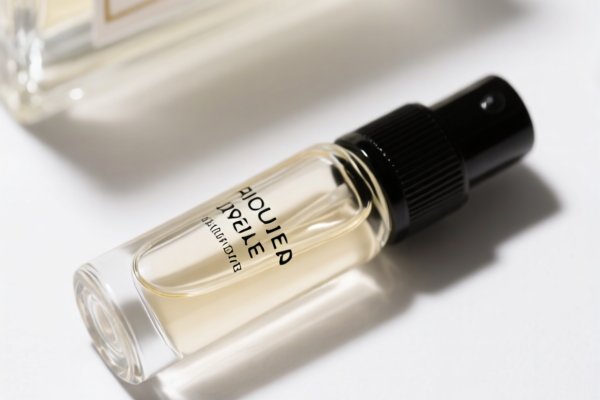
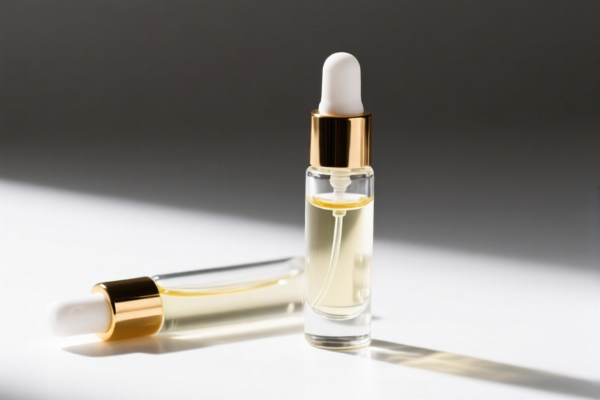
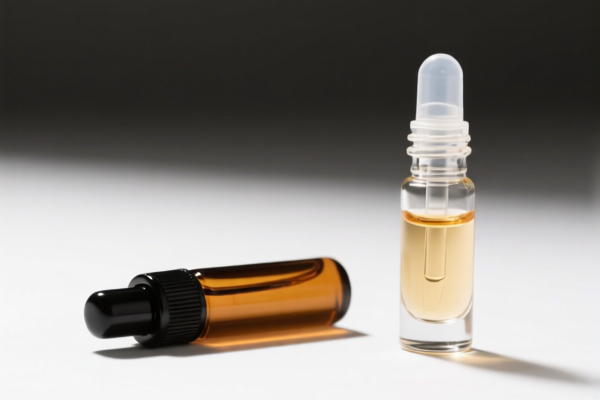

AI Analysis
🧴 Spray Perfume Bottle (Glass & Plastic)
🌐 HS Code Reference & Customs Clearance Guide | 2026 Latest Tariff Analysis | Professional Compliance Strategy
📌 I. Product Definition & Classification: Decoding "Spray Perfume Bottle"
A Spray Perfume Bottle is a primary packaging unit designed to hold, preserve, and dispense fragrance. In international trade, classification is strictly determined by the material composition and specific design features. Misclassification leads to severe tariff discrepancies (up to 40.2% vs. 26.5%) and customs delays.
There are two main categories: * Glass Perfume Bottles: Rigid, premium packaging. Classification varies by specific subheading based on shape/utility nuances. * Plastic Spray Bottles: Lightweight, durable packaging. Distinction is made between specialized "perfume containers" and general-purpose "spray containers."
⚠️ Critical Distinction Point:
- Glass vs. Plastic: Material dictates the HS Chapter (70 vs. 39).
- Specificity: "Perfume bottle" codes often carry different tax rates than general "spray bottles."
- Tax Burden: US-China trade tensions have added significant duties (Section 301 + IEEPA) on these items.
📦 II. HS Code Classification Details (2026 Latest Tariff Authority)
| HS Code | Product Description | Material | Key Characteristics | Total Tax Rate |
|---|---|---|---|---|
7010.90.30.10 |
Glass Perfume Bottle | Glass | Specific for perfume packaging | 40.2% |
7010.90.30.20 |
Glass Perfume Bottle | Glass | Specific for perfume packaging | 40.2% |
7013.99.30.00 |
Glass Perfume Bottle | Glass | General glass ware category | 26.5% |
3923.30.00.10 |
Plastic Perfume Bottle | Plastic | Specifically for perfume packaging | 38.0% |
3923.30.00.90 |
Plastic Spray Bottle | Plastic | General spray container (non-perfume specific) | 38.0% |
🔍 Key Insight:
- Glass Bottles: Two main paths exist. The specific perfume codes (7010.90.30.10/.20) carry a 40.2% rate, while the general glass category (7013.99.30.00) is lower at 26.5%. Proper description is key to avoiding overpayment or audit flags.
- Plastic Bottles: Regardless of whether it is labeled "perfume" or "general spray," the total tax rate is consistently 38.0%. The distinction lies in the specific subheading used for inventory purposes.
💰 III. 2026 Latest Tariff Rate Breakdown (Including Additional Duties & Policies)
✅ Applicable Country: United States (US)
✅ Origin: China (CN)
✅ Effective Date: November 10, 2025 onwards (and subsequent imports)
🎯 1. Glass Perfume Bottles (7010.90.30.10 / 7010.90.30.20)
| Item | Details |
|---|---|
| Base Tariff | 5.2% (ad valorem) |
| Section 301 Additional Duty | +25.0% |
| IEEPA Additional Duty (122) | +10.0% |
| Total Tax Rate | 40.2% |
| Tax Calculation | CIF Value × 40.2% |
| De Minimis Exemption | ❌ Not Eligible |
| Legal Basis Path | Base: 7010 → Section 301: Footnote 9903.88.01 → IEEPA: 9903.01.24 |
📌 Explanation:
- The 40.2% total rate is the sum of the Base Rate (5.2%), the Section 301 Duty (25%), and the IEEPA Duty (10%).
- These are high-cost items due to their origin and material.
🎯 2. Glass Perfume Bottle (7013.99.30.00)
| Item | Details |
|---|---|
| Base Tariff | 9.0% (ad valorem) |
| Section 301 Additional Duty | +7.5% |
| IEEPA Additional Duty (122) | +10.0% |
| Total Tax Rate | 26.5% |
| Tax Calculation | CIF Value × 26.5% |
| De Minimis Exemption | ❌ Not Eligible |
| Legal Basis Path | Base: 7013 → Section 301: Footnote 9903.88.01 → IEEPA: 9903.01.24 |
📌 Strategy Alert:
- If your glass bottle fits the criteria for7013.99.30.00, you save 13.7% in duties compared to the7010codes.
- Warning: Customs may challenge this if the bottle is deemed "specialized perfume packaging" rather than general glass ware. Documentation must support the general use claim if using this code.
🎯 3. Plastic Perfume & Spray Bottles (3923.30.00.10 / 3923.30.00.90)
| Item | Details |
|---|---|
| Base Tariff | 3.0% (ad valorem) |
| Section 301 Additional Duty | +25.0% |
| IEEPA Additional Duty (122) | +10.0% |
| Total Tax Rate | 38.0% |
| Tax Calculation | CIF Value × 38.0% |
| De Minimis Exemption | ❌ Not Eligible |
| Legal Basis Path | Base: 3923 → Section 301: Footnote 9903.88.01 → IEEPA: 9903.01.24 |
📌 Note:
- Both the specific perfume bottle (...00.10) and general spray bottle (...00.90) have the identical total tax rate of 38.0%.
- The distinction is administrative, affecting inventory management and potential future policy changes, but not current tax liability.
🛠️ IV. Customs Clearance Practical Advice (Real-World Pitfall Guide)
✅ 1. Required Documentation Checklist
| Document | Required? | Purpose |
|---|---|---|
| ✅ Commercial Invoice | ✔️ | Must clearly state "Perfume Bottle" or "Spray Bottle" and Material (Glass/Plastic). |
| ✅ Packing List | ✔️ | Detail unit weights and quantities. |
| ✅ Product Photos | ✔️ | Show the bottle shape, closure type, and material clarity. |
| ✅ Material Declaration | ✔️ | Explicitly state "100% Glass" or "100% Plastic." |
| ✅ HS Code Pre-Ruling | ✔️ | Recommended to avoid disputes between 7010 and 7013. |
✅ 2. Declaration Tips (Key Mantra)
🔥 "Material First, Use Second, Rate Third!"
| Scenario | Correct Declaration | Wrong Practice |
|---|---|---|
| Glass Bottle for Perfume | 7010.90.30.10 or 7013.99.30.00 |
Declaring as "Packaging Material" generally → Risk of audit |
| Plastic Perfume Bottle | 3923.30.00.10 |
Declaring as "Plastic Container" only → Ambiguity |
| Plastic Spray Bottle (General) | 3923.30.00.90 |
Mislabeling as "Perfume Bottle" if not intended → Inventory mismatch |
✅ 3. Special Cases & Handling
| Situation | Handling Advice |
|---|---|
| Bottle with Spray Mechanism | If the spray pump is attached, declare as the complete unit (Perfume Bottle). Do not separate the pump from the bottle in customs docs unless shipped separately. |
| Mixed Shipment (Glass & Plastic) | Declare separately. Mixing HS Codes in one line item will cause delays. |
| Origin: Not China | If the bottle is made in Vietnam, Thailand, or Mexico, you may apply for IEEPA Exemptions, potentially reducing the total tax rate significantly (see below). |
🌍 V. Global Market Comparison (2026 Latest)
| Country/Region | Recommended HS Code | Approx. Tariff (China Origin) | Certification | Notes |
|---|---|---|---|---|
| 🇺🇸 USA | 7010.90.30.10 (Glass) / 3923.30.00.10 (Plastic) |
38.0% - 40.2% | None specific for packaging | High additional duties due to trade policy |
| 🇨🇳 China | 7010.90.30 / 3923.30 |
5.0% - 10.0% | CCC (if applicable) | No additional Section 301 taxes |
| 🇪🇺 EU | 7010.90 / 3923.30 |
4.5% - 6.5% | REACH Compliance | No major punitive tariffs |
| 🇬🇧 UK | 7010.90 / 3923.30 |
4.5% - 6.5% | UKCA | Post-Brexit alignment with EU trends |
| 🇯🇵 Japan | 7010.90 / 3923.30 |
0% - 5.0% | JIS Standards | Low import duties |
📌 Conclusion:
- USA is the most expensive market due to Section 301 and IEEPA duties.
- Supply Chain Strategy: Consider sourcing glass/plastic bottles from non-China origins (e.g., Vietnam, Thailand) to leverage IEEPA Exemptions and reduce tax liability.
📌 VI. Common Mistakes & Pitfalls (Lessons Learned)
❌ Mistake 1: Declaring Glass Perfume Bottles as "General Glass Containers" to get 7013 rate.
👉 Consequence: Customs may reclassify to 7010 if the shape is clearly perfume-specific. Risk of back-tariffs + fines.
❌ Mistake 2: Ignoring IEEPA 10% Duty on Plastic Bottles.
👉 Consequence: Underpayment by 10%. Customs audits will catch this via HS Code cross-referencing.
❌ Mistake 3: Mixing Glass and Plastic Bottles in one HS Line Item.
👉 Consequence: Customs rejection. Must separate by material.
❌ Mistake 4: Assuming "Perfume Bottle" qualifies for De Minimis.
👉 Consequence: Denial of De Minimis. All these codes are NOT eligible for the $800 threshold exemption.
✅ Correct Practice:
"Glass Perfume Bottle, 50ml, Clear, with Spray Pump, Model XYZ, Made in China"
→ Use7010.90.30.10or7013.99.30.00with clear material and usage description.
🎯 VII. Conclusion: Precise Classification for Cost Efficiency
🎯 Remember the Mantra:
🔹 "Glass: 40.2% (Specific) vs 26.5% (General); Plastic: 38.0% Fixed!"
🔹 "No De Minimis! Full CIF Tax Applies!"📌 Pro Tip:
If your volume is high, consider Origin Shifting to countries with IEEPA Exemptions (e.g., Vietnam, Thailand). This can save you 10% in IEEPA duties on both glass and plastic bottles.
Always apply for a Pre-Ruling if your bottle design is ambiguous between7010and7013.
📣 Immediate Action:
📞 Contact a licensed customs broker.
📄 Provide detailed photos and specifications.
🚀 Optimize your supply chain to mitigate 40%+ tariff burdens!
✨ Professional Clearance Starts with Accurate Classification!
💼 Every Percentage Point Counts in Your Margin!
Customer Reviews
About HS Code Classification
The Harmonized System (HS) is an internationally standardized nomenclature developed by the World Customs Organization (WCO) to classify traded products. Over 200 countries use the HS system as the basis for customs tariffs, trade statistics, and import/export regulations.
Each HS code follows a hierarchical structure:
- Chapter (2 digits) — Broad category of goods (e.g., Chapter 84: Machinery and Mechanical Appliances)
- Heading (4 digits) — More specific grouping within the chapter
- Subheading (6 digits) — Internationally standardized breakdown, used by all WCO member countries
- National subdivisions (8-10 digits) — Country-specific extensions for further classification, such as US HTSUS 10-digit codes
Correct HS code classification is essential for smooth customs clearance, accurate duty payment, and compliance with trade regulations. Misclassification can lead to customs delays, overpayment of duties, or penalties.
When importing from CN to US, the applicable tariff rates may include:
- Most-Favored-Nation (MFN) rate — The standard duty rate applied to WTO members
- General rate — Applied to countries without trade agreements
- Trade remedy duties — Additional tariffs such as Section 301 (anti-dumping), Section 232 (national security), or countervailing duties
The information provided on this page is for reference purposes only. For official classification, please consult with your local customs authority or a licensed customs broker.