Sprayer
CN → US| HS Code | Tariff Rate | Origin | Destination | Doc |
|---|---|---|---|---|
| 8424411000 | 35.0% | CN | US | Official Doc |
| 8424419000 | 37.4% | CN | US | Official Doc |
| 8201906000 | 35.0% | CN | US | Official Doc |
| 3926909989 | 22.8% | CN | US | Official Doc |
| 3926909910 | 22.8% | CN | US | Official Doc |
Product Images
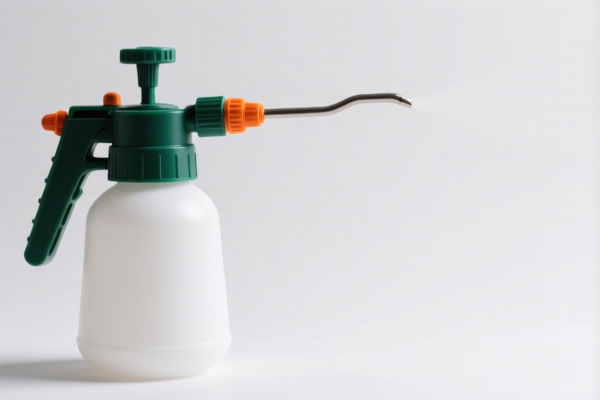
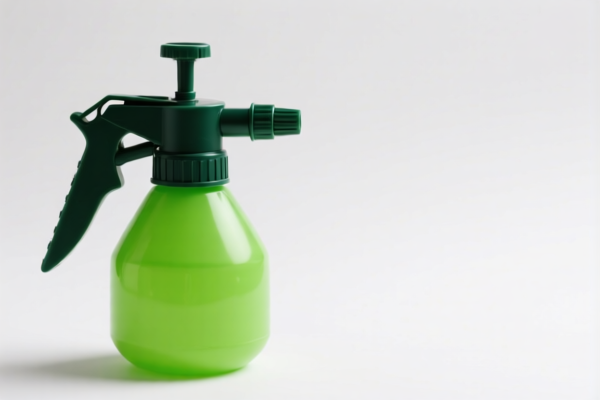
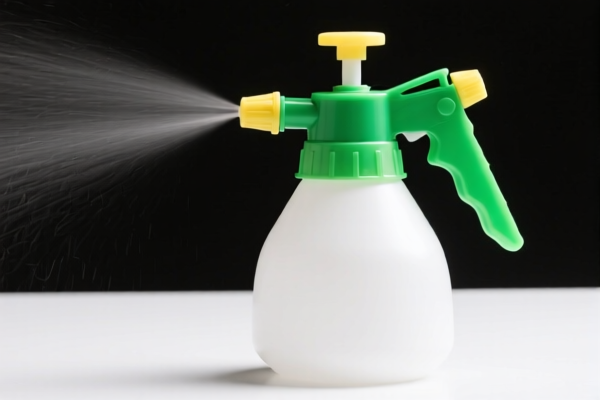
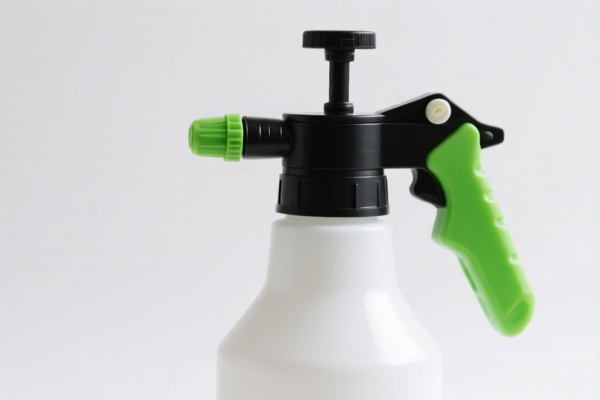
AI Analysis
🚜 Sprayer (Garden & Agricultural Sprayers)
🌐 HS Code Reference & Customs Clearance Guide | 2026 Latest Tariff Analysis | Professional Clearance Strategy
📌 I. Product Definition & Classification: Do You Really Understand “Sprayers”?
A Sprayer is a device used to apply liquids (pesticides, herbicides, water, fertilizers) onto plants or surfaces. In international trade, the classification depends strictly on function, mechanism, and material. Misclassification is common because these devices can be manual, battery-powered, or purely mechanical.
⚠️ Key Distinction Points:
- Agricultural/Horticultural Portable Sprayers: If it’s a backpack, knapsack, or handheld unit designed for gardening or farming, it generally falls under Chapter 84 (Machinery for Agr/Hort).
- Hand Tools (Manual Pump): If it’s a simple, non-motorized, purely mechanical tool often made of plastic/metal parts, it may fall under Chapter 82 (Tools) or Chapter 39 (Plastics) depending on material composition.
- Smokers (For Beekeeping): Do not confuse with "smokers." A Smoker is a specialized tool for calming bees, falling under Chapter 85 (Electrical) if electric, or Chapter 82 if manual.
- Pure Plastic Components: If the device is primarily a plastic container with no complex mechanical function, it might be classified as a Plastic Article.
📦 II. HS Code Classification Details (2026 Latest Tariff Authority Comparison)
Based on the provided data, here is the breakdown for "Sprayer" products:
| HS Code | Product Description | Application Scenario | Material/Mechanism Clue |
|---|---|---|---|
8424.41.10.00 |
Horticultural Sprayer (Matched Use/Form) | Garden sprayers, precise form & function match | No material conflict; specific horticultural use |
8424.41.90.00 |
Horticultural Sprayer (Other) | General agricultural/horticultural portable sprayers | Meets requirements for portable agr/hort sprayers |
8201.90.60.00 |
Sprayer (Hand Tool) | Manual garden sprayers, handheld tools | Material inferred as Plastic or Metal; simple mechanics |
3926.90.99.89 |
Plastic Sprayer (Other Plastic Articles) | Sprayers made primarily of plastic | Classified as "Other" plastic articles; no complex machinery |
3926.90.99.10 |
Plastic Sprayer (Other Plastic Articles) | Similar to above, specific plastic article code | Material-focused classification |
8543.70.97.00 |
Smoker (Electrical/Functional Device) | Note: Often confused with Sprayers | Electric smoker for beekeeping; independent functional device |
🔍 Critical Reminder:
- "Sprayer" vs. "Smoker": If the device is a beekeeping smoker (produces smoke), it is NOT a sprayer. It falls under8543.70.97.00. Do not mislabel! - Material Matters: For manual sprayers, if the mechanism is extremely simple (no pump mechanism beyond basic hand pressure), customs may view it as a "Hand Tool" (8201) or "Plastic Article" (3926). If it has a defined horticultural pumping mechanism,8424is the most accurate for functional sprayers. - Portability:8424.41specifically targets portable sprayers for agriculture/horticulture.
💰 III. 2026 Latest Tariff Rate Detail (Including Additional Taxes & Policy Surcharges)
✅ Applicable Country: United States (US)
✅ Origin: China (CN)
✅ Effective Time: Post-2025 (Current Trade Environment)
✅ Sanctions: Subject to Section 301 (25%) and IEEPA (10%) tariffs.
🎯 1. 8424.41.10.00 —— Horticultural Sprayer (Specific Match)
| Item | Content |
|---|---|
| Base Tariff | 0.0% |
| Section 301 Surcharge | +25.0% |
| IEEPA Surcharge (122) | +10.0% |
| Total Tax Rate | 35.0% |
| Calculation | CIF Value × 35% |
| De Minimis Exemption | ❌ Not Applicable (De Minimis denied for these codes) |
| Legal Path | Section 301: 8424.41.10 → IEEPA: 122 |
📌 Explanation:
- This code is the most accurate for functional garden sprayers.
- Despite 0% base tariff, the 35% total impact is significant.
- Base tariff is 0% because it’s considered specialized agricultural machinery, but the 25% Section 301 and 10% IEEPA apply heavily.
🎯 2. 8424.41.90.00 —— Horticultural Sprayer (Other)
| Item | Content |
|---|---|
| Base Tariff | 2.4% |
| Section 301 Surcharge | +25.0% |
| IEEPA Surcharge (122) | +10.0% |
| Total Tax Rate | 37.4% |
| Calculation | CIF Value × 37.4% |
| De Minimis Exemption | ❌ Not Applicable |
| Legal Path | Section 301: 8424.41.90 → IEEPA: 122 |
📌 Note:
- Slightly higher than8424.41.10due to the 2.4% base tariff.
- Use this if the sprayer doesn’t perfectly match the "specific form" of8424.41.10but is still a portable agr/hort sprayer.
🎯 3. 8201.90.60.00 —— Sprayer (Hand Tool)
| Item | Content |
|---|---|
| Base Tariff | 0.0% |
| Section 301 Surcharge | +25.0% |
| IEEPA Surcharge (122) | +10.0% |
| Total Tax Rate | 35.0% |
| Calculation | CIF Value × 35% |
| De Minimis Exemption | ❌ Not Applicable |
| Legal Path | Section 301: 8201.90.60 → IEEPA: 122 |
📌 Risk:
- Customs may argue that a complex plastic sprayer is not a "Hand Tool" in the sense of Chapter 82 (which is usually metal/wood tools).
- If disputed, you might face reclassification to 3926 (Plastic) or 8424.
🎯 4. 3926.90.99.89 / 3926.90.99.10 —— Plastic Sprayer (Other Plastic Articles)
| Item | Content |
|---|---|
| Base Tariff | 5.3% |
| Section 301 Surcharge | +7.5% |
| IEEPA Surcharge (122) | +10.0% |
| Total Tax Rate | 22.8% |
| Calculation | CIF Value × 22.8% |
| De Minimis Exemption | ❌ Not Applicable |
| Legal Path | Section 301: 3926.90.99 → IEEPA: 122 |
📌 Advantage:
- Lowest Total Tax Rate (22.8%).
- Risk: Customs may reject this if the item is deemed a "Machinery" (Chapter 84) rather than a simple "Plastic Article."
- Strategy: Use this if the device is purely a plastic tank with a very simple pump, lacking complex mechanical features.
🎯 5. 8543.70.97.00 —— Smoker (NOT a Sprayer!)
| Item | Content |
|---|---|
| Base Tariff | 0.0% |
| Section 301 Surcharge | +25.0% |
| IEEPA Surcharge (122) | +10.0% |
| Total Tax Rate | 35.0% |
| Calculation | CIF Value × 35% |
| De Minimis Exemption | ❌ Not Applicable |
🚨 WARNING:
- If you are shipping a Beekeeping Smoker, do NOT call it a "Sprayer."
- Call it "Electrical Smoker for Apiary Use".
- Wrong description = Fraud/Seizure risk.
🛠️ IV. Customs Clearance Practical Advice (Real-World Pitfall Guide)
✅ 1. Essential Documentation Checklist
| Document | Mandatory? | Description |
|---|---|---|
| ✅ Product Spec Sheet | ✔️ | Must detail: Material (Plastic/Metal), Capacity (Liters/Gallons), Type (Backpack/Held), Power Source (Manual/Electric). |
| ✅ Product Photos | ✔️ | Clear images showing: Nozzle type, tank material, handle/pump mechanism. |
| ✅ Commercial Invoice | ✔️ | CRITICAL: Do NOT use generic "Garden Tool." Use precise term: "Horticultural Sprayer, Portable, Plastic, Manual Pump." |
| ✅ Material Declaration | ✔️ | Specify % of Plastic vs. Metal. High plastic content supports 3926; mechanical complexity supports 8424. |
| ✅ Labeling | ✔️ | Ensure product label matches invoice description. |
✅ 2. Declaration Strategy (Key Mnemonic)
🔥 “Function First, Material Second, Name Precise, Rate Optimized!”
| Scenario | Correct Declaration | Incorrect Declaration | Result |
|---|---|---|---|
| Complex Garden Sprayer | 8424.41.10.00 - "Horticultural Sprayer" |
"Plastic Toy" or "General Tool" | Correct Tax: 35% |
| Simple Plastic Tank | 3926.90.99.10 - "Plastic Article" |
"Sprayer" | Lower Tax: 22.8% (if accepted) |
| Beekeeping Smoker | 8543.70.97.00 - "Electrical Smoker" |
"Sprayer" | Seizure/Fine (Wrong Product) |
| Manual Hand Pump | 8201.90.60.00 - "Hand Tool" |
"Machinery" | Risk of Re-class to 8424/3926 |
✅ 3. Special Circumstances Handling
| Situation | Handling Advice |
|---|---|
| Electric Sprayer | If it has a battery/motor, it might fall under 8424 or 8543 (if smoker). Do NOT classify as manual 8201. |
| OEM/White Label | Provide design drawings to prove function. If function is "horticultural spraying," 8424 is safest. |
| Combined Kits | If sprayer + hose + nozzle are sold together, declare as one unit under the primary function (Sprayer). Do not split. |
| "Smart" Sprayers | If GPS/AI-enabled, still 8424 (machinery for agr/hort), not IT equipment. |
🌍 V. Global Market Comparison (2026 Update)
| Country/Region | Recommended HS Code | Total Tariff (China Origin) | Certification Requirements | Notes |
|---|---|---|---|---|
| 🇺🇸 USA | 8424.41.10.00 |
35.0% | No specific EPA/CE, but label in English | Highest risk of re-classification. |
| 🇪🇺 EU | 8424.41.10.00 |
~6.5% | CE Mark, REACH (Chemicals in paint/plastic) | Lower base tariff, no 301/IEEPA. |
| 🇨🇦 Canada | 8424.41.10.00 |
~0-6% | Health Canada (if pesticide-related) | Generally favorable trade terms. |
| 🇦🇺 Australia | 8424.41.10.00 |
~5% | ACMA (if electric) | No major anti-dumping for simple sprayers. |
📌 Conclusion:
- The US market is the most expensive for sprayers due to 35-37.4% total tariffs.
- EU/Canada/Australia are significantly cheaper (~5-7%).
- Strategy for US: Consider sourcing from Vietnam/Mexico to avoid Section 301 (25%) and IEEPA (10%) tariffs, reducing cost to ~0-5%.
📌 VI. Common Errors & Pitfall Guide (Lessons Learned)
❌ Error 1: Calling a Beekeeping Smoker a "Sprayer"
👉 Consequence: Customs Seizure or heavy fines for misdescription. Smokers are 8543, Sprayers are 8424.
❌ Error 2: Classifying a complex mechanical sprayer as "Plastic Article" (3926) to save tax
👉 Consequence: Customs may re-classify to 8424 (35%) + Penalties for undervaluation/tariff evasion.
❌ Error 3: Ignoring the IEEPA 10% Surcharge
👉 Consequence: Unexpected cost increase. All these codes are subject to IEEPA 10% regardless of base tariff.
❌ Error 4: Splitting the Sprayer from its Pump/Nozzle in shipping
👉 Consequence: If shipped separately, each part may be taxed individually or deemed incomplete, leading to higher total duty.
✅ Correct Practice:
“Portable Horticultural Sprayer, 5-Gallon, Plastic Tank, Manual Pump, Model ABC, Made in China”
🎯 VII. Conclusion: Professional Declaration Saves Money!
🎯 Remember the Mnemonic:
🔹 “Function is King, Material is Queen. Sprayer=8424, Smoker=8543. Plastic=3926 (Risky).”
🔹 “US Tax is 35%, Global is 5%. Source Smart, Save Big!”
📌 Pro Tip:
If you are exporting to the US, and your sprayer is >$500 CIF, consider Advance Ruling (PBO) from CBP to lock in the HS Code. This prevents surprise audits or re-classifications later.
For Plastic-heavy, simple sprayers, try to argue for3926(22.8%) but be prepared to provide detailed engineering specs proving lack of "mechanical function" beyond basic pumping.
📣 Immediate Action:
📞 Verify Product Function: Is it a Sprayer or Smoker?
📞 Check Material: Is it >50% Plastic?
📞 Calculate Landed Cost: Include 35% US Duty + 10% IEEPA.
🚀 Optimize Supply Chain: Consider non-China origins for US market to avoid 35%+ tariffs.
✨ Professional Customs Clearance Starts with Accurate Classification!
💼 Your Bottom Line Depends on the First 8 Digits of the HS Code!
Customer Reviews
About HS Code Classification
The Harmonized System (HS) is an internationally standardized nomenclature developed by the World Customs Organization (WCO) to classify traded products. Over 200 countries use the HS system as the basis for customs tariffs, trade statistics, and import/export regulations.
Each HS code follows a hierarchical structure:
- Chapter (2 digits) — Broad category of goods (e.g., Chapter 84: Machinery and Mechanical Appliances)
- Heading (4 digits) — More specific grouping within the chapter
- Subheading (6 digits) — Internationally standardized breakdown, used by all WCO member countries
- National subdivisions (8-10 digits) — Country-specific extensions for further classification, such as US HTSUS 10-digit codes
Correct HS code classification is essential for smooth customs clearance, accurate duty payment, and compliance with trade regulations. Misclassification can lead to customs delays, overpayment of duties, or penalties.
When importing from CN to US, the applicable tariff rates may include:
- Most-Favored-Nation (MFN) rate — The standard duty rate applied to WTO members
- General rate — Applied to countries without trade agreements
- Trade remedy duties — Additional tariffs such as Section 301 (anti-dumping), Section 232 (national security), or countervailing duties
The information provided on this page is for reference purposes only. For official classification, please consult with your local customs authority or a licensed customs broker.