Spring Cord
CN → US| HS Code | Tariff Rate | Origin | Destination | Doc |
|---|---|---|---|---|
| 4016996050 | 37.5% | CN | US | Official Doc |
| 5604909000 | 40.0% | CN | US | Official Doc |
| 5604100000 | 41.3% | CN | US | Official Doc |
| 9506910030 | 22.1% | CN | US | Official Doc |
| 9506996080 | 21.5% | CN | US | Official Doc |
| 4016993510 | 35.0% | CN | US | Official Doc |
Product Images
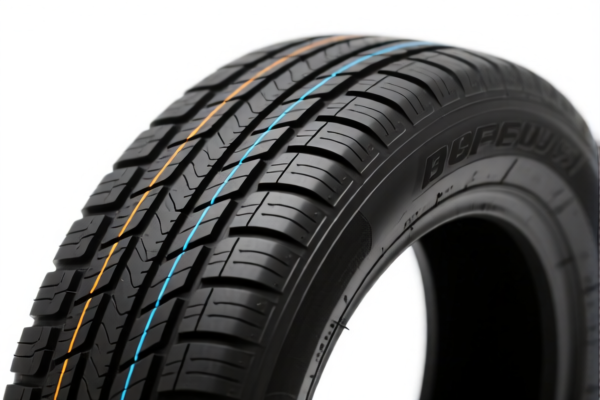
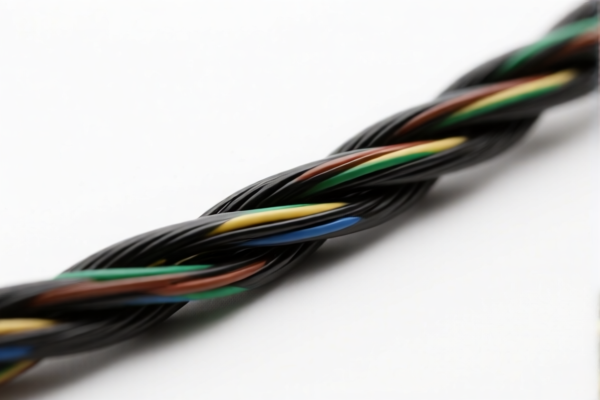
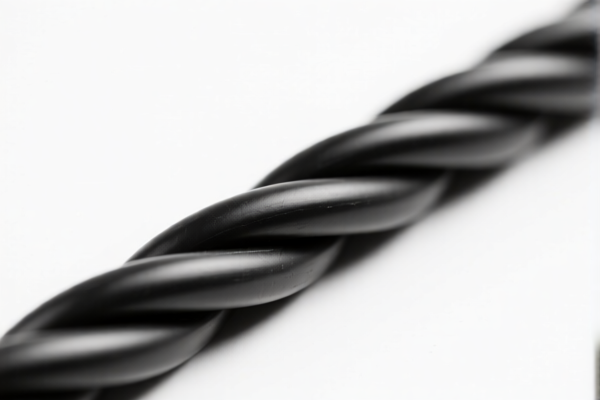
AI Analysis
🌿 Spring Cord (Rubber & Textile Covered Ropes/Strings)
🌐 HS Code Reference & Customs Clearance Guide | 2026 Latest Tariff Analysis | Professional Entry Strategy
📌 I. Product Definition & Classification: What Exactly is "Spring Cord"?
"Spring Cord" in international trade generally refers to elastic cords, strings, or ropes. The critical distinction for HS Code classification lies in the material composition and physical structure:
- Rubber/Elastic Rubber Only: Pure elastic cords made of vulcanized or synthetic rubber without textile coverings.
- Rubber + Textile Covered: Rubber cords/strings covered with textile materials (fabric, yarn, etc.).
- Pure Textile Rubber-Coated: Textile strings with a specific rubber coating, distinct from general rubber goods.
⚠️ Key Classification Distinction:
- If the item is purely elastic rubber without textile covering → It falls under Chapter 40 (Rubber Articles).
- If the item is a string/rope structure where rubber is the core or cover but textile is present → It often falls under Chapter 56 (Textile Products).
- If it is a general sports item made of rubber/plastic → It may fall under Chapter 95 (Sports Goods).
📦 II. HS Code Classification Details (2026 Latest Tariff Authority Comparison)
Based on the provided data, here are the specific HS Codes and their corresponding rationales:
| HS Code | Product Description | Classification Rationale | Key Feature |
|---|---|---|---|
4016.99.60.50 |
Non-specific Rubber Articles (Elastic Cord) | Material is vulcanized or elastic rubber; not for specific dedicated use. | Pure Rubber/Elastic |
5604.90.90.00 |
Rubber Thread/Cord Covered with Textile | Cord/rope form with textile covering over rubber material. | Textile + Rubber Cover |
5604.10.00.00 |
Rubber Cord/Thread (General) | Rubber cord/rope conforming to rope morphology and rubber/textile covered material features. | Core Rubber + Structure |
9506.91.00.30 |
General Sports/Fitness Equipment | Generic sports or fitness equipment where material is rubber or plastic. | Sports Use |
9506.99.60.80 |
Sports Exercise Apparatus | Exercise equipment made of elastic materials like rubber or latex. | Elastic Sports Gear |
4016.99.35.10 |
Natural Rubber Bands | Natural rubber made elastic bands, possessing elastic characteristics. | Natural Rubber Elastic |
🔍 Critical Note:
- Chapter 40 (4016...) applies to non-industrial, non-specific rubber articles. If the spring cord is a simple elastic band or non-woven rubber cord, it likely goes here.
- Chapter 56 (5604...) applies when the product is defined as a thread, cord, or rope that is covered with rubber or textile. The "rope/line" morphology is key here.
- Chapter 95 (9506...) applies if the "spring cord" is part of or constitutes a sports/fitness product (e.g., resistance bands, jump ropes, gym equipment components).
💰 III. 2026 Latest Tariff Rate Breakdown (Including Additional Taxes & Policies)
✅ Applicable Country: United States (US)
✅ Origin: China (CN)
✅ Effective Date: Current rates apply as per the provided data (Includes 301 Duties & IEEPA Surcharges)
🎯 1. 4016.99.60.50 —— Non-Specific Rubber Articles (Elastic Rubber Cord)
| Item | Details |
|---|---|
| Base Tariff | 2.5% (ad valorem) |
| Retaliatory/Section 301 Duty | 25.0% |
| IEEPA Surcharge (Section 122) | 10.0% |
| Total Tariff Rate | 37.5% |
| Tax Calculation | CIF Value × 37.5% |
| De Minimis Exemption | ❌ Not Applicable (High tariff threshold) |
| Legal Basis | Base Rate + Sec 301 Footnote + IEEPA Section 122 |
📌 Explanation:
- This classification is for pure rubber/elastic cords.
- The 25% Section 301 duty is a standard additional tariff on Chinese rubber goods.
- The 10% IEEPA surcharge is added on top, bringing the total to 37.5%.
- Risk: High cost impact for simple elastic rubber components.
🎯 2. 5604.90.90.00 —— Rubber Cord Covered with Textile
| Item | Details |
|---|---|
| Base Tariff | 5.0% (ad valorem) |
| Retaliatory/Section 301 Duty | 25.0% |
| IEEPA Surcharge (Section 122) | 10.0% |
| Total Tariff Rate | 40.0% |
| Tax Calculation | CIF Value × 40.0% |
| De Minimis Exemption | ❌ Not Applicable |
| Legal Basis | Base Rate + Sec 301 Footnote + IEEPA Section 122 |
📌 Explanation:
- Applies when the cord/rope has a textile covering over rubber.
- The base rate is higher (5.0%) compared to pure rubber (2.5%), but the additional taxes remain the same.
- Total 40% makes this one of the highest taxed categories in the list.
🎯 3. 5604.10.00.00 —— Rubber Cord/Thread (General Morphology)
| Item | Details |
|---|---|
| Base Tariff | 6.3% (ad valorem) |
| Retaliatory/Section 301 Duty | 25.0% |
| IEEPA Surcharge (Section 122) | 10.0% |
| Total Tariff Rate | 41.3% |
| Tax Calculation | CIF Value × 41.3% |
| De Minimis Exemption | ❌ Not Applicable |
| Legal Basis | Base Rate + Sec 301 Footnote + IEEPA Section 122 |
📌 Explanation:
- This code captures rubber cords/threads that fit the general definition of ropes/strings in Chapter 56.
- Highest base rate (6.3%) among the rubber/textile codes.
- Total 41.3% is the peak tariff in the provided dataset for this product type.
🎯 4. 9506.91.00.30 —— General Sports/Fitness Equipment (Rubber/Plastic)
| Item | Details |
|---|---|
| Base Tariff | 4.6% (ad valorem) |
| Retaliatory/Section 301 Duty | 7.5% |
| IEEPA Surcharge (Section 122) | 10.0% |
| Steel/Aluminum/Copper Surcharge | 50% (If applicable materials) |
| Total Tariff Rate | 22.1% (Non-metal) / Up to 67.1% (Metal) |
| Tax Calculation | CIF Value × 22.1% (Standard) |
| De Minimis Exemption | ❌ Not Applicable |
| Legal Basis | Base Rate + Lower Sec 301 Footnote + IEEPA Section 122 |
📌 Explanation:
- If the "spring cord" is sold as fitness equipment (e.g., a resistance band set), it benefits from a lower Section 301 rate of 7.5% instead of 25%.
- Total 22.1% is significantly lower than pure rubber/textile codes.
- ⚠️ Warning: If the product contains steel/aluminum/copper components (e.g., weighted handles), the 50% surcharge applies, raising the total drastically.
🎯 5. 9506.99.60.80 —— Sports Exercise Apparatus (Elastic Material)
| Item | Details |
|---|---|
| Base Tariff | 4.0% (ad valorem) |
| Retaliatory/Section 301 Duty | 7.5% |
| IEEPA Surcharge (Section 122) | 10.0% |
| Steel/Aluminum/Copper Surcharge | 50% (If applicable materials) |
| Total Tariff Rate | 21.5% (Non-metal) / Up to 66.5% (Metal) |
| Tax Calculation | CIF Value × 21.5% (Standard) |
| De Minimis Exemption | ❌ Not Applicable |
| Legal Basis | Base Rate + Lower Sec 301 Footnote + IEEPA Section 122 |
📌 Explanation:
- Another sports equipment code, specifically for elastic materials like rubber/latex.
- Lowest base rate (4.0%) among all codes.
- Total 21.5% offers the best tariff advantage if the product qualifies as sports gear.
- Strategy: If selling resistance bands or elastic exercise cords, classify under Chapter 95 to save ~20% in duties.
🎯 6. 4016.99.35.10 —— Natural Rubber Bands
| Item | Details |
|---|---|
| Base Tariff | 0.0% (ad valorem) |
| Retaliatory/Section 301 Duty | 25.0% |
| IEEPA Surcharge (Section 122) | 10.0% |
| Total Tariff Rate | 35.0% |
| Tax Calculation | CIF Value × 35.0% |
| De Minimis Exemption | ❌ Not Applicable |
| Legal Basis | Base Rate (0%) + Sec 301 Footnote + IEEPA Section 122 |
📌 Explanation:
- Specific to natural rubber bands.
- Zero base tariff helps lower the total, but additional taxes still push it to 35.0%.
- Lower than4016.99.60.50(37.5%) due to the 0% base rate.
🛠️ IV. Customs Clearance Practical Advice (Battle-Tested Pitfall Guide)
✅ 1. Documentation Checklist (Non-Negotiable)
| Document | Required | Purpose |
|---|---|---|
| ✅ Product Specification Sheet | ✔️ | Must detail material (e.g., "100% Vulcanized Rubber" vs. "Rubber Core with Polyester Cover"). |
| ✅ Material Composition Report | ✔️ | Critical for distinguishing between Ch 40 (Rubber) and Ch 56 (Textile/Rubber). |
| ✅ Product Photos (Clear) | ✔️ | Show cross-section (if covered), labeling, and packaging. |
| ✅ Intended Use Declaration | ✔️ | State clearly if it is for "Sports/Fitness" (Ch 95) or "Industrial/Miscellaneous" (Ch 40/56). |
| ✅ Commercial Invoice | ✔️ | Accurate description: "Natural Rubber Elastic Band" vs. "Textile-Covered Rubber Cord". |
| ✅ Certificate of Origin | ✔️ | For preferential treatment if applicable (though most of these have high tariffs). |
✅ 2. Classification Strategy (Key Mnemonics)
🔥 "Sports First, Rubber Second, Textile Last, Metal Alert!"
| Scenario | Correct HS Code | Wrong Classification | Consequence |
|---|---|---|---|
| Resistance Bands (Fitness) | 9506.91.00.30 or 9506.99.60.80 |
4016.99.60.50 |
Overpaying ~15-20% in duties |
| Simple Rubber Elastic Band | 4016.99.35.10 |
5604.10.00.00 |
Overpaying ~6% in duties |
| Cord with Fabric Cover | 5604.90.90.00 |
4016.99.60.50 |
Misclassification risk + penalty |
| Cord with Metal Weights | 9506... (+50% metal surcharge) |
9506... (assuming no metal) |
Unexpected 50% surcharge |
✅ 3. Special Cases & Handling
| Situation | Recommendation |
|---|---|
| OEM/White Label Sports Bands | Provide proof of end-use (e.g., gyms, fitness apps marketing) to support Chapter 95 classification. |
| Mixed Packaging | If sold as a kit (bands + door anchor + handles), declare as Set under 9506. Do not split components. |
| Natural vs. Synthetic Rubber | Ensure invoice specifies "Natural Rubber" if claiming 4016.99.35.10 for 0% base rate. |
| Textile Covering Thickness | If textile cover is dominant, CBP may argue for Chapter 56 (5604.10.00.00). Ensure material ratio is clear. |
🌍 V. Global Market Comparison (2026 Latest)
| Country/Region | Recommended HS Code | Estimated Tariff | Certification | Notes |
|---|---|---|---|---|
| 🇺🇸 USA | 9506.99.60.80 (if sports) |
21.5% | ASTM F963, CPSIA | Best option for sports cords |
| 🇪🇺 EU | 4016.99 or 5604.90 |
0-6.5% (MFN) | REACH, RoHS | No Section 301/IEEPA equivalent |
| 🇨🇳 China | 4016.99 |
5-10% | CCC (if applicable) | Lower base rates, no retaliatory tariffs |
| 🇬🇧 UK | 9506.99 |
0-5% | UKCA | Post-Brexit rules apply |
| 🇨🇦 Canada | 4016.99 |
0-6.5% | Health Canada | No US-style retaliatory tariffs |
📌 Conclusion:
- USA is the most expensive market due to Section 301 + IEEPA.
- Strategic Shift: If possible, classify "Spring Cord" as Sports Equipment (Ch 95) to reduce duties from ~40% to ~21.5%.
- EU/Asia: Much more favorable, no additional punitive tariffs.
📌 VI. Common Errors & Pitfalls (Blood & Tears Lessons)
❌ Error 1: Classifying Fitness Resistance Bands as "Rubber Articles" (4016...)
👉 Result: Paying 37.5% instead of 21.5%. Losing $16 on every $100.
❌ Error 2: Ignoring Metal Components in Fitness Kits
👉 Result: Incurring a 50% surcharge on the metal part, raising total cost unpredictably.
❌ Error 3: Describing as "Textile Cord" when it's Rubber with Light Covering
👉 Result: Misclassification under 5604.10.00.00 (41.3%) instead of 4016.99.60.50 (37.5%).
❌ Error 4: Vague Description "Elastic String"
👉 Result: CBP questions origin/material → Delays, Audits, Penalties.
✅ Correct Approach:
"Fitness Resistance Band, 100% Natural Rubber, No Textile Cover, for Home Exercise, Model XYZ"
🎯 VII. Conclusion: Precise Classification Saves Profit!
🎯 Remember the Golden Rules:
🔹 "Sports First: 21.5% vs. Rubber 37.5%!"
🔹 "Textile Cover = Higher Base Rate (5-6%)."
🔹 "Natural Rubber = 0% Base Rate (Total 35%)."
🔹 "Metal Parts = 50% Surcharge Alert!"
📌 Pro Tip:
If you are importing Resistance Bands or Elastic Exercise Cords, always argue for HS Code 9506 (Sports Equipment). Provide marketing materials showing fitness use to substantiate this classification. This can save you over 15% in total landed cost.
📣 Immediate Action:
📞 Consult a Customs Broker to review your product's intended use and material composition.
🚀 Optimize for HS 9506 if applicable.
💼 Every percentage point of tariff is direct profit loss!
✨ Professional Customs Clearance Starts with Accurate Classification!
💼 Your Cost, Precise. Your Profit, Maximized!
Customer Reviews
About HS Code Classification
The Harmonized System (HS) is an internationally standardized nomenclature developed by the World Customs Organization (WCO) to classify traded products. Over 200 countries use the HS system as the basis for customs tariffs, trade statistics, and import/export regulations.
Each HS code follows a hierarchical structure:
- Chapter (2 digits) — Broad category of goods (e.g., Chapter 84: Machinery and Mechanical Appliances)
- Heading (4 digits) — More specific grouping within the chapter
- Subheading (6 digits) — Internationally standardized breakdown, used by all WCO member countries
- National subdivisions (8-10 digits) — Country-specific extensions for further classification, such as US HTSUS 10-digit codes
Correct HS code classification is essential for smooth customs clearance, accurate duty payment, and compliance with trade regulations. Misclassification can lead to customs delays, overpayment of duties, or penalties.
When importing from CN to US, the applicable tariff rates may include:
- Most-Favored-Nation (MFN) rate — The standard duty rate applied to WTO members
- General rate — Applied to countries without trade agreements
- Trade remedy duties — Additional tariffs such as Section 301 (anti-dumping), Section 232 (national security), or countervailing duties
The information provided on this page is for reference purposes only. For official classification, please consult with your local customs authority or a licensed customs broker.