Spring Mattress
CN → US| HS Code | Tariff Rate | Origin | Destination | Doc |
|---|---|---|---|---|
| 9404210095 | 38.0% | CN | US | Official Doc |
| 9404299095 | 41.0% | CN | US | Official Doc |
| 3926907500 | 14.2% | CN | US | Official Doc |
| 3926907700 | 12.4% | CN | US | Official Doc |
| 7320106015 | 88.2% | CN | US | Official Doc |
Product Images
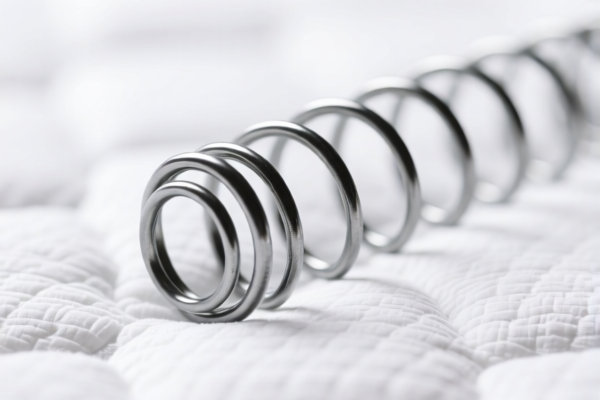
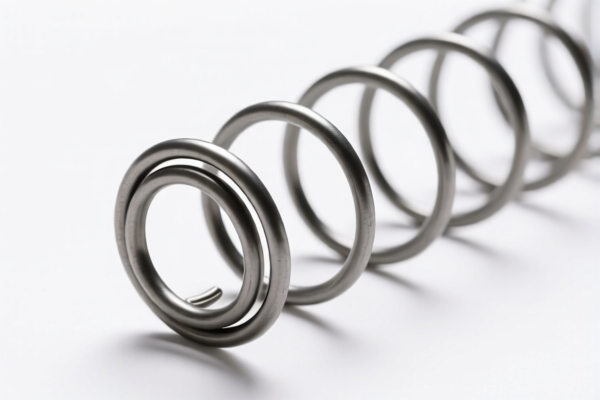
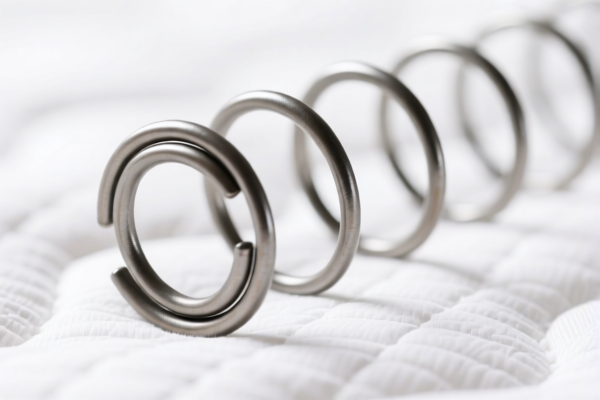
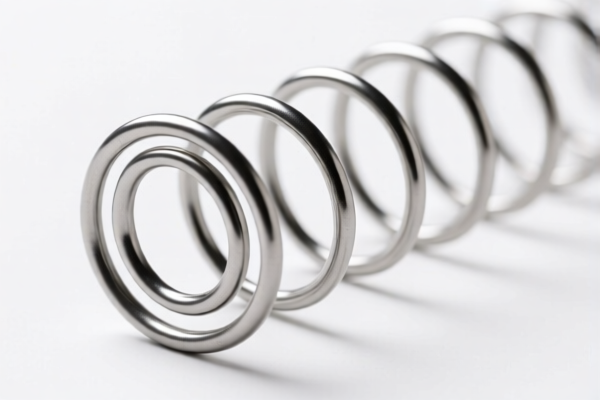
AI Analysis
🛏️ Spring Mattress & Related Components (HS Code Analysis & Clearance Guide)
🌐 HS Code Reference & Customs Clearance Guide | 2026 Latest Tariff Rates | Professional Strategy for U.S. Imports
📌 I. Product Definition & Classification: What Exactly Are We Importing?
The term "Spring Mattress" in international trade often triggers confusion because it can refer to the final consumer product (the bed you sleep on) or its internal components (the springs themselves). The Harmonized System (HS) distinguishes strictly between finished goods and parts/parts.
Key Distinctions: 1. Finished Spring Mattress: A complete bedding article. If the primary material is foam plastic, it falls under Chapter 94. If it is an inflatable mattress (often confused with spring beds if made of plastic with air chambers), it falls under Chapter 39. 2. Mattress Springs: The metal coils inside a mattress. These are classified as articles of iron or steel. 3. Plastic/Inflatable Mattresses: Often mislabeled as "spring" mattresses by non-experts if they have internal plastic supports. These fall under Chapter 39.
⚠️ Critical Warning:
- Misclassifying a steel spring as a foam mattress (or vice versa) leads to massive tariff discrepancies (from ~12% to ~88%).
- "Spring Mattress" usually implies a foam/latex/feather mattress with springs inside, which is governed by Chapter 94 (Furniture).
- However, if you are importing only the springs or inflatable plastic beds, the code changes completely.
📦 II. HS Code Classification Details (2026 Latest Tariff Alignment)
Based on the provided data, here are the four potential HS Codes, ranging from finished mattresses to components and inflatable alternatives.
| HS Code | Product Description | Classification Logic (from Data) | Material/Shape Conflict |
|---|---|---|---|
9404.21.00.95 |
Mattresses of Foam Plastic or of Cellular Rubber | Matches the form (mattress); assumes material is foam/plastic based on common sense. | ✅ No conflict. This is the standard code for most spring mattresses with foam layers. |
9404.29.90.95 |
Other Mattresses and Bedding | "Mattress" name fits usage; "Other" category acts as a catch-all if material isn't foam. | ✅ No conflict. Used if the mattress has non-foam materials (e.g., latex, feathers) not specified in 9404.21. |
3926.90.75.00 |
Inflatable Mattresses & Plastic Bedding | Matches shape and usage; infers material is plastic or contains plastic (e.g., air beds). | ✅ No conflict. Crucial Distinction: Only for inflatable or pure plastic beds, NOT traditional spring mattresses. |
3926.90.77.00 |
Other Plastic Articles | Matches form/classification; infers mattress contains plastic/synthetic lining. | ✅ No conflict. Another variant for plastic-based bedding. |
7320.10.60.15 |
Springs and Leaves of Iron/Steel (Other) | Product name "Spring" matches material (iron/steel) and form; "Other" category. | ⚠️ High Risk: This is for components (the metal coils), NOT the finished mattress. |
🔍 Key Insight:
- If you are importing a complete, ready-to-use mattress (with springs inside), use9404.21.00.95or9404.29.90.95.
- If you are importing only the metal springs, use7320.10.60.15.
- If you are importing air beds (plastic), use3926.90.75.00.
💰 III. 2026 Latest Tariff Rate Breakdown (Including Duties & Surcharges)
✅ Applicable Country: United States (US)
✅ Origin: China (CN)
✅ Effective Date: Post-November 2025 policies (Section 301, IEEPA)
🎯 1. 9404.21.00.95 — Mattress of Foam Plastic (Most Common for Spring Mattresses)
| Item | Detail |
|---|---|
| Base Tariff | 3.0% (Ad Valorem) |
| Section 301 Surcharge | +25.0% (Standard 301 tariff for Chapter 94) |
| IEEPA Surcharge | +10.0% (China-specific "122 Clause" tariff) |
| Total Tariff Rate | 38.0% |
| Tax Calculation | CIF Value × 38% |
| De Minimis Exemption | ❌ Not Applicable |
| Legal Path | USITC:9404.21.00.95 → 301:9903.88.01 → IEEPA:9903.01.24 |
📌 Explanation:
- This is the most likely code for a standard spring mattress with foam padding.
- The 38% total rate is high due to the combination of base duty and political surcharges.
- No discount is available for "bedding" items from China.
🎯 2. 9404.29.90.95 — Other Mattresses (Non-Foam)
| Item | Detail |
|---|---|
| Base Tariff | 6.0% |
| Section 301 Surcharge | +25.0% |
| IEEPA Surcharge | +10.0% |
| Total Tariff Rate | 41.0% |
| Tax Calculation | CIF Value × 41% |
| De Minimis Exemption | ❌ Not Applicable |
| Legal Path | USITC:9404.29.90.95 → 301:9903.88.01 → IEEPA:9903.01.24 |
📌 Explanation:
- Use this if the mattress is made of latex, feather, or other materials not primarily foam.
- Higher rate (41%) than foam mattresses (38%) due to a higher base duty (6% vs 3%).
🎯 3. 3926.90.75.00 — Inflatable Plastic Mattresses
| Item | Detail |
|---|---|
| Base Tariff | 4.2% |
| Section 301 Surcharge | 0.0% (Plastic articles often have different 301 treatments) |
| IEEPA Surcharge | +10.0% |
| Total Tariff Rate | 14.2% |
| Tax Calculation | CIF Value × 14.2% |
| De Minimis Exemption | ❌ Not Applicable |
| Legal Path | USITC:3926.90.75.00 → IEEPA:9903.01.24 |
📌 Explanation:
- Significantly Lower Tariff (14.2%) compared to foam mattresses.
- Warning: Do NOT use this code for traditional spring mattresses. Misclassification can lead to seizure and penalties. Only use for inflatable beds made of plastic.
🎯 4. 3926.90.77.00 — Other Plastic Articles
| Item | Detail |
|---|---|
| Base Tariff | 2.4% |
| Section 301 Surcharge | 0.0% |
| IEEPA Surcharge | +10.0% |
| Total Tariff Rate | 12.4% |
| Tax Calculation | CIF Value × 12.4% |
| De Minimis Exemption | ❌ Not Applicable |
| Legal Path | USITC:3926.90.77.00 → IEEPA:9903.01.24 |
📌 Explanation:
- Similar to3926.90.75.00but for other plastic bedding items.
- Lowest total rate (12.4%), but again, only for plastic/inflatable goods.
🎯 5. 7320.10.60.15 — Iron/Steel Springs (Components)
| Item | Detail |
|---|---|
| Base Tariff | 3.2% |
| Section 301 Surcharge | +25.0% |
| IEEPA Surcharge | +10.0% |
| Section 232 Surcharge | +50.0% (Steel products) |
| Total Tariff Rate | 88.2% |
| Tax Calculation | CIF Value × 88.2% |
| De Minimis Exemption | ❌ Not Applicable |
| Legal Path | USITC:7320.10.60.15 → 301:9903.88.01 → IEEPA:9903.01.24 → 232:Steel |
📌 Explanation:
- Extremely High Tariff (88.2%).
- This code applies ONLY if you are importing metal springs as raw materials/parts.
- Do NOT use for finished mattresses. If a customs officer determines you are importing "springs" but declared them as "mattresses," you may face audits.
🛠️ IV. Customs Clearance Practical Advice (Avoiding Pitfalls)
✅ 1. Documentation Checklist (Must-Have)
| Document | Required? | Description |
|---|---|---|
| ✅ Product Specification Sheet | ✔️ | Must clearly state: "Spring Mattress with Foam Core" OR "Inflatable Plastic Mattress". |
| ✅ Material Composition Label | ✔️ | e.g., "Cover: Polyester; Filling: Polyurethane Foam; Internal: Steel Coils". |
| ✅ Product Photos | ✔️ | Show the mattress fully assembled, including labels. |
| ✅ Commercial Invoice | ✔️ | Must match the HS Code description exactly. Avoid vague terms like "Bedding." |
| ✅ Certificate of Origin (CO) | ✔️ | Required for determining origin-based surcharges. |
| ✅ Packaging List | ✔️ | Include weight, dimensions, and number of pieces. |
✅ 2. Declaration Strategy (Key Tips)
🔥 "Declare by Material, Not Just Function!"
| Scenario | Correct Declaration | Incorrect Declaration | Consequence |
|---|---|---|---|
| Standard Spring Mattress | 9404.21.00.95 – "Foam Plastic Mattress with Steel Springs" |
"Spring Mattress" | Ambiguous; may be flagged for audit. |
| Inflatable Bed | 3926.90.75.00 – "PVC Inflatable Mattress" |
"Spring Mattress" | Misclassification; high penalty risk. |
| Importing Springs Only | 7320.10.60.15 – "Steel Springs for Mattresses" |
"Mattress Parts" | 88.2% tariff if not specified as springs. |
| Latex Mattress | 9404.29.90.95 – "Other Mattress (Latex)" |
"Foam Mattress" | Wrong base rate (6% vs 3%). |
✅ 3. Special Considerations
| Issue | Advice |
|---|---|
| "Spring" in Name | Do NOT let the word "Spring" mislead you into using Chapter 73 (Steel Articles) unless you are importing only the coils. Finished mattresses go to Chapter 94. |
| Inflatable vs. Spring | Clearly distinguish in documentation. Inflatable beds (Chapter 39) have much lower tariffs (12-14%) but require proof of material (plastic vs. foam). |
| Steel Surcharges | If importing steel springs, remember the 50% Section 232 tariff. This is a steel-specific duty. |
| Pre-Ruling | For large shipments, apply for an Advance Ruling from CBP to confirm the HS Code and avoid post-clearance audits. |
🌍 V. Global Clearance Comparison (2026 Update)
| Market | Recommended HS Code | Total Tariff (China Origin) | Key Requirement |
|---|---|---|---|
| 🇺🇸 USA | 9404.21.00.95 |
38.0% | IEEPA + 301 Duties apply. |
| 🇺🇸 USA (Inflatable) | 3926.90.75.00 |
14.2% | Must prove plastic material. |
| 🇨🇳 China | 9404.21.00.00 |
8% | No additional surcharges. |
| 🇪🇺 EU | 9404.29.90 |
11% | CE Marking if applicable. |
| 🇬🇧 UK | 9404.29.90 |
11% | Post-Brexit rules apply. |
📌 Conclusion:
- The USA market is the most costly for Chinese-origin mattresses due to Section 301 and IEEPA surcharges.
- Inflatable mattresses (Chapter 39) offer a significant tariff advantage (14.2% vs 38%) but require strict material compliance.
- Steel springs (Chapter 73) are prohibitively expensive (88.2%) if imported as components without proper justification.
📌 VI. Common Errors & Pitfalls (Lessons Learned)
❌ Error 1: Declaring a foam mattress as an inflatable plastic bed (3926.90.75.00) to save tax.
👉 Result: Customs inspection reveals foam material → Penalty + Back Tax + Seizure.
❌ Error 2: Declaring finished spring mattresses as steel springs (7320.10.60.15).
👉 Result: 88.2% tariff applies instead of 38% → Massive cost increase.
❌ Error 3: Using vague descriptions like "Bedding" or "Furniture" on the invoice.
👉 Result: CBP assigns a default higher rate or delays shipment for classification review.
✅ Correct Approach:
"Spring Mattress, Polyurethane Foam Core, Steel Coil Support, Polyester Cover, Model XYZ, HS 9404.21.00.95"
🎯 VII. Conclusion: Professional Declaration, Lower Costs
🎯 Key Takeaway:
🔹 "Foam Mattress = Chapter 94 (38%)"
🔹 "Inflatable Mattress = Chapter 39 (14.2%)"
🔹 "Steel Springs = Chapter 73 (88.2%)"
🔹 "Never mix materials in declaration!"
📌 Pro Tip:
If your product is 100% plastic/inflatable, consider re-engineering the product to qualify for Chapter 39 codes to save ~24% in tariffs. If it is a traditional mattress, ensure accurate material breakdown (foam vs. other) to optimize between 9404.21 and 9404.29.
✨ Professional Customs Clearance Starts with Accurate Classification!
💼 Your every cent saved is a cent earned!
Customer Reviews
About HS Code Classification
The Harmonized System (HS) is an internationally standardized nomenclature developed by the World Customs Organization (WCO) to classify traded products. Over 200 countries use the HS system as the basis for customs tariffs, trade statistics, and import/export regulations.
Each HS code follows a hierarchical structure:
- Chapter (2 digits) — Broad category of goods (e.g., Chapter 84: Machinery and Mechanical Appliances)
- Heading (4 digits) — More specific grouping within the chapter
- Subheading (6 digits) — Internationally standardized breakdown, used by all WCO member countries
- National subdivisions (8-10 digits) — Country-specific extensions for further classification, such as US HTSUS 10-digit codes
Correct HS code classification is essential for smooth customs clearance, accurate duty payment, and compliance with trade regulations. Misclassification can lead to customs delays, overpayment of duties, or penalties.
When importing from CN to US, the applicable tariff rates may include:
- Most-Favored-Nation (MFN) rate — The standard duty rate applied to WTO members
- General rate — Applied to countries without trade agreements
- Trade remedy duties — Additional tariffs such as Section 301 (anti-dumping), Section 232 (national security), or countervailing duties
The information provided on this page is for reference purposes only. For official classification, please consult with your local customs authority or a licensed customs broker.