Spring filled Mattress
CN → US| HS Code | Tariff Rate | Origin | Destination | Doc |
|---|---|---|---|---|
| 3926907700 | 12.4% | CN | US | Official Doc |
| 9404210095 | 38.0% | CN | US | Official Doc |
| 9404299095 | 41.0% | CN | US | Official Doc |
| 3926907500 | 14.2% | CN | US | Official Doc |
| 7320106015 | 88.2% | CN | US | Official Doc |
Product Images
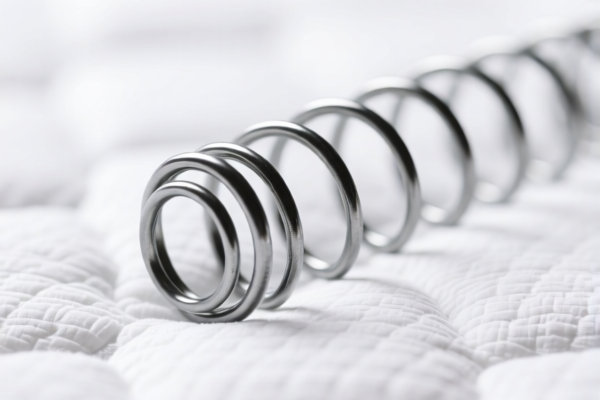
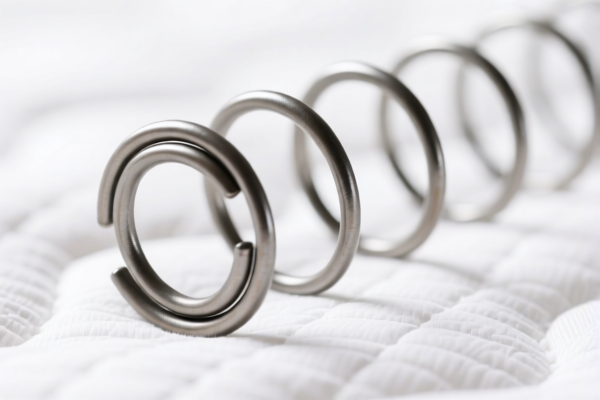
AI Analysis
🛏️ Spring Filled Mattress (Spring Mattress)
🌐 HS Code Reference & Customs Clearance Guide | 2026 Latest Tariff Analysis | Professional Compliance Strategy
📌 I. Product Definition & Classification: What Exactly is a "Spring Mattress"?
A spring mattress is a bedding product that uses steel coils (innerspring) as the primary support system, often combined with foam, latex, or fiber padding. In international trade, classification depends heavily on material composition and specific structural features.
Based on the provided data, four potential HS Codes are identified for import into the US from China. The key differentiator is the primary material or specific form (e.g., inflatable vs. solid foam).
⚠️ Critical Classification Insight:
- Spring-only or Spring+Fabric/Foam: Generally falls under Chapter 94 (Furniture).
- Inflatable/Air Mattress: Falls under Chapter 39 (Plastics).
- Material Ambiguity: If the material is not explicitly defined, customs may apply "fallback" categories based on common sense (e.g., assuming plastic components in modern mattresses), which can drastically change tax rates.
📦 II. HS Code Classification Details (2026 Latest Tariff Data)
| HS Code | Product Description | Matching Logic & Material Inference |
|---|---|---|
| 3926.90.77.00 | Other plastic articles | Match: Form (Mattress) aligns with use. Material: Common sense infers plastic/synthetic backing or components. No material conflict. |
| 9404.21.00.95 | Mattresses with cellular rubber or plastic | Match: Form (Mattress) aligns. Material: Infers foam plastic or plastic core (fits "other" category logic). |
| 9404.29.90.95 | Other bedding articles | Match: Name "Mattress" fits scope. Material: If unspecified, uses "fallback" rule. Infers material doesn't conflict with "other materials." |
| 3926.90.75.00 | Inflatable mattresses | Match: Name "Mattress" implies air-filled nature. Material: Infers plastic content (e.g., PVC/TPU for inflatable mattresses). Fits "other inflatable articles." |
🔍 Key Observation:
- The data includes two distinct categories: Plastic/Inflatable (Ch. 39) and Furniture/Mattress (Ch. 94).
- Tax Disparity: Plastic/Inflatable options (3926) have significantly lower taxes (12.4% - 14.2%) compared to Furniture options (9404) (38.0% - 41.0%).
- ⚠️ Risk: If your product is a traditional steel-spring mattress (not inflatable), classifying it under 3926 may be challenged by customs unless strong evidence of plastic dominance exists.
💰 III. 2026 Latest Tariff Rate Breakdown (Including Duties & Surcharges)
✅ Applicable Country: United States (US)
✅ Country of Origin: China (CN)
✅ Effective Date: Post-2025 (Current data reflects latest surcharges)
🎯 1. 3926.90.77.00 — Other Plastic Articles (Plastic Backing/Components)
| Item | Detail |
|---|---|
| Base Duty | 2.4% |
| Section 301 Surcharge | 0.0% |
| Section 122 Surcharge | 10.0% |
| Total Tax Rate | 12.4% |
| Calculation | CIF Value × 12.4% |
| De Minimis Exemption | ❌ Not Eligible (Due to Section 301/122 surcharges) |
| Legal Path | HTSUS 3926.90.77.00 → Section 122 (10%) |
📌 Explanation:
- This is the most tax-efficient option among the matches.
- Section 122 applies a 10% surcharge on certain Chinese goods.
- No Section 301 (25%) applies here, which is rare for Chinese furniture.
🎯 2. 9404.21.00.95 — Mattresses with Cellular Rubber or Plastic
| Item | Detail |
|---|---|
| Base Duty | 3.0% |
| Section 301 Surcharge | 25.0% |
| Section 122 Surcharge | 10.0% |
| Total Tax Rate | 38.0% |
| Calculation | CIF Value × 38.0% |
| De Minimis Exemption | ❌ Not Eligible |
| Legal Path | HTSUS 9404.21.00.95 → Section 301 (25%) + Section 122 (10%) |
📌 Explanation:
- Section 301 (25%) is the dominant cost driver.
- Applies to mattresses with significant plastic/foam cores.
🎯 3. 9404.29.90.95 — Other Mattresses (Fallback Category)
| Item | Detail |
|---|---|
| Base Duty | 6.0% |
| Section 301 Surcharge | 25.0% |
| Section 122 Surcharge | 10.0% |
| Total Tax Rate | 41.0% |
| Calculation | CIF Value × 41.0% |
| De Minimis Exemption | ❌ Not Eligible |
| Legal Path | HTSUS 9404.29.90.95 → Section 301 (25%) + Section 122 (10%) |
📌 Explanation:
- Highest Tax Rate in the furniture category.
- Used when specific material (like foam/plastic core) isn't clearly defined.
- High risk of customs audit if documentation is vague.
🎯 4. 3926.90.75.00 — Inflatable Mattresses (Plastic)
| Item | Detail |
|---|---|
| Base Duty | 4.2% |
| Section 301 Surcharge | 0.0% |
| Section 122 Surcharge | 10.0% |
| Total Tax Rate | 14.2% |
| Calculation | CIF Value × 14.2% |
| De Minimis Exemption | ❌ Not Eligible |
| Legal Path | HTSUS 3926.90.75.00 → Section 122 (10%) |
📌 Explanation:
- Second most tax-efficient option.
- Only applies if the mattress is inflatable (air-filled).
- Critical Warning: If you ship a traditional steel-spring mattress but declare it as "inflatable," you face fraud penalties. Only use if the product is genuinely an air mattress.
🛠️ IV. Customs Clearance Practical Advice (Avoiding Pitfalls)
✅ 1. Documentation Checklist (Mandatory)
| Document | Required | Notes |
|---|---|---|
| Product Spec Sheet | ✔️ | Must specify: Material composition (steel, foam, plastic), type (innerspring, inflatable, foam), dimensions. |
| Product Photos | ✔️ | Clear images of the mattress, labels, and internal structure (if possible). |
| Commercial Invoice | ✔️ | Must match HS Code description precisely. Avoid generic "Mattress" if specific type is known. |
| Packing List | ✔️ | Detail contents to avoid "missing item" flags. |
| Material Declaration | ✔️ | Critical for distinguishing between Ch. 39 (Plastic) and Ch. 94 (Furniture). |
✅ 2. Declaration Strategy (Key Tips)
🔥 "Match Material, Not Just Name!"
| Product Type | Recommended HS Code | Risk if Mislabeled |
|---|---|---|
| Inflatable Air Mattress | 3926.90.75.00 (14.2%) |
If declared as 9404, you pay ~25% more tax. |
| Foam/Plastic-Core Mattress | 9404.21.00.95 (38.0%) |
If declared as 3926, risk of customs seizure for misclassification. |
| Traditional Steel-Spring Mattress | 9404.29.90.95 (41.0%) |
Most likely outcome. High tax. Consider design changes to qualify for lower rates. |
| Mattress with Plastic Backing | 3926.90.77.00 (12.4%) |
Only if plastic is primary component. Risky if steel springs dominate. |
✅ 3. Special Cases & Exemptions
| Situation | Advice |
|---|---|
| OEM/Custom Design | Provide detailed material breakdown. If >50% plastic by weight/value, argue for Ch. 39. |
| Mixed Materials | Customs usually classifies based on essential character. For spring mattresses, steel springs often define "essential character," pushing to Ch. 94. |
| Section 301 Exclusions | Check if your specific product type was excluded from Section 301 (25%). Most mattresses are not excluded. |
| Section 122 | Applies to all Chinese-origin goods listed in Section 122. No exemption for mattresses. |
🌍 V. Global Market Comparison (2026)
| Country/Region | Recommended HS Code | Total Tax (China Origin) | Key Certification | Notes |
|---|---|---|---|---|
| 🇺🇸 USA | 9404.29.90.95 or 3926.90.77.00 |
12.4% - 41.0% | N/A | High surcharges (301+122). |
| 🇨🇳 China | 9404.29.90.95 |
~10% | N/A | Lower base duty. |
| 🇪🇺 EU | 9404.29 |
~5-7% | CE (if applicable) | No Section 301 equivalent. |
| 🇬🇧 UK | 9404.29 |
~5-7% | UKCA | Post-Brexit rules. |
📌 Conclusion:
- USA is the most expensive market for Chinese mattresses due to Section 301 (25%) and Section 122 (10%).
- Cost Optimization: If possible, modify product design to qualify for Chapter 39 (e.g., emphasize plastic components or inflatable nature) IF COMPLIANT. Otherwise, budget for 38-41% tax.
📌 VI. Common Mistakes & Pitfalls (Lessons Learned)
❌ Mistake 1: Declaring a steel-spring mattress as "Inflatable" (3926.90.75.00)
👉 Consequence: Customs inspection reveals steel springs → Misclassification penalty, back taxes, potential fraud charges.
❌ Mistake 2: Ignoring Section 122 (10%)
👉 Consequence: Underpaying duties by 10% → Interest and penalties.
❌ Mistake 3: Using generic "Mattress" on Invoice without material detail
👉 Consequence: Customs assigns "fallback" code (9404.29.90.95) with highest tax (41%) → Unnecessary cost increase.
✅ Correct Approach:
"Innerspring Mattress, Steel Coil Core, Foam Padding, Fabric Cover, Non-Inflatable, Model XYZ, Made in China"
🎯 VII. Conclusion: Professional Classification, Cost Efficiency!
🎯 Remember:
🔹 "Inflatable? Go Ch. 39 (14.2%). Foam/Plastic Core? Go Ch. 94 (38%). Steel Core? Go Ch. 94 (41%)."
🔹 "Don't guess material. Document it. A misclassification costs 25%+ in taxes."
🔹 "Section 301 and Section 122 are non-negotiable. Plan your margins accordingly."
📌 Pro Tip:
If your product is 100% foam with no steel springs, ensure it's classified under 9404.21 (38%) rather than 9404.29 (41%). Even a 3% difference adds up on large shipments.
For inflatable mattresses, prove compliance with Ch. 39 to save ~24% vs. furniture classification.
📣 Immediate Action:
📞 Consult a Customs Broker: Confirm if your specific mattress design qualifies for Ch. 39.
📄 Prepare Detailed Specs: Material breakdown is your best defense against audits.
💰 Calculate Landed Cost: Include 12.4%-41% tax in your pricing model.
✨ Professional Classification Starts with Accuracy!
💼 Every percent saved is pure profit.
Customer Reviews
About HS Code Classification
The Harmonized System (HS) is an internationally standardized nomenclature developed by the World Customs Organization (WCO) to classify traded products. Over 200 countries use the HS system as the basis for customs tariffs, trade statistics, and import/export regulations.
Each HS code follows a hierarchical structure:
- Chapter (2 digits) — Broad category of goods (e.g., Chapter 84: Machinery and Mechanical Appliances)
- Heading (4 digits) — More specific grouping within the chapter
- Subheading (6 digits) — Internationally standardized breakdown, used by all WCO member countries
- National subdivisions (8-10 digits) — Country-specific extensions for further classification, such as US HTSUS 10-digit codes
Correct HS code classification is essential for smooth customs clearance, accurate duty payment, and compliance with trade regulations. Misclassification can lead to customs delays, overpayment of duties, or penalties.
When importing from CN to US, the applicable tariff rates may include:
- Most-Favored-Nation (MFN) rate — The standard duty rate applied to WTO members
- General rate — Applied to countries without trade agreements
- Trade remedy duties — Additional tariffs such as Section 301 (anti-dumping), Section 232 (national security), or countervailing duties
The information provided on this page is for reference purposes only. For official classification, please consult with your local customs authority or a licensed customs broker.