Sprout Inhibitor Mixture
CN → US| HS Code | Tariff Rate | Origin | Destination | Doc |
|---|---|---|---|---|
| 3809921000 | 41.5% | CN | US | Official Doc |
| 3824999397 | 40.0% | CN | US | Official Doc |
| 3808935040 | 40.0% | CN | US | Official Doc |
| 3809925000 | 41.0% | CN | US | Official Doc |
| 3824890000 | 41.5% | CN | US | Official Doc |
Product Images
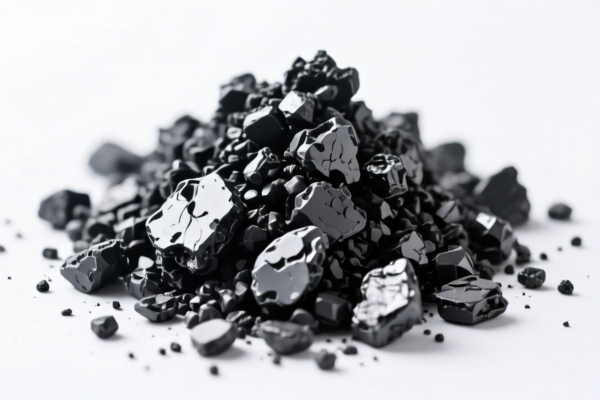
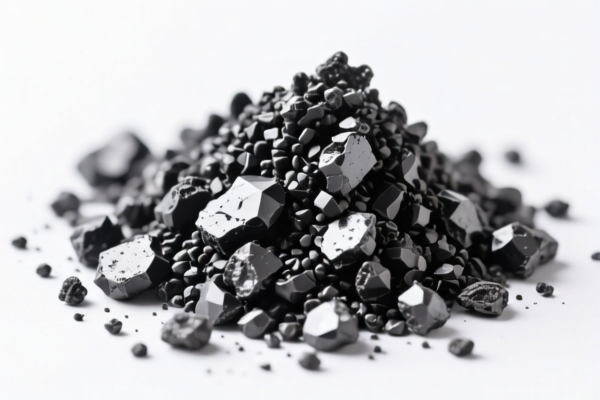
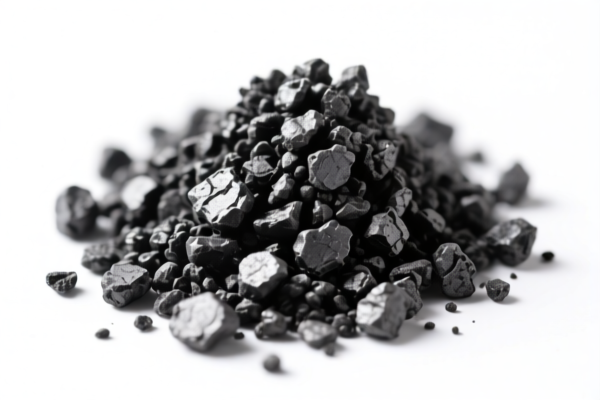
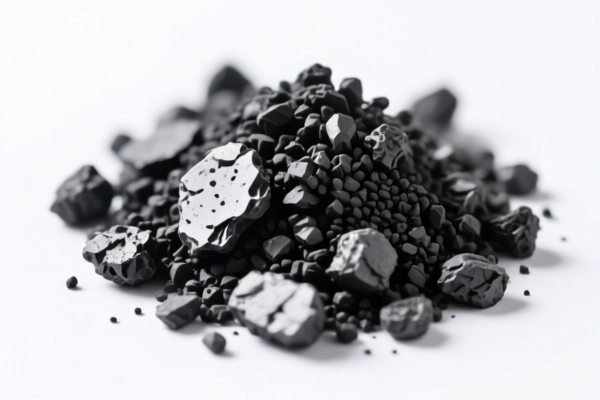
AI Analysis
🥔 Sprout Inhibitor Mixture (Chemical Additive for Agriculture/Storage)
🌐 HS Code Reference & Customs Clearance Guide | 2026 Latest Tariff Analysis | Professional Import Strategy for US Market
📌 1. Product Definition: What is a "Sprout Inhibitor Mixture"?
A Sprout Inhibitor Mixture is a specialized chemical preparation used primarily in the storage and transport of agricultural products, such as potatoes, onions, and garlic. Its core function is to prevent vegetative growth (sprouting) during long-term storage.
In international trade, these mixtures are classified based on their primary function and chemical composition. They generally fall under two main categories: 1. Chemical Preparations for Preservation/Pest Control (Ch. 3808/3824): If the product is a non-specific chemical mixture designed to inhibit sprouting. 2. Industrial/Merchandise Preparations (Ch. 3809): If explicitly marketed as an "industrial dressing aid" or similar, though less common for sprout inhibitors.
⚠️ Critical Distinction:
- If the product is primarily a pesticide/fungicide/germinator → Likely Chapter 3808 or 3824.
- If it is a general chemical mixture without specific pesticidal claims → Likely Chapter 3824.
- Note: The specific HS codes provided in the data below reflect US customs interpretations for these chemical mixtures.
📦 2. HS Code Classification Matrix (2026 Latest Tariff Alignment)
| HS Code | Product Description | Key Justification from Data | Tax Implication |
|---|---|---|---|
3808.93.50.40 |
Anti-sprouting Product | Explicitly categorized under "anti-sprouting products"; matches functional description with no material conflict. | 40.0% |
3824.99.93.97 |
Chemical Mixture (Other) | Classified as a chemical product/preparation; generic "other" category for chemical mixtures. | 40.0% |
3809.92.50.00 |
Chemical Preparation (General) | Categorized under "other products and preparations"; fits the "additive mixture" definition under residual clauses. | 41.0% |
3809.92.10.00 |
Industrial Aid/Preparation | Viewed as a chemical preparation for industrial finishing/processing; no material conflict. | 41.5% |
3824.89.00.00 |
Chemical Additive (SCCPs) | Contains short-chain chlorinated paraffins (SCCPs) or similar chemical additives; falls under chemical制品. | 41.5% |
🔍 Key Insight:
- Lowest Risk/Tax:3808.93.50.40and3824.99.93.97both carry a 40.0% total tax rate.
- Highest Risk/Tax:3809.92.10.00and3824.89.00.00carry a 41.5% total tax rate.
- Why the Difference? The 1.5% difference stems from the base tariff rate (5.0% vs. 6.5%) before adding the mandatory surcharges.
💰 3. 2026 Tariff Rate Breakdown (Detailed Tax Analysis)
✅ Applicable Country: United States (US)
✅ Origin: China (CN)
✅ Effective Date: November 10, 2025 onwards
🎯 1. The 40.0% Total Tax Category
HS Codes: 3808.93.50.40 & 3824.99.93.97
| Item | Detail |
|---|---|
| Base Duty Rate | 5.0% (ad valorem) |
| Section 301 Surcharge | +25.0% (USITC Footnote 9903.88.01 equivalent for Ch. 38) |
| IEEPA Surcharge | +10.0% (China-specific, effective Nov 2025) |
| Total Effective Rate | 40.0% |
| Calculation | CIF Value × 40.0% |
| De Minimis Eligibility | ❌ No (Deny De Minimis) |
📌 Explanation:
- The 5.0% base is the standard MFN tariff for most chemical preparations in Chapters 3808 and 3824.
- The 25% Section 301 tariff is mandatory for Chinese-made chemicals in this category.
- The 10% IEEPA tariff is a new layer applied to specific Chinese imports.
- Total = 5% + 25% + 10% = 40%.
🎯 2. The 41.0% Total Tax Category
HS Code: 3809.92.50.00
| Item | Detail |
|---|---|
| Base Duty Rate | 6.0% (ad valorem) |
| Section 301 Surcharge | +25.0% |
| IEEPA Surcharge | +10.0% |
| Total Effective Rate | 41.0% |
| Calculation | CIF Value × 41.0% |
📌 Explanation:
- Chapter 3809 (Preparations for use in Textile, Paper, or Leather Industries) often has a slightly higher base duty (6.0%) compared to general chemical mixtures (5.0%).
- This makes it $1 more expensive per $100 CIF value than the 40% category.
🎯 3. The 41.5% Total Tax Category
HS Codes: 3809.92.10.00 & 3824.89.00.00
| Item | Detail |
|---|---|
| Base Duty Rate | 6.5% (ad valorem) |
| Section 301 Surcharge | +25.0% |
| IEEPA Surcharge | +10.0% |
| Total Effective Rate | 41.5% |
| Calculation | CIF Value × 41.5% |
📌 Explanation:
-3809.92.10.00(Industrial Dressing Aids) and3824.89.00.00(Chemical Products with SCCPs) have a higher base duty of 6.5%.
- This is the highest tax bracket among the options.
- Risk Alert: If your product contains Short-Chain Chlorinated Paraffins (SCCPs), it may automatically fall into3824.89.00.00due to environmental regulations, even if you intended a different classification.
🛠️ 4. Customs Clearance Strategy (Practical Tips)
✅ 1. Documentation Checklist (Non-Negotiable)
| Document | Required? | Purpose |
|---|---|---|
| Safety Data Sheet (SDS) | ✔️ Mandatory | Proves chemical composition; critical for determining if SCCPs are present. |
| Statement of Ingredients | ✔️ Mandatory | Helps CBP determine the exact HS Code (e.g., is it a pesticide or a general mixture?). |
| Product Label/Photo | ✔️ Mandatory | Must clearly state "Sprout Inhibitor" and list active ingredients. |
| Commercial Invoice | ✔️ Mandatory | Must describe the product accurately (avoid vague terms like "Chemical Mix"). |
| Certificate of Origin | ✔️ Mandatory | Required to apply Section 301 tariffs (China origin). |
| FDA/USDA Pre-Approval (if applicable) | ✔️ Conditional | If used on food crops, may require USDA or EPA registration. |
✅ 2. Declaration Best Practices
🔥 "Declare by Function, Not Just Name"
| Scenario | Recommended HS Code | Reason |
|---|---|---|
| Pure Anti-Sprouting Agent | 3808.93.50.40 |
Most accurate functional description; lowest tax (40%). |
| General Chemical Mixture | 3824.99.93.97 |
If functional claim is weak; safe fallback (40%). |
| Contains SCCPs | 3824.89.00.00 |
Mandatory if SCCPs are present; high tax (41.5%). |
| Textile/Industrial Aid | 3809.92.10.00 |
Only if explicitly used in textile/leather processing; high tax (41.5%). |
📌 Warning:
- Do not misdeclare a sprout inhibitor as a "fertilizer" or "plant food." CBP has specific databases for agricultural chemicals.
- If the product contains bromopropionate or chlorpropham, ensure it is registered with the EPA if used on food crops.
✅ 3. Cost Optimization Tips
- Aim for 40.0%: Try to classify under
3808.93.50.40or3824.99.93.97. - Avoid 41.5%: Ensure your product does not contain Short-Chain Chlorinated Paraffins (SCCPs) if you want to avoid
3824.89.00.00. - Pre-Ruling: File an Advance Ruling with US CBP if the composition is complex. This prevents post-clearance audits and penalties.
🌍 5. Global Market Comparison (2026)
| Market | Recommended HS Code | Estimated Duty (China Origin) | Notes |
|---|---|---|---|
| 🇺🇸 USA | 3808.93.50.40 |
40.0% | High tariffs due to Section 301 + IEEPA. |
| 🇨🇳 China | 3808.93.50.40 |
~10-15% | Domestic tax applies; no Section 301. |
| 🇪🇺 EU | 3808.93 |
~6.5% | No major surcharges for agricultural chemicals (unless specific bans apply). |
| 🇬🇧 UK | 3808.93 |
~6.5% | Post-Brexit tariffs mirror EU. |
📌 Conclusion:
- The US market is the most expensive for importing sprout inhibitors due to layered tariffs.
- Cost Impact: A $10,000 CIF shipment could incur $4,000–$4,150 in duties. Plan cash flow accordingly.
📌 6. Common Mistakes & Pitfalls (Learn from Others)
❌ Mistake 1: Declaring as "Fertilizer" to avoid higher duties
👉 Result: CBP rejects the declaration; product held; fines applied.
👉 Fix: Use accurate functional description: "Sprout Inhibitor Chemical."
❌ Mistake 2: Ignoring SCCP Content
👉 Result: Misclassified under 3824.99.93.97 instead of 3824.89.00.00; leads to back-taxes + penalties.
👉 Fix: Check SDS for SCCPs. If present, use 3824.89.00.00.
❌ Mistake 3: Vague Invoice Description
👉 Result: "Chemical Mixture" – CBP assigns highest duty (41.5%) due to lack of specificity.
👉 Fix: Use "Sprout Inhibitor for Potatoes" or "Anti-Sprouting Agent."
✅ Correct Declaration Example:
"Sprout Inhibitor Mixture for Agricultural Use (Potatoes), Chemical Composition: [List Ingredients], HS Code: 3808.93.50.40"
🎯 7. Final Recommendations
🎯 Action Plan:
1. Verify Ingredients: Check if SCCPs are present.
2. Select HS Code:
- No SCCPs + Functional Claim → 3808.93.50.40 (40%)
- No SCCPs + No Functional Claim → 3824.99.93.97 (40%)
- Contains SCCPs → 3824.89.00.00 (41.5%)
3. Prepare SDS: Ensure it is up-to-date and matches the declaration.
4. Consult Customs Broker: For complex mixtures, file an Advance Ruling.
📢 Pro Tip:
If you are shipping to the US, budget 40% of the CIF value for duties. This is not negotiable for Chinese-origin goods in this category.
✨ Professional Customs Clearance Starts with Accurate Classification!
💼 Your Profit Margin Depends on It!
Customer Reviews
About HS Code Classification
The Harmonized System (HS) is an internationally standardized nomenclature developed by the World Customs Organization (WCO) to classify traded products. Over 200 countries use the HS system as the basis for customs tariffs, trade statistics, and import/export regulations.
Each HS code follows a hierarchical structure:
- Chapter (2 digits) — Broad category of goods (e.g., Chapter 84: Machinery and Mechanical Appliances)
- Heading (4 digits) — More specific grouping within the chapter
- Subheading (6 digits) — Internationally standardized breakdown, used by all WCO member countries
- National subdivisions (8-10 digits) — Country-specific extensions for further classification, such as US HTSUS 10-digit codes
Correct HS code classification is essential for smooth customs clearance, accurate duty payment, and compliance with trade regulations. Misclassification can lead to customs delays, overpayment of duties, or penalties.
When importing from CN to US, the applicable tariff rates may include:
- Most-Favored-Nation (MFN) rate — The standard duty rate applied to WTO members
- General rate — Applied to countries without trade agreements
- Trade remedy duties — Additional tariffs such as Section 301 (anti-dumping), Section 232 (national security), or countervailing duties
The information provided on this page is for reference purposes only. For official classification, please consult with your local customs authority or a licensed customs broker.