Spruce Fir Wood Telephone Poles
CN → US| HS Code | Tariff Rate | Origin | Destination | Doc |
|---|---|---|---|---|
| 4407120059 | 35.0% | CN | US | Official Doc |
| 4403230112 | 35.0% | CN | US | Official Doc |
| 4404100080 | 35.0% | CN | US | Official Doc |
| 4407120020 | 35.0% | CN | US | Official Doc |
| 4403240112 | 35.0% | CN | US | Official Doc |
Product Images
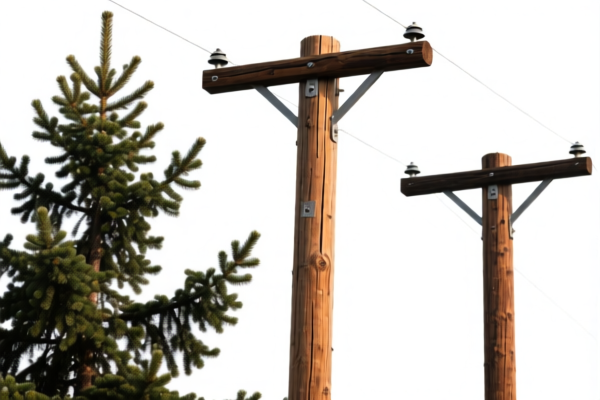
AI Analysis
🌲 Spruce & Fir Wood Telephone Poles (Power/Pole Piles)
🌐 HS Code Reference & Clearance Guide | 2026 Latest Tariff Analysis | Professional Customs Strategy
📌 Part 1: Product Definition & Classification: What Exactly Are "Spruce/Fir Poles"?
Spruce and Fir wood telephone poles are critical infrastructure components used in power transmission, telecommunications, and electrical grid support. In international trade, these are classified based on their processing level and specific end-use.
These products fall under Chapter 44 (Wood and Articles of Wood), specifically targeting prepared wood products. The key distinction lies in whether they are treated as raw processed timber, specific utility poles, or general timber products.
⚠️ Critical Distinction:
- If the wood is seasoned, debarked, and shaped into a pole/pile → It is often classified under 4403 or 4404.
- If the wood is sawn, planed, or otherwise worked but not fully finished as a specific "pole" in some interpretations, it may fall under 4407.
- Note: The provided data highlights multiple valid HS Codes for similar items due to nuances in "shape" vs. "use" vs. "processing method."
📦 Part 2: HS Code Classification Details (2026 Latest Tariff Authority对照)
Based on the provided data, here are the specific HS Codes applicable to Spruce/Fir Wood Poles:
| HS Code | Product Description (Summary) | Key Characteristics | Processing State |
|---|---|---|---|
| 4407.12.00.59 | Spruce/Fir Wood Pole, Needle-leaved Wood, Wood Processing Product | Broad category for worked wood; emphasis on material and processing. | Sawn/Worked |
| 4403.23.01.12 | Spruce/Fir Wood Pole, Needle-leaved Wood, Use: Electric Power Pole | Specific end-use classification for power lines. | Treated/Poled |
| 4404.10.00.80 | Spruce/Fir Wood Pole, Needle-leaved Wood, Shape: Pole, Pile, Post | Classification based on physical shape (long cylindrical form). | Shaped/Seasoned |
| 4407.12.00.20 | Spruce/Fir Wood Pole, Needle-leaved Wood, Use: Wood Processing Utilization | General utilization code for processed timber products. | Sawn/Worked |
| 4403.24.01.12 | Spruce/Fir Wood Pole, Needle-leaved Wood, Use: Phone, Telegraph, Electric Pole | Specific end-use for telecommunications and power poles. | Treated/Poled |
🔍 Key Reminder:
- All listed codes share the same Total Tax Rate of 35.0% for China-origin goods destined for the US (based on the provided data).
- The distinction between4403(Prepared wood) and4407(Sawn wood) and4404(Wood charcoal/processed shapes) can trigger different海关 (Customs) scrutiny levels.
- End-use matters: Code4403.24.01.12explicitly mentions "Phone, Telegraph," while4403.23.01.12mentions "Electric Power." Mislabeling can cause delays.
💰 Part 3: 2026 Latest Tariff Rate Details (Including Surtaxes & Policy Add-ons)
✅ Applicable Country: United States (US)
✅ Country of Origin: China (CN)
✅ Effective Date: Current (Based on provided data snapshot)
🎯 Universal Tax Breakdown for All Listed HS Codes
| Item | Content |
|---|---|
| Base Tariff Rate | 0.0% (Ad Valorem) |
| Section 301 Surcharge | +25.0% (Additional Tariff) |
| Section 122 Tariff | +10.0% (Specific China Tariff) |
| Total Tariff Rate | 35.0% |
| Tax Calculation | CIF Value × 35% |
| De Minimis Exemption | ❌ Not Applicable (High tariff rates generally exclude this from de minimis benefits) |
📌 Explanation:
- "Base Tariff 0%": Needle-leaved wood products often have low base MFN rates.
- "Section 301 25%": The most significant cost driver. Applies to most Chinese-origin wood products under HTSUS 4403, 4404, 4407.
- "Section 122 10%": A specific additional duty targeting Chinese imports.
- Total 35%: This is a high barrier. Importers must factor this into landed cost calculations immediately.
🛠️ Part 4: Clearance Operational Advice (Practical Pitfall Avoidance)
✅ 1. Required Documentation Checklist (Essential)
| Document | Mandatory | Explanation |
|---|---|---|
| ✅ Product Specification Sheet | ✔️ | Must detail: Species (Spruce/Fir), Dimensions, Treatment Type (e.g., Creosote, Copper Azole), Length, Taper. |
| ✅ Certificate of Origin (CO) | ✔️ | Crucial for proving CN origin; may need notarization. |
| ✅ Treatment Certificate | ✔️ | Critical: Wood poles are often treated with preservatives. Must declare chemical contents for safety (MSDS may be required). |
| ✅ Commercial Invoice | ✔️ | Clearly state "Spruce/Fir Wood Poles for Electrical/Telecom Use." Do not use vague terms like "Wood Logs." |
| ✅ Packing List | ✔️ | Detail weight, volume, and number of poles per bundle/container. |
| ✅ ISPM 15 Phytosanitary Mark | ✔️ | Non-negotiable: Wood packaging/material must be heat-treated or fumigated and marked. |
✅ 2. Declaration Tips (Key Mantras)
🔥 “Species Clear, Treatment Declared, Use Specific, Rate Accurate!”
| Scenario | Correct Declaration Approach | Wrong Approach |
|---|---|---|
| Poles for Power Lines | HS Code 4403.23.01.12 |
Using generic "Wood Piles" → Risk of misclassification |
| Poles for Telecom | HS Code 4403.24.01.12 |
Using "Power Pole" code → Audit flag |
| Raw Shaped Poles | HS Code 4404.10.00.80 |
Declaring as "Sawn Timber" → Wrong chapter |
| Treated Wood | Explicitly state "Pressure Treated" | Omitting treatment info → CBP Holds for PMO (Phytosanitary/Chemical) |
✅ 3. Special Cases Handling
| Situation | Handling Advice |
|---|---|
| Chemical Treatment | If treated with Creosote or Copper-based compounds, ensure MSDS is available. Some chemicals may trigger EPA or DOT regulations. |
| Mixed Bundles | If poles of different species are packed together, use the highest tariff or clarify per HS Code. Avoid mixing Spruce/Fir with non-needle woods without clear separation. |
| Damaged/Wet Wood | CBP may reject wood with mold, rot, or excessive moisture. Ensure wood is seasoned and meets ISPM 15 standards. |
| Origin Confusion | If poles are sourced from Canada/USA but processed in China, they may still be "Chinese Origin." Provide clear supply chain documentation. |
🌍 Part 5: Global Market Comparison (2026 Latest)
| Country/Region | Recommended HS Code | Tariff (China Origin) | Key Requirements | Notes |
|---|---|---|---|---|
| 🇺🇸 United States | 4403.23.01.12 / 4404.10.00.80 |
35% (0% Base + 25% Sec 301 + 10% Sec 122) | ISPM 15, MSDS (if treated) | Highest Cost: 35% total tax is a major barrier. |
| 🇨🇳 China | 4403.23.01.12 |
Varies (Export Duty may apply) | Phytosanitary Certificate | Export regulations for wood products. |
| 🇪🇺 European Union | 4407.12.00 |
~20% (Standard MFN) | FSC Certification, EUTR Compliance | No Section 301; but strict environmental rules. |
| 🇦🇺 Australia | 4404.10.00 |
~5-10% | Biosecurity Approval (BA) | Strict biosecurity checks on wood imports. |
📌 Conclusion:
- US Market: The 35% total tariff is the defining challenge. Importers must absorb this cost or negotiate price reductions with suppliers.
- Documentation: The Treatment Certificate and ISPM 15 Mark are the most common causes of US customs delays for wood products.
📌 Part 6: Common Mistakes & Pitfalls (Blood Lessons)
❌ Mistake 1: Declaring "Wood Logs" instead of "Processed Poles"
👉 Consequence: Misclassification → Penalty + Backdated Tariffs.
❌ Mistake 2: Ignoring the Treatment Chemicals
👉 Consequence: CBP Halts Shipment for EPA/DOT Review → Demurrage Costs Spiral.
❌ Mistake 3: Using Incorrect HS Code for "Use"
👉 Consequence: Confusion between 4403.23 (Power) and 4403.24 (Telecom). While tax is same, audit risk increases.
❌ Mistake 4: No ISPM 15 Mark on Wood Packaging
👉 Consequence: Immediate Rejection/Return of cargo.
✅ Correct Practice:
"Spruce/Fir Wood Poles, Pressure-Treated, ISPM 15 Marked, Used for Electrical Transmission, Model XYZ, Treated with Copper Azole"
🎯 Part 7: Conclusion: Professional Declaration, Save Costs, Ensure Smooth Clearance!
🎯 Remember the Mantra:
🔹 "Species Specific, Treatment Declared, ISPM 15 Present, 35% Tax Ready!"
🔹 "HS Code Dictates Duty, 35% is the Cost of China-Origin Wood, Prep is Key!"
📌 Pro Tip:
If your poles are sourced from non-Chinese origins (e.g., Canada, USA, New Zealand), you may avoid the 25% Section 301 and 10% Section 122 tariffs, reducing the total tax to 0%.
👉 Action: Verify the Country of Origin carefully! If the trees are grown and harvested in Canada, and processed there, you may qualify for 0% duty.
📣 Immediate Action:
📞 Contact a licensed US Customs Broker + Provide MSDS for Treatment Chemicals + Ensure ISPM 15 Marking
🚀 Let your Spruce/Fir Poles clear smoothly, avoid delays, and protect your margins!
✨ Professional Clearance Starts with Accurate Classification!
💼 Your Every Dollar of Tax is Worth Calculating Precisely!
Customer Reviews
About HS Code Classification
The Harmonized System (HS) is an internationally standardized nomenclature developed by the World Customs Organization (WCO) to classify traded products. Over 200 countries use the HS system as the basis for customs tariffs, trade statistics, and import/export regulations.
Each HS code follows a hierarchical structure:
- Chapter (2 digits) — Broad category of goods (e.g., Chapter 84: Machinery and Mechanical Appliances)
- Heading (4 digits) — More specific grouping within the chapter
- Subheading (6 digits) — Internationally standardized breakdown, used by all WCO member countries
- National subdivisions (8-10 digits) — Country-specific extensions for further classification, such as US HTSUS 10-digit codes
Correct HS code classification is essential for smooth customs clearance, accurate duty payment, and compliance with trade regulations. Misclassification can lead to customs delays, overpayment of duties, or penalties.
When importing from CN to US, the applicable tariff rates may include:
- Most-Favored-Nation (MFN) rate — The standard duty rate applied to WTO members
- General rate — Applied to countries without trade agreements
- Trade remedy duties — Additional tariffs such as Section 301 (anti-dumping), Section 232 (national security), or countervailing duties
The information provided on this page is for reference purposes only. For official classification, please consult with your local customs authority or a licensed customs broker.