Spruce Lumber
CN → US| HS Code | Tariff Rate | Origin | Destination | Doc |
|---|---|---|---|---|
| 4403240135 | 35.0% | CN | US | Official Doc |
| 4401110000 | 35.0% | CN | US | Official Doc |
| 4403230135 | 35.0% | CN | US | Official Doc |
| 4404100080 | 35.0% | CN | US | Official Doc |
| 4407120019 | 35.0% | CN | US | Official Doc |
Product Images
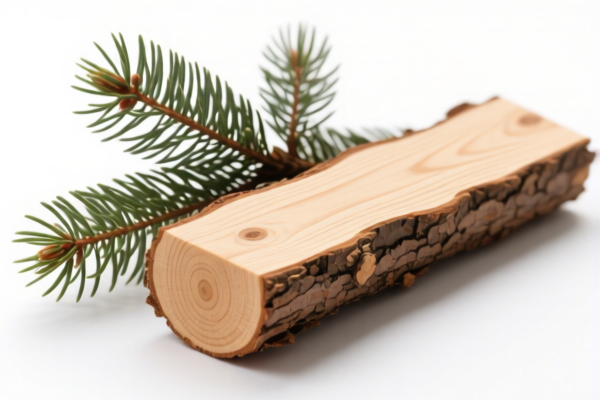
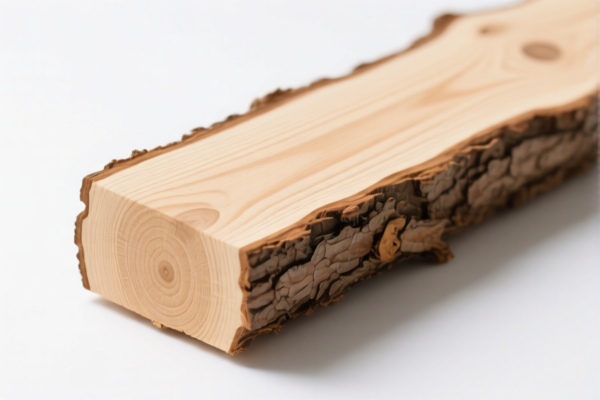
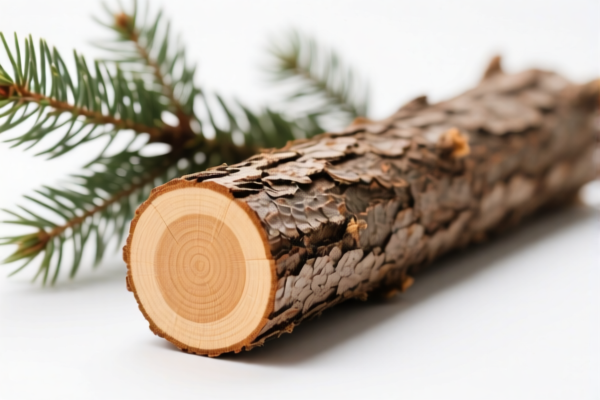
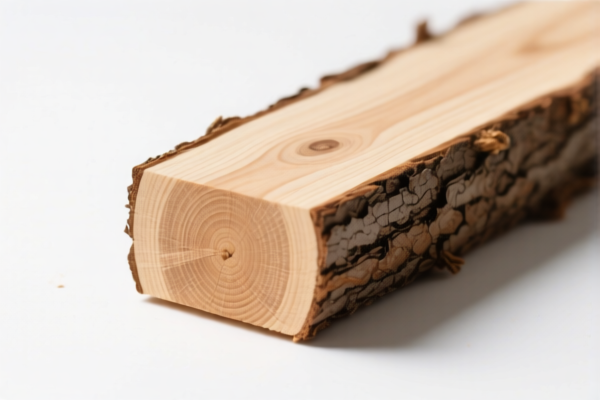
AI Analysis
🌲 Spruce Lumber & Logs: The Definitive HS Code & Customs Clearance Guide (2026)
🌐 HS Code Reference & Customs Strategy | 2026 Latest Tariff Analysis | Professional Clearance Protocol
📌 I. Product Definition & Classification: Do You Really Understand "Spruce"?
Spruce Lumber is not a single commodity. In international trade, the classification depends entirely on the state of processing and intended use. Misclassification is the #1 cause of customs delays for timber products.
There are two main categories: 1. Raw Logs (Unprocessed/Semi-processed): Used for fuel, structural construction, or further processing. 2. Sawn/Chipped Wood (Processed): Ready for carpentry, furniture, or panel production.
⚠️ Critical Distinction Point: - If it is raw, round, or merely debarked → It is likely a Log (Chapter 4401-4403). - If it is sawn, planed, or shaped → It is likely Sawn Wood (Chapter 4407-4408). - If it is chipped or for fuel → It falls under Fuel Wood (Chapter 4401).
📦 II. HS Code Classification Matrix (2026 Latest Tariff Authority)
Based on the provided data, here are the precise classifications for Spruce products. All items below are subject to the same total tariff rate of 35%.
| HS Code | Product Description | Form/State | Key Identifier |
|---|---|---|---|
4403.24.01.35 |
Spruce Logs/Raw Wood | Raw Wood (Sawn or Chipped but not further worked) | Physical form: "Raw/Coarse" (粗制木材) |
4403.24.01.35 |
Spruce Logs (Round) | Log (Raw) | Physical form: "Log" (原木) |
4401.11.00.00 |
Spruce Fuel Wood | Fuel / Rough Chips | Purpose: "Fuel wood" (燃料木), Needle-leaf |
4404.10.00.80 |
Spruce Stakes/Poles | Shaped Wood (Poles/Stakes) | Form: "Wooden stakes/poles" (木桩) |
4407.12.00.19 |
Spruce Sawn Wood | Sawn/Lengthwise Cut | Form: "Lengthwise sawn or chipped" (纵向锯切或初级形态) |
🔍 重点提醒 (Key Alerts): - All items listed above carry a 35% Total Tax Rate. There is no lower rate for "processed" vs "unprocessed" in this specific dataset context (due to additional tariffs). -
4403series refers to wood treated with paint, creosote, or similar chemicals, OR simply raw timber depending on specific sub-headings. In this data, it covers raw logs and coarse wood. -4407series refers to sawn wood of less than 6mm thickness? No, generally thicker. It covers planed, sanded, finger-jointed, or end-jointed wood. Here, it covers basic sawn spruce. -4401series is strictly for fuel wood, even if it looks like logs. If you declare spruce logs as "lumber" but they are destined for burning, customs may reclassify to4401.
💰 III. 2026 Tariff Rate Breakdown (Detailed Policy Analysis)
✅ Applicable Country: United States (US)
✅ Origin: China (CN) (Implied by 122 Clause & 25% Surcharge context)
✅ Effective Date: Current (Post-2025 Trade Actions)
🎯 Universal Tariff Structure for All Listed Spruce Codes
| Tariff Component | Rate | Legal Basis / Explanation |
|---|---|---|
| Base Duty (MFN) | 0.0% | Most wood products have 0% base duty under normal trade. |
| Section 301 Surcharge | +25.0% | Additional duty on Chinese origin goods (USTR List 3/4B). |
| Section 122 Tariff | +10.0% | Specific additional tariff applied to wood/wood products under 19 U.S.C. § 1677(j). |
| TOTAL EFFECTIVE RATE | 35.0% | Sum of Base + 301 + 122 |
📌 Explanation: - The 0% base is misleading. It does NOT mean duty-free. - The 25% is the standard "Trade War" tariff on Chinese manufactured/half-manufactured goods. - The 10% is the Section 122 tariff, specifically targeting wood imports to protect domestic timber industries. - Total 35% is a HIGH COST. Importers must factor this into CIF pricing immediately.
🛠️ IV. Customs Clearance Practical Guide (Pitfall Avoidance)
✅ 1. Required Documentation Checklist
| Document | Must Provide | Why? |
|---|---|---|
| Phytosanitary Certificate | ✔️ Essential | Required by USDA APHIS to prove no pests/diseases. Without it, cargo is quarantined or destroyed. |
| Commercial Invoice | ✔️ Essential | Must clearly state: "Spruce Lumber/Logs", HS Code, Country of Origin. |
| Packing List | ✔️ Essential | Detailed weight (gross/net), number of bundles/pallets. |
| Bill of Lading | ✔️ Essential | Proof of shipment. |
| ISF (Importer Security Filing) | ✔️ 10+2 Rule | Must file 24 hours before loading. Late filing = $5,000+ fines. |
| Lacey Act Declaration | ✔️ Mandatory | Critical for Wood! Must declare scientific name (Picea spp.), country of harvest, and value. Failure = Seizure. |
| Treatment Certificate | ✔️ If Applicable | If wood is heat-treated (HT) or fumigated (MB), provide proof. |
⚠️ Lacey Act Warning:
Spruce is a protected genus. You MUST declare the scientific name (Picea abies, Picea glauca, etc.) and the country where it was harvested. Do not just write "Spruce".
✅ 2. Classification Strategy & Common Errors
| Scenario | Correct HS Code | Common Mistake | Consequence |
|---|---|---|---|
| Round Spruce Logs (debarked) | 4403.24.01.35 |
Declaring as 4407 (Sawn) |
Under-declaration → Penalties + Back Taxes |
| Sawn Spruce Boards (planed) | 4407.12.00.19 |
Declaring as 4403 (Log) |
Over-complication → Unnecessary Phytosanitary scrutiny |
| Spruce Chips/Bark (for fuel) | 4401.11.00.00 |
Declaring as 4403 |
Misuse of Duty → Possible fraud investigation |
| Spruce Stakes (fence posts) | 4404.10.00.80 |
Declaring as 4407 |
Classification Error → Delay |
🔥 Golden Rule:
"Form Dictates Code, Origin Dictates Tax."
- If it's round →4403
- If it's sawn →4407
- If it's for burning →4401
✅ 3. Special Cases & Mitigation
| Situation | Strategy |
|---|---|
| Mixed Shipments | If one container has logs (4403) and sawn wood (4407), declare separately. Do not lump them. |
| Origin Masking | DO NOT try to re-label Chinese spruce as "Canadian" or "Russian". US Customs uses DNA testing and isotopic analysis. Severe penalties for fraud. |
| Section 122 Exemption? | Currently, no general exemption for Chinese wood. Check for specific free trade agreement benefits (none apply to CN). |
| Wood Packaging Material | ISPM 15 compliance is mandatory for pallets/crates. Non-compliant pallets will be rejected at the port. |
🌍 V. Global Market Comparison (2026 Context)
| Market | HS Code Example | Base Duty | Additional Tariffs | Total Estimate | Notes |
|---|---|---|---|---|---|
| 🇺🇸 USA | 4403.24.01.35 |
0% | 35% (301+122) | 35% | Highest Barrier. Lacey Act strict. |
| 🇨🇳 China | 4403.24.01.35 |
0-5% | None | ~0-5% | Major importer of spruce. |
| 🇪🇺 EU | 4403.24.00.00 |
0% | None | 0% | No equivalent to 301/122. |
| 🇲🇽 Mexico | 4403.24.00.00 |
0% | None | 0% | Under USMCA. |
📌 Conclusion:
- US is the ONLY major market with 35% tariffs on Chinese spruce due to Section 301 and 122. - EU and China are more favorable for duty purposes, but have different phytosanitary and sustainability (FLEGT/EUTR) requirements.
📌 VI. Common Errors & Blood-Letting Lessons
❌ Error 1: Forgetting the Lacey Act Declaration
👉 Result: Cargo held at port for weeks. Fines up to $50,000 per violation.
❌ Error 2: Declaring "Sawn Wood" when goods are "Logs"
👉 Result: Customs doubts the value and origin. Audit triggered.
❌ Error 3: Ignoring the 122 Clause (10%)
👉 Result: Budgeting only for 25% tariff. Shortfall in payment.
❌ Error 4: Non-compliant Pallets (ISPM 15)
👉 Result: Entire container rejected or fumigated at importer's expense.
✅ Correct Action:
"Declare Scientific Name, Verify ISPM 15 Pallets, Budget for 35% Total Duty, File Lacey Act Correctly."
🎯 VII. Conclusion: Professional Clearance, Cost Control, Compliance
🎯 Remember the Mantra:
🔹 "Round is 4403, Sawn is 4407, Fuel is 4401."
🔹 "Base 0, 301 25, 122 10, Total 35."
🔹 "Lacey Act is Not Optional, Phytosanitary is Mandatory."
📌 Pro Tip:
If you are importing spruce from China to the US, consider:
1. Pre-Arrival Review Program (PARP) with CBP.
2. Supply Chain Diversification: Explore sourcing from Canada or Russia (if sanctions allow) to avoid the 301/122 tariffs.
3. Bonded Warehouses: If you need storage time, use a bonded facility to defer tax payment until sale.
📣 Immediate Action:
📞 Consult a licensed customs broker BEFORE shipment.
📝 Prepare Lacey Act Declaration templates.
🚀 Ensure your supplier provides ISPM 15 compliant packaging.
✨ Professional customs clearance starts with accurate classification!
💼 Your profit margin is protected by precise compliance!
Customer Reviews
About HS Code Classification
The Harmonized System (HS) is an internationally standardized nomenclature developed by the World Customs Organization (WCO) to classify traded products. Over 200 countries use the HS system as the basis for customs tariffs, trade statistics, and import/export regulations.
Each HS code follows a hierarchical structure:
- Chapter (2 digits) — Broad category of goods (e.g., Chapter 84: Machinery and Mechanical Appliances)
- Heading (4 digits) — More specific grouping within the chapter
- Subheading (6 digits) — Internationally standardized breakdown, used by all WCO member countries
- National subdivisions (8-10 digits) — Country-specific extensions for further classification, such as US HTSUS 10-digit codes
Correct HS code classification is essential for smooth customs clearance, accurate duty payment, and compliance with trade regulations. Misclassification can lead to customs delays, overpayment of duties, or penalties.
When importing from CN to US, the applicable tariff rates may include:
- Most-Favored-Nation (MFN) rate — The standard duty rate applied to WTO members
- General rate — Applied to countries without trade agreements
- Trade remedy duties — Additional tariffs such as Section 301 (anti-dumping), Section 232 (national security), or countervailing duties
The information provided on this page is for reference purposes only. For official classification, please consult with your local customs authority or a licensed customs broker.