Spruce Pile
CN → US| HS Code | Tariff Rate | Origin | Destination | Doc |
|---|---|---|---|---|
| 4404100080 | 35.0% | CN | US | Official Doc |
| 4407120019 | 35.0% | CN | US | Official Doc |
| 4404100040 | 35.0% | CN | US | Official Doc |
| 4407120020 | 35.0% | CN | US | Official Doc |
| 4403230116 | 35.0% | CN | US | Official Doc |
Product Images
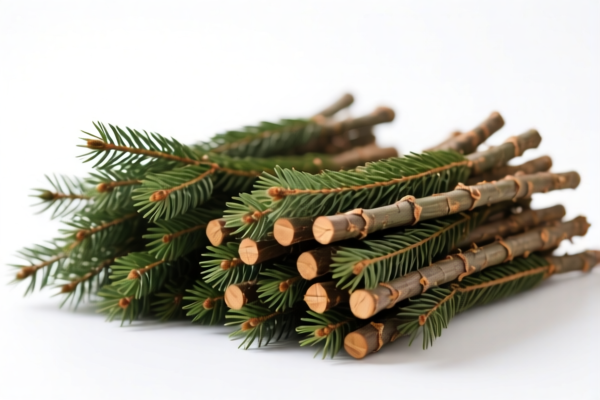
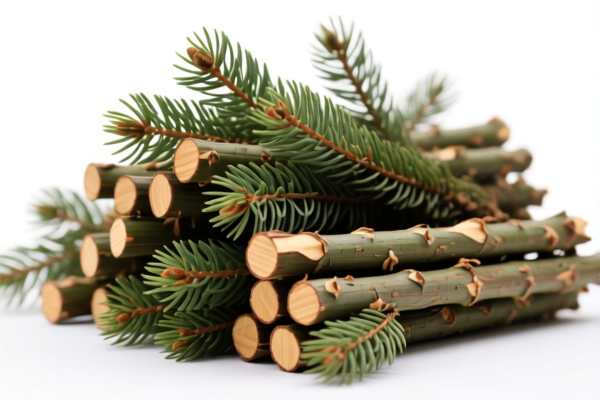
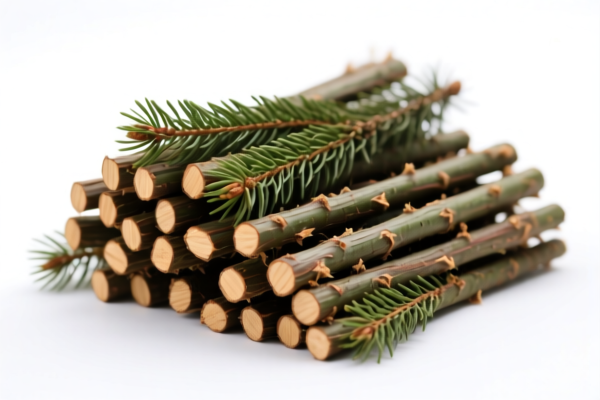
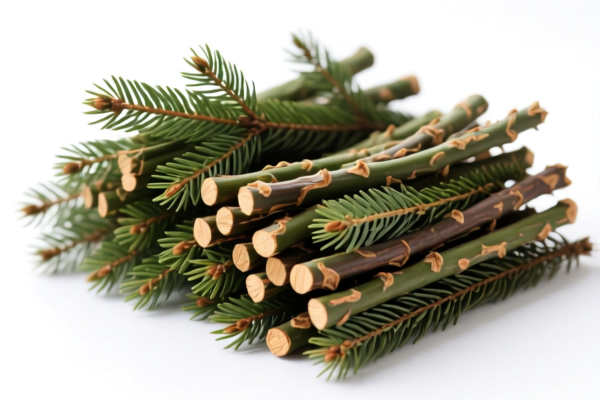
AI Analysis
🌲 Spruce Pile (Wooden Piles/Stakes of Spruce)
🌐 HS Code Reference & Customs Clearance Guide | 2026 Latest Tariff Analysis | Professional Entry Strategies
📌 I. Product Definition & Classification: What Exactly is a "Spruce Pile"?
In international trade, "Spruce Pile" refers to wooden stakes, posts, or piles made from Spruce (a type of softwood/coniferous tree). The classification depends heavily on the processing level and specific shape of the wood:
- Continuously Shaped/Unprocessed Piles: If the spruce is shaped (tapered or squared) but not processed into other specific goods, it may fall under Chapter 44, Heading 44.03 (Wood prepared for the structure of buildings, etc.).
- Wooden Poles/Stakes (Unworked): If it is simply cut to length and slightly worked (e.g., debarked, tapered) but not planed or sawn to standard dimensions, it may fall under Chapter 44, Heading 44.04 (Wooden strips, rods, etc.) or 44.03.
- Sawn Lumber: If the spruce is sawn longitudinally into beams or planks, it falls under Chapter 44, Heading 44.07.
⚠️ Key Distinction Point:
- Heading 44.03: "Wood in the rough, whether or not stripped of bark or sapwood, or roughly squared." (Includes piles, stakes, and posts).
- Heading 44.04: "Wooden strips and rods... continuously shaped along their length." (Usually for fences, pickets, or specific shaped rods).
- Heading 44.07: "Wood sawn or chipped lengthwise... of a thickness exceeding 6mm." (Standard lumber/boards).
📦 II. HS Code Classification Details (2026 Latest Tariff Authority Comparison)
| HS Code | Product Description | Application Scenario | Processing Level |
|---|---|---|---|
4403.23.01.16 |
Wood prepared for the structure of buildings; piles, stakes, poles. | Spruce piles/posts, roughly squared, for construction or fencing. | ✅ Roughly prepared (Piles/Stakes) |
4404.10.00.40 |
Wooden strips, rods... of coniferous wood (Spruce). | Tapered stakes, fence pickets, or continuously shaped spruce rods. | ✅ Continuously shaped |
4404.10.00.80 |
Other wooden strips, rods... of coniferous wood. | Non-standard shaped spruce rods/stakes not specified in 40. | ✅ Continuously shaped (Other) |
4407.12.00.19 |
Wood sawn longitudinally... of spruce, thickness > 6mm. | Standard spruce lumber/boards, not specifically piles. | ✅ Sawn/Planed (Lumber) |
4407.12.00.20 |
Other wood sawn longitudinally... of spruce. | Other spruce lumber forms. | ✅ Sawn/Planed (Lumber) |
🔍 Key Reminder:
- If the item is a "pile" (long, cylindrical or tapered, used for driven into ground), it typically falls under 4403 (Wood prepared for structures, including piles).
- If the item is a "stick/rod" (straight, uniform cross-section), it may fall under 4404.
- The examples in the data provided (4404.10.00.40,4404.10.00.80,4407.12.00.19,4407.12.00.20,4403.23.01.16) all apply to Spruce and relate to pile/stake/rod/lumber forms.
- All listed HS Codes in the provided data carry the SAME total tax rate: 35.0%.
💰 III. 2026 Latest Tariff Rate Breakdown (Including Surcharges, Policy Add-ons)
✅ Applicable Country: United States (US)
✅ Origin: China (CN)
✅ Effective Time: 2025/2026 (Subject to current trade policies, specifically Section 301 and Section 122/IEEPA surcharges as per your data)
🎯 1. All Relevant HS Codes (4403.23.01.16, 4404.10.00.40, 4404.10.00.80, 4407.12.00.19, 4407.12.00.20)
| Item | Content |
|---|---|
| Base Tariff Rate | 0% (Ad Valorem) |
| Section 301 Surcharge | +25% (From USITC Footnote 9903.88.01 / Section 301 Tariff Act) |
| Section 122/IEEPA Surcharge | +10% (Specific surcharge for Chinese wood products under current provisions) |
| Total Tariff Rate | 35.0% |
| Tax Calculation | CIF Value × 35% |
| De Minimis Exemption | ❌ Not Eligible (Wood products of this type are generally excluded from de minimis relief for Chinese origin) |
| Legal Basis Path | USITC:4403/4404/4407 → Section 301: 25% → Section 122/IEEPA: 10% → Total: 35% |
📌 Explanation:
- "Base Tariff 0%": Standard MFN rate for most wood products.
- "Section 301 Surcharge 25%": Imposed on many Chinese goods, including wood products, due to trade tensions.
- "Section 122 Surcharge 10%": An additional layer of tariff applied to certain Chinese imports.
- Total 35%: This is a high tariff rate. Importers must factor this into their cost structure.
- No De Minimis: Small shipments do not bypass these tariffs.
🛠️ IV. Customs Clearance Practical Advice (Combat Pitfall Guide)
✅ 1. Required Documentation Checklist (Missing Items = Delays)
| Document | Mandatory | Notes |
|---|---|---|
| ✅ Product Specification Sheet | ✔️ | Must specify: Wood species (Spruce/Picea), dimensions (length, diameter), treatment (untreated, heat-treated, etc.), and end-use (pile, stake, lumber). |
| ✅ Photo of Product | ✔️ | Show the cross-section and end-use shape (e.g., tapered pile vs. straight plank). |
| ✅ Commercial Invoice | ✔️ | Clearly state: "Spruce Wooden Pile/Stake" or "Spruce Sawn Lumber". Avoid vague terms like "Wood Parts". |
| ✅ Packing List | ✔️ | Detail the number of items, gross weight, and net weight. |
| ✅ Origin Certificate | ✔️ | Proves Chinese origin (triggers 35% tax). If shipped from Vietnam/Malaysia, provide valid COO to claim lower rates (if eligible). |
| ✅ ISPM 15 Phytosanitary Certificate | ✔️ | Critical for Wood! Must show heat treatment or fumigation to prevent pest introduction. |
✅ 2. Declaration Tips (Key Mantra)
🔥 “Be Specific on Shape: Pile, Stake, or Lumber?”
| Scenario | Correct Declaration | Wrong Declaration | Consequence |
|---|---|---|---|
| Tapered, round wood for driving into ground | 4403.23.01.16 ("Piles, Stakes") | "Wood Stick" | Misclassification → Potential penalty |
| Straight, square/rectangular spruce rods | 4404.10.00.40 ("Rods/Strips") | "Lumber" | Overpayment or underpayment |
| Standard spruce boards/planks | 4407.12.00.19 ("Sawn Wood") | "Pile" | Wrong HS Code |
| Heat-treated spruce piles | 4403.23.01.16 + HT Mark | Untreated | Rejection by USDA/APHIS |
📌 Note:
- Piles are often considered "roughly squared" or "shaped" and fall under 4403.
- Stakes/Rods that are continuously shaped may fall under 4404.
- Lumber that is sawn and planed falls under 4407.
- All these codes in your data have a 35% total tax rate, so accurate classification is mainly for compliance, inspection, and phytosanitary rules, not just tax savings.
✅ 3. Special Cases Handling
| Case | Handling Advice |
|---|---|
| Heat Treatment (HT) | Ensure ISPM 15 mark is visible. Without it, goods will be rejected or destroyed. |
| Treated Wood (Chemical) | If pressure-treated with chemicals, declare as "Treated Wood" and provide MSDS. May require additional EPA/pesticide permits. |
| Mixed Shipments | If a container has both Spruce Piles and other wood products, declare each HS Code separately. Do not lump under one code. |
| Non-Chinese Origin | If Spruce is harvested in Canada but processed in China, or vice versa, origin rules apply. Generally, substantial transformation determines origin. If origin is not China, tax rate may be 0% (no Section 301/122). |
🌍 V. Global Market Comparison for Spruce Piles/Lumber (2026)
| Country/Region | Recommended HS Code | Tariff Rate (China Origin) | Certification | Notes |
|---|---|---|---|---|
| 🇺🇸 USA | 4403 / 4404 / 4407 |
35% (0% Base + 25% Sec 301 + 10% Sec 122) | ISPM 15, HT Mark | High tariffs. Strict phytosanitary rules. |
| 🇨🇳 China | 4403 / 4404 / 4407 |
0-5% | Fumigation/HT | Low tariffs. Import duties may be minimal. |
| 🇪🇺 EU | 4403 / 4404 / 4407 |
0-2.5% | ISPM 15, EUTR Compliance | No Section 301. Strict due diligence for illegal logging. |
| 🇬🇧 UK | 4403 / 4404 / 4407 |
0-5% | ISPM 15 | Post-Brexit rules. Check UK Global Tariff. |
| 🇯🇵 Japan | 4403 / 4404 / 4407 |
0-2.5% | Phytosanitary Cert | Preferential rate under J-EPA if certified. |
📌 Conclusion:
- USA has the highest tariffs (35%) due to Section 301 and Section 122.
- EU/UK/Japan have much lower tariffs but stricter environmental/phytosanitary regulations.
- Origin is Key: If you can source Spruce Piles from Canada, Russia, or European countries, you can avoid the 35% US surcharge entirely.
📌 VI. Common Errors & Pitfalls (Lessons Learned)
❌ Error 1: Declaring "Spruce Piles" as "Other Wood Products"
👉 Consequence: Wrong HS Code → Customs Audit → Delays + Penalties.
✅ Fix: Use specific HS Code (4403.23.01.16 or 4404.10.00.40).
❌ Error 2: Ignoring ISPM 15 Heat Treatment Mark
👉 Consequence: Rejected/Destroyed by US Customs/Border Protection (CBP) and USDA APHIS.
✅ Fix: Ensure every piece has the HT Mark.
❌ Error 3: Misdeclaring Origin (Claiming Canadian Origin for Chinese-Processed Goods)
👉 Consequence: Fraud Penalty + Back Taxes.
✅ Fix: Declare actual country of harvest/processing. If processed in China, it's Chinese origin.
❌ Error 4: Not Separating Piles from Lumber in Same Shipment
👉 Consequence: Confusion at Customs → Inspection Delay.
✅ Fix: List each HS Code on separate lines of the commercial invoice.
🎯 VII. Conclusion: Professional Declaration, Save Time & Money
🎯 Remember the Mantra:
🔹 "Piles vs. Lumber: Define Shape Clear."
🔹 "35% Tax for China Origin: Check COO First."
🔹 "ISPM 15 Mark: No Mark, No Entry."
📌 Pro Tip:
If you are exporting Spruce Piles to the USA, consider:
1. Sourcing from Non-China Origins (e.g., Canada, Russia) to avoid the 35% tariff.
2. Pre-Clearance with CBP: Submit your documentation (Invoice, Packing List, ISPM 15 Cert) for review before shipping.
3. Consult a Licensed Customs Broker: Wood products are high-risk for inspection. A broker can help ensure smooth clearance.
📣 Act Now:
📞 Contact a Customs Broker + Verify ISPM 15 Compliance + Check Origin Rules
🚀 Ensure Your Spruce Piles Clear Customs Smoothly and Avoid Costly Delays!
✨ Professional Clearance Starts with Accurate Classification!
💼 Every Tax Dollar Matters – Optimize Your Supply Chain Today!
Customer Reviews
About HS Code Classification
The Harmonized System (HS) is an internationally standardized nomenclature developed by the World Customs Organization (WCO) to classify traded products. Over 200 countries use the HS system as the basis for customs tariffs, trade statistics, and import/export regulations.
Each HS code follows a hierarchical structure:
- Chapter (2 digits) — Broad category of goods (e.g., Chapter 84: Machinery and Mechanical Appliances)
- Heading (4 digits) — More specific grouping within the chapter
- Subheading (6 digits) — Internationally standardized breakdown, used by all WCO member countries
- National subdivisions (8-10 digits) — Country-specific extensions for further classification, such as US HTSUS 10-digit codes
Correct HS code classification is essential for smooth customs clearance, accurate duty payment, and compliance with trade regulations. Misclassification can lead to customs delays, overpayment of duties, or penalties.
When importing from CN to US, the applicable tariff rates may include:
- Most-Favored-Nation (MFN) rate — The standard duty rate applied to WTO members
- General rate — Applied to countries without trade agreements
- Trade remedy duties — Additional tariffs such as Section 301 (anti-dumping), Section 232 (national security), or countervailing duties
The information provided on this page is for reference purposes only. For official classification, please consult with your local customs authority or a licensed customs broker.