Spruce Power Poles
CN → US| HS Code | Tariff Rate | Origin | Destination | Doc |
|---|---|---|---|---|
| 4404100080 | 35.0% | CN | US | Official Doc |
| 4407120020 | 35.0% | CN | US | Official Doc |
| 4403240112 | 35.0% | CN | US | Official Doc |
| 4407120059 | 35.0% | CN | US | Official Doc |
| 4403230112 | 35.0% | CN | US | Official Doc |
Product Images
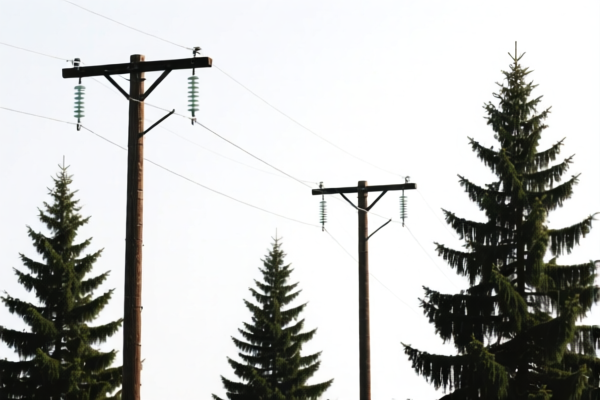
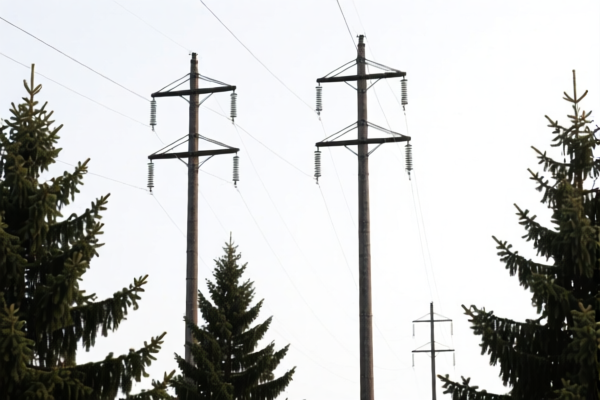
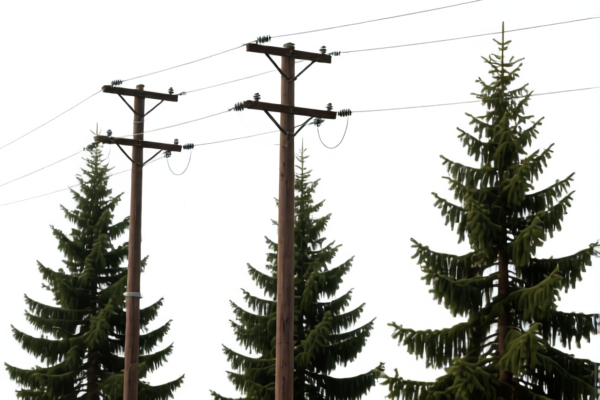
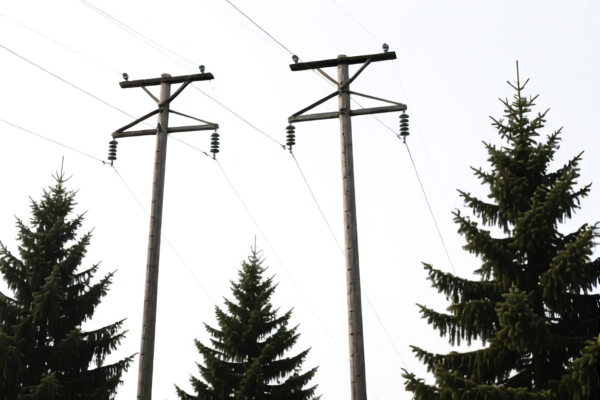
AI Analysis
🌲 Spruce Power Poles: HS Code Classification & Customs Clearance Guide 2026
🌐 HS Code Reference & Clearance Strategy | 2026 Latest Tariff Analysis | Professional Customs Advice 📌 I. Product Definition & Classification: What Exactly Are "Spruce Power Poles"?
Spruce Power Poles are essential infrastructure components used in electrical transmission and distribution networks. In international trade, they are categorized under Chapter 44: Wood and Articles of Wood. The classification depends heavily on the processing level and physical form of the wood:
- Raw/Prepared Poles (Logs): Wood that has been roughly trimmed but retains its natural shape, often treated for preservation. These may fall under Chapter 44 Heading 4403 (Wood prepared for the construction industry, e.g., dressed, sawn, or chipped).
- Processed Wood Products: Wood that has been planed, sawn, or otherwise worked into specific shapes (poles, piles, or posts). These typically fall under Heading 4404 (Wood continuous planing) or Heading 4407 (Wood sawn or chipped lengthwise, sliced or peeled, veneered, etc.).
⚠️ Key Distinction: - If the pole is raw, rough-sawn, or simply trimmed (maintaining its natural roundness/log-like appearance), it is often classified under 4403 (Prepared wood). - If the pole is planed, smoothed, or further processed into a specific cylindrical shape, it may fall under 4404 (Continuous planing) or 4407 (Sawn/Processed). - Crucial Note: For U.S. imports from China, all spruce/fir (coniferous) wood products are subject to significant additional tariffs.
📦 II. HS Code Classification Details (2026 Latest Tariff Data)
Based on the provided data, here are the specific HS Codes for Spruce Power Poles and their corresponding descriptions:
| HS Code | Product Description | Key Characteristics | Processing Level |
|---|---|---|---|
| 4404.10.00.80 | Spruce/Fir Wood Poles | Form: Poles, piles, and posts. Category: Coniferous wood. |
Planed/Smoothed (Continuous planing) |
| 4407.12.00.20 | Spruce/Fir Wood Poles | Form: Processed wood utilization. Material: Coniferous wood (Spruce/Fir). |
Sawn/Processed (Veneered, thick sawn, etc.) |
| 4403.24.01.12 | Spruce/Fir Wood Poles | Form: Power poles. Material: Coniferous wood. Use: Electrical poles. |
Prepared for construction (Roughly dressed/logs) |
| 4407.12.00.59 | Spruce/Fir Wood Poles | Material: Coniferous wood. Conflict: No material conflict. |
Sawn/Processed (Other specific sub-category) |
| 4403.23.01.12 | Spruce/Fir Wood Poles | Form: Electrical power poles. Material: Coniferous wood. Compliance: Fully meets classification requirements. |
Prepared for construction (Specific sub-category) |
🔍 Key Insight: - 4403 codes generally imply the wood is "prepared for the construction industry" (e.g., treated poles, rough-sawn logs). - 4407 and 4404 codes imply further processing (sawing, planing). - All listed HS Codes for Spruce Power Poles from China face the same total tariff rate.
💰 III. 2026 Tariff Rate Breakdown (Including Additional Duties)
✅ Applicable Country: United States (US)
✅ Origin: China (CN)
✅ Total Tax Rate: 35.0%
✅ Effective Date: Current rates apply (Section 301 & IEEPA surcharges are active)
🎯 1. All Spruce Power Pole HS Codes (4403.23/4403.24/4404.10/4407.12)
| Item | Content |
|---|---|
| Base Tariff | 0.0% (Ad valorem) |
| Section 301 Additional Duty | +25.0% |
| Section 122 Tariff (IEEPA) | +10.0% |
| Total Tax Rate | 35.0% |
| Tax Calculation | CIF Value × 35% |
| De Minimis Exemption | ❌ Not Applicable (Section 301 goods are excluded from de minimis treatment) |
| Legal Basis Path | 301:4403 / 301:4404 / 301:4407 → IEEPA:9903.01.24 → FOOTNOTE:301 |
📌 Explanation: - "Base Tariff 0%": Standard MFN rate for wood products is often 0%. - "Section 301 Additional Duty 25%": Imposed under U.S. Trade Act Section 301 against China for listed goods, including wood products. - "Section 122 Tariff 10%": Refers to additional tariffs under the International Emergency Economic Powers Act (IEEPA), often linked to specific trade remedies. - Total 35%: This is a high tariff that significantly impacts profit margins. Importers must budget for this cost.
🛠️ IV. Customs Clearance Practical Advice (Real-World Pitfall Guide)
✅ 1. Required Documentation Checklist (Missing items cause delays)
| Document | Mandatory? | Notes |
|---|---|---|
| ✅ Product Specification | ✔️ | Must specify wood species (Spruce/Fir), treatment type (e.g., CCA, Creosote), and dimensions. |
| ✅ Treatment Certificate | ✔️ | Proof of preservative treatment (e.g., AWPA standards) is often required for wood imports. |
| ✅ Phytosanitary Certificate | ✔️ | Issued by the country of origin to certify the wood is free from pests/diseases. |
| ✅ Commercial Invoice | ✔️ | Must clearly state "Spruce Power Poles" and HS Code. Avoid vague terms like "Wood Poles." |
| ✅ Packing List | ✔️ | Detail weight, dimensions, and number of poles per pallet/container. |
| ✅ Bill of Lading/Air Waybill | ✔️ | Standard shipping documents. |
| ✅ Country of Origin Certificate | ✔️ | To confirm Chinese origin (triggers 35% tariff). |
✅ 2. Declaration Tips (Critical Mnemonics)
🔥 "Name It Right, Code It Right, 35% is the Light!"
(Meaning: Accurate naming and coding prevent penalties, but the 35% tariff is unavoidable for Chinese origin.)
| Scenario | Correct Declaration | Wrong Practice |
|---|---|---|
| Treated Wooden Poles | 4403.24.01.12 or 4403.23.01.12 |
Calling them "Metal Poles" → Customs Seizure |
| Raw Spruce Logs (for poles) | 4403.24.01.12 |
Calling them "Finished Goods" → Classification Dispute |
| Planed/Smoothed Poles | 4404.10.00.80 |
Misclassifying as 4403 → Potential Penalties |
| Veneered/Processed Wood | 4407.12.00.20 |
Under-declaring value → Audit Risk |
✅ 3. Special Cases & Handling
| Situation | Handling Advice |
|---|---|
| Preservative Treatment | If poles are treated with CCA (Chromated Copper Arsenate) or Creosote, additional EPA/Environmental regulations may apply. Disclose this clearly. |
| Mixed Containers | If a container has both wood poles and non-wood items, declare separately. Wood poles still incur 35%. |
| Origin Labeling | Ensure all packaging clearly marks "Made in China." Mislabeling can lead to severe penalties. |
| Pre-Clearance Ruling | Highly Recommended: Apply for an Advance Ruling from U.S. CBP to confirm the correct HS Code (4403 vs. 4404) based on your specific product's processing level. |
🌍 V. Global Market Comparison (2026)
| Country/Region | Recommended HS Code | Tariff Rate (China Origin) | Certifications Required | Notes |
|---|---|---|---|---|
| 🇺🇸 USA | 4403.23.01.12 / 4404.10.00.80 |
35% | Phytosanitary, Treatment Cert | Highest tariff market due to Section 301 & IEEPA. |
| 🇨🇳 China | 4403 / 4404 |
0-5% (Export side may have duties) | None (for export) | China is a major producer; exports are less restricted. |
| 🇪🇺 EU | 4403 / 4404 |
0-5% | ISPM 15 (Wood Packaging), FSC/PEFC | No Section 301 tariffs, but strict environmental rules. |
| 🇨🇦 Canada | 4403 / 4404 |
0% | CFIA Phytosanitary | Similar to US but no 35% surcharge. |
| 🇲🇽 Mexico | 4403 / 4404 |
0-5% | None (if under USMCA) | Potential hub for re-export, but origin rules apply. |
📌 Conclusion: - The US is the most expensive market for Spruce Power Poles from China due to the 35% combined tariff. - Diversification is key: Consider sourcing from Vietnam, Canada, or Europe to avoid the 35% surcharge. - Accurate Declaration: Misclassification can lead to fines, but even correct declaration will result in the 35% tax.
📌 VI. Common Mistakes & Pitfalls (Lessons Learned)
❌ Mistake 1: Calling "Spruce Poles" as "Construction Materials" without specifying HS Code
👉 Consequence: Customs may assign a higher default rate or delay shipment.
❌ Mistake 2: Ignoring Phytosanitary Requirements
👉 Consequence: Goods held at port for fumigation or destroyed. No Phytosanitary Cert = No Entry.
❌ Mistake 3: Assuming "Wood Products" are exempt from Section 301
👉 Consequence: Underpayment of tariffs → Penalties and Interest.
❌ Mistake 4: Mixing Treated and Untreated Wood in one shipment
👉 Consequence: Complicates clearance; treated wood may require EPA approval.
✅ Correct Approach:
"Spruce Wood Power Poles, Treated with Creosote, Length 10m, Diameter 20cm, HS Code 4403.24.01.12, Origin China"
🎯 VII. Conclusion: Professional Declaration, Cost Control
🎯 Remember the Key Points:
🔹 "35% is the Bottom Line for China Origin."
🔹 "Phytosanitary Cert is Non-Negotiable."
🔹 "Choose 4403 or 4404 based on Processing, Not Just Shape."
📌 Pro Tip: If your volume is high, consider Supply Chain Diversification: - Source from Canada or Europe for the US market (0-5% tariff). - Use Mexico as a hub if you can meet USMCA rules of origin (but note: wood often requires significant local processing to qualify).
📣 Immediate Action:
📞 Consult a Customs Broker to confirm the exact HS Code (4403 vs. 4404) based on your product's processing level.
📄 Prepare Phytosanitary Certs in advance to avoid port delays.
🧮 Calculate CIF Value + 35% Tariff to ensure profitability.
✨ Accurate Classification Saves Time and Money!
💼 Every Pole Counts – Make Sure It Clears Smoothly!
Customer Reviews
About HS Code Classification
The Harmonized System (HS) is an internationally standardized nomenclature developed by the World Customs Organization (WCO) to classify traded products. Over 200 countries use the HS system as the basis for customs tariffs, trade statistics, and import/export regulations.
Each HS code follows a hierarchical structure:
- Chapter (2 digits) — Broad category of goods (e.g., Chapter 84: Machinery and Mechanical Appliances)
- Heading (4 digits) — More specific grouping within the chapter
- Subheading (6 digits) — Internationally standardized breakdown, used by all WCO member countries
- National subdivisions (8-10 digits) — Country-specific extensions for further classification, such as US HTSUS 10-digit codes
Correct HS code classification is essential for smooth customs clearance, accurate duty payment, and compliance with trade regulations. Misclassification can lead to customs delays, overpayment of duties, or penalties.
When importing from CN to US, the applicable tariff rates may include:
- Most-Favored-Nation (MFN) rate — The standard duty rate applied to WTO members
- General rate — Applied to countries without trade agreements
- Trade remedy duties — Additional tariffs such as Section 301 (anti-dumping), Section 232 (national security), or countervailing duties
The information provided on this page is for reference purposes only. For official classification, please consult with your local customs authority or a licensed customs broker.