Spruce Power Transmission Pole
CN → US| HS Code | Tariff Rate | Origin | Destination | Doc |
|---|---|---|---|---|
| 4404100080 | 35.0% | CN | US | Official Doc |
| 4407120020 | 35.0% | CN | US | Official Doc |
| 4403240112 | 35.0% | CN | US | Official Doc |
| 4407120059 | 35.0% | CN | US | Official Doc |
| 4403230112 | 35.0% | CN | US | Official Doc |
Product Images
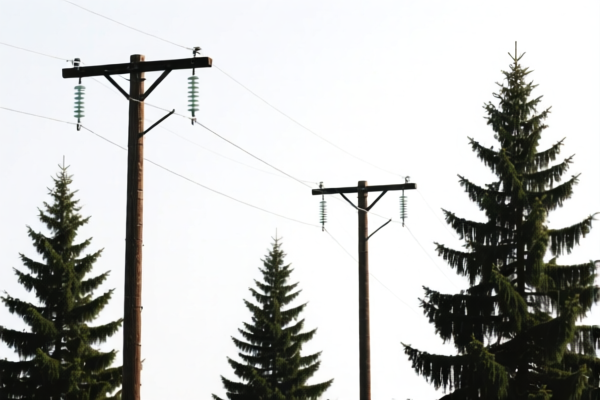
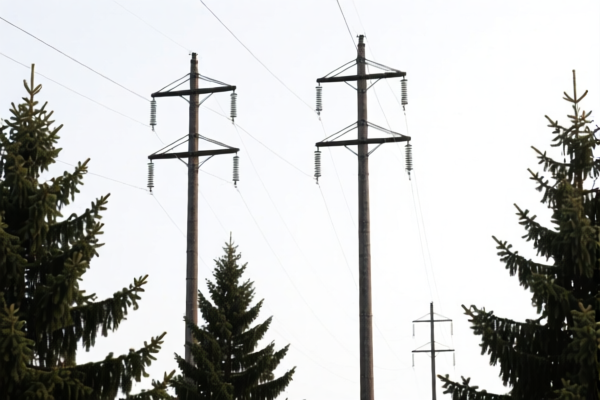
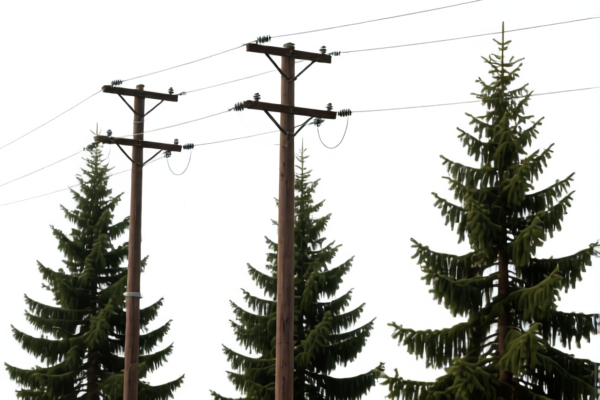
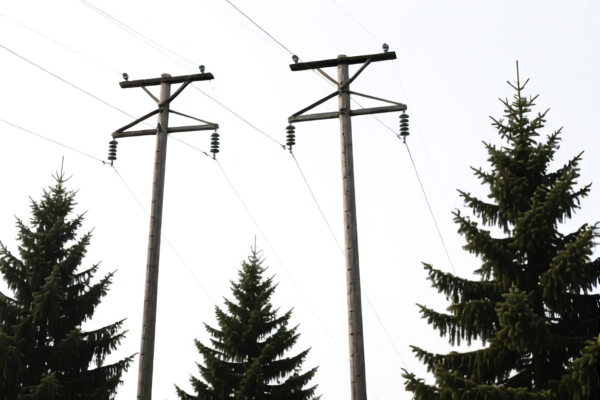
AI Analysis
🌲 Spruce Power Transmission Pole
🌐 HS Code Reference & Customs Clearance Guide | 2026 Latest Tariff Analysis | Professional Clearance Strategy
📌 I. Product Definition & Classification: What Exactly is a "Spruce Power Transmission Pole"?
A Spruce Power Transmission Pole is a critical infrastructure component used in electrical grids. In international trade, it is classified under Chapter 44 (Wood and Articles of Wood), specifically as processed coniferous wood. The classification depends heavily on the degree of processing and the final form of the product.
⚠️ Key Distinction:
- If the wood is merely shaped into a pole/pegs/columns without significant milling or turning → HS 4404.10
- If the wood is sawn, planed, or shaped into specific structural forms → HS 4407.12
- If the wood is retained in its natural shape but treated as "poles" for specific utility use → HS 4403.24 / 4403.23
📦 II. HS Code Classification Details (2026 Latest Tariff Authority Comparison)
| HS Code | Product Description | Application Scenario | Processing Level |
|---|---|---|---|
4404.10.00.80 |
Wooden poles, pegs, and similar products, of coniferous wood, not lengthwise sawn lengthwise, chipped or split; roughly trimmed or rounded at the ends. | Simple wooden poles, stakes, and columns made from Spruce/Fir. | ✅ Roughly trimmed/rounded |
4407.12.00.20 |
Wood sawn lengthwise, sliced or peeled, whether or not planed, sanded or finger-jointed, of a thickness exceeding 6 mm, of spruce, fir, etc. | Processed timber, planks, or structural wood elements derived from Spruce/Fir. | ✅ Sawed/Planed/Processed |
4403.24.01.12 |
Wood retained in its natural bark, whether or not peeled, chipped, or roughly trimmed, of coniferous wood, of spruce, fir, etc., whether or not treated with paint or creosote. | Power poles retaining natural bark, treated for durability. | ✅ Natural bark retained |
4407.12.00.59 |
Other wood, sawn lengthwise, sliced or peeled... of spruce, fir, etc. | Other processed spruce/fir wood products not specified elsewhere. | ✅ Processed (Other) |
4403.23.01.12 |
Wood retained in its natural bark... of coniferous wood, of larch, of a length exceeding 3.5m. | Specific long-length coniferous poles, potentially larch or similar, treated. | ✅ Natural bark, Long length |
🔍 Key Reminder:
- Spruce/Fir Power Poles are primarily classified under 4403 (if bark is retained) or 4404/4407 (if shaped/sawn).
- The specific sub-code depends on whether the pole retains its natural bark and the method of shaping.
- All listed HS codes attract the same total tariff rate under current US-China trade regulations.
💰 III. 2026 Latest Tariff Rate Breakdown (Including Additional Taxes & Policy Surcharges)
✅ Applicable Country: United States (US)
✅ Origin: China (CN)
✅ Effective Date: Ongoing (Current Trade War Tariffs)
🎯 1. All Listed HS Codes (4404.10.00.80, 4407.12.00.20, 4403.24.01.12, 4407.12.00.59, 4403.23.01.12)
| Item | Content |
|---|---|
| Base Tariff | 0% (ad valorem) |
| Section 301 Additional Tariff | +25% (from USITC Footnote 9903.88.01 or relevant Section 301 list) |
| Section 122 Tariff (IEEPA/Other) | +10% (Specific policy surcharge often applied to wood products or listed in trade data) |
| Total Tariff Rate | 35.0% |
| Tax Calculation | CIF Value × 35% |
| De Minimis Eligibility | ❌ Not Eligible (Wood products from China are subject to high tariffs and inspections) |
| Legal Basis Path | USITC:44xx.xx.xx.xx → Section 301: +25% → Policy Surcharge: +10% |
📌 Explanation:
- The 0% base rate applies to standard wooden poles under most FTAs, but US-China trade tensions have overridden this.
- Section 301 Tariff (+25%) is the primary additional duty on Chinese wood products.
- Section 122 Tariff (+10%) is applied as per the provided tax detail, bringing the total to 35%.
- This is a high-cost scenario for importers. Pre-calculation of landed cost is essential.
🛠️ IV. Customs Clearance Practical Advice (Real-World Pitfall Guide)
✅ 1. Required Documentation Checklist (Missing items cause delays)
| Document | Must Provide | Notes |
|---|---|---|
| ✅ Product Specification Sheet | ✔️ | Must specify: Wood Species (Spruce/Fir), Dimensions (Length, Diameter), Treatment Type (Creosote, Pressure-Treated, etc.). |
| ✅ ISPM 15 Phytosanitary Certificate | ✔️ | Critical! Wood products require proof of pest-free treatment (fumigation/heating). |
| ✅ Phytosanitary Permit | ✔️ | Issued by the country of origin. Without this, the cargo will be quarantined or destroyed. |
| ✅ Commercial Invoice | ✔️ | Clearly state: "Spruce Power Transmission Pole, Treated/Untreated, HS Code XXXX". |
| ✅ Packing List | ✔️ | Detail bundle counts, total weight, and dimensions. |
| ✅ Treatment Certificate | ✔️ | If treated with chemicals (e.g., Creosote), MSDS (Material Safety Data Sheet) may be required. |
✅ 2. Declaration Tips (Key Mantra)
🔥 "ISPM 15 is King, Species Must Match, Treatment Proven, Clearance Wins!"
| Scenario | Correct Declaration | Wrong Practice |
|---|---|---|
| Natural Bark Poles | 4403.24.01.12 + ISPM 15 |
Declare as "Lumber" (4407) → Mismatch in form → Rejection |
| Roughly Trimmed Poles | 4404.10.00.80 + ISPM 15 |
No phytosanitary proof → Seizure/Destruction |
| Processed/Planed Poles | 4407.12.00.20 + ISPM 15 |
Declare as "Raw Wood" → Tariff misapplication |
| Treated with Creosote | Add MSDS + "Treated Wood" | Ignore chemical content → Customs Hold |
✅ 3. Special Case Handling
| Situation | Handling Advice |
|---|---|
| Wood Pests (Bark Beetles) | If bark is retained, ensure ISPM 15 stamp is visible. If infested, cargo may be fumigated on-site at your expense or returned. |
| Chemical Treatment | If treated with preservatives, ensure compliance with EPA (Environmental Protection Agency) standards. Provide MSDS. |
| Dimensional Variance | Ensure declared length/diameter matches actual cargo. Significant variance can lead to classification disputes. |
| Mixed Wood Types | If mixed with hardwood, the entire shipment may be reclassified or inspected more thoroughly. Declare species accurately. |
🌍 V. Global Market Comparison (2026 Latest)
| Country/Region | Recommended HS Code | Tariff (China Origin) | Certification | Notes |
|---|---|---|---|---|
| 🇺🇸 USA | 4403.24.01.12 / 4404.10.00.80 |
35% (0% + 25% + 10%) | ISPM 15 + EPA | High tariff, strict phytosanitary rules |
| 🇨🇳 China | 4403.24.01.12 |
0-5% (Export duty may apply) | None | Export from China is straightforward |
| 🇪🇺 EU | 4403.24.01.12 |
0% (Under EBA/GSP if eligible) | FSC/PEFC + ISPM 15 | No Section 301 tariff, but strict wood legality rules |
| 🇯🇵 Japan | 4403.24.01.12 |
0-2% | Phytosanitary Certificate | Strict quarantine for wood |
📌 Conclusion:
- The US market imposes a 35% effective tariff on Chinese Spruce Poles due to trade policies.
- ISPM 15 compliance is non-negotiable for wood products entering the US.
- Consider origin diversification (e.g., Canada, Russia, or Southeast Asia) if tariffs are prohibitive, though other markets may have their own barriers.
📌 VI. Common Mistakes & Pitfalls (Lessons Learned)
❌ Mistake 1: Failing to provide ISPM 15 phytosanitary certificate.
👉 Consequence: Cargo held at port, fumigated, or destroyed. Cost: $10,000+
❌ Mistake 2: Misdeclaring "Raw Lumber" for "Poles".
👉 Consequence: Classification error, potential penalties, and delays.
❌ Mistake 3: Ignoring Chemical Treatment disclosures.
👉 Consequence: EPA violation, fines, and shipment rejection.
❌ Mistake 4: Not calculating Total Landed Cost (CIF + 35% Tariff + Duties + Fees).
👉 Consequence: Unexpected cost blowout, eroding profit margins.
✅ Correct Practice:
"Spruce Power Transmission Pole, Length 12m, Diameter 20cm, Pressure-Treated with Creosote, ISPM 15 Certified, HS Code 4403.24.01.12"
🎯 VII. Conclusion: Professional Declaration, Save Time and Money!
🎯 Remember the Mantra:
🔹 "ISPM 15 First, Species Second, Tariff 35%, Declaration Third!"
🔹 "HS Code Determines Duty, 35% is the Baseline, No Exceptions for Wood!"
📌 Pro Tip:
If your Spruce Poles are sourced from Canada, Europe, or Southeast Asia, the tariff may be 0%. However, ISPM 15 is still required globally.
Always apply for a Pre-Ruling (Advance Ruling) from US Customs if unsure about the specific HS code for your treated/pole format.
📣 Action Required:
📞 Contact a Licensed Customs Broker + Provide ISPM 15 Certificate + Verify HS Code
🚀 Ensure Smooth Clearance, Efficient Export, and Cost Control!
✨ Professional Customs Clearance Starts with Accurate Classification!
💼 Your Every Cent Counts, Calculate Accurately!
Customer Reviews
About HS Code Classification
The Harmonized System (HS) is an internationally standardized nomenclature developed by the World Customs Organization (WCO) to classify traded products. Over 200 countries use the HS system as the basis for customs tariffs, trade statistics, and import/export regulations.
Each HS code follows a hierarchical structure:
- Chapter (2 digits) — Broad category of goods (e.g., Chapter 84: Machinery and Mechanical Appliances)
- Heading (4 digits) — More specific grouping within the chapter
- Subheading (6 digits) — Internationally standardized breakdown, used by all WCO member countries
- National subdivisions (8-10 digits) — Country-specific extensions for further classification, such as US HTSUS 10-digit codes
Correct HS code classification is essential for smooth customs clearance, accurate duty payment, and compliance with trade regulations. Misclassification can lead to customs delays, overpayment of duties, or penalties.
When importing from CN to US, the applicable tariff rates may include:
- Most-Favored-Nation (MFN) rate — The standard duty rate applied to WTO members
- General rate — Applied to countries without trade agreements
- Trade remedy duties — Additional tariffs such as Section 301 (anti-dumping), Section 232 (national security), or countervailing duties
The information provided on this page is for reference purposes only. For official classification, please consult with your local customs authority or a licensed customs broker.