Spruce Structural Timber
CN → US| HS Code | Tariff Rate | Origin | Destination | Doc |
|---|---|---|---|---|
| 4403240135 | 35.0% | CN | US | Official Doc |
| 4407120017 | 35.0% | CN | US | Official Doc |
| 4407120019 | 35.0% | CN | US | Official Doc |
Product Images
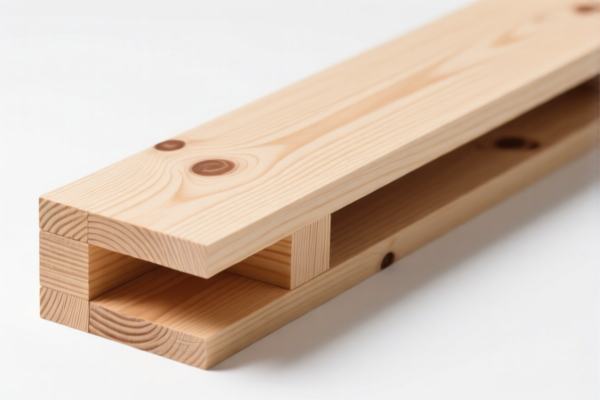
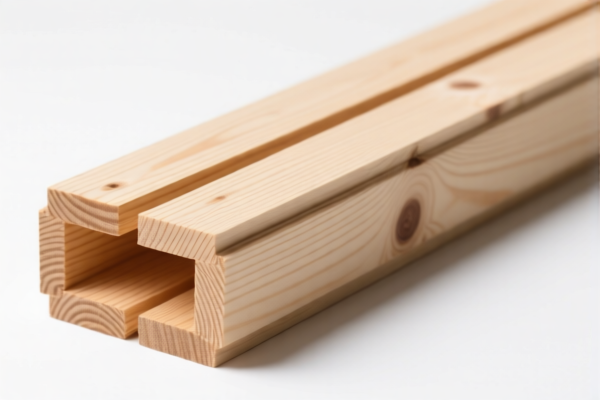
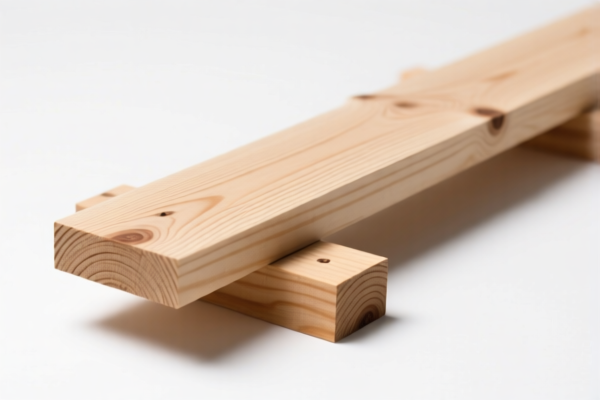
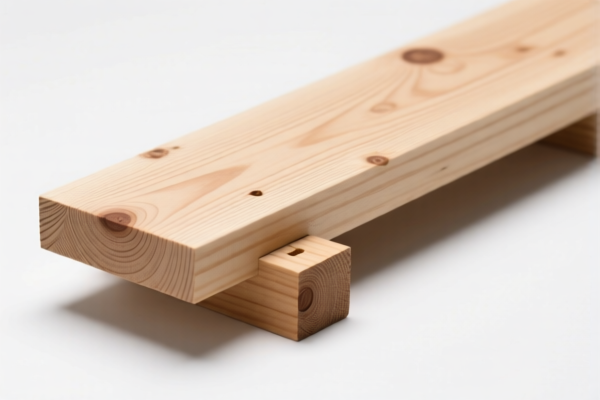
AI Analysis
🌲 Spruce Structural Timber: HS Code Classification & Duty Breakdown
🌐 HS Code Reference & Customs Clearance Guide | 2026 Latest Tariff Analysis | Professional Clearance Strategy
📌 Part 1: Product Definition & Classification: What is "Spruce Structural Timber"?
Spruce Structural Timber refers to processed wood products primarily made from spruce (a coniferous softwood), specifically designed for outdoor or temporary structural applications. In international trade, these products are distinguished by their material (Spruce), form (Logs/Rough Wood/Primary Processed), and purpose (Outdoor/Temporary Structures).
⚠️ Key Distinction:
- If the wood is in log form or roughly shaped for structural use → It falls under Heading 4403 (Wood treated/preserved) or Heading 4407 (Sawn wood).
- If it is rough sawn or planed for temporary structures → It falls under Heading 4407 (Planed/sawn wood).
- Crucial Note: All listed HS Codes below carry significant additional tariffs for Chinese-origin goods imported into the US.
📦 Part 2: HS Code Classification Details (2026 Latest Tariff Authority Cross-Reference)
| HS Code | Product Description | Application Scenario | Material/Form |
|---|---|---|---|
4403.24.01.35 |
Spruce wood, treated/preserved for outdoor structures | Outdoor decks, fences, structural beams exposed to weather | Spruce / Logs or Sawn Timber |
4407.12.00.17 |
Spruce wood, rough sawn or primary processed for outdoor/temp structures | Temporary scaffolding, outdoor sheds, rustic structural elements | Spruce / Rough/Primary Wood |
4407.12.00.19 |
Spruce wood, untreated/unprocessed for temporary structures | Temporary construction, formwork, non-permanent shelters | Spruce / Unprocessed Wood |
🔍 Important Reminder:
- All these codes apply to Coniferous Wood (Pinaceae family), specifically Spruce (Picea).
- The distinction between4403(treated/preserved) and4407(sawn/planed) depends on whether chemical treatment/preservation has been applied.
- All listed codes incur a total tax of 35.0% for US imports from China.
💰 Part 3: 2026 Latest Tariff Rate Details (Including Additional Taxes & Policy Surcharges)
✅ Applicable Country: United States (US)
✅ Origin: China (CN)
✅ Effective Time: 2025–2026 (Current Policy)
🎯 1. 4403.24.01.35 —— Spruce Wood for Outdoor Structures (Treated/Preserved)
| Item | Content |
|---|---|
| Base Tariff Rate | 0.0% (ad valorem) |
| Section 301 Surcharge | +25.0% (Additional Tariff) |
| Section 122 Tariff | +10.0% (Specific Policy Surcharge) |
| Total Tax Rate | 35.0% |
| Tax Calculation | CIF Value × 35% |
| De Minimis Exemption | ❌ Not Eligible (High-risk commodity) |
| Legal Basis Path | USITC:4403.24.01.35 → Section 301: 25% → Section 122: 10% |
📌 Explanation:
- "Base Tariff 0%": Wood products generally have low base duties under US HTS.
- "Section 301 Surcharge 25%": Applies to all Chinese-origin spruce wood as part of broader trade measures.
- "Section 122 Tariff 10%": A specific policy surcharge applicable to certain wood/structural materials.
- Total 35%: High duty cost must be factored into pricing.
🎯 2. 4407.12.00.17 —— Spruce Wood for Outdoor/Temporary Structures (Rough/Primary)
| Item | Content |
|---|---|
| Base Tariff Rate | 0.0% |
| Section 301 Surcharge | +25.0% |
| Section 122 Tariff | +10.0% |
| Total Tax Rate | 35.0% |
| Tax Calculation | CIF Value × 35% |
| De Minimis Exemption | ❌ Not Eligible |
| Legal Basis Path | USITC:4407.12.00.17 → Section 301: 25% → Section 122: 10% |
📌 Note:
- This code covers rough or primary sawn spruce wood not yet planed or finished.
- Commonly used for temporary structures, scaffolding, or rustic outdoor builds.
- Tax structure is identical to4403.24.01.35.
🎯 3. 4407.12.00.19 —— Spruce Wood for Temporary Structures (Unprocessed)
| Item | Content |
|---|---|
| Base Tariff Rate | 0.0% |
| Section 301 Surcharge | +25.0% |
| Section 122 Tariff | +10.0% |
| Total Tax Rate | 35.0% |
| Tax Calculation | CIF Value × 35% |
| De Minimis Exemption | ❌ Not Eligible |
| Legal Basis Path | USITC:4407.12.00.19 → Section 301: 25% → Section 122: 10% |
📌 Note:
- This code applies to unprocessed spruce wood intended for temporary use.
- Unlike4403, this wood is not chemically treated/preserved.
- If the wood is later treated, it should be reclassified under4403.24.01.35.
🛠️ Part 4: Customs Clearance Practical Advice (Battle-Tested Pitfall Guide)
✅ 1. Documentation Checklist (Essential)
| Document | Required | Description |
|---|---|---|
| ✅ Product Specification Sheet | ✔️ | Include species (Spruce/Picea), dimensions, treatment status, intended use (Outdoor/Temporary) |
| ✅ Processing Certificate | ✔️ | Confirm if wood is treated (4403) or unprocessed (4407) |
| ✅ Commercial Invoice | ✔️ | Clearly state "Spruce Timber for Structural Use" with HS Code |
| ✅ Packing List | ✔️ | Detail quantity, weight, and packaging type |
| ✅ Phytosanitary Certificate | ✔️ | Required for all wood products to prevent pest entry |
| ✅ Fumigation Certificate | ✔️ | Mandatory for raw wood imports into the US |
| ✅ Bill of Lading/Air Waybill | ✔️ | Standard shipping document |
✅ 2. Declaration Tips (Critical Rules)
🔥 "Treated vs. Untreated, Structure vs. Temporary, HS Code Determines Duty!"
| Scenario | Correct Declaration | Common Error |
|---|---|---|
| Treated Spruce for Outdoor Decks | 4403.24.01.35 |
Misdeclare as 4407 → Lower duty, but audit risk |
| Rough Spruce for Scaffolding | 4407.12.00.17 |
Misdeclare as 4403 → Incorrect treatment status |
| Unprocessed Spruce for Temporary Shelters | 4407.12.00.19 |
Use vague term "Wood" → Delayed clearance |
| Planed/Finished Spruce Boards | Not Listed (Different HS) | Force into structural codes → Rejection |
✅ 3. Special Case Handling
| Situation | Handling Advice |
|---|---|
| OEM Custom Sizes | Provide custom order specs + design drawings to prove structural intent |
| Treated vs. Untreated | Clearly label "Preservative-Treated" (4403) or "Untreated" (4407) on invoice |
| Mixed Shipments | Declare each HS code separately; do not lump different treatment statuses |
| Wood with Bark | Still qualifies as timber if structural; ensure phytosanitary compliance |
🌍 Part 5: Global Market Comparison (2026 Latest)
| Country/Region | Recommended HS Code | Tariff | Certification | Notes |
|---|---|---|---|---|
| 🇺🇸 USA | 4403.24.01.35 / 4407.12.00.17/19 |
35% (China Origin) | Phytosanitary + Fumigation | High duty due to Section 301 & 122 |
| 🇨🇳 China | 4403.24.01.35 / 4407.12.00.17/19 |
5–15% (Import Duty) | No special cert | Lower duty, domestic demand |
| 🇪🇺 EU | 4403.24.01.35 / 4407.12.00.17/19 |
0–5% (if FSC Certified) | FSC/PEFC Certification | Eco-labels preferred |
| 🇯🇵 Japan | 4403.24.01.35 / 4407.12.00.17/19 |
3.2% | ISPM 15 Compliance | Strict pest control |
📌 Conclusion:
- USA imposes the highest duties (35%) due to trade policies;
- EU and Japan offer lower rates if environmental standards (FSC) are met;
- Phytosanitary compliance is universal for wood products.
📌 Part 6: Common Mistakes & Pitfall Guide (Lessons Learned)
❌ Mistake 1: Declaring "Treated Wood" as "Untreated"
👉 Consequence: Fines for misdeclaration + potential quarantine hold.
❌ Mistake 2: Using generic term "Wood Planks" instead of "Spruce Structural Timber"
👉 Consequence: Customs may misclassify → Incorrect duty assessment.
❌ Mistake 3: Ignoring Phytosanitary Certificates
👉 Consequence: Cargo detained at port → Storage fees + delay.
❌ Mistake 4: Mixing Treated and Untreated Wood in One Container
👉 Consequence: Complex declaration required → Higher risk of errors.
✅ Correct Practice:
"Spruce Structural Timber, Treated for Outdoor Use, Logs/Sawn, Species: Picea, FSC Certified, Fumigated, Model/Type: XYZ"
🎯 Part 7: Conclusion: Professional Declaration, Cost Control, Efficiency
🎯 Key Takeaway:
🔹 "Treated = 4403, Untreated = 4407, Structural Use = Specific Subcodes"
🔹 "35% Total Tax for US Imports, Plan Ahead!"
🔹 "Phytosanitary Certificates Are Non-Negotiable!"
📌 Pro Tip:
If your spruce timber is originally from Canada, Russia, or Scandinavia, the Section 301 surcharge may not apply, potentially reducing duties significantly.
Always apply for a Pre-Ruling (Advance Ruling) from US CBP to confirm HS Code and duty rate.
📣 Take Action Now:
📞 Contact a Licensed Customs Broker + Provide Product Photos + Apply for HS Code Pre-Ruling
🚀 Ensure Smooth Clearance, Cost Control, and Timely Delivery!
✨ Professional Clearance Starts with Accurate Classification!
💼 Every Dollar of Duty Saved is Pure Profit!
Customer Reviews
About HS Code Classification
The Harmonized System (HS) is an internationally standardized nomenclature developed by the World Customs Organization (WCO) to classify traded products. Over 200 countries use the HS system as the basis for customs tariffs, trade statistics, and import/export regulations.
Each HS code follows a hierarchical structure:
- Chapter (2 digits) — Broad category of goods (e.g., Chapter 84: Machinery and Mechanical Appliances)
- Heading (4 digits) — More specific grouping within the chapter
- Subheading (6 digits) — Internationally standardized breakdown, used by all WCO member countries
- National subdivisions (8-10 digits) — Country-specific extensions for further classification, such as US HTSUS 10-digit codes
Correct HS code classification is essential for smooth customs clearance, accurate duty payment, and compliance with trade regulations. Misclassification can lead to customs delays, overpayment of duties, or penalties.
When importing from CN to US, the applicable tariff rates may include:
- Most-Favored-Nation (MFN) rate — The standard duty rate applied to WTO members
- General rate — Applied to countries without trade agreements
- Trade remedy duties — Additional tariffs such as Section 301 (anti-dumping), Section 232 (national security), or countervailing duties
The information provided on this page is for reference purposes only. For official classification, please consult with your local customs authority or a licensed customs broker.