Spruce Telephone Pole
CN → US| HS Code | Tariff Rate | Origin | Destination | Doc |
|---|---|---|---|---|
| 4407120059 | 35.0% | CN | US | Official Doc |
| 4403230112 | 35.0% | CN | US | Official Doc |
| 4404100080 | 35.0% | CN | US | Official Doc |
| 4407120020 | 35.0% | CN | US | Official Doc |
| 4403240112 | 35.0% | CN | US | Official Doc |
Product Images
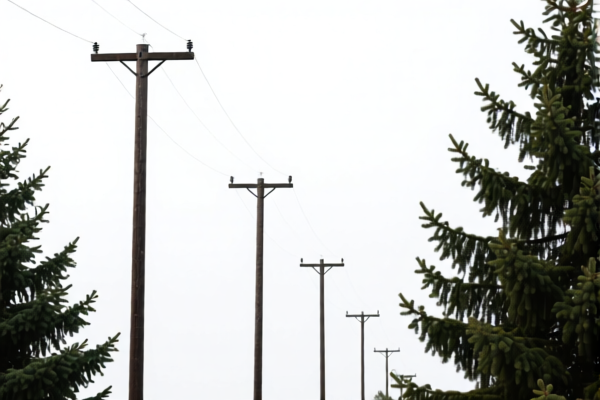
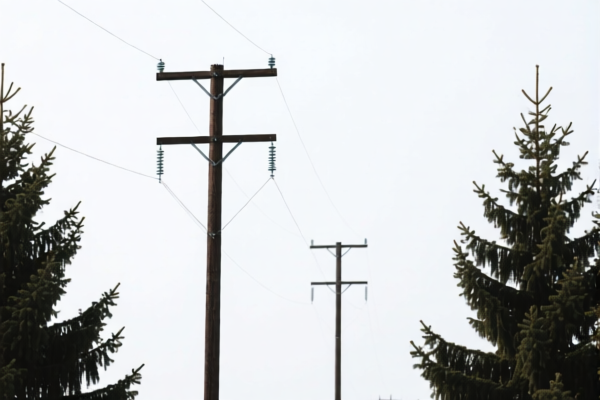
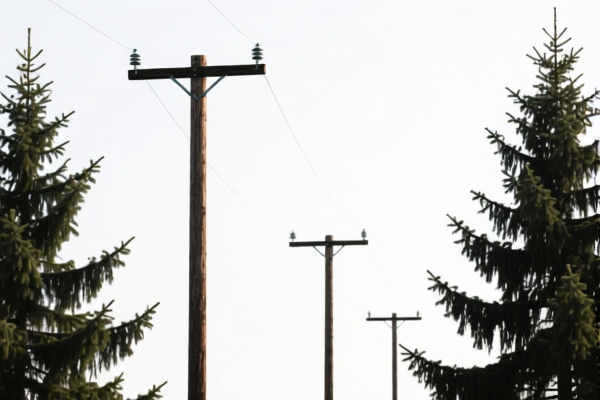
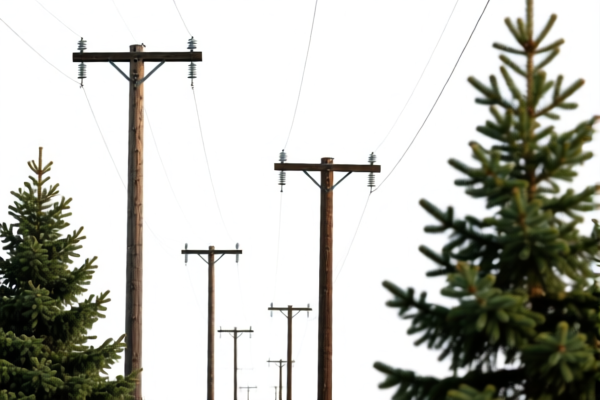
AI Analysis
🌲 Spruce Telephone Pole (Spruce Cold Fir Electric Pole)
🌐 HS Code Reference & Customs Clearance Guide | 2026 Latest Tariff Analysis | Professional Clearance Strategy
📌 I. Product Definition & Classification: What Exactly Is a "Spruce Telephone Pole"?
A Spruce Telephone Pole (often categorized under Spruce and Cold Fir in timber trade) is a structural timber product primarily used for power transmission and telecommunications infrastructure. It is not just a raw log; it is a processed wood product designed for durability and structural integrity.
In international trade, the classification depends heavily on the level of processing:
- Roughly Hewn/Chipped: May fall under processed timber chapters.
- Treated/Preserved: Often still classified under timber products if the treatment doesn't change the fundamental character.
- Specific Shape (Pole/Pin/Post): Key identifiers for specific HS codes like 4404 (Charcoal wood/Posts) or 4407 (Sawn wood).
⚠️ Critical Distinction:
- If the wood is merely sawn but not shaped into a final pole structure, it may be classified under general sawn timber. - If it is shaped into poles, pins, or posts (tapered, pointed), it falls under specific heading 4404 or 4403. - If it is preserved/treated, the base HS code remains the same, but customs may require additional treatment certificates.
📦 II. HS Code Classification Details (2026 Latest Tariff Authority Comparison)
The data provided indicates that Spruce/Cold Fir Poles are subject to a complex tariff structure involving base duties, additional tariffs, and Section 122 duties. Below are the specific HS Codes identified in the reference data:
| HS Code | Product Description | Application Scenario | Processing State |
|---|---|---|---|
4407.12.00.59 |
Spruce/Cold Fir Wood, Sawn/Laminated, Other | General processed spruce/cold fir wood products, not specifically poles | ✅ Sawn/Laminated |
4403.23.01.12 |
Spruce/Cold Fir Wood, Treated or Not, For Electric Poles | Specifically for power poles, raw or slightly processed | ✅ For Electric Poles |
4404.10.00.80 |
Spruce/Cold Fir Wood, Charcoal Wood/Posts/Poles | Poles, Pins, and Posts – The most common classification for shaped poles | ✅ Shaped as Poles |
4407.12.00.20 |
Spruce/Cold Fir Wood, Sawn/Laminated, Utilization | General wood utilization, less specific than 4403/4404 | ✅ Sawn/Utilized |
4403.24.01.12 |
Spruce/Cold Fir Wood, Treated or Not, For Electric Poles | Specifically for electric poles (sub-category of 4403) | ✅ For Electric Poles |
🔍 Key Insight:
-4404.10.00.80is the most precise classification for shaped poles, pins, and posts. -4403.23.01.12and4403.24.01.12are used when the wood is specified specifically for electric pole use, even if not yet fully shaped into the final taper. -4407codes are generally for sawn timber used for other purposes or less specific processing. Using these for finished poles may lead to misclassification issues if the product is clearly a "pole."
💰 III. 2026 Latest Tariff Rate Details (Including Additional Duties & Policy Surcharges)
✅ Applicable Country: United States (US)
✅ Origin: China (CN)
✅ Effective Time: 2026 (Current Data Context)
All HS Codes listed above share the same total tax rate according to the provided data.
🎯 Total Tax Structure for All Listed HS Codes:
| Item | Content |
|---|---|
| Base Tariff (MFN) | 0.0% |
| Additional Tariff (Section 301/USITC) | +25.0% |
| Section 122 Tariff | +10.0% |
| Total Tax Rate | 35.0% |
| Tax Calculation Basis | CIF Value (Cost, Insurance, Freight) × 35% |
| De Minimis Exemption | ❌ Not Applicable (Deny de minimis for Section 301/122 goods) |
| Legal Basis Path | USITC:4403/4404 → Section 301: Footnote 9903.88.01 → Section 122: Specific Provision |
📌 Explanation:
- Base Tariff 0%: Wood products often have low or zero base MFN rates to encourage raw material import. - Additional Tariff 25%: This is the standard Section 301 tariff on many Chinese-origin goods, including wood products. - Section 122 Tariff 10%: This is an additional surcharge (often related to specific trade remedies or recent policy updates) applied on top of the 301 tariff. - Total 35%: This is a very high effective duty rate. Importers must factor this into their landed cost immediately.
🛠️ IV. Customs Clearance Practical Advice (Actionable Pitfall Guide)
✅ 1. Required Documentation Checklist (Non-Negotiable)
| Document | Mandatory? | Notes |
|---|---|---|
| ✅ Commercial Invoice | ✔️ | Must clearly state "Spruce/Cold Fir Electric Pole" and HS Code. |
| ✅ Packing List | ✔️ | Detail dimensions, weight, and number of poles. |
| ✅ Bill of Lading/Air Waybill | ✔️ | Standard shipping document. |
| ✅ Certificate of Origin (CO) | ✔️ | To prove Chinese origin (triggers the 35% tax). |
| ✅ Wood Treatment Certificate | ✔️ | If treated with preservatives (e.g., creosote, copper azole), must declare. |
| ✅ IPPC Mark | ✔️ | Mandatory for wood packaging/materials to confirm pest-free status. |
| ✅ Product Specification Sheet | ✔️ | Confirm material (Spruce/Cold Fir), length, diameter, and treatment status. |
✅ 2. Declaration Strategy (Key Mnemonics)
🔥 "Shape Determines Code, Treatment Requires Cert, 35% Tax is Fixed!"
| Scenario | Correct HS Code | Risk if Wrong |
|---|---|---|
| Shaped Poles (Tapered, Pointed) | 4404.10.00.80 |
Misclassifying as sawn timber (4407) may lead to penalties for inaccurate description. |
| Raw Logs for Poles | 4403.23.01.12 or 4403.24.01.12 |
Using 4407 is technically incorrect for "poles" but may be used if not yet shaped. |
| Treated Poles | Same HS Code | Must declare treatment type. Failure to do so can cause quarantine delays. |
| Wood Packaging | 4407 or 4415 |
Must have IPPC Mark. No IPPC = Rejection/Re-export. |
✅ 3. Special Situations
| Situation | Handling Advice |
|---|---|
| Mixed Shipment (Poles + Packaging) | Declare poles and packaging separately. Packaging may have different duties/IPPC rules. |
| Second-hand Poles | Higher scrutiny for pests. Requires rigorous fumigation certificate. |
| Non-Chinese Origin | If from Canada, Russia, etc., NO Section 301/122 Tariffs. Tax may be 0% or lower. Crucial for cost savings. |
| Sample Shipment | De minimis exemption does NOT apply to Section 301/122 goods. Even small samples pay 35%. |
🌍 V. Global Market Comparison (2026 Context)
| Country/Region | Recommended HS Code | Tariff (China Origin) | Key Requirements |
|---|---|---|---|
| 🇺🇸 USA | 4404.10.00.80 / 4403.23.01.12 |
35% (0% Base + 25% Sec 301 + 10% Sec 122) | IPPC Mark, Treatment Cert |
| 🇨🇳 China | 4404 / 4403 |
~0-5% | Phytosanitary Cert |
| 🇪🇺 EU | 4404 / 4403 |
~0-2.5% | Fumigation/Heat Treatment Proof |
| 🇨🇦 Canada | 4404 / 4403 |
0% (USMCA/Other) | IPPC Mark |
📌 Conclusion:
- The USA imposes a significant 35% tariff on Chinese-origin spruce/cold fir poles. - Alternative Sourcing: If possible, source poles from Canada, Russia, or Europe to avoid the 35% surcharge. - Cost Impact: On a $10,000 shipment, $3,500 is pure duty cost.
📌 VI. Common Errors & Pitfalls (Lessons from the Field)
❌ Error 1: Declaring "Wood" instead of "Electric Pole"
👉 Consequence: Customs may question the specificity. While tax rate is the same, accuracy is key for compliance and future audits.
❌ Error 2: Ignoring the IPPC Mark on packaging
👉 Consequence: Cargo held at port, fumigated at importer’s expense, or rejected.
❌ Error 3: Assuming "De Minimis" ($800) exemption applies
👉 Consequence: NO. Section 301 and 122 goods are explicitly excluded from de minimis. Even small parcels pay 35%.
❌ Error 4: Using 4407 for shaped poles
👉 Consequence: While tax is the same, it’s a misdeclaration. If audited, it could lead to penalties for inaccurate HS code usage. 4404 is more accurate for "poles."
✅ Correct Approach:
"Spruce Electric Poles, Preserved with [Chemical Name], Tapered, Length 30ft, Diameter 8in at base, IPPC Certified, Origin China"
🎯 VII. Conclusion: Professional Clearance, Cost Control, Risk Mitigation
🎯 Remember the Rules:
🔹 "Shape = 4404, Purpose = 4403, Tax = 35%, De Minimis = NO."
🔹 "IPPC Mark is Mandatory, No Mark = No Entry."
🔹 "Consider Sourcing from Non-China to Save 35%."
📌 Pro Tip:
If your suppliers are not in China (e.g., Canadian Spruce), the tax could be 0% (or significantly lower). Always verify the Country of Origin on the bill of lading to optimize duty costs.
📣 Immediate Action:
📞 Confirm HS Code with your freight forwarder before shipment.
📋 Ensure all wood packaging has IPPC Marks.
💰 Factor 35% duty into your landed cost calculations for Chinese-origin poles.
✨ Professional Clearance Starts with Accurate Classification!
💼 Your Bottom Line Depends on Every Percent of Duty!
Customer Reviews
About HS Code Classification
The Harmonized System (HS) is an internationally standardized nomenclature developed by the World Customs Organization (WCO) to classify traded products. Over 200 countries use the HS system as the basis for customs tariffs, trade statistics, and import/export regulations.
Each HS code follows a hierarchical structure:
- Chapter (2 digits) — Broad category of goods (e.g., Chapter 84: Machinery and Mechanical Appliances)
- Heading (4 digits) — More specific grouping within the chapter
- Subheading (6 digits) — Internationally standardized breakdown, used by all WCO member countries
- National subdivisions (8-10 digits) — Country-specific extensions for further classification, such as US HTSUS 10-digit codes
Correct HS code classification is essential for smooth customs clearance, accurate duty payment, and compliance with trade regulations. Misclassification can lead to customs delays, overpayment of duties, or penalties.
When importing from CN to US, the applicable tariff rates may include:
- Most-Favored-Nation (MFN) rate — The standard duty rate applied to WTO members
- General rate — Applied to countries without trade agreements
- Trade remedy duties — Additional tariffs such as Section 301 (anti-dumping), Section 232 (national security), or countervailing duties
The information provided on this page is for reference purposes only. For official classification, please consult with your local customs authority or a licensed customs broker.