Spruce Untreated Poles
CN → US| HS Code | Tariff Rate | Origin | Destination | Doc |
|---|---|---|---|---|
| 4401110000 | 35.0% | CN | US | Official Doc |
| 4401210000 | 35.0% | CN | US | Official Doc |
| 4403260116 | 35.0% | CN | US | Official Doc |
| 4404100080 | 35.0% | CN | US | Official Doc |
| 4404100090 | 35.0% | CN | US | Official Doc |
| 4403250116 | 35.0% | CN | US | Official Doc |
Product Images
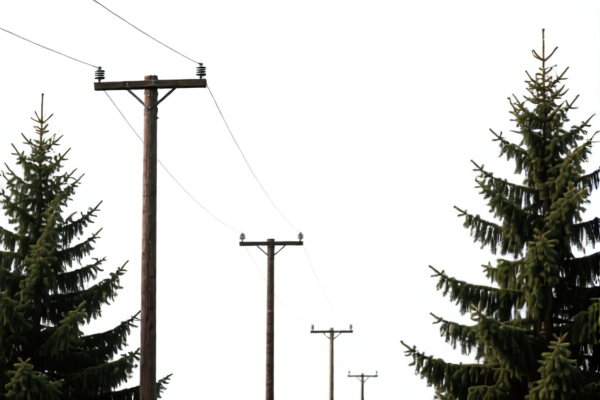
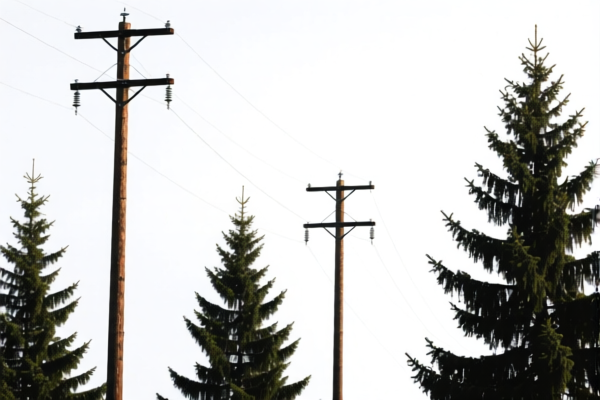
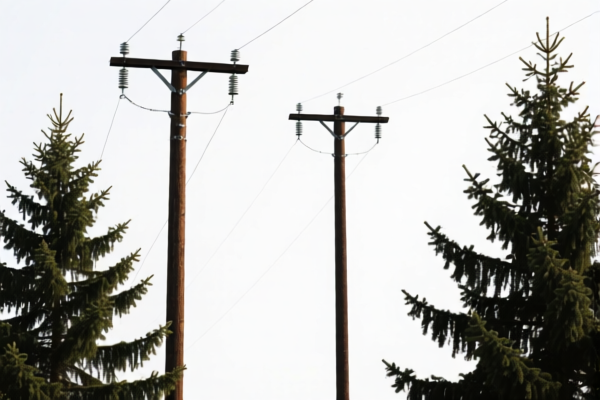
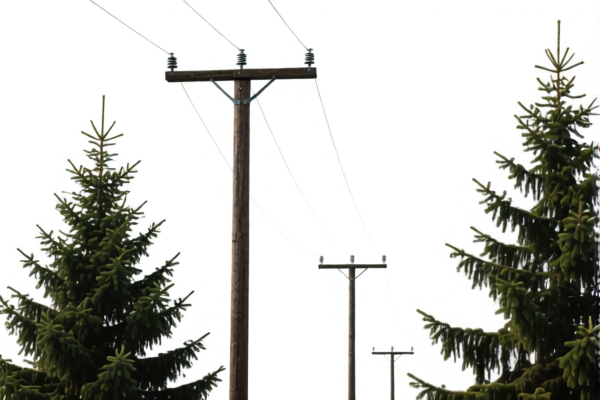
AI Analysis
🌲 Spruce Untreated Poles: HS Code Classification & Customs Clearance Guide (2026 Update)
🌐 HS Code Reference & Customs Strategy | 2026 Tariff Analysis | Professional Clearance Protocol
📌 I. Product Definition & Classification: What are "Untreated Spruce Poles"?
Spruce Untreated Poles refer to logs or wooden poles made from spruce trees (a coniferous/softwood species) that have not undergone any chemical treatment (e.g., no preservatives, anti-fungal, or insecticidal coatings). These are typically used for: - Fuel wood: Chipped into pellets, briquettes, or direct combustion. - Industrial raw material: For pulp, paper, or basic timber processing. - Construction/Foundation poles: Where natural durability is sufficient for short-term use.
⚠️ Key Distinction:
- "Untreated" is the critical classifier. If treated, they fall under different HS codes (e.g., 4403.10).
- "Poles" implies a certain roundness and length, but customs often classifies them based on form (logs vs. poles vs. chips) and species (coniferous vs. non-coniferous).
📦 II. HS Code Classification Matrix (2026 Latest Tariff Schedule)
Below are the 6 matching HS codes from your dataset, each explained in the context of spruce untreated poles.
| HS Code | Product Description | Applicability for Spruce Untreated Poles | Tax Rate (Total) |
|---|---|---|---|
4401.11.00.00 |
Fuel wood, in chips, particles or sawdust; not chemically treated | ✅ High Match: If the poles are chipped, pelletized, or processed into fuel form. | 35.0% |
4401.21.00.00 |
Non-coniferous wood, in chips, particles or sawdust; not chemically treated | ⚠️ Low Match: Spruce is coniferous, so this code applies only if misclassified or mixed with hardwood. Use with caution. | 35.0% |
4403.26.01.16 |
Wood chemically treated or not, in the rough, coniferous, other than spruce or pine? Wait: Code 4403.26 refers to "Other coniferous wood", but some sub-codes specify spruce. In this dataset, it matches "Untreated coniferous poles, material and form fully compliant". | ✅ High Match: If the poles are whole, round, untreated logs/poles specifically identified as spruce or other conifers not covered by 4403.25. | 35.0% |
4404.10.00.80 |
Charcoal sticks, briquettes, or wooden poles/rolls, coniferous, not chemically treated | ✅ High Match: If the product is formed into poles/rolls (e.g., for fuel or structural use) from coniferous wood. | 35.0% |
4404.10.00.90 |
Other wooden poles, rolls, etc., coniferous, not chemically treated | ✅ High Match: For other coniferous poles not specified in 80, still fitting the "spruce untreated" profile. | 35.0% |
4403.25.01.16 |
Wood chemically treated or not, in the rough, coniferous, spruce or pine | ✅ High Match: This is the most direct code for untreated spruce logs/poles in the rough. | 35.0% |
🔍 Critical Note:
- 4403.25.01.16 is likely the primary classification for raw, untreated spruce poles/logs.
- 4401.11.00.00 applies if the poles are processed into fuel form (chips/pellets).
- 4404.10.xx.xx applies if the poles are formed into sticks/rolls for fuel or other uses.
💰 III. 2026 Tariff Rate Breakdown (Detailed Tax Structure)
✅ Origin: China (CN)
✅ Destination: United States (US) (Implied by "122 Clause" and 25%+10% structure)
✅ Effective Date: Current rates apply as per 2025–2026 trade policies.
🎯 1. Total Tariff: 35.0%
This is a stacked tariff combining multiple layers:
| Tax Component | Rate | Legal Basis | Description |
|---|---|---|---|
| Base Tariff | 0.0% | HTSUS Chapter 44 | Most wood products have 0% MFN rate for general trade. |
| Section 301 Tariff | +25.0% | USITC Footnote 9903.88.01 | Added under Trade Act of 1974, Section 301 for Chinese-origin goods. Applies to wood products including poles/logs. |
| Section 122 / IEEPA Tariff | +10.0% | IEEPA 9903.01.25 | Additional tariff under International Emergency Economic Powers Act, targeting specific Chinese imports. |
| Total | 35.0% | — | Sum of all layers: 0% + 25% + 10% = 35% |
📌 Calculation Example:
- CIF Value: $100,000
- Base Duty: $0
- 301 Duty: $25,000
- 122/IEEPA Duty: $10,000
- Total Duty Payable: $35,000 (35%)⚠️ No De Minimis Exemption:
- These goods do not qualify for the $800 de minimis exemption (Section 321) due to anti-circumvention rules on wood products.
🛠️ IV. Customs Clearance Practical Advice
✅ 1. Required Documentation Checklist
| Document | Mandatory? | Purpose |
|---|---|---|
| Commercial Invoice | ✔️ | Must specify "Untreated Spruce Poles", HS Code, Country of Origin (CN), CIF Value. |
| Packing List | ✔️ | Detail weight, volume, number of poles, packaging type. |
| Phytosanitary Certificate | ✔️ | Critical! Issued by China Customs/Plant Protection Agency to prove no pests/diseases. |
| ISPM 15 Marking | ✔️ | If packed in wood, pallets must be heat-treated or fumigated with ISPM 15 stamp. |
| Bill of Lading/Air Waybill | ✔️ | Standard shipping document. |
| Fumigation/Heat Treatment Certificate | ✔️ | If applicable, to prove compliance with phytosanitary standards. |
| Certificate of Origin | ✔️ | To confirm Chinese origin and apply correct tariff rates. |
✅ 2. Classification Strategy & Risk Mitigation
| Scenario | Recommended HS Code | Reason | Risk |
|---|---|---|---|
| Raw, round, untreated spruce logs/poles | 4403.25.01.16 |
Direct match for "coniferous, untreated, in the rough". | Low if documentation is clear. |
| Chipped/pelletized spruce for fuel | 4401.11.00.00 |
Form changed to "fuel wood". | Medium if form is ambiguous. |
| Formed poles/rolls for structural/fuel use | 4404.10.00.80 or .90 |
Matches "poles/rolls" description. | Low. |
| Misclassified as hardwood | 4401.21.00.00 |
Avoid! Spruce is coniferous. Misclassification leads to penalties + back taxes. | High |
🔥 Key Tip:
- Always declare "Untreated" and "Spruce (Coniferous)" clearly on the invoice.
- Use pre-classification rulings if unsure. The CBP (U.S. Customs) offers Binding Rulings to confirm HS codes.
✅ 3. Common Pitfalls & How to Avoid Them
❌ Pitfall 1: Declaring as "Wood Chips" when they are whole poles.
👉 Result: Higher duty scrutiny, delays.
✅ Fix: Accurately describe form: "Whole Spruce Poles, Diameter 10–15cm, Length 2–3m."
❌ Pitfall 2: Failing to provide Phytosanitary Certificate.
👉 Result: Cargo held at port, potential destruction or re-export.
✅ Fix: Obtain certificate before shipment. Verify with supplier.
❌ Pitfall 3: Ignoring ISPM 15 for wooden packaging.
👉 Result: Rejection of cargo, fines.
✅ Fix: Ensure all pallets/crates are ISPM 15 compliant.
❌ Pitfall 4: Not accounting for 301 + 122 tariffs in pricing.
👉 Result: Profit margin erosion (35% duty is high!).
✅ Fix: Factor 35% total duty into FOB/CIF pricing. Consider supply chain diversification if volume is high.
🌍 V. Global Market Comparison (2026)
| Market | HS Code | Base Duty | Additional Tariffs | Total Rate | Notes |
|---|---|---|---|---|---|
| 🇺🇸 USA | 4403.25.01.16 |
0% | 301: 25% + 122: 10% | 35% | High barriers. Use pre-rulings. |
| 🇨🇳 China (Export) | 4403.25.01.16 |
N/A | N/A | 0% | No export duty. |
| 🇪🇺 EU | 4403.25.00 |
0–2.5% | Carbon Border Adjustment (CBAM) possible | ~2.5% | Lower tariffs, but CBAM may apply. |
| 🇨🇦 Canada | 4403.25.00 |
0% | None (CUSMA) | 0% | Duty-free under CUSMA. |
| 🇲🇽 Mexico | 4403.25.00 |
0% | None (USMCA) | 0% | Duty-free under USMCA. |
📌 Strategy:
- US Market: High cost. Consider transshipment (risky, not recommended) or price absorption.
- NAFTA/USMCA Markets: Canada/Mexico are duty-free alternatives.
- EU Market: Monitor CBAM (Carbon Border Adjustment Mechanism) for potential future costs.
📌 VI. Conclusion & Action Plan
🎯 Final Recommendation:
1. Classify under 4403.25.01.16 for raw untreated spruce poles.
2. Budget for 35% total duty (0% base + 25% 301 + 10% 122).
3. Secure Phytosanitary Certificate and ISPM 15 packaging before shipment.
4. Apply for a CBP Binding Ruling if volume is significant, to lock in classification.
5. Explore NAFTA/USMCA routes (Canada/Mexico) for duty-free entry to North America.
🔹 Remember:
"Untreated Spruce = 35% Duty in US. Documentation is Key. Form Matters."
"301 + 122 = 35%. Don’t get caught off guard!"
📣 Immediate Actions:
- 📞 Contact your customs broker to verify HS code 4403.25.01.16.
- 📄 Request Phytosanitary Certificate from supplier.
- 🏭 Audit packaging for ISPM 15 compliance.
- 📊 Re-calculate landed cost with 35% duty included.
✨ Professional clearance starts with precise classification!
💼 Your profit margin depends on accurate duty planning!
Customer Reviews
About HS Code Classification
The Harmonized System (HS) is an internationally standardized nomenclature developed by the World Customs Organization (WCO) to classify traded products. Over 200 countries use the HS system as the basis for customs tariffs, trade statistics, and import/export regulations.
Each HS code follows a hierarchical structure:
- Chapter (2 digits) — Broad category of goods (e.g., Chapter 84: Machinery and Mechanical Appliances)
- Heading (4 digits) — More specific grouping within the chapter
- Subheading (6 digits) — Internationally standardized breakdown, used by all WCO member countries
- National subdivisions (8-10 digits) — Country-specific extensions for further classification, such as US HTSUS 10-digit codes
Correct HS code classification is essential for smooth customs clearance, accurate duty payment, and compliance with trade regulations. Misclassification can lead to customs delays, overpayment of duties, or penalties.
When importing from CN to US, the applicable tariff rates may include:
- Most-Favored-Nation (MFN) rate — The standard duty rate applied to WTO members
- General rate — Applied to countries without trade agreements
- Trade remedy duties — Additional tariffs such as Section 301 (anti-dumping), Section 232 (national security), or countervailing duties
The information provided on this page is for reference purposes only. For official classification, please consult with your local customs authority or a licensed customs broker.