Spruce Wood Logs
CN → US| HS Code | Tariff Rate | Origin | Destination | Doc |
|---|---|---|---|---|
| 4403240135 | 35.0% | CN | US | Official Doc |
| 4401110000 | 35.0% | CN | US | Official Doc |
| 4403230135 | 35.0% | CN | US | Official Doc |
Product Images
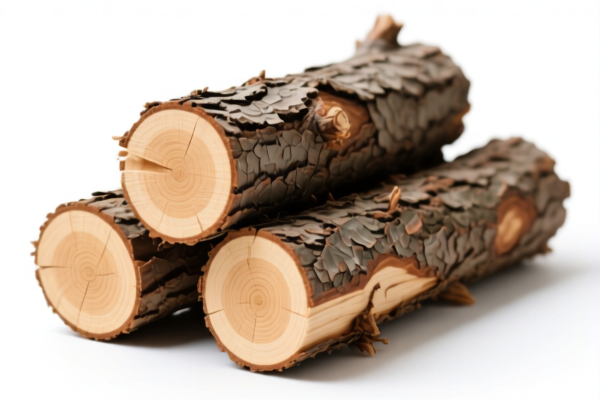
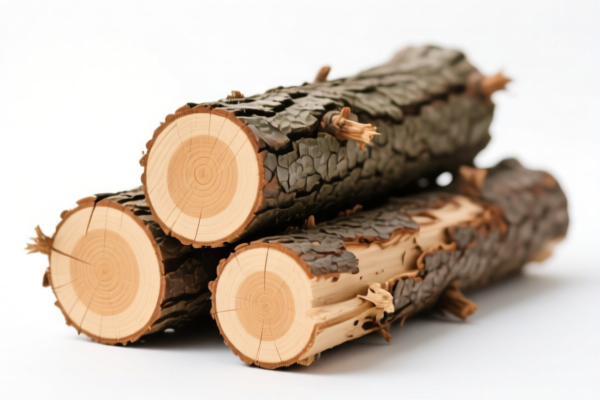
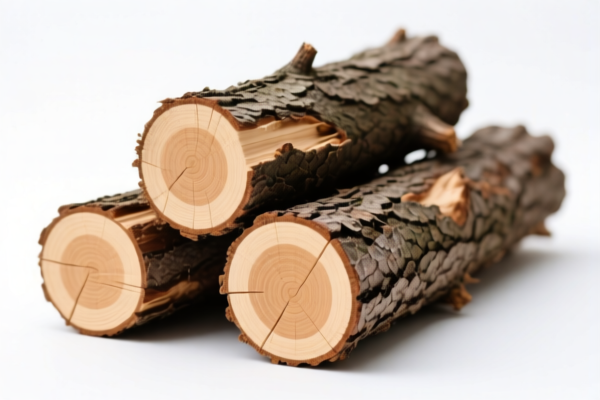
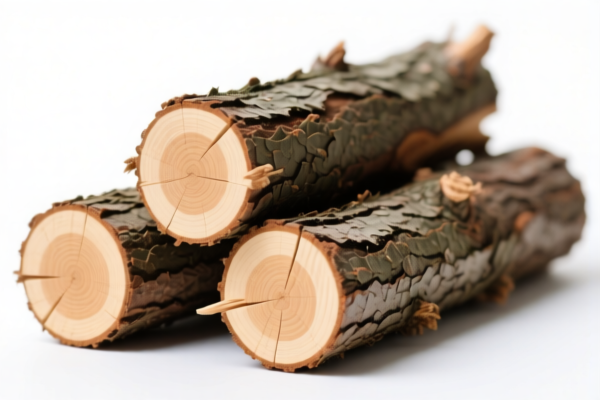
AI Analysis
🌲 Spruce Wood Logs (Picea spp.)
🌐 HS Code Reference & Customs Clearance Guide | 2026 Latest Tariff Analysis | Professional Clearance Strategy
📌 I. Product Definition & Classification: Do You Really Understand "Spruce Logs"?
Spruce Wood Logs are raw timber materials primarily derived from the Picea genus. In international trade, their classification depends strictly on their physical form and intended use. They are not merely "wood"; they are categorized into three distinct scenarios:
- Construction/Industrial Timber: Treated as raw material for furniture, construction, or manufacturing (Logs).
- Fuel: Burned for energy generation or heating (Fuelwood).
- Simplified Processing: Roughly hewn or simply squared, but not fully processed (Rough Timber).
⚠️ Key Distinction Point:
- If the spruce is simply felled, debarked or un-debarked, and intended for structural or manufacturing use → Classified under 4403.24.01.35 (Logs) or 4403.23.01.35 (Rough Timber).
- If the spruce is intended to be burned as fuel → Classified under 4401.11.00.00 (Fuelwood).
- Note: Even though "Logs" and "Rough Timber" look similar, the customs declaration must specify if it is processed enough to be considered "rough timber" or strictly "logs" to avoid misclassification penalties.
📦 II. HS Code Classification Details (2026 Latest Tariff Authority Comparison)
| HS Code | Product Description | Application Scenario | Processing Level |
|---|---|---|---|
4403.24.01.35 |
Spruce logs, material is Spruce, form is Log | Raw material for sawmills, construction, export trade | ✅ Unprocessed Log |
4401.11.00.00 |
Spruce logs, Spruce is a coniferous species, form is Fuelwood | Energy source, biomass fuel, heating | ✅ For Combustion |
4403.23.01.35 |
Spruce logs, material is Spruce, form is Rough Timber | Semi-processed for specific industrial uses | ✅ Roughly Hewn/Squared |
🔍 Key Reminder:
- Spruce is a Conifer: All three codes above relate to Coniferous Wood.
- Purpose Matters: If you declare "Spruce Logs" but intend to burn them, you MUST use4401.11.00.00. If you declare them as fuel but they are used for construction, you risk fines for misdeclaration.
- Format Matters: The difference between4403.24(Log) and4403.23(Rough Timber) lies in the degree of processing. "Logs" are typically round or near-round; "Rough Timber" is at least sawn or roughly squared on all four sides.
💰 III. 2026 Latest Tariff Rate Breakdown (Including Surtaxes, Policy Add-ons)
✅ Applicable Country: United States (US)
✅ Origin: China (CN)
✅ Effective Date: 2025/2026 (Includes subsequent imports)
🎯 1. 4403.24.01.35 —— Spruce Logs (Raw Material for Industry)
| Item | Content |
|---|---|
| Base Tariff Rate | 0.0% (ad valorem) |
| USITC Surtax | +25.0% (Section 301 Tariff) |
| Section 122 Tariff | +10.0% (Specific Provision for Certain Wood Products) |
| Total Tax Rate | 35.0% |
| Tax Calculation | CIF Value × 35% |
| De Minimis Eligibility | ❌ No (Deny de minimis) |
| Legal Basis Path | Section 301 → Section 122 → USITC:4403.24.01.35 |
📌 Explanation:
- The 25% Section 301 tariff applies to a wide range of Chinese imports, including wood products.
- The 10% Section 122 tariff is a specific additional duty applied to certain imports under different trade authorities.
- Total 35%: This is a high tariff. Importers must budget carefully. Misclassification as "Fuelwood" to avoid this is risky if the goods are clearly for industrial use.
🎯 2. 4401.11.00.00 —— Spruce Fuelwood (Coniferous, in Logs)
| Item | Content |
|---|---|
| Base Tariff Rate | 0.0% |
| USITC Surtax | +25.0% (Section 301 Tariff) |
| Section 122 Tariff | +10.0% (Specific Provision for Certain Wood Products) |
| Total Tax Rate | 35.0% |
| Tax Calculation | CIF Value × 35% |
| De Minimis Eligibility | ❌ No (Deny de minimis) |
| Legal Basis Path | Section 301 → Section 122 → USITC:4401.11.00.00 |
📌 Note:
- Although "Fuelwood" might seem like a different category, it is also subject to Section 301 and Section 122 tariffs when originating from China.
- Do not assume "Fuel" equals "Duty-Free." It does not. The total rate remains 35%.
🎯 3. 4403.23.01.35 —— Spruce Rough Timber
| Item | Content |
|---|---|
| Base Tariff Rate | 0.0% |
| USITC Surtax | +25.0% (Section 301 Tariff) |
| Section 122 Tariff | +10.0% (Specific Provision for Certain Wood Products) |
| Total Tax Rate | 35.0% |
| Tax Calculation | CIF Value × 35% |
| De Minimis Eligibility | ❌ No (Deny de minimis) |
| Legal Basis Path | Section 301 → Section 122 → USITC:4403.23.01.35 |
📌 Note:
- Whether declared as "Logs" or "Rough Timber," the tariff structure is identical for Chinese-origin spruce.
- The distinction is purely regulatory and documentary. If the wood is too processed for logs but not enough for finished lumber, use this code.
🛠️ IV. Customs Clearance Practical Advice (Battle-Proven Pitfall Avoidance Guide)
✅ 1. Required Documentation Checklist (Nothing Missing)
| Document | Must Provide | Explanation |
|---|---|---|
| ✅ Commercial Invoice | ✔️ | Clearly state "Spruce Wood Logs" or "Spruce Fuelwood." Do not use vague terms like "Wood." |
| ✅ Packing List | ✔️ | Detail the quantity, weight, and packaging (e.g., bulk, bundled). |
| ✅ Phytosanitary Certificate | ✔️ | Critical for Wood. Must confirm no pests/diseases (ISPM 15 standard). |
| ✅ Bill of Lading | ✔️ | Show clean on-board status. |
| ✅ Certificate of Origin | ✔️ | To prove origin from China (triggers Section 301/122). |
| ✅ Processing/Use Declaration | ✔️ | Explicitly state if for "Fuel," "Construction," or "Rough Timber" to justify HS Code. |
✅ 2. Declaration Tips (Key Mnemonic)
🔥 "Specify Form, Specify Use, Pesticide Free, Tariff 35%!"
| Scenario | Correct Declaration | Wrong Practice |
|---|---|---|
| Spruce for Building | 4403.24.01.35 |
Declare as Fuelwood → Inspection delay |
| Spruce for Heating | 4401.11.00.00 |
Declare as Timber → Misclassification fine |
| Spruce Roughly Squared | 4403.23.01.35 |
Declare as Log → Dispute over processing level |
| Non-Chinese Origin | Different Code | Assume all Spruce is 35% → Miss preferential rate (if any) |
✅ 3. Special Situation Handling
| Situation | Handling Advice |
|---|---|
| Pest Infestation Risk | Ensure Phytosanitary Certificate is valid. US CBP and USDA APHIS are strict on wood imports. |
| Mixed Wood Shipments | If Spruce is mixed with Pine, declare separately. Mixed declarations cause hold-ups. |
| Section 122 vs. 301 | Both apply. Ensure your broker knows both 25% + 10% are additive, not alternative. |
| De Minimis (Section 321) | ❌ Not Applicable. Wood products from China are generally excluded from $800 de minimis exemption due to Section 301/122. |
🌍 V. Global Major Market Customs Comparison (2026 Latest)
| Country/Region | Recommended HS Code | Tariff (China Origin) | Certification Required | Notes |
|---|---|---|---|---|
| 🇺🇸 USA | 4403.24.01.35 / 4401.11.00.00 |
35% (25% Sec 301 + 10% Sec 122) | Phytosanitary Cert, Fumigation | High tariff, strict biosecurity |
| 🇨🇳 China | 4403.24.01.35 |
5% - 10% (Varies) | None (Export only) | Export duty may apply |
| 🇪🇺 EU | 4403.23.00 / 4403.94.00 |
0% - 3% (Generally) | Fumigation (ISPM 15) | No Section 301 equivalent |
| 🇨🇦 Canada | 4403.24.00 |
0% (CUSMA if Canadian origin) | ISPM 15 | Check USMCA rules if non-NAFTA |
📌 Conclusion:
- USA is the most challenging market for Chinese Spruce due to the 35% cumulative tariff.
- Biosecurity is the biggest operational hurdle. Even if tariffs are paid, incorrect phytosanitary docs lead to rejection or destruction.
📌 VI. Common Mistakes & Pitfall Avoidance (Blood Lessons)
❌ Mistake 1: Declaring "Spruce Logs" without specifying if it is for fuel or timber.
👉 Consequence: Customs may hold the shipment for additional inspection to determine intent.
❌ Mistake 2: Assuming "Fuelwood" is duty-free or lower taxed.
👉 Consequence: It is also 35%. No savings. Only the HS code changes.
❌ Mistake 3: Ignoring Phytosanitary Certification.
👉 Consequence: Shipment rejected at port, returned, or destroyed. 100% loss of cargo value.
❌ Mistake 4: Using "Wood" as a generic description.
👉 Consequence: CBP may assign a higher default duty rate or impose penalties for inaccurate description.
✅ Correct Practice:
"Spruce Wood Logs, Coniferous, Unprocessed, For Construction Use, Fumigated, HS Code 4403.24.01.35"
🎯 VII. Conclusion: Professional Declaration, Save Time, Reduce Costs!
🎯 Remember the Mnemonic:
🔹 "Logs, Fuel, Rough – All 35% for China!"
🔹 "Phytosanitary is Key, Without It, You’re Done!"
🔹 "HS Code Defines Purpose, Purpose Defines Code!"
📌 Pro Tip:
If your Spruce originates from USA, Canada, or New Zealand, you may qualify for 0% duty under various FTAs (USMCA, etc.). Always verify Origin first.
For Chinese-origin wood, budget for 35% tariff and strict biosecurity compliance.
📣 Immediate Action:
📞 Contact a licensed customs broker + Provide Phytosanitary Cert + Pre-clear HS Code
🚀 Let your Spruce Logs pass customs smoothly, avoid delays, and protect your margins!
✨ Professional clearance starts with accurate classification!
💼 Every percent of tax matters, every document counts!
Customer Reviews
About HS Code Classification
The Harmonized System (HS) is an internationally standardized nomenclature developed by the World Customs Organization (WCO) to classify traded products. Over 200 countries use the HS system as the basis for customs tariffs, trade statistics, and import/export regulations.
Each HS code follows a hierarchical structure:
- Chapter (2 digits) — Broad category of goods (e.g., Chapter 84: Machinery and Mechanical Appliances)
- Heading (4 digits) — More specific grouping within the chapter
- Subheading (6 digits) — Internationally standardized breakdown, used by all WCO member countries
- National subdivisions (8-10 digits) — Country-specific extensions for further classification, such as US HTSUS 10-digit codes
Correct HS code classification is essential for smooth customs clearance, accurate duty payment, and compliance with trade regulations. Misclassification can lead to customs delays, overpayment of duties, or penalties.
When importing from CN to US, the applicable tariff rates may include:
- Most-Favored-Nation (MFN) rate — The standard duty rate applied to WTO members
- General rate — Applied to countries without trade agreements
- Trade remedy duties — Additional tariffs such as Section 301 (anti-dumping), Section 232 (national security), or countervailing duties
The information provided on this page is for reference purposes only. For official classification, please consult with your local customs authority or a licensed customs broker.