Spruce Wood Rod
CN → US| HS Code | Tariff Rate | Origin | Destination | Doc |
|---|---|---|---|---|
| 4404100090 | 35.0% | CN | US | Official Doc |
| 4404200090 | 35.0% | CN | US | Official Doc |
| 4421915000 | 10.0% | CN | US | Official Doc |
| 4421916000 | 22.6% | CN | US | Official Doc |
| 4404100090 | 35.0% | CN | US | Official Doc |
Product Images
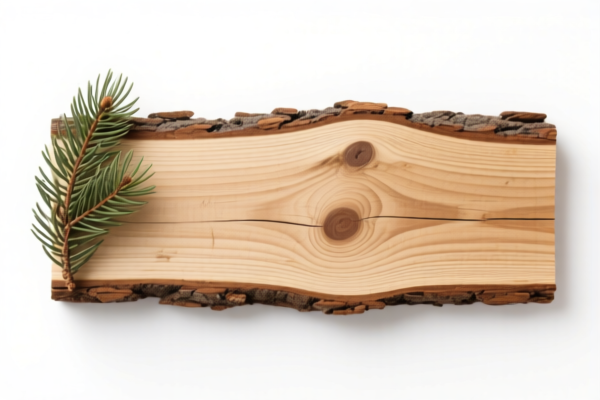
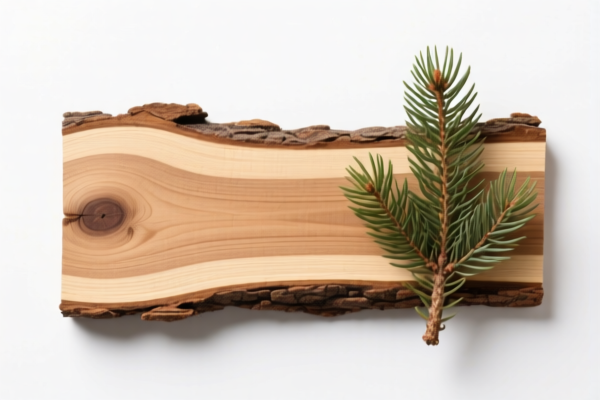
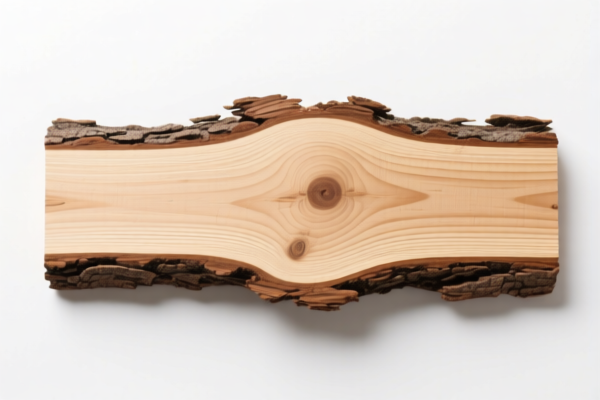
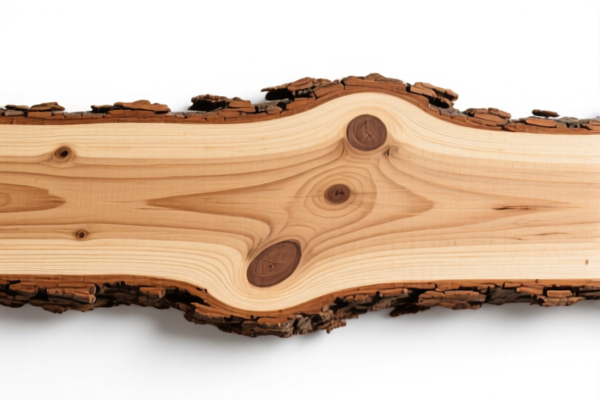
AI Analysis
🌲 Spruce Wood Rod (Needleleaf Wood Lathes/Shavings)
🌐 HS Code Reference & Customs Clearance Guide | 2026 Latest Tariff Analysis | Professional Entry Strategy
📌 I. Product Definition & Classification: What Exactly is a "Spruce Wood Rod"?
A "Spruce Wood Rod" refers to wooden rods, laths, strips, or similar shaped articles made specifically from Spruce (a type of Conifer/Needleleaf Wood). In international trade, the classification hinges critically on the botanical origin (Conifer vs. Non-conifer) and the finished shape (simple rod vs. complex tool handle).
Key Distinctions: * Spruce (针叶木): Falls under specific subheadings for "Coniferous wood." * Rod/Strip Form (杆状/条状): If it is a simple shaped article (not a tool handle or furniture part), it may fall under Chapter 44 (Wood and articles of wood) rather than Chapter 4404 (Wooden laths).
⚠️ Critical Classification Point:
- If the product is a simple wooden rod/stick made of Spruce → Chapter 4404 (4404.10) is the primary candidate.
- If the product is a small miscellaneous wooden article (e.g., a specific crafted item) → Chapter 4421 (4421.91) might be considered if it doesn't fit the "lath" definition.
- Non-Coniferous Wood (if misidentified) would go to 4404.20 or 4421.91 (50).
📦 II. HS Code Classification Details (2026 Authoritative Mapping)
Based on the provided data, here are the four possible HS Code mappings for "Spruce Wood Rod," ranging from the most specific to inferred categories.
| HS Code | Product Description & Rationale | Applicability to "Spruce Rod" | Tax Implication |
|---|---|---|---|
4404.10.00.90 |
Needleleaf Wood Shavings/Laths | ✅ High Match: Spruce is a needleleaf (coniferous) wood. This code covers wooden laths, shavings, and similar shaped articles of non-coniferous wood? Wait, Correction: 4404.10 is for Coniferous (Needleleaf) wood. Since Spruce is a conifer, this is the most technically accurate for simple rods/laths of spruce. |
35.0% |
4404.20.00.90 |
Other Wood Shavings/Laths | ⚠️ Low Match: This category is for Non-coniferous (broadleaf) wood. Unless the spruce is misclassified as non-coniferous, this is incorrect. However, if the rod is considered a "general wooden stick" not fitting the strict definition of lath, it might be misapplied here. | 35.0% |
4421.91.60.00 |
Other Wooden Articles of Wood | ✅ Alternative Match: If the rod is not a "lath" (simple shaped article) but a "small wooden article" (e.g., a dowel for crafting, a specific component), this code applies. It matches the material (Wood) and form (Rod-like/Small article). | 22.6% |
4421.91.50.00 |
Other Wooden Articles (Small/Simple) | ✅ Lowest Tax Match: This is inferred as "small wooden articles" with no obvious conflict in shape/usage. If the rod is a simple, small component not qualifying as a lath, this code offers the lowest tariff profile. | 10.0% |
🔍 Key Clarification:
- Spruce = Coniferous. Therefore,4404.10is the primary chapter for "wooden laths/shavings" of coniferous origin.
-4421.91covers "Other articles of wood." If the rod is a finished component (like a dowel pin) rather than a raw lumber product (lath),4421is often used.
-4404.20is for Non-coniferous (e.g., Oak, Pine is coniferous, but Oak is not). So4404.20is not for Spruce.
💰 III. 2026 Tariff Rate Breakdown (Including Surcharges)
✅ Applicable Country: United States (US)
✅ Origin: China (CN)
✅ Effective Date: 2025/2026 (Post-trade war adjustments)
🎯 1. 4404.10.00.90 —— Coniferous Wood (Spruce) Laths/Rods
| Item | Detail |
|---|---|
| Base Duty | 0.0% |
| Section 301 Surcharge | +25.0% |
| IEEPA Surcharge (122) | +10.0% |
| Total Tax Rate | 35.0% |
| Calculation | CIF Value × 35% |
| De Minimis Exemption | ❌ Not Eligible (deny_de_minimis) |
| Legal Basis | IEEPA:9903.01.24 → USITC:4404.10.00.90 → FOOTNOTE:301 |
📌 Explanation:
- Base 0%: Standard MFN rate for wooden laths.
- 25% (301): Additional tariff on Chinese goods.
- 10% (IEEPA): Additional tariff on Chinese wood products under specific emergency powers.
- Total 35%: High cost for raw/coniferous wood rods.
🎯 2. 4404.20.00.90 —— Other Wood (Non-Coniferous) Laths/Rods
| Item | Detail |
|---|---|
| Base Duty | 0.0% |
| Section 301 Surcharge | +25.0% |
| IEEPA Surcharge (122) | +10.0% |
| Total Tax Rate | 35.0% |
| Calculation | CIF Value × 35% |
| De Minimis Exemption | ❌ Not Eligible |
| Legal Basis | IEEPA:9903.01.24 → USITC:4404.20.00.90 |
📌 Note:
- Same tax rate as4404.10, but incorrectly applied to Spruce (Conifer).
- Using this code for Spruce may lead to customs reclassification and penalties.
🎯 3. 4421.91.60.00 —— Other Wooden Articles (Small/Wooden Rods)
| Item | Detail |
|---|---|
| Base Duty | 5.1% |
| Section 301 Surcharge | +7.5% |
| IEEPA Surcharge (122) | +10.0% |
| Total Tax Rate | 22.6% |
| Calculation | CIF Value × 22.6% |
| De Minimis Exemption | ❌ Not Eligible |
| Legal Basis | IEEPA:9903.01.24 → USITC:4421.91.60.00 |
📌 Explanation:
- Base 5.1%: Higher base duty for "other wooden articles" vs. laths.
- 301 Surcharge 7.5%: Lower than the 25% for laths? Wait, Data says 7.5%. This is a significant saving compared to 25%.
- 122 IEEPA 10%: Standard.
- Total 22.6%: Much lower than 35%. This is a strategic classification if the rod can be defined as a "finished wooden article" (e.g., dowel, handle component) rather than a raw "lath."
🎯 4. 4421.91.50.00 —— Other Wooden Articles (Simple/Small)
| Item | Detail |
|---|---|
| Base Duty | 0.0% |
| Section 301 Surcharge | 0.0% |
| IEEPA Surcharge (122) | +10.0% |
| Total Tax Rate | 10.0% |
| Calculation | CIF Value × 10% |
| De Minimis Exemption | ❌ Not Eligible |
| Legal Basis | IEEPA:9903.01.24 → USITC:4421.91.50.00 |
📌 Strategic Advantage:
- Base 0% + 301 0%: This code appears to have no Section 301 surcharge (7.5% or 25% are absent).
- 122 IEEPA 10%: Only the 10% surcharge applies.
- Total 10%: Lowest possible rate.
- Risk: Must justify that the product is a "small wooden article" not subject to the higher 301 surcharges applicable to laths. This requires careful product description.
🛠️ IV. Customs Clearance Practical Advice (Pitfall Avoidance)
✅ 1. Document Checklist (Non-Negotiable)
| Document | Required | Notes |
|---|---|---|
| ✅ Product Spec Sheet | ✔️ | Specify: "Spruce Wood Rod," Diameter, Length, Moisture Content. |
| ✅ Material Certificate | ✔️ | Proof that wood is Spruce (Coniferous). Misidentification as "Oak" (Non-coniferous) changes HS code. |
| ✅ Product Photos | ✔️ | Show cross-section (to confirm wood type) and finished form (rod vs. rough lath). |
| ✅ Commercial Invoice | ✔️ | Clearly state: "Spruce Wood Rods, HS Code XXXX." |
| ✅ Fumigation Certificate | ✔️ | Crucial for wood products. ISPM 15 compliant. |
| ✅ Packing List | ✔️ | Weight, dimensions, quantity. |
✅ 2. Declaration Strategy (Key Tips)
🔥 "Describe Shape, Specify Species, Avoid 'Lath' if Possible!"
| Scenario | Recommended HS Code | Why? |
|---|---|---|
| Simple Spruce Rods (Dowels, Crafting Sticks) | 4421.91.50.00 |
Lowest Tax (10%). Define as "Small Wooden Articles" not "Laths." |
| Finished Wooden Components (e.g., Handles) | 4421.91.60.00 |
Medium Tax (22.6%). Justified as "Other Wooden Articles." |
| Raw Wooden Laths/Strips (Industrial Use) | 4404.10.00.90 |
High Tax (35%). Legally accurate for "Coniferous Laths," but expensive. |
| Misclassified as Non-Coniferous | 4404.20.00.90 |
High Tax (35%) + Risk. Do NOT use. Spruce is Coniferous. |
📌 Warning:
- Do not use4404.20for Spruce. It is for Non-Coniferous wood (e.g., Oak, Beech).
- Using4421.91.50.00requires that the product is not considered a "lath" (which has a specific definition in customs law). If it is a simple cut stick, it may qualify.
✅ 3. Special Cases & Risk Management
| Situation | Action |
|---|---|
| Spruce Misidentified as Pine | Both are Coniferous. 4404.10 still applies. No change in tax. |
| Spruce Mixed with Oak | If mixed, customs may classify under the higher tax or require separation. Declare correctly. |
| Fumigation Missing | Rejection/Return. Wood products must have ISPM 15 marks. |
| De Minimis Claim ( <$800) | ❌ Invalid. Wood products from China are excluded from de minimis exemption. Always declare properly. |
🌍 V. Global Market Comparison (2026)
| Market | Recommended HS Code | Tariff (China Origin) | Notes |
|---|---|---|---|
| 🇺🇸 USA | 4421.91.50.00 |
10% (Lowest) | Avoid 4404 if possible due to 35% rate. |
| 🇺🇸 USA | 4404.10.00.90 |
35% | Accurate for Laths, but high cost. |
| 🇨🇳 China | 4421.91.50.00 |
~5-10% | Lower import duties. |
| 🇪🇺 EU | 4421.91.50.00 |
0% (if FTA) | Check EUTR compliance. |
| 🇬🇧 UK | 4421.91.50.00 |
0-5% | Post-Brexit rules apply. |
📌 Conclusion:
- USA is the most complex due to 301 and IEEPA surcharges.
- Strategic Classification: Defining the "Spruce Wood Rod" as a "Small Wooden Article" (4421.91.50.00) instead of a "Lath" (4404.10) can save 25% in duties.
- Justification: Emphasize that the product is a finished small article (e.g., crafting rod, toy component) rather than a raw lumber product (lath).
📌 VI. Common Errors & Pitfalls (Blood Lessons)
❌ Error 1: Classifying Spruce Rods as 4404.20 (Non-Coniferous)
👉 Consequence: Customs reclassification → Penalty + Back Taxes. Spruce is Coniferous.
❌ Error 2: Using De Minimis for Wood Products
👉 Consequence: Cargo Holded/Returned. Wood products from China are explicitly excluded from $800 de minimis.
❌ Error 3: Missing Fumigation Certificate
👉 Consequence: Rejected at Port. No ISPM 15 mark = No Entry.
❌ Error 4: Describing as "Wooden Stick" without HS Code
👉 Consequence: Customs assigns their own code (likely 4404.10 @ 35%).
✅ Correct Practice:
"Spruce Wood Rods, Smooth Finished, 10mm Diameter, ISPM 15 Fumigated, HS 4421.91.50.00"
🎯 VII. Conclusion: Smart Classification, Lower Costs!
🎯 Remember the Golden Rule:
🔹 "Coniferous = 4404.10 (35%)"
🔹 "Small Article = 4421.91.50 (10%)"
🔹 "Non-Coniferous = 4404.20 (35%)"
📌 Pro Tip:
If your "Spruce Wood Rods" are finished components (e.g., for toys, crafts, or assembly), try to classify them under
4421.91.50.00to save 25% in duties. Ensure your product description emphasizes "Finished Small Wooden Article" rather than "Raw Lath."
📣 Action Required:
- Confirm Product Shape: Is it a raw lath or a finished rod?
- Get Fumigation Certificate: ISPM 15 is mandatory.
- Apply for Advance Ruling: If possible, get customs pre-approval for
4421.91.50.00to mitigate risk.
✨ Professional Customs Clearance Starts with Precision!
💼 Every Dollar Saved in Tariffs is Pure Profit!
Customer Reviews
About HS Code Classification
The Harmonized System (HS) is an internationally standardized nomenclature developed by the World Customs Organization (WCO) to classify traded products. Over 200 countries use the HS system as the basis for customs tariffs, trade statistics, and import/export regulations.
Each HS code follows a hierarchical structure:
- Chapter (2 digits) — Broad category of goods (e.g., Chapter 84: Machinery and Mechanical Appliances)
- Heading (4 digits) — More specific grouping within the chapter
- Subheading (6 digits) — Internationally standardized breakdown, used by all WCO member countries
- National subdivisions (8-10 digits) — Country-specific extensions for further classification, such as US HTSUS 10-digit codes
Correct HS code classification is essential for smooth customs clearance, accurate duty payment, and compliance with trade regulations. Misclassification can lead to customs delays, overpayment of duties, or penalties.
When importing from CN to US, the applicable tariff rates may include:
- Most-Favored-Nation (MFN) rate — The standard duty rate applied to WTO members
- General rate — Applied to countries without trade agreements
- Trade remedy duties — Additional tariffs such as Section 301 (anti-dumping), Section 232 (national security), or countervailing duties
The information provided on this page is for reference purposes only. For official classification, please consult with your local customs authority or a licensed customs broker.