Spruce wood for agricultural support
CN → US| HS Code | Tariff Rate | Origin | Destination | Doc |
|---|---|---|---|---|
| 4403240135 | 35.0% | CN | US | Official Doc |
| 4403230115 | 35.0% | CN | US | Official Doc |
Product Images
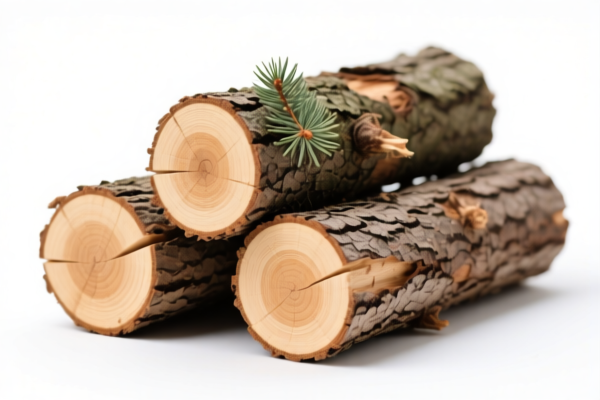
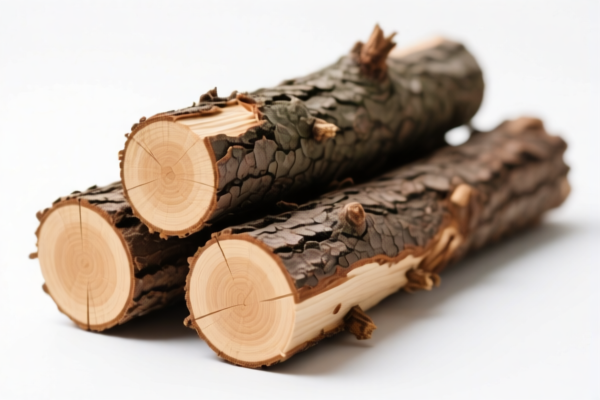
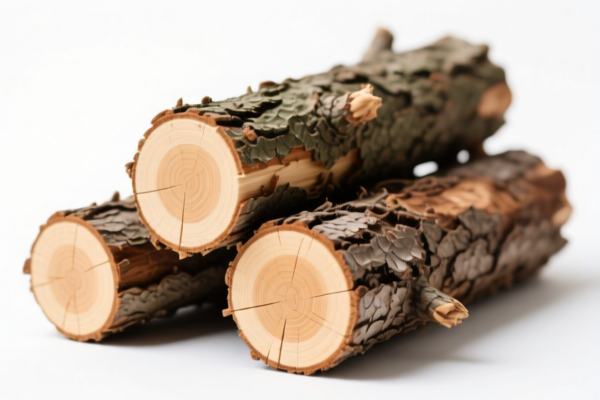
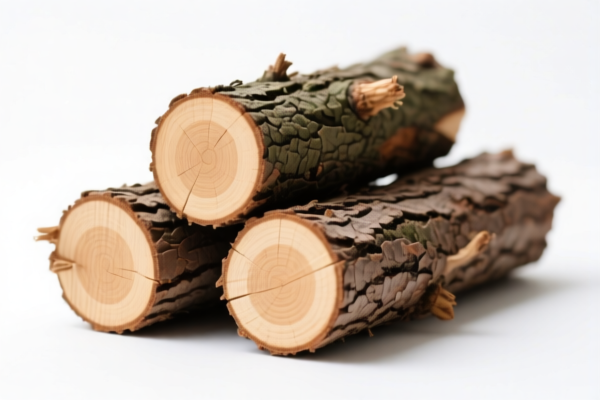
AI Analysis
🌲 Spruce Wood for Agricultural Support (Rough Wood / Poles / Posts)
🌐 HS Code Reference & Customs Clearance Guide | 2026 Latest Tariff Analysis | Professional Clearance Strategy 📌 I. Product Definition & Classification: Understanding "Spruce Wood for Agricultural Support"
Spruce wood intended for agricultural support (such as trellises, stakes, or fencing) falls under Chapter 44 of the Harmonized System. Specifically, it is classified as "Wood in the rough". This category includes wood that has been stripped of bark or sapwood or roughly squared, but has not been processed into finished lumber or panels.
In international trade, the exact HS Code depends on the geometric shape and minimum cross-sectional dimension of the wood:
1. General Logs and Timbers: - Wood that is roughly squared or in the rough form, used generally for construction or further processing. - Key Characteristic: Not specifically shaped as poles/posts with a defined minimum size.
2. Poles, Piles, and Posts: - Wood specifically shaped for use as poles, piles, or posts (e.g., for fences or agricultural supports). - Key Characteristic: The smallest cross-sectional dimension is 15 cm or more.
⚠️ Critical Distinction: - If the spruce wood is roughly squared logs (no specific post shape, or <15cm smallest dimension) → Classified under 4403.24.01.35. - If the spruce wood is shaped as poles/posts (smallest cross-section ≥ 15cm) → Classified under 4403.23.01.15.
📦 II. HS Code Classification Details (2026 Latest Tariff Authority Match)
| HS Code | Product Description | Application Scenario | Minimum Cross-Section |
|---|---|---|---|
4403.24.01.35 |
Spruce (Picea spp.) - Other, coniferous: Logs and timber | Rough-squared logs, general construction timber, smaller dimensional logs | < 15 cm (or not specified as post) |
4403.23.01.15 |
Spruce (Picea spp.) - Poles, piles, and posts: Fence posts | Agricultural support poles, fence posts, heavy-duty stakes | ≥ 15 cm |
🔍 Key Reminder: -
4403.24.01.35applies to "Other" spruce timber that doesn't meet the specific "pole/post" criteria (often smaller or less uniform). -4403.23.01.15applies specifically to Poles, Piles, and Posts, where the smallest cross-sectional dimension is 15 cm or more. For large agricultural support structures, this is likely the correct code.
💰 III. 2026 Latest Tariff Rate Detail (Including Surtaxes)
✅ Applicable Country: United States (US) ✅ Origin: China (CN) [Note: Based on the provided tax data which shows a 25% surcharge] ✅ Effective Time: 2026 Tariff Schedule
🎯 1. 4403.24.01.35 —— Spruce Logs and Timber (Other)
| Item | Content |
|---|---|
| Base Tariff | 0.0% |
| Additional Tariff (Section 301/Retaliatory) | 0.0% |
| Total Tariff | 0.0% |
| Tax Calculation | CIF Value × 0% |
| De Minimis Exemption | ❌ Not Applicable (Physical goods subject to tariff) |
| Legal Basis | Standard HTSUS for Softwood Lumber (Rough) |
📌 Explanation: - This code represents general rough spruce timber. - Total Tax: 0%. This is a highly favorable rate, likely due to specific trade agreements or exclusions for this specific subheading of rough timber. - Cost Impact: Minimal. Focus should be on ensuring accurate description to avoid misclassification.
🎯 2. 4403.23.01.15 —— Spruce Poles, Piles, and Posts (≥15cm)
| Item | Content |
|---|---|
| Base Tariff | 0.0% |
| Additional Tariff (Section 301/Retaliatory) | 25.0% |
| Total Tariff | 25.0% |
| Tax Calculation | CIF Value × 25% |
| De Minimis Exemption | ❌ Not Applicable |
| Legal Basis | HTSUS 4403.23.01.15 + Additional Duty Footnote |
📌 Explanation: - This code covers spruce wood specifically shaped as poles or posts with a significant cross-section (≥15 cm). - Total Tax: 25.0%. This is a high tariff rate. - Why the difference? The US imposes additional duties on certain categories of Chinese-origin wood products, particularly those considered "posts" or larger structural timber, often linked to Section 301 investigations or specific trade remedy measures. - Cost Impact: Significant. 25% of the CIF value must be budgeted for duties.
🛠️ IV. Customs Clearance Practical Advice (Pitfall Avoidance Guide)
✅ 1. Documentation Checklist (Essential for Clearance)
| Document | Required | Explanation |
|---|---|---|
| ✅ Commercial Invoice | ✔️ | Must clearly state: "Spruce Wood, Rough, for Agricultural Support," including HS Code. |
| ✅ Packing List | ✔️ | Detail the dimensions (length, width, height) to prove cross-section ≥15 cm if claiming 4403.23.01.15. |
| ✅ Phytosanitary Certificate | ✔️ | CRITICAL for wood products. Must certify freedom from pests (e.g., bark beetles). Issued by origin country's NPPO. |
| ✅ ISPM 15 Marking | ✔️ | If wood is packaged in pallets/crates, they must be heat-treated or fumigated and marked with ISPM 15 logo. |
| ✅ Product Specifications | ✔️ | Include species (Picea spp.), treatment status (rough, bark-stripped), and dimensions. |
| ✅ Bill of Lading | ✔️ | Standard shipping document. |
✅ 2. Declaration Tips (Key Mnemonics)
🔥 "Size Defines the Code: <15cm is Log, ≥15cm is Post!"
| Scenario | Correct HS Code | Incorrect Action |
|---|---|---|
| Small branches, <15cm thickness | 4403.24.01.35 |
Misdeclare as Posts → 25% Tax |
| Large fence posts, ≥15cm thickness | 4403.23.01.15 |
Misdeclare as "Other Logs" → 0% Tax (Risk of Audit & Penalties) |
| Processed Lumber (Planed/Squared) | Not in this list (Likely Ch 4403/4407) | Misdeclare as "Rough Wood" → Wrong Chapter |
📌 Note: - Do not under-declare size. If the customs officer measures a "post" and finds it is <15 cm, it may be reclassified to
4403.24.01.35(0% tax), but this is rare. More commonly, if you declare a large timber as "Other Logs" (0%) but it is clearly a "Post" (25%), you will face back taxes, fines, and potential seizure. - Accuracy is key: If the wood is indeed ≥15 cm, pay the 25%. If it is <15 cm, use the 0% code.
✅ 3. Special Considerations for Agricultural Wood
| Issue | Handling Advice |
|---|---|
| Bark Presence | The HS codes 4403.23 and 4403.24 apply to wood "whether or not stripped of bark." However, excessive bark may increase pest risk. Ensure Phytosanitary Certificate covers bark if present. |
| Chemical Treatment | If wood is chemically treated (e.g., creosote for fence posts), declare this explicitly. It may affect classification or require additional safety data sheets (SDS). |
| Packaging | Wooden pallets must comply with ISPM 15. Non-compliant packaging can lead to rejection or destruction at the port. |
| Value Declaration | Ensure the declared CIF value is accurate. Under-declaration to reduce 25% tax is a common audit trigger for wood products. |
🌍 V. Global Market Comparison (2026 Latest)
| Country/Region | Recommended HS Code | Tariff Rate (China Origin) | Certification Requirement | Notes |
|---|---|---|---|---|
| 🇺🇸 USA | 4403.23.01.15 (Posts) |
25.0% | Phytosanitary + ISPM 15 | High tariff on posts/logs from China. |
| 🇺🇸 USA | 4403.24.01.35 (Other) |
0.0% | Phytosanitary + ISPM 15 | Lower tariff if not classified as "Posts". |
| 🇨🇳 China | 4403.24.01.35 / 4403.23.01.15 |
0-5% | Phytosanitary | Export market, lower duties. |
| 🇪🇺 EU | 4403.24 / 4403.23 |
0% (Most Favored Nation) | Fumigation/Heat Treatment (ISPM 15) | Strict phytosanitary rules, but low/zero tariff. |
| 🇬🇧 UK | 4403.24 / 4403.23 |
0% | Phytosanitary | Post-Brexit rules align closely with EU standards. |
📌 Conclusion: - The USA imposes a 25% duty on spruce poles/posts (≥15cm) from China. This is a significant cost driver. - If possible, verify if the wood can be classified as "Other Logs" (
4403.24.01.35) if the dimensions are under 15 cm. This reduces duty to 0%. - For other markets (EU, UK, China), tariffs are generally low or zero, but phytosanitary compliance is strict.
📌 VI. Common Errors & Pitfalls (Lessons Learned)
❌ Error 1: Declaring large fence posts as "Other Logs" to avoid 25% duty. 👉 Consequence: Customs reclassifies based on physical inspection → Back taxes + 25% duty + Penalties.
❌ Error 2: Ignoring the Phytosanitary Certificate. 👉 Consequence: Shipment held at port, fumigated at exporter's expense, or rejected/destroyed.
❌ Error 3: Not marking wooden pallets with ISPM 15. 👉 Consequence: Entire shipment quarantined, packaging removed/replaced at port → Delays and extra costs.
❌ Error 4: Incorrectly stating species (e.g., saying "Pine" instead of "Spruce"). 👉 Consequence: Misclassification risk, potential biosecurity flags.
✅ Correct Practice:
"Spruce Wood, Rough, Species: Picea spp., For Agricultural Posts, Length: 3m, Diameter: 18cm, Fumigated, ISPM 15 Pallets."
🎯 VII. Conclusion: Professional Declaration for Cost Efficiency
🎯 Remember the Rule:
🔹 "Check the Size: <15cm is 0%, ≥15cm is 25%!" 🔹 "Phytosanitary is Mandatory, No Exception!"
📌 Pro Tip:
If your agricultural support wood has a smallest cross-sectional dimension under 15 cm, it likely falls under 4403.24.01.35 (0% tax). If it is large posts, budget for 25%.
Always obtain a Phytosanitary Certificate and ensure ISPM 15 compliance for packaging.
📣 Immediate Action:
📞 Consult with a licensed customs broker to verify the exact dimensions of your spruce wood. 📄 Ensure the Phytosanitary Certificate matches the wood description precisely. 🚀 Clear customs smoothly, avoid 25% pitfalls if possible, and ensure compliance!
✨ Professional Clearance Starts with Accurate Classification! 💼 Every dollar saved on duty counts!
Customer Reviews
About HS Code Classification
The Harmonized System (HS) is an internationally standardized nomenclature developed by the World Customs Organization (WCO) to classify traded products. Over 200 countries use the HS system as the basis for customs tariffs, trade statistics, and import/export regulations.
Each HS code follows a hierarchical structure:
- Chapter (2 digits) — Broad category of goods (e.g., Chapter 84: Machinery and Mechanical Appliances)
- Heading (4 digits) — More specific grouping within the chapter
- Subheading (6 digits) — Internationally standardized breakdown, used by all WCO member countries
- National subdivisions (8-10 digits) — Country-specific extensions for further classification, such as US HTSUS 10-digit codes
Correct HS code classification is essential for smooth customs clearance, accurate duty payment, and compliance with trade regulations. Misclassification can lead to customs delays, overpayment of duties, or penalties.
When importing from CN to US, the applicable tariff rates may include:
- Most-Favored-Nation (MFN) rate — The standard duty rate applied to WTO members
- General rate — Applied to countries without trade agreements
- Trade remedy duties — Additional tariffs such as Section 301 (anti-dumping), Section 232 (national security), or countervailing duties
The information provided on this page is for reference purposes only. For official classification, please consult with your local customs authority or a licensed customs broker.