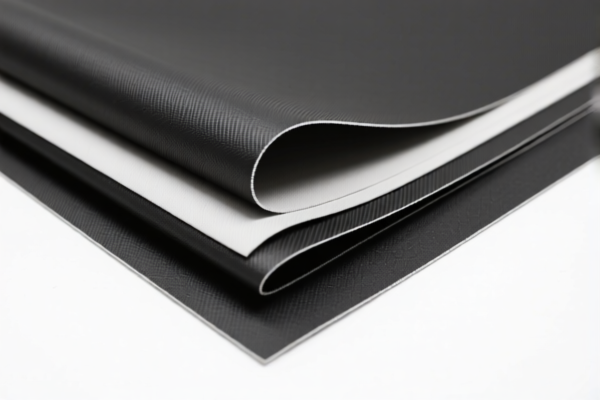
Square Meter Car Interior Material
CN → US| HS Code | Tariff Rate | Origin | Destination | Doc |
|---|---|---|---|---|
| 5903102090 | 35.0% | CN | US | Official Doc |
| 3921905050 | 39.8% | CN | US | Official Doc |
| 3921135000 | 39.2% | CN | US | Official Doc |
| 5903202000 | 35.0% | CN | US | Official Doc |
| 3926305000 | 22.8% | CN | US | Official Doc |
Product Images


AI Analysis
🚗 Square Meter of Car Interior Material: HS Code & Tariff Deep Dive (2026 Guide)
🌐 HS Code Reference & Clearance Guide | 2026 Tariff Analysis | Professional Logistics Strategy
📌 I. Product Definition & Classification: What Exactly is "Square Meter Car Interior Material"?
"Car Interior Material" is a broad term used in the global automotive supply chain, typically referring to textiles, plastics, and composite laminates used for upholstery, headliners, door panels, dashboards, and trims. In international trade, it falls primarily into two major categories:
Category A: Coated/Impregnated Textiles (5903)
Textile fabrics coated, impregnated, or covered with plastics (e.g., PVC, PU) for durability and aesthetics.
* Typical Applications: Seat covers, headliners, floor mats, door panel linings.
Category B: Plastic Sheets, Films, and Articles (3921/3926)
Plastic-based materials (non-textile or composite) used as sheets, films, or molded parts.
* Typical Applications: Dashboard skins (PVC/PU film), hard plastic trim, connectors, interior plastic components.
⚠️ Critical Classification Point:
- If the base is fabric (textile) and it is coated (e.g., PVC or PU) → HS Code 5903 series.
- If the base is pure plastic (no fabric) and formed into sheets/membranes → HS Code 3921 series.
- If it is a finished plastic part (e.g., a specific clip or connector made of plastic) → HS Code 3926 series.
📦 II. HS Code Classification Breakdown (2026 Latest Tariff Schedule)
Based on the provided dataset, here are the specific classifications for automotive interior materials:
| HS Code | Product Description | Material Logic | Typical Application |
|---|---|---|---|
5903.10.20.90 |
Textiles, impregnated/coated with Polyvinyl Chloride (PVC) | Textile base + PVC coating | PVC leather seats, car floor mats, headliners |
3921.90.50.50 |
Plastics: Other plates, sheets, film (Catch-all for plastics) | Pure plastic, sheet/film form | General plastic trim sheets, dashboards (non-specific) |
3921.13.50.00 |
Plastics: Cellular or foamed polyurethane | Polyurethane (PU) film/foam | Flexible PU skins, soft-touch dashboard covers |
5903.20.20.00 |
Textiles, impregnated/coated with Polyurethane (PU) | Textile base + PU coating | PU "leather" (Synthetic leather), upholstery fabric |
3926.30.50.00 |
Plastic articles: Connectors/Parts (Miscellaneous) | Finished plastic molded part | Interior plastic clips, latches, connectors, trim pieces |
🔍 Key Insight:
- Textiles vs. Pure Plastic: The distinction between5903(Textile + Plastic) and3921(Pure Plastic) is the most common audit trigger. If a fabric is visible, it is likely5903. - Material Specifics: PVC (5903.10) and PU (5903.20) are the dominant coatings. - Finished Parts: If the material is not a roll of fabric or sheet, but a specific molded piece (like a clip), it drops to3926.
💰 III. 2026 Tariff Rate详解 (Detailed Tariff Breakdown)
✅ Applicable Market: United States (US)
✅ Country of Origin: China (CN)
✅ Effective Date: Based on current trade data (2025-2026 projections)
Note: The "122 Clauses" (Section 301) and "25% Add-on" are critical for US imports from China.
🎯 1. 5903.10.20.90 & 5903.20.20.00 — Coated Textiles (PVC & PU)
These cover the most common "Synthetic Leather" and "Coated Fabrics".
| Item | Content |
|---|---|
| Base Tariff | 0.0% (Duty-free entry for textiles under normal MFN) |
| Section 301 Add-on | +25.0% (Retaliation tariff on Chinese textiles/coatings) |
| Section 122 Tariff | +10.0% (Specific punitive tariff for "other" categories) |
| Total Tariff | 35.0% |
| Calculation | CIF Value × 35% |
| De Minimis Exemption | ❌ NO (Not eligible) |
| Legal Path | USITC:5903.10.20.90 → Section 301: 25% → Section 122: 10% |
📌 Interpretation:
- Even though the base textile duty is 0%, the 35% total is driven by the 25% Section 301 and 10% Section 122 penalties.
- Material Note: This applies to both PVC-coated (5903.10) and PU-coated (5903.20) fabrics.
🎯 2. 3921.90.50.50 & 3921.13.50.00 — Plastic Sheets & PU Foams
These cover pure plastic sheets and flexible PU films.
| Item | Content |
|---|---|
| Base Tariff | 4.2% - 4.8% (Standard plastic duty) |
| Section 301 Add-on | +25.0% |
| Section 122 Tariff | +10.0% |
| Total Tariff | 39.2% - 39.8% |
| Calculation | CIF Value × ~39.5% |
| De Minimis Exemption | ❌ NO |
| Legal Path | USITC:3921.xx → Section 301: 25% → Section 122: 10% |
📌 Interpretation:
- These are higher cost than coated textiles due to the non-zero base tariff.
- PU Foam/Film (3921.13.50.00) carries 39.2%, while generic plastic sheets (3921.90.50.50) carry 39.8%.
- Risk: High classification risk if the "plastic content" is ambiguous.
🎯 3. 3926.30.50.00 — Plastic Articles (Connectors/Parts)
Specific molded plastic components.
| Item | Content |
|---|---|
| Base Tariff | 5.3% |
| Section 301 Add-on | +7.5% (Reduced rate for specific "other" plastic articles) |
| Section 122 Tariff | +10.0% |
| Total Tariff | 22.8% |
| Calculation | CIF Value × 22.8% |
| De Minimis Exemption | ❌ NO |
| Legal Path | USITC:3926.30 → Section 301: 7.5% → Section 122: 10% |
📌 Interpretation:
- Lowest Tariff Option: If the product can be classified as a "finished plastic part" (connector/clip) rather than a "sheet/roll", the tariff drops significantly from ~39% to 22.8%.
- Strategy: Use this for small molded components, not for bulk fabric rolls.
🛠️ IV. Clearance Practical Advice (Avoiding Pitfalls)
✅ 1. Documentation Checklist (Must-Haves)
| Document | Requirement | Why? |
|---|---|---|
| Material Composition Report | ✅ Critical | Must explicitly state % of Textile vs. Plastic, and type of plastic (PVC vs. PU). |
| Technical Data Sheet (TDS) | ✅ Required | Defines the "coating" vs. "substrate" to distinguish 5903 (Textile) from 3921 (Plastic). |
| Product Photos (Cross-section) | ✅ Required | Visual proof of the textile base covered by plastic. |
| Bill of Materials (BOM) | ✅ Required | Breakdown of components (e.g., "PVC coated polyester fabric"). |
| Commercial Invoice | ✔️ | Must describe the material precisely (e.g., "PU Coated Textile" NOT just "Plastic Sheet"). |
✅ 2. Declaration Strategy (The "Golden Rule")
🔥 Mantra: "Fabric Base = 5903; Pure Plastic Sheet = 3921; Molded Part = 3926!"
| Scenario | Correct HS Code | Tax Rate | Common Mistake |
|---|---|---|---|
| Roll of PVC Leather (Fabric base + PVC) | 5903.10.20.90 |
35.0% | ❌ Declaring as 3921 (Higher base tariff, potential penalty) |
| Roll of PU Leather (Fabric base + PU) | 5903.20.20.00 |
35.0% | ❌ Declaring as 3926 (Not a finished part) |
| Sheets of Hard Plastic Dashboard | 3921.90.50.50 |
39.8% | ❌ Declaring as 5903 (No textile base) |
| Plastic Clips/Connectors | 3926.30.50.00 |
22.8% | ❌ Declaring as "Plastic Sheets" (Missed savings) |
✅ 3. Special Situation Handling
| Situation | Strategy |
|---|---|
| "Synthetic Leather" Ambiguity | Provide a microscopic cross-section photo showing the woven/knit fabric base to prove it belongs in 5903 (35%) rather than 3921 (39%). |
| Laminated Materials | If a material has a fabric layer, a foam layer, and a plastic coating, it is still Textile (5903) due to the fabric substrate. |
| Custom Molded Trims | If the material is shipped as a finished shape (not a roll), try to argue for 3926 to get the 22.8% rate. |
| Mixed Shipments | Do not combine rolls of 5903 and 3926 on one HS Code line. Split the invoice to avoid audit flags. |
🌍 V. Global Market Comparison (2026)
| Country/Region | Recommended HS Code | Approx. Tariff (China Origin) | Key Requirement |
|---|---|---|---|
| 🇺🇸 USA | 5903.10.20.90 / 3921.13.50.00 |
35.0% - 39.8% | Strict Section 301 & 122 |
| 🇨🇳 China | 5903.10.20.90 / 3921.13.50.00 |
~4% - 5% | Standard domestic tax |
| 🇪🇺 EU | 5903.10 / 3921 |
0% - 3% | CE + REACH Compliance |
| 🇯🇵 Japan | 5903.10 / 3921 |
0% - 3% | PSE + ISO Certification |
| 🇲🇽 Mexico | 5903.10 / 3921 |
0% (under USMCA) | Origin Cert (USMCA) |
📌 Conclusion:
- USA is the most expensive market due to Section 301 (25%) + Section 122 (10%).
- EU/Japan offer significantly lower tariffs (0-3%) but require strict chemical compliance (REACH/PCB).
- Mexico is the best option for USMCA duty-free access if the goods are processed there.
📌 VI. Common Errors & "Blood Lessons"
❌ Mistake 1: Calling "PVC Leather" simply "Plastic Sheet" (3921).
👉 Result: Customs may classify it as 5903 (35%) and charge back-dated duties if they detect the textile base.
❌ Mistake 2: Classifying "Finished Molded Clips" as "Plastic Sheets" (3921).
👉 Result: Overpaying 17% more in tariffs (39.8% vs 22.8%). Always declare finished parts as 3926.
❌ Mistake 3: Ignoring the "Coating Type" (PVC vs. PU).
👉 Result: While the tariff might be similar, the legal description must match. "PU Coated" must be 5903.20.
❌ Mistake 4: Not declaring the "Base Material".
👉 Result: If the HS Code is ambiguous, Customs will seize the goods for "Missing Description".
✅ Correct Approach:
"PVC Coated Polyester Fabric, 1.2mm thickness, used for automotive seat upholstery."
(Support with TDS showing 80% Polyester / 20% PVC coating)
🎯 VII. Conclusion: Precision is Profit
🎯 Remember the Rules:
🔹 "Fabric + Coating = 5903 (35% Tax)"
🔹 "Pure Plastic Sheet = 3921 (39.8% Tax)"
🔹 "Finished Plastic Part = 3926 (22.8% Tax - Save Big!)"🔹 "Section 301 (25%) + Section 122 (10%) = The Killer Combo"
🔹 "Don't guess the code; test the material!"
📌 Pro Tip:
If your automotive interior material is originating from Vietnam or Mexico, you may apply for USMCA/USMCA Duty Exemption, reducing the tariff from 35% to 0%.
Action Item: Request an Advance Ruling (Pre-Classification) from US Customs before shipping to lock in the correct HS Code and avoid 40%+ costs.
📣 Take Action Now:
📞 Contact a licensed Customs Broker + Submit Material Test Reports + Apply for Pre-Ruling
🚀 Clear customs smoothly, cut costs in half, and boost your auto supply chain profit!
✨ Professional Classification Starts with Material Accuracy!
💼 Every cent saved on tariff is pure profit.
Customer Reviews
About HS Code Classification
The Harmonized System (HS) is an internationally standardized nomenclature developed by the World Customs Organization (WCO) to classify traded products. Over 200 countries use the HS system as the basis for customs tariffs, trade statistics, and import/export regulations.
Each HS code follows a hierarchical structure:
- Chapter (2 digits) — Broad category of goods (e.g., Chapter 84: Machinery and Mechanical Appliances)
- Heading (4 digits) — More specific grouping within the chapter
- Subheading (6 digits) — Internationally standardized breakdown, used by all WCO member countries
- National subdivisions (8-10 digits) — Country-specific extensions for further classification, such as US HTSUS 10-digit codes
Correct HS code classification is essential for smooth customs clearance, accurate duty payment, and compliance with trade regulations. Misclassification can lead to customs delays, overpayment of duties, or penalties.
When importing from CN to US, the applicable tariff rates may include:
- Most-Favored-Nation (MFN) rate — The standard duty rate applied to WTO members
- General rate — Applied to countries without trade agreements
- Trade remedy duties — Additional tariffs such as Section 301 (anti-dumping), Section 232 (national security), or countervailing duties
The information provided on this page is for reference purposes only. For official classification, please consult with your local customs authority or a licensed customs broker.