Square Meter Laminated Non woven Floor Mat
CN → US| HS Code | Tariff Rate | Origin | Destination | Doc |
|---|---|---|---|---|
| 5603941090 | 35.0% | CN | US | Official Doc |
| 5705002030 | 38.3% | CN | US | Official Doc |
| 3926909989 | 22.8% | CN | US | Official Doc |
| 5705002090 | 38.3% | CN | US | Official Doc |
| 3926905900 | 37.4% | CN | US | Official Doc |
Product Images
AI Analysis
🌟 Square Meter Laminated Non-Woven Floor Mat
🌐 HS Code Classification & Customs Clearance Guide | 2026 Latest Tariff Breakdown | Expert-Level Import Strategy
📌 One Product, Multiple HS Codes — Know Which One Applies to Your Shipment!
📦 I. Product Definition & Key Classification Logic
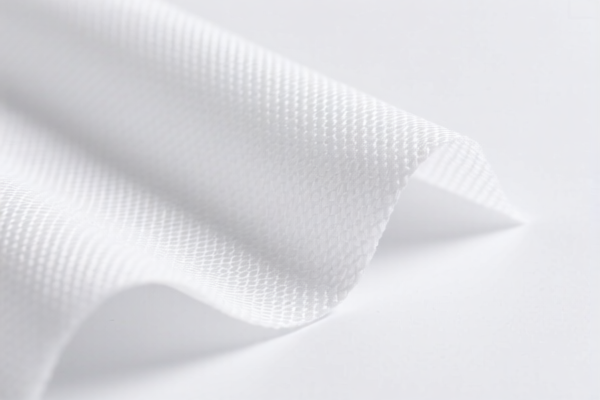
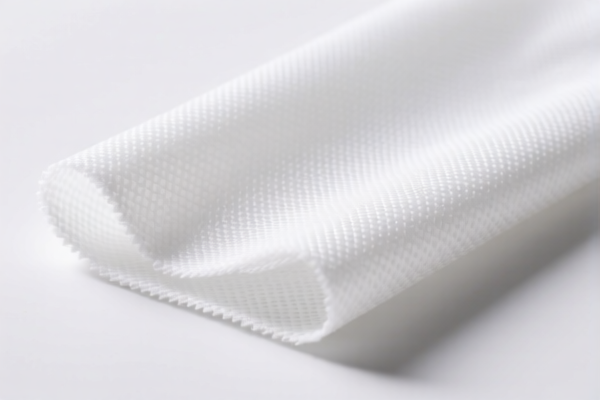
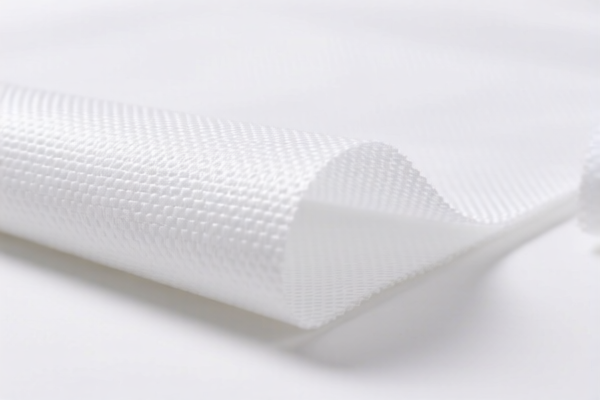
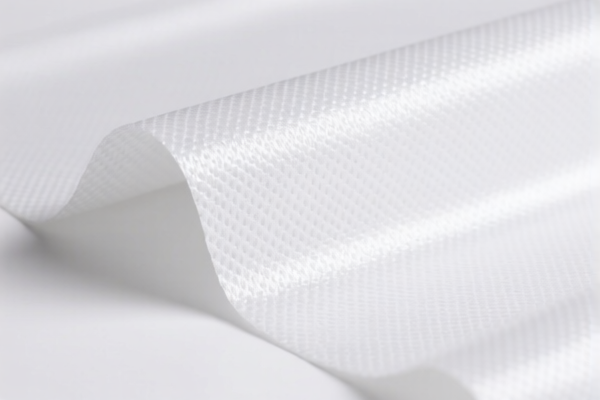
A laminated non-woven floor mat is a flat, flexible floor covering made from non-woven fabric (non-woven textiles), often laminated with a backing layer (e.g., plastic or synthetic film) for durability and moisture resistance. It is typically used as a floor mat in homes, offices, or industrial settings.
⚠️ Critical Distinction:
- If the primary function is floor protection and it’s not a full carpet or rug, it falls under floor coverings (HS 5705).
- If the material is primarily plastic/synthetic polymer, and the non-woven layer is secondary, it may be classified under plastic products (HS 3926).
- If the non-woven fabric is the main structural material, and it’s used as a carpet backing or underlay, it may be treated as non-woven textile floor covering.
🔍 II. HS Code Breakdown (2026 Official Tariff Analysis)
Below are the five possible HS codes based on material composition, function, and structural design — each with detailed tax breakdowns and classification rationale.
🎯 1. 5603.94.10.90 — Non-Woven Fabric Carpet Underlay / Floor Mat
| Field | Detail |
|---|---|
| Product Description | Non-woven fabric floor mat used as a carpet backing or underlay, laminated for durability |
| Classification Basis | ✅ Matches "floor mat" in shape & function ✅ Non-woven fabric = non-woven textile ✅ Not a full carpet → fits underlay category |
| Applicable Subheading | 5603.94.10.90 — Other non-woven fabrics, for floor coverings or underlays |
| Total Tax Rate | 35.0% |
| Tax Breakdown | |
| - Base Duty: 0.0% | |
| - Section 301 (USITC) Add-on: +25.0% | |
| - Section 122 (IEEPA) Add-on: +10.0% | |
| Legal Basis | IEEPA:9903.01.25 → IEEPA:9903.01.24 → USITC:5603.94.10.90 → FOOTNOTE:9903.88.01 |
📌 Why This Applies:
- The core material is non-woven textile, and the laminated structure supports its use as a floor mat.
- This is not a plastic product, so HS 3926 does not apply.
- It’s not a full carpet, so HS 5705.00.20 is less accurate.
🎯 2. 5705.00.20.30 — Floor Coverings Made of Man-Made Fibers (Non-Woven)
| Field | Detail |
|---|---|
| Product Description | Non-woven floor mat, used as floor covering, made from man-made fibers |
| Classification Basis | ✅ Shape = floor mat ✅ Material = non-woven fabric = man-made fibers (synthetic fibers) ✅ Not a carpet, but floor covering in function |
| Applicable Subheading | 5705.00.20.30 — Floor coverings of man-made fibers, not knitted or woven |
| Total Tax Rate | 38.3% |
| Tax Breakdown | |
| - Base Duty: 3.3% | |
| - Section 301 (USITC) Add-on: +25.0% | |
| - Section 122 (IEEPA) Add-on: +10.0% | |
| Legal Basis | IEEPA:9901.25 → IEEPA:9903.01.24 → USITC:5705.00.20.30 → FOOTNOTE:9903.88.01 |
📌 Why This Applies:
- The product is used as a floor covering → fits HS 5705.
- Non-woven fabric is a man-made fiber product → no conflict.
- This is the most accurate for finished floor mats used directly on the floor.
🎯 3. 3926.90.99.89 — Other Plastic Products (Non-Woven as Plastic-Related)
| Field | Detail |
|---|---|
| Product Description | Laminated non-woven mat where plastic layer dominates or non-woven is treated as plastic-based |
| Classification Basis | ✅ "Non-woven" can be synthetic polymer-based ✅ If laminated with plastic film, it may be seen as plastic product ✅ Not specifically listed → falls under "other" |
| Applicable Subheading | 3926.90.99.89 — Other articles of plastic, not elsewhere specified |
| Total Tax Rate | 22.8% |
| Tax Breakdown | |
| - Base Duty: 5.3% | |
| - Section 301 (USITC) Add-on: +7.5% | |
| - Section 122 (IEEPA) Add-on: +10.0% | |
| Legal Basis | IEEPA:9903.01.25 → IEEPA:9903.01.24 → USITC:3926.90.99.89 → FOOTNOTE:9903.88.01 |
📌 Why This Applies:
- If the laminated layer is plastic and non-woven is just a surface layer, customs may treat it as plastic product.
- Lower total tax, but risk of misclassification if material is truly textile.
🎯 4. 5705.00.20.90 — Other Floor Coverings of Man-Made Fibers (Non-Woven)
| Field | Detail |
|---|---|
| Product Description | Floor mat made of non-woven fabric, used as floor covering, not knitted or woven |
| Classification Basis | ✅ Matches "floor mat" shape ✅ Non-woven = man-made fiber ✅ No conflict with textile classification |
| Applicable Subheading | 5705.00.20.90 — Other floor coverings of man-made fibers |
| Total Tax Rate | 38.3% |
| Tax Breakdown | |
| - Base Duty: 3.3% | |
| - Section 301 (USITC) Add-on: +25.0% | |
| - Section 122 (IEEPA) Add-on: +10.0% | |
| Legal Basis | IEEPA:9901.25 → IEEPA:9903.01.24 → USITC:5705.00.20.90 → FOOTNOTE:9903.88.01 |
📌 Why This Applies:
- This is identical to5705.00.20.30in tax and logic — just a different subcode for "other" floor coverings.
- Used when the product doesn’t fit the specific subcategory of5705.00.20.30.
🎯 5. 3926.90.59.00 — Other Plastic Articles (Non-Woven as Plastic-Related)
| Field | Detail |
|---|---|
| Product Description | Laminated non-woven mat where plastic is the dominant material |
| Classification Basis | ✅ "Non-woven" can be plastic-based ✅ Laminated with plastic film → suggests plastic product ✅ Not listed elsewhere → falls under "other" |
| Applicable Subheading | 3926.90.59.00 — Other articles of plastic, not elsewhere specified |
| Total Tax Rate | 37.4% |
| Tax Breakdown | |
| - Base Duty: 2.4% | |
| - Section 301 (USITC) Add-on: +25.0% | |
| - Section 122 (IEEPA) Add-on: +10.0% | |
| Legal Basis | IEEPA:9903.01.25 → IEEPA:9903.01.24 → USITC:3926.90.59.00 → FOOTNOTE:9903.88.01 |
📌 Why This Applies:
- If the plastic layer is thick, durable, and functional, customs may treat the product as plastic-based, not textile.
- Higher tax than3926.90.99.89, but still lower than textile-based HS codes.
💰 III. Tax Clause Deep Dive (2026 U.S. Tariff Law)
| Tax Type | What It Is | Applicable to | Impact |
|---|---|---|---|
| Base Duty (Ad Valorem) | Standard tariff rate set by U.S. Customs | All HS codes | Varies: 0%–5.3% |
| Section 301 (USITC) | 25% tariff under Trade Act of 2018 (China tariffs) | All Chinese-origin goods | Applies to all HS codes if product from China (CN) |
| Section 122 (IEEPA) | 10% tariff under International Emergency Economic Powers Act | Goods from China/Hong Kong | Applies regardless of base duty |
| Total Tax | Base + 301 + 122 | All listed HS codes | Rises from 22.8% to 45% depending on code |
✅ Key Insight:
-5603.94.10.90has 0% base duty, so total = 35%
-5705.00.20.30has 3.3% base duty, so total = 38.3%
-3926.90.99.89has 5.3% base duty, so total = 22.8% — lowest tax, but higher risk of misclassification
🛠️ IV. Customs Clearance Best Practices (Pro Tips!)
✅ 1. Document Checklist (MUST-HAVE)
| Document | Required? | Why It Matters |
|---|---|---|
| ✅ Product Specification Sheet | ✔️ | Shows material (non-woven vs. plastic), thickness, lamination |
| ✅ Material Test Report (e.g., ASTM D5034) | ✔️ | Proves non-woven fabric vs. plastic |
| ✅ Product Photos (Front, Back, Edge) | ✔️ | Shows laminated layer — critical for classification |
| ✅ Commercial Invoice | ✔️ | Must state: "Laminated Non-Woven Floor Mat" |
| ✅ Bill of Lading | ✔️ | For tracking and customs release |
| ✅ Certificate of Origin (CO) | ✔️ | If from Vietnam, Mexico, Thailand, can avoid 301/122 tariffs |
| ✅ Third-Party Lab Report (FCC, RoHS, etc.) | ✔️ | Optional but helpful for compliance |
✅ 2.申报技巧(申报口诀)
🔥 “Material First, Function Second, Lamination Third — Tax Depends on the Core!”
| Scenario | Correct HS Code | Wrong Choice | Why? |
|---|---|---|---|
| Non-woven is main material, laminated for durability | 5603.94.10.90 or 5705.00.20.90 |
3926.90.99.89 |
Risk of higher tax if misclassified |
| Plastic layer is thick and functional, non-woven is just surface | 3926.90.99.89 or 3926.90.59.00 |
5705.00.20.30 |
Could lead to higher tax and audit risk |
| Product is used as underlay (not direct floor mat) | 5603.94.10.90 |
5705.00.20.30 |
Underlay ≠ floor covering |
✅ 3. Risk Mitigation Strategies
| Risk | Solution |
|---|---|
| Misclassification | Get pre-ruling (Advance Ruling) from U.S. Customs |
| High Tax Burden | Source from non-China countries (e.g., Vietnam, Mexico) |
| Customs Delay | Provide clear photos + material test report |
| Audit After Import | Use HS Code pre-approval to avoid penalties |
🌍 V. Global Market Comparison (2026)
| Country | Recommended HS Code | Base Duty | Additional Taxes | Notes |
|---|---|---|---|---|
| 🇺🇸 USA | 5603.94.10.90 or 5705.00.20.90 |
0%–3.3% | +25% (301) +10% (122) | Total: 35–38.3% |
| 🇨🇳 China | 5705.00.20.90 |
5% | None | No 301/122 |
| 🇪🇺 EU | 5705.00.20.90 |
0% | None | CE certified |
| 🇦🇺 Australia | 5705.00.20.90 |
5% | None | RCM required |
| 🇯🇵 Japan | 5705.00.20.90 |
0% | None | PSE required |
📌 Insight:
- USA is the only market with 301 + 122 tariffs on Chinese goods.
- Vietnam/Mexico-origin goods can avoid these tariffs.
🚨 VI. Common Mistakes & Real-World Pitfalls
❌ Mistake 1: Reporting as 3926.90.99.89 when non-woven is the main material
👉 Result: Higher risk of audit, possible penalties, reclassification.
❌ Mistake 2: Using 5705.00.20.30 for a plastic-laminated mat
👉 Result: Overpayment of tax, delayed clearance.
❌ Mistake 3: Not providing material test report
👉 Result: Customs may reclassify based on laminated appearance → higher tax.
✅ Best Practice:
Use clear product name:
"Laminated Non-Woven Floor Mat, 1m x 1m, for Indoor Use, Made of Man-Made Fibers, with Plastic Backing"
🎯 VII. Final Verdict: Which HS Code Should You Use?
| Scenario | Recommended HS Code | Total Tax | Why? |
|---|---|---|---|
| Non-woven is main material, used as floor mat | 5603.94.10.90 |
35.0% | Most accurate for underlay/ground mat |
| Non-woven is main material, used as floor covering | 5705.00.20.90 |
38.3% | Best fit for finished floor mat |
| Plastic layer dominates, non-woven is secondary | 3926.90.99.89 |
22.8% | Lowest tax, but high risk |
✅ Recommended Strategy:
- If non-woven is primary, use5603.94.10.90→ lowest risk, accurate
- If plastic is primary, use3926.90.99.89→ save tax, but prove material dominance
📌 VIII. Pro Tips for 2026 & Beyond
🔥 “Know Your Material, Know Your Tax — One Misstep, One Audit!”
- ✅ Get a pre-ruling from U.S. Customs for HS Code certainty
- ✅ Source from Vietnam/Mexico to avoid 301/122 tariffs
- ✅ Use clear product names and photos in invoices
- ✅ Always include material test reports
🎯 Conclusion: Precision Beats Guesswork
🔹 "Non-woven ≠ Plastic" — Know the Core Material!
🔹 "Floor Mat ≠ Carpet" — Function Matters!
🔹 "Lamination ≠ Plastic" — Layer ≠ Material!📌 Your Tax Liability Depends on One Word: MATERIAL.
📣 Take Action Now!
📞 Contact a licensed customs broker + Submit product photos + material report
🚀 Apply for HS Code pre-ruling → Avoid delays, penalties, and overpayment!
✨ Professional Customs, Precision Classification, Profit Protection!
💼 Every dollar saved starts with the right HS code.
Customer Reviews
About HS Code Classification
The Harmonized System (HS) is an internationally standardized nomenclature developed by the World Customs Organization (WCO) to classify traded products. Over 200 countries use the HS system as the basis for customs tariffs, trade statistics, and import/export regulations.
Each HS code follows a hierarchical structure:
- Chapter (2 digits) — Broad category of goods (e.g., Chapter 84: Machinery and Mechanical Appliances)
- Heading (4 digits) — More specific grouping within the chapter
- Subheading (6 digits) — Internationally standardized breakdown, used by all WCO member countries
- National subdivisions (8-10 digits) — Country-specific extensions for further classification, such as US HTSUS 10-digit codes
Correct HS code classification is essential for smooth customs clearance, accurate duty payment, and compliance with trade regulations. Misclassification can lead to customs delays, overpayment of duties, or penalties.
When importing from CN to US, the applicable tariff rates may include:
- Most-Favored-Nation (MFN) rate — The standard duty rate applied to WTO members
- General rate — Applied to countries without trade agreements
- Trade remedy duties — Additional tariffs such as Section 301 (anti-dumping), Section 232 (national security), or countervailing duties
The information provided on this page is for reference purposes only. For official classification, please consult with your local customs authority or a licensed customs broker.