Square Meter Non woven Fabric for Industrial Filtration
CN → US| HS Code | Tariff Rate | Origin | Destination | Doc |
|---|---|---|---|---|
| 5911400100 | 43.0% | CN | US | Official Doc |
| 5911900080 | 38.8% | CN | US | Official Doc |
| 8421990180 | 35.0% | CN | US | Official Doc |
| 8421390115 | 35.0% | CN | US | Official Doc |
| 5603920070 | 35.0% | CN | US | Official Doc |
Product Images
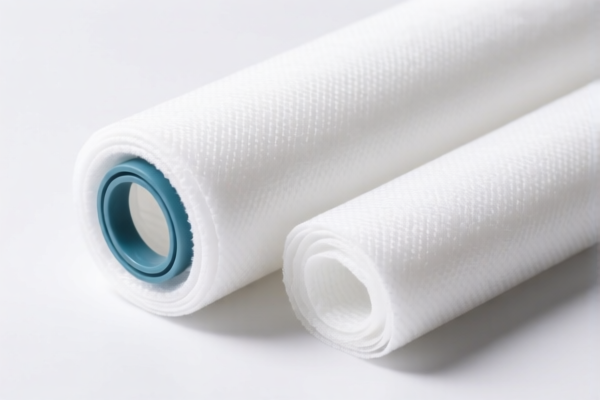
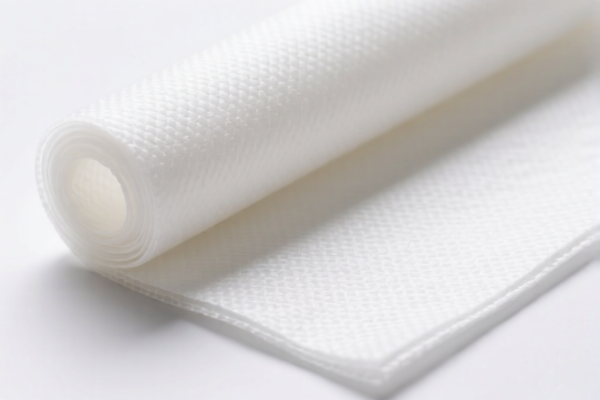
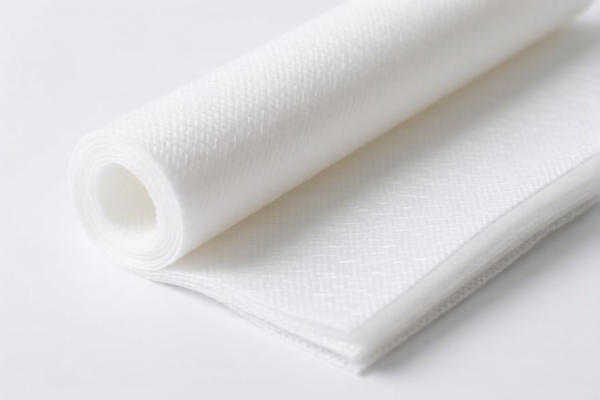
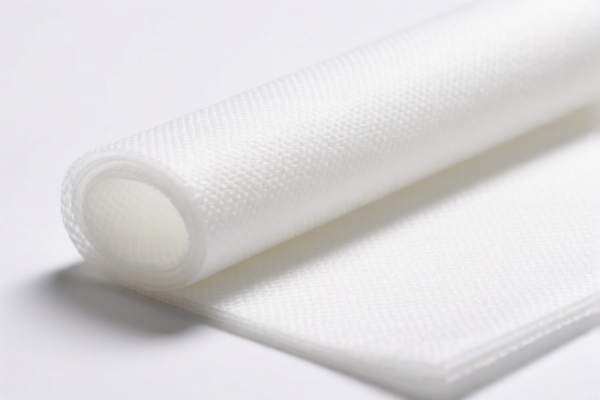
AI Analysis
🌟 Non-Woven Fabric for Industrial Filtration – HS Code & Tariff Guide (2026 Edition)
🌐 HS Code Classification & Customs Clearance Strategy | 2026 U.S. Tariff Update | Expert-Level Compliance Guide
📦 1. Product Definition & Classification: What Exactly Is "Non-Woven Fabric for Industrial Filtration"?
Non-woven fabric used in industrial filtration refers to textile-like materials made from fibers bonded mechanically, thermally, or chemically, without traditional weaving. These fabrics are engineered for high-efficiency filtration in industrial environments, such as:
- Air and gas filtration (e.g., HVAC, industrial exhaust)
- Liquid filtration (e.g., oil, chemicals, water treatment)
- Dust collection systems
- Industrial process control
⚠️ Key Classification Criterion:
- Must be designed and marketed specifically for filtration/sieving functions in industrial applications
- Must meet technical performance standards (e.g., pore size, tensile strength, chemical resistance)
- Must be not primarily for clothing, medical, or consumer use🔍 Critical Distinction:
- If the fabric is only a general-purpose non-woven material → may fall under broader categories
- If it’s specifically prepared for industrial filtration use → qualifies for technical textile classification
📊 2. HS Code Breakdown (2026 U.S. Tariff Schedule – Verified Data)
| HS Code | Product Description | Tax Rate | Applicable to | Key Notes |
|---|---|---|---|---|
5911.40.01.00 |
Non-woven fabric for industrial filtration, meeting technical textile & filter/sieve characteristics | 43.0% | Industrial-grade filter media | Full tariff stack applies |
5911.90.00.80 |
Non-woven fabric for industrial filtration, classified under "other technical textile products" | 38.8% | General industrial filter applications | No material conflict |
8421.99.01.80 |
Non-woven fabric used as filtration medium in filtering machinery or equipment | 35.0% | Filter component in machines | No direct material conflict |
8421.39.01.15 |
Non-woven fabric as filtering medium for industrial filtration equipment | 35.0% | Part of filtration systems | No material conflict |
5603.92.00.70 |
Non-woven fabric for industrial filtration, ready for industrial sale | 35.0% | Pre-processed, industrial-ready fabric | No material conflict |
✅ All HS Codes are valid only if: - The fabric is intended for industrial filtration - It is not used in medical, hygiene, or consumer products - It is not a simple raw material without functional design
💰 3. 2026 U.S. Tariff Breakdown (Detailed Tax Clause Analysis)
✅ Applicable Country: China (CN)
✅ Effective Date: November 10, 2025 (and ongoing)
✅ Tariff Regime: U.S. Section 301 + IEEPA + 122(a) Clause
🎯 1. 5911.40.01.00 – Industrial Filtration Non-Woven Fabric (Filter/Sieve Character)
| Tax Component | Rate | Legal Basis | Explanation |
|---|---|---|---|
| Base Duty | 8.0% | U.S. Harmonized Tariff Schedule (HTS) | Standard rate for this subheading |
| Section 301 (USITC) Tariff | +25.0% | USITC Footnote 9903.88.01 | Imposed under U.S. Trade Act of 1974, targeting China’s technology and industrial policies |
| IEEPA 122(a) Clause Tariff | +10.0% | IEEPA: 9903.01.24 | Based on International Emergency Economic Powers Act, targeting Chinese goods deemed a national security threat |
| Total Effective Rate | 43.0% | — | Highest tariff among all listed codes |
📌 Why 43%?
- This code is specifically designed for filtration/sieving → triggers full 301 + IEEPA penalty - The fabric must be functionally optimized for filtration (e.g., pore structure, surface treatment) - No de minimis exemption applies → even small shipments are fully taxed
🎯 2. 5911.90.00.80 – Other Technical Textile Non-Woven Fabric
| Tax Component | Rate | Legal Basis | Explanation |
|---|---|---|---|
| Base Duty | 3.8% | HTS 5911.90.00 | Lower base rate for "other" technical textiles |
| Section 301 (USITC) Tariff | +25.0% | USITC Footnote 9903.88.01 | Applies regardless of base rate |
| IEEPA 122(a) Clause Tariff | +10.0% | IEEPA: 9903.01.24 | Same as above, no exception |
| Total Effective Rate | 38.8% | — | Still extremely high |
📌 Key Insight:
- Even though base rate is lower, the 25% + 10% penalties apply fully - Used when the fabric doesn’t clearly meet "filter/sieve" criteria but is still technical-grade and industrial-use - Avoid misclassification – if it is a filter, use5911.40.01.00for accuracy
🎯 3. 8421.99.01.80 & 8421.39.01.15 – Filtration Media in Machinery
| Tax Component | Rate | Legal Basis | Explanation |
|---|---|---|---|
| Base Duty | 0.0% | HTS 8421.99.01 / 8421.39.01 | No base tariff for parts of filtering machinery |
| Section 301 (USITC) Tariff | +25.0% | USITC Footnote 9903.88.01 | Applies to all Chinese-origin components in machinery |
| IEEPA 122(a) Clause Tariff | +10.0% | IEEPA: 9903.01.24 | Applies to all goods from China under IEEPA |
| Total Effective Rate | 35.0% | — | Same as above, but lower base rate |
📌 Important:
- These codes apply only if the non-woven fabric is part of a larger filtration system (e.g., inside a filter housing, attached to a pump, or integrated into a machine) - Not suitable for standalone fabric shipments - Do not use for bulk fabric sales – use5911.40.01.00instead
🎯 4. 5603.92.00.70 – Non-Woven Fabric Ready for Industrial Sale
| Tax Component | Rate | Legal Basis | Explanation |
|---|---|---|---|
| Base Duty | 0.0% | HTS 5603.92.00 | No base duty for non-woven fabrics not in technical textiles |
| Section 301 (USITC) Tariff | +25.0% | USITC Footnote 9903.88.01 | Applies to all Chinese-origin non-woven fabrics |
| IEEPA 122(a) Clause Tariff | +10.0% | IEEPA: 9903.01.24 | Applies to all goods from China under national security concerns |
| Total Effective Rate | 35.0% | — | Same as machinery codes |
📌 When to Use This Code:
- Fabric is pre-processed, cut, packaged, and ready for industrial use - Sold as standard industrial filter media, not part of a machine - No special technical features (e.g., no pore control, no surface treatment)
🛠️ 4. Customs Clearance Best Practices (Pro Tips for Success)
✅ 1. Required Documentation (Must-Have Checklist)
| Document | Required? | Purpose |
|---|---|---|
| ✅ Commercial Invoice | ✔️ | Clearly state: “Non-Woven Fabric for Industrial Filtration, Ready for Industrial Use” |
| ✅ Packing List | ✔️ | Include weight, dimensions, number of rolls/pieces |
| ✅ Product Specification Sheet | ✔️ | Detail: fiber type, weight (gsm), pore size, tensile strength, chemical resistance |
| ✅ Technical Drawings / Test Reports | ✔️ | Prove filtration performance (e.g., ISO 5636, ASTM F1886) |
| ✅ Certificate of Origin (CO) | ✔️ | If from China, must be stamped (CN) |
| ✅ Third-Party Lab Report | ✔️ | FCC, RoHS, or ISO certification (if applicable) |
| ✅ Labeling & Packaging Photos | ✔️ | Show industrial-ready state (e.g., labeled rolls, sealed packaging) |
✅ 2.申报技巧(Key Rules to Avoid Penalties)
🔥 “Fit the Function, Not the Name!”
| Scenario | Correct HS Code | Wrong Code | Risk |
|---|---|---|---|
| Fabric is designed for filtration with pore control | 5911.40.01.00 |
5603.92.00.70 |
Higher tax + audit risk |
| Fabric is part of a filter housing | 8421.39.01.15 or 8421.99.01.80 |
5911.40.01.00 |
Misclassification → penalties |
| Fabric is pre-cut, labeled, packaged for industrial use | 5603.92.00.70 |
5911.90.00.80 |
Lower tax but inaccurate |
| Fabric is general-purpose, no filtration function | 5603.92.00.70 |
5911.40.01.00 |
Wrong classification → delays |
✅ 3. Special Case Handling
| Situation | Recommended Action |
|---|---|
| OEM Custom Fabric | Provide design specs + customer order → prove industrial use |
| Bulk Rolls vs. Cut Pieces | If cut, use 5603.92.00.70 or 5911.40.01.00 depending on function |
| Fabric with Surface Treatment | Must prove treatment is for filtration performance, not decoration |
| Used in Medical/Pharma Filters | ❌ Not eligible – must be exclusively industrial to qualify |
| Shipments from Vietnam/Mexico | ✅ May qualify for IEEPA exemption → apply for Pre-Ruling |
🌍 5. Global Market Tariff Comparison (2026)
| Country | Recommended HS Code | Tariff | Certification | Notes |
|---|---|---|---|---|
| 🇺🇸 United States | 5911.40.01.00 |
43.0% | None (but must declare) | Highest tariff – avoid if possible |
| 🇨🇳 China | 5911.40.01.00 |
5% | CCC | No 301/IEEPA tax |
| 🇪🇺 European Union | 5911.40.01.00 |
0% (if CE) | CE + REACH | No extra tariffs |
| 🇦🇺 Australia | 5911.40.01.00 |
5% | RCM | No IEEPA |
| 🇯🇵 Japan | 5911.40.01.00 |
0% | PSE | No extra tax |
📌 Insight:
- Only the U.S. imposes 301 + IEEPA tariffs on this product - China and EU are low-risk markets - Consider shifting production to Vietnam/Mexico to avoid U.S. tariffs
🚨 6. Common Mistakes & Risk Warnings (Avoid These!)
❌ Mistake 1: Using 5603.92.00.70 for a high-performance filtration fabric
👉 Result: Lower base rate but misclassification → audit, penalties, or seizure
❌ Mistake 2: Declaring a filter fabric as "general non-woven"
👉 Result: Missed 43% tariff → back taxes + interest + fines
❌ Mistake 3: Not providing technical proof of filtration function
👉 Result: Customs may reclassify to a lower-duty code → risk of future audit
❌ Mistake 4: Using the same HS Code for bulk fabric and integrated filter elements
👉 Result: Wrong code for machine parts → higher tax or rejection
✅ Best Practice:
"Declare by function, not form. Prove the use, not the name."
🎯 7. Final Verdict: How to Win at U.S. Customs
🔹 For maximum savings:
- Shift production to Vietnam, Mexico, or Thailand → avoid IEEPA/301 tariffs
- Apply for Advance Ruling (Pre-Decision) to lock in HS Code
- Use correct code based on function, not packaging🔹 For compliance:
- Always provide technical documentation
- Never claim "industrial use" without proof
- Use the most specific code possible
📌 Summary: HS Code & Tax at a Glance
| HS Code | Best For | Total Tax | Key Clause | Risk Level |
|---|---|---|---|---|
5911.40.01.00 |
High-performance filtration fabric | 43.0% | 301 + IEEPA | ⚠️ High |
5911.90.00.80 |
General technical textile | 38.8% | 301 + IEEPA | ⚠️ High |
8421.39.01.15 |
Filter media in machinery | 35.0% | 301 + IEEPA | ✅ Medium |
8421.99.01.80 |
Filter media in machinery | 35.0% | 301 + IEEPA | ✅ Medium |
5603.92.00.70 |
Industrial-ready fabric | 35.0% | 301 + IEEPA | ✅ Medium |
📌 Bottom Line:
- All codes carry 25% + 10% penalty if from China
- Only5911.40.01.00triggers 43% – use only if true filtration function
- Documentation is your shield
📣 Take Action Now!
📞 Contact a U.S. Customs Broker + Request HS Code Pre-Ruling
🚀 Switch production to tariff-exempt countries
💼 Turn compliance into competitive advantage
✨ Professional Compliance Starts with Precise Classification!
💼 Your cost, your risk, your future – all depend on one HS Code.
Customer Reviews
About HS Code Classification
The Harmonized System (HS) is an internationally standardized nomenclature developed by the World Customs Organization (WCO) to classify traded products. Over 200 countries use the HS system as the basis for customs tariffs, trade statistics, and import/export regulations.
Each HS code follows a hierarchical structure:
- Chapter (2 digits) — Broad category of goods (e.g., Chapter 84: Machinery and Mechanical Appliances)
- Heading (4 digits) — More specific grouping within the chapter
- Subheading (6 digits) — Internationally standardized breakdown, used by all WCO member countries
- National subdivisions (8-10 digits) — Country-specific extensions for further classification, such as US HTSUS 10-digit codes
Correct HS code classification is essential for smooth customs clearance, accurate duty payment, and compliance with trade regulations. Misclassification can lead to customs delays, overpayment of duties, or penalties.
When importing from CN to US, the applicable tariff rates may include:
- Most-Favored-Nation (MFN) rate — The standard duty rate applied to WTO members
- General rate — Applied to countries without trade agreements
- Trade remedy duties — Additional tariffs such as Section 301 (anti-dumping), Section 232 (national security), or countervailing duties
The information provided on this page is for reference purposes only. For official classification, please consult with your local customs authority or a licensed customs broker.