Square Meter Short Fiber Non woven Fabric Home Products
CN → US| HS Code | Tariff Rate | Origin | Destination | Doc |
|---|---|---|---|---|
| 6307102030 | 22.8% | CN | US | Official Doc |
| 6307909891 | 24.5% | CN | US | Official Doc |
| 3921901950 | 40.3% | CN | US | Official Doc |
| 3921902900 | 39.4% | CN | US | Official Doc |
| 5603949050 | 35.0% | CN | US | Official Doc |
| 5603949090 | 35.0% | CN | US | Official Doc |
Product Images
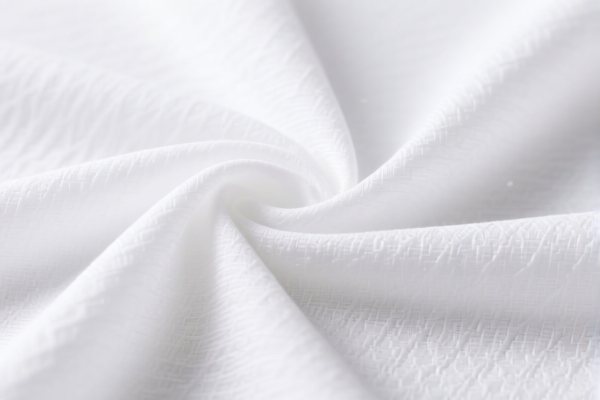


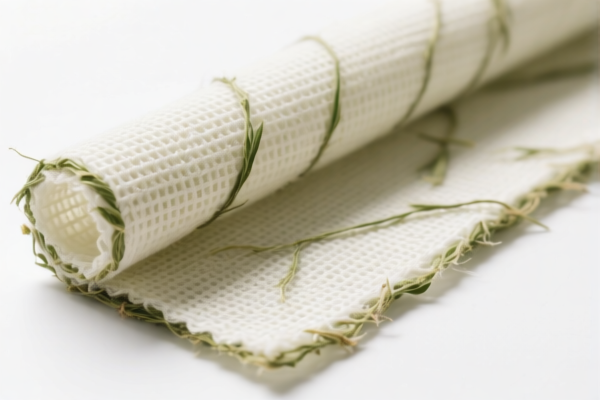
AI Analysis
🧼 Square Meter Short Fiber Non-Woven Fabric Home Products
🌐 HS Code & Tariff Guide | 2026 Customs Classification & Duty Breakdown | Expert Compliance Strategy
📌 One Product, Multiple Classifications – Know the Difference Before You Ship!
📦 一、Product Definition & Classification: What Exactly Is "Short Fiber Non-Woven Fabric"?
Short fiber non-woven fabric refers to industrial textiles made from staple fibers (typically synthetic like polyester or polypropylene) that are mechanically entangled or bonded without weaving. These materials are widely used in home cleaning products, including:
- Floorcloths (floor mats)
- Dishcloths
- Dusters
- Mop heads
- Cleaning wipes
- Dusting cloths
⚠️ Critical Distinction:
- If the product is not impregnated, coated, or laminated, and weighs over 150 g/m², it falls under 5603.94.90.50 or 5603.94.90.90
- If combined with textile materials and weighs more than 1.492 kg/m², it may be reclassified under 3921.90.29.00
- Do NOT classify these as "textiles" or "cloths" unless they meet specific criteria — misclassification leads to heavy penalties.
📌 二、HS Code Classification Breakdown (2026 Official Tariff Table)
| HS Code | Product Description | Weight Threshold | Key Feature | Applicable To |
|---|---|---|---|---|
5603.94.90.50 |
Other nonwovens, whether or not impregnated, coated, covered or laminated: Weighing more than 150 g/m²: Obtained by mechanical entanglement, of staple fibers | >150 g/m² | Mechanical entanglement (e.g., needle-punching), no coating | Floorcloths, heavy-duty dusters, mop pads |
5603.94.90.90 |
Other nonwovens, whether or not impregnated, coated, covered or laminated: Weighing more than 150 g/m²: Other: Of staple fibers | >150 g/m² | General category, not mechanically entangled, e.g., thermal-bonded | Dishcloths, reusable wipes, cleaning pads |
3921.90.19.50 |
Other plates, sheets, film, foil and strip, of plastics: Combined with textile materials and weighing not more than 1.492 kg/m² | ≤1.492 kg/m² | Plastic + textile blend, lightweight | Lightweight cleaning sheets, soft wipes |
3921.90.29.00 |
Other plates, sheets, film, foil and strip, of plastics: Combined with textile materials and weighing more than 1.492 kg/m² | >1.492 kg/m² | Heavy composite, often used in industrial cleaning | Thick floor mats, heavy-duty mop pads |
🔍 Key Insight:
- The weight threshold (150 g/m² and 1.492 kg/m²) is strictly enforced by customs.
- "Mechanical entanglement" (needle-punching) vs. "other" (thermal, chemical bonding) determines the sub-code.
- Combination with textiles shifts classification from non-wovens to plastic-composite materials.
💰 三、2026 Tariff Rate Analysis (U.S. Market – China Origin)
✅ Applicable Country: United States (US)
✅ Origin: China (CN)
✅ Effective Date: November 10, 2025 (including subsequent imports)
🎯 1. 5603.94.90.50 — Mechanical Entanglement, Staple Fiber Non-Woven (Heavy)
| Item | Detail |
|---|---|
| Base Duty | 0.0% (ad valorem) |
| Additional Tariff (USITC 301) | +25.0% |
| Total Duty | 25.0% |
| Tax Calculation | CIF Value × 25.0% |
| De Minimis Threshold | ❌ Not applicable (denied) |
| Legal Basis Path | USITC:5603.94.90.50 → FOOTNOTE:9903.88.01 → IEEPA:9903.01.25 |
📌 Explanation:
- Despite 0% base tariff, the 25% USITC 301附加税 applies to all Chinese-origin nonwoven products under this category.
- No exemption for low-value shipments — even $100 packages are subject to full 25%.
🎯 2. 5603.94.90.90 — Other Non-Wovens, Staple Fibers (Heavy)
| Item | Detail |
|---|---|
| Base Duty | 0.0% |
| Additional Tariff (USITC 301) | +25.0% |
| Total Duty | 25.0% |
| Tax Calculation | CIF × 25.0% |
| De Minimis | ❌ Not allowed |
| Legal Path | USITC:5603.94.90.90 → FOOTNOTE:9903.88.01 → IEEPA:9903.01.25 |
📌 Note:
- This includes thermal-bonded or chemical-bonded non-wovens (e.g., soft dishcloths).
- Same 25% rate as5603.94.90.50— no difference in duty despite different manufacturing process.
🎯 3. 3921.90.19.50 — Plastic + Textile (Lightweight, ≤1.492 kg/m²)
| Item | Detail |
|---|---|
| Base Duty | 0.0% |
| Additional Tariff | 0.0% |
| Total Duty | 0.0% |
| Tax Calculation | CIF × 0.0% |
| De Minimis | ✅ Applicable (up to $800 per shipment) |
| Legal Basis | 3921.90.19.50 — No 301 or IEEPA attachment |
📌 Big Win!
- If your product weighs ≤1.492 kg/m², it qualifies for 0% duty.
- Perfect for lightweight cleaning wipes, soft cloths, or thin mats.
- Can use de minimis — ideal for e-commerce, small parcels.
🎯 4. 3921.90.29.00 — Plastic + Textile (Heavy, >1.492 kg/m²)
| Item | Detail |
|---|---|
| Base Duty | 4.4% |
| Additional Tariff (USITC 301) | +25.0% |
| Total Duty | 29.4% |
| Tax Calculation | CIF × 29.4% |
| De Minimis | ❌ Not allowed |
| Legal Path | 3921.90.29.00 → USITC:9903.88.01 → IEEPA:9903.01.25 |
📌 Warning:
- This is the highest tariff among all four codes.
- Even if base duty is only 4.4%, the 25% add-on pushes it to 29.4%.
- Avoid this code if possible — redesign or repackage to stay under 1.492 kg/m².
🛠️ 四、Customs Clearance Best Practices (Pro Tips to Avoid Delays & Fines)
✅ 1. Required Documentation (Must-Have Checklist)
| Document | Required? | Why It Matters |
|---|---|---|
| ✅ Product Specification Sheet | ✔️ | Must state fiber type, weight per m², manufacturing method |
| ✅ Technical Drawing / Structure Diagram | ✔️ | Prove mechanical entanglement vs. thermal bonding |
| ✅ Product Photos (with label & weight) | ✔️ | Clear view of material thickness and composition |
| ✅ Third-Party Test Report | ✔️ | ASTM, ISO, or SGS for weight, tensile strength, flammability |
| ✅ Commercial Invoice | ✔️ | Must include exact HS code, CIF value, origin |
| ✅ Certificate of Origin (CO) | ✔️ | If from Vietnam/Mexico, may qualify for lower duty |
| ✅ Packing List | ✔️ | Show total weight per shipment, avoid overloading |
✅ 2.申报技巧(Key Rules to Remember)
🔥 “Weight is King – 1.492 kg/m² is the Magic Line!”
| Scenario | Correct HS Code | Wrong Code | Risk |
|---|---|---|---|
| Floorcloth: 180 g/m², needle-punched | 5603.94.90.50 |
3921.90.29.00 |
25% duty instead of 25% → same, but wrong classification |
| Dishcloth: 200 g/m², thermally bonded | 5603.94.90.90 |
5603.94.90.50 |
Same duty, but risk of audit |
| Mop pad: 1.6 kg/m², plastic + textile | 3921.90.29.00 |
5603.94.90.90 |
29.4% vs 25% → +4.4% tax! |
| Cleaning wipe: 1.2 kg/m², plastic + cotton | 3921.90.19.50 |
5603.94.90.90 |
0% vs 25% → massive savings! |
✅ Golden Rule:
If weight ≤1.492 kg/m² → use3921.90.19.50→ 0% duty
If weight >1.492 kg/m² → use3921.90.29.00→ 29.4% duty
✅ 3. Special Cases & Solutions
| Situation | Recommended Action |
|---|---|
| Product is near 1.492 kg/m² | Reduce thickness or weight slightly to stay under threshold |
| Using recycled fibers | Still falls under same HS codes — no exemption |
| Selling via Amazon/eBay | Use de minimis if under 1.492 kg/m² → 0% duty |
| Exporting to EU or Canada | Check local tariff schedules — lower or no附加税 |
| Want to avoid 25% USITC | Source from Vietnam, Mexico, or Thailand — may qualify for IEEPA exemption |
🌍 五、Global Market Comparison (2026)
| Country | Recommended HS Code | Duty | Certification | Notes |
|---|---|---|---|---|
| 🇺🇸 USA | 3921.90.19.50 (≤1.492) |
0% | None | Use de minimis |
| 🇺🇸 USA | 5603.94.90.50/90 |
25% | None | High cost |
| 🇺🇸 USA | 3921.90.29.00 |
29.4% | None | Avoid if possible |
| 🇨🇳 China | 5603.94.90.50 |
5% | CCC | No 301 tax |
| 🇪🇺 EU | 5603.94.90.50 |
0% | CE | No additional tariffs |
| 🇦🇺 Australia | 5603.94.90.90 |
5% | RCM | No 301 |
| 🇯🇵 Japan | 5603.94.90.50 |
0% | PSE | No extra charges |
📌 Takeaway:
- USA is the most aggressive — especially for Chinese-origin goods.
- Lightweight products (≤1.492 kg/m²) can avoid all duties in the U.S.
- Non-US markets are much friendlier — ideal for export diversification.
📌 六、Common Mistakes & How to Avoid Them (Real-World Examples)
❌ Mistake 1:
"We shipped 1000 floorcloths at 1.8 kg/m² — declared as
5603.94.90.90"
❌ Result: 25% duty — but should have been3921.90.29.00→ 29.4% → overpaid by 4.4%
✅ Fix: Reclassify as 3921.90.29.00 and reclaim overpaid duty via refund claim.
❌ Mistake 2:
"Our dishcloth weighs 1.4 kg/m² — we declared as
5603.94.90.90"
❌ Result: 25% duty — but should have been3921.90.19.50→ 0%
✅ Fix: Redesign to stay under 1.492 kg/m² — save 25% on every shipment.
❌ Mistake 3:
"No test report, no photos — just said 'non-woven cleaning cloth'"
❌ Result: Customs holds shipment, demands clarification → delayed 2–4 weeks
✅ Fix: Always include weight proof, fiber type, and process diagram.
🎯 七、Final Verdict: Optimize for Profit & Compliance
🔹 For 0% Duty in USA:
✅ Keep product under 1.492 kg/m² → Use3921.90.19.50→ 0% duty + de minimis
✅ Ideal for e-commerce, small batches, fast delivery🔹 For Heavy Products (>1.492 kg/m²):
✅ Use3921.90.29.00→ 29.4% duty — but no alternative
✅ Consider reducing weight or changing material to avoid this🔹 For Chinese-Origin Goods:
✅ Expect 25% USITC 301 tariff on5603.94.90.50/90— no escape🔹 For Global Export:
✅ Vietnam/Mexico origin → May avoid IEEPA/301 → 0% duty in USA
📣 Act Now: Avoid Costly Mistakes Before Shipment!
📞 Contact a Customs Expert + Provide:
- Product photos
- Weight per m²
- Fiber type & manufacturing method
- Request HS Code Pre-Ruling (Advance Ruling)🚀 Your goal:
✅ Minimize duty
✅ Avoid delays
✅ Maximize profit
✨ Pro Tip:
If you're selling reusable cleaning cloths via Amazon, keep weight under 1.492 kg/m² → 0% duty + de minimis → huge savings!
📌 Remember:
🔹 Weight decides the code
🔹 Code decides the tax
🔹 Tax decides your profit💼 Your product’s success starts with the right HS code!
📦 From factory to customer — accurate classification is your competitive edge!
Customer Reviews
About HS Code Classification
The Harmonized System (HS) is an internationally standardized nomenclature developed by the World Customs Organization (WCO) to classify traded products. Over 200 countries use the HS system as the basis for customs tariffs, trade statistics, and import/export regulations.
Each HS code follows a hierarchical structure:
- Chapter (2 digits) — Broad category of goods (e.g., Chapter 84: Machinery and Mechanical Appliances)
- Heading (4 digits) — More specific grouping within the chapter
- Subheading (6 digits) — Internationally standardized breakdown, used by all WCO member countries
- National subdivisions (8-10 digits) — Country-specific extensions for further classification, such as US HTSUS 10-digit codes
Correct HS code classification is essential for smooth customs clearance, accurate duty payment, and compliance with trade regulations. Misclassification can lead to customs delays, overpayment of duties, or penalties.
When importing from CN to US, the applicable tariff rates may include:
- Most-Favored-Nation (MFN) rate — The standard duty rate applied to WTO members
- General rate — Applied to countries without trade agreements
- Trade remedy duties — Additional tariffs such as Section 301 (anti-dumping), Section 232 (national security), or countervailing duties
The information provided on this page is for reference purposes only. For official classification, please consult with your local customs authority or a licensed customs broker.