Square Wood Chip
CN → USProduct Images
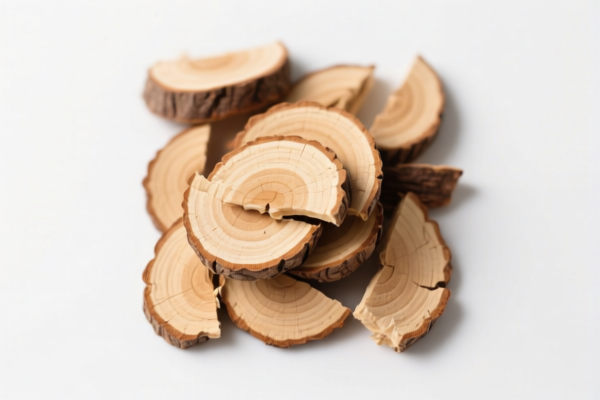
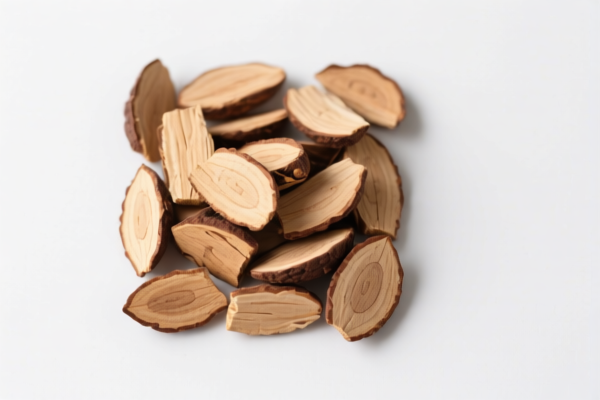
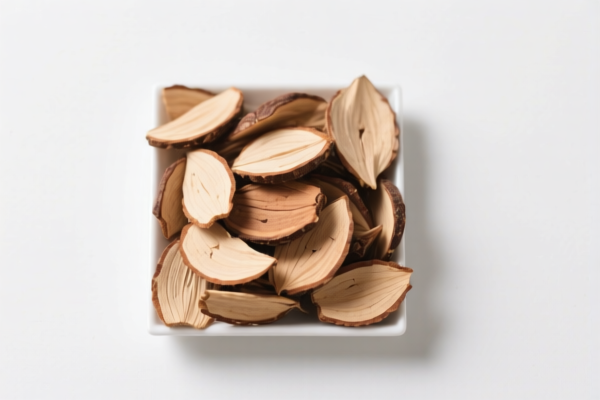
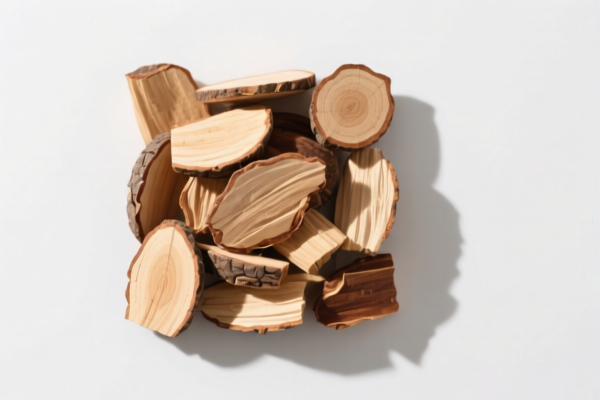
AI Analysis
🖥️ Square Wood Chips (Wood-Based Panels / Prepared Wood)
🌐 HS Code Reference & Clearance Guide | 2026 Latest Tariff Analysis | Professional Customs Strategy
📌 I. Product Definition & Classification: What Exactly Are "Square Wood Chips"?
In international trade, the term "Square Wood Chips" is ambiguous and can lead to critical classification errors. It typically refers to two distinct categories of wood products:
-
Mechanically Prepared Wood Chips (Industrial Feedstock):
Square-cut wood chips used for pulping, paper manufacturing, or biomass energy. These are raw materials, not finished goods.
Key Characteristic: Irregular shape, no chemical treatment, used for industrial processing. -
Engineered Wood Panels (Finished Goods):
If "square" refers to the sheet shape (e.g., square plywood, MDF, or OSB panels) rather than the chip shape, these are building materials.
Key Characteristic: Bonded wood particles/fibers, standardized sheet format, used in construction/furniture.
⚠️ Critical Distinction:
- If the product is loose chips (particles) →归入 Chapter 44 (Wood & Articles of Wood).
- If the product is finished panels/sheets →归入 Chapter 44 (specifically subheadings for plywood or fiberboard).
- Misclassification Risk: Declaring engineered panels as "wood chips" to avoid higher tariffs is a common customs fraud red flag.
📦 II. HS Code Classification Details (2026 Latest Tariff Authority)
| HS Code | Product Description | Application Scenario | Physical Form |
|---|---|---|---|
4401.31.00.00 |
Wood chips and particles (mechanically produced), not agglomerated | Paper/pulp industry, biomass fuel | Loose chips |
4401.39.00.00 |
Other wood chips and particles | Non-pulp uses, unspecified | Loose chips |
4412.31.00.00 |
Plywood, veneer panels, etc., with outer plies of tropical wood | Furniture, construction | Sheets/Panels |
4412.39.00.00 |
Other plywood, veneer panels, etc. | General construction | Sheets/Panels |
4411.94.10.00 |
Fiberboards, MDF, HDF, not mechanically worked | Furniture cores, indoor decoration | Sheets/Panels |
4411.94.20.00 |
OSB (Oriented Strand Board) | Structural sheathing | Sheets/Panels |
🔍 Key Reminder:
- "Square Wood Chips" as loose material: Usually classified under 4401.31 or 4401.39.
- "Square Wood Chips" as engineered panels: Classified under 4412 (Plywood) or 4411 (Fiberboard).
- Customs Inspection: Customs will verify if the product is "mechanically prepared" (chips) or "bonded/pressed" (panels).
💰 III. 2026 Latest Tariff Rates Detail (US Import from China)
✅ Applicable Country: United States (US)
✅ Origin: China (CN)
✅ Effective Date: From November 10, 2025 (including subsequent imports)
🎯 1. 4401.31.00.00 – Wood Chips and Particles (Mechanically Prepared)
| Item | Content |
|---|---|
| Base Duty Rate | 0% (ad valorem) |
| USITC Additional Duty | +10% (Under USITC Footnote 11 to Subchapter III of Chapter 99) |
| IEEPA Additional Duty | +10% (Section 301 Tariffs on Chinese Goods) |
| Total Duty Rate | 20% |
| Tax Calculation | CIF Value × 20% |
| De Minimis Eligibility | ❌ No (Section 321 de minimis does NOT apply to wood products subject to Section 301) |
| Legal Basis Path | IEEPA:9903.01.25 → USITC:4401.31.00.00 → FOOTNOTE:9903.11.10 |
📌 Explanation:
- Wood chips are often exempt from base tariffs due to resource scarcity, but Section 301 tariffs apply.
- The 20% total is significant for low-margin bulk commodities.
- No de minimis exemption: Small shipments cannot bypass this duty.
🎯 2. 4401.39.00.00 – Other Wood Chips and Particles
| Item | Content |
|---|---|
| Base Duty Rate | 0% |
| USITC Additional Duty | +10% |
| IEEPA Additional Duty | +10% |
| Total Duty Rate | 20% |
| Tax Calculation | CIF Value × 20% |
| De Minimis Eligibility | ❌ No |
| Legal Basis Path | IEEPA:9903.01.25 → USITC:4401.39.00.00 → FOOTNOTE:9903.11.10 |
📌 Note:
- Similar to4401.31, but applies to non-standard or non-pulp chips.
- Same 20% total duty rate.
🎯 3. 4411.94.10.00 / 4412.39.00.00 – Engineered Wood Panels (If "Square" refers to Sheets)
| Item | Content |
|---|---|
| Base Duty Rate | 0% – 5.7% (varies by type) |
| USITC Additional Duty | +25% (For Plywood/OSB) or +10% (for MDF) |
| IEEPA Additional Duty | +10% |
| Total Duty Rate | 35% – 40.7% |
| Tax Calculation | CIF Value × (35%–40.7%) |
| De Minimis Eligibility | ❌ No |
| Legal Basis Path | IEEPA:9903.01.25 → USITC:4411.94.10.00 → FOOTNOTE:9903.11.10 |
📌 Critical Alert:
- Engineered wood panels face much higher tariffs than raw chips.
- If you misdeclare panels as chips, you risk seizure, fines, and legal action for customs fraud.
🛠️ IV. Customs Clearance Practical Advice (Avoid Pitfalls)
✅ 1. Documentation Checklist (All Required)
| Document | Mandatory | Description |
|---|---|---|
| ✅ Product Specification | ✔️ | Detailed description: "Wood chips, square-cut, species: Pine/Oak, size: 20x20mm, moisture content <15%" |
| ✅ HS Code Pre-ruling | ✔️ | Recommended to confirm if product is "chips" or "panels" |
| ✅ Phytosanitary Certificate | ✔️ | Mandatory for wood products to prove no pests (ISPM 15 compliance) |
| ✅ Fumigation Certificate | ✔️ | If wood is not heat-treated (HT) or methyl bromide (MB) treated |
| ✅ Commercial Invoice | ✔️ | Clearly state "Wood Chips for Pulp/Biomass" NOT "Building Materials" |
| ✅ Packing List | ✔️ | Indicate weight, volume, and packaging type (pallets/bales) |
✅ 2. Declaration Tips (Key Rules)
🔥 "Chips are Chips, Panels are Panels! Do Not Mix!"
| Scenario | Correct Declaration | Wrong Practice |
|---|---|---|
| Loose wood chips for paper | 4401.31.00.00 – "Wood chips, mechanically prepared" |
Declare as "Plywood" → 35%+ duty |
| Square OSB sheets for construction | 4411.94.20.00 – "OSB Panels" |
Declare as "Chips" → 0% base (but fraud risk) |
| Mixed shipment (chips + panels) | Split Declaration | Mixed HS Code in one line → Customs hold |
✅ 3. Special Cases
| Situation | Handling Advice |
|---|---|
| Heat-Treated (HT) Wood | Ensure HT mark is visible on pallets/bales for phytosanitary compliance |
| Recycled Wood Chips | Must declare as "Recovered Wood"; may require additional testing for contaminants |
| Biomass Fuel Chips | Declare as "Fuel Grade"; ensure moisture content is within contract specs |
| OEM Custom Sizes | Provide drawings; clarify if "square" refers to cross-section or sheet shape |
🌍 V. Global Market Clearance Comparison (2026 Latest)
| Country/Region | Recommended HS Code | Tariff | Certification | Notes |
|---|---|---|---|---|
| 🇺🇸 USA | 4401.31.00.00 |
20% (Chips) / 35%+ (Panels) | Phytosanitary + Fumigation | High scrutiny on wood origin |
| 🇨🇳 China | 4401.31.00.00 |
0% | Phytosanitary | Free trade for raw wood chips |
| 🇪🇺 EU | 4401.31.00.00 |
0% | ISPM 15 + EUTR | Strict wood legality verification |
| 🇬🇧 UK | 4401.31.00.00 |
0% | UK Phytosanitary | Post-Brexit rules apply |
| 🇯🇵 Japan | 4401.31.00.00 |
0% | IPPC Mark | Strict pest control |
📌 Conclusion:
- USA has the highest duty burden (20% for chips, 35%+ for panels).
- EU/UK/Japan focus on legality and pests, not just tariffs.
- China is a net importer of wood chips; low duty but strict phytosanitary checks.
📌 VI. Common Errors & Pitfalls (Lessons Learned)
❌ Error 1: Declaring OSB Panels as Wood Chips
👉 Consequence: Customs inspection reveals bonded structure → Fines, Seizure, Back-Taxes (35%+).
❌ Error 2: Missing Phytosanitary Certificate
👉 Consequence: Shipment held at port, potential destruction if pests detected.
❌ Error 3: Not specifying Wood Species
👉 Consequence: Customs may classify under higher duty rates for "Other Wood" → Unpredictable costs.
❌ Error 4: Mixing Heat-Treated (HT) and Non-HT wood in one container
👉 Consequence: Whole container rejected if non-HT wood is detected.
✅ Correct Practice:
"Square Wood Chips, 20x20mm, Pinus Sylvestris, Moisture Content 12%, Heat-Treated (HT), For Pulp Manufacturing"
🎯 VII. Conclusion: Precise Classification Saves Money!
🎯 Remember:
🔹 "Chips vs. Panels: Know the Difference!"
🔹 "Phytosanitary is Mandatory: No Cert, No Entry!"
🔹 "USA Tariffs: 20% for Chips, 35%+ for Panels – Plan Ahead!"
📌 Tips:
- If your wood chips are from non-tropical species, duties are generally lower.
- For engineered wood, ensure compliance with CARFAC (USA) or FSC (Global) certification for market access.
- Always request a Customs Ruling for new product types to avoid post-import audits.
📣 Take Action Now:
📞 Consult a Licensed Customs Broker
📄 Prepare Phytosanitary & Fumigation Certificates
🚀 Ensure Smooth Clearance, Avoid Delays, Maximize Profit!
✨ Professional Clearance Starts with Accurate Classification!
💼 Every Duty Saved is Profit Earned!
Customer Reviews
About HS Code Classification
The Harmonized System (HS) is an internationally standardized nomenclature developed by the World Customs Organization (WCO) to classify traded products. Over 200 countries use the HS system as the basis for customs tariffs, trade statistics, and import/export regulations.
Each HS code follows a hierarchical structure:
- Chapter (2 digits) — Broad category of goods (e.g., Chapter 84: Machinery and Mechanical Appliances)
- Heading (4 digits) — More specific grouping within the chapter
- Subheading (6 digits) — Internationally standardized breakdown, used by all WCO member countries
- National subdivisions (8-10 digits) — Country-specific extensions for further classification, such as US HTSUS 10-digit codes
Correct HS code classification is essential for smooth customs clearance, accurate duty payment, and compliance with trade regulations. Misclassification can lead to customs delays, overpayment of duties, or penalties.
When importing from CN to US, the applicable tariff rates may include:
- Most-Favored-Nation (MFN) rate — The standard duty rate applied to WTO members
- General rate — Applied to countries without trade agreements
- Trade remedy duties — Additional tariffs such as Section 301 (anti-dumping), Section 232 (national security), or countervailing duties
The information provided on this page is for reference purposes only. For official classification, please consult with your local customs authority or a licensed customs broker.