Square Wood Chips
CN → US| HS Code | Tariff Rate | Origin | Destination | Doc |
|---|---|---|---|---|
| 4407190066 | 35.0% | CN | US | Official Doc |
| 4407190092 | 35.0% | CN | US | Official Doc |
| 4407190054 | 35.0% | CN | US | Official Doc |
Product Images
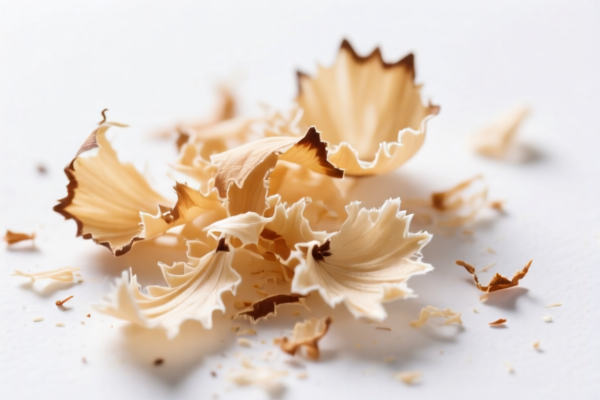


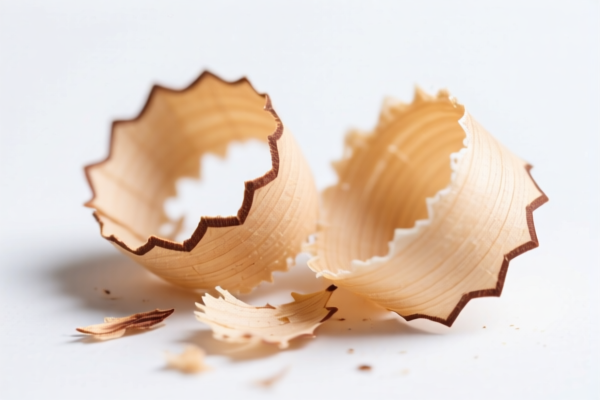
AI Analysis
🪵 Square Wood Chips (Wood Chips and Shavings)
🌐 HS Code Reference & Customs Clearance Guide | 2026 Latest Tariff Analysis | Professional Entry Strategies
📌 I. Product Definition & Classification: What Exactly Are "Square Wood Chips"?
"Square Wood Chips" refer to processed wood materials, typically in a sheet-like or chip form, derived from coniferous (softwood) timber. In international trade, their classification hinges on morphology (shape/form) and material properties. They are generally considered primary wood products/raw materials, distinct from finished furniture or engineered boards.
Key distinctions in classification depend on: 1. Morphology: Are they "chips" for pulp/chemical processing or "sliced/shaved" sheets? 2. Material: Specifically Coniferous Wood (Softwood, e.g., Pine, Spruce, Fir). 3. Processing Level: Primary processing (sawing, chipping, shaving) vs. further manufacturing.
⚠️ Critical Distinction:
- If the product is in primary raw form (chips/shavings/slices) intended for pulp, particleboard, or further processing → It falls under Chapter 44 (Wood and Articles of Wood), specifically heading 44.07.
- Do not confuse with "Wooden Toys" or "Furniture" (which have completely different tax structures).
- The term "Square" likely describes the cross-section of the chip/slice or the board-like shape, not a specific legal category. Customs focuses on the physical state (chips/shavings) rather than the geometric label "square."
📦 II. HS Code Classification Details (2026 Latest Tariff Authority Cross-Reference)
Based on the provided data for "Square Wood Chips," the goods are classified under HS Code 4407.19 (Wood sawn or chipped lengthwise, sliced or peeled, whether or not planed, sanded or finger-jointed, of a thickness exceeding 6 mm), specifically for Coniferous Wood other than Pine/Spruce/Fir or specific sub-categories.
| HS Code | Product Description | Application Scenario | Key Classification Logic |
|---|---|---|---|
4407.19.00.66 |
Wood chips/shavings, primary form, raw material attribute | Raw material for particleboard, pulp, or biomass energy | ✅ Primary Form: Matches "wood chips" morphology. Treated as raw material. |
4407.19.00.92 |
Coniferous wood slices/shavings, longitudinal cutting/slicing feature | Sliced veneer sheets, wood shavings for crafts or further processing | ✅ Coniferous Match: Specifically matches "coniferous wood" category. Shape fits "sliced/chipped." |
4407.19.00.54 |
Other wood chips/shavings, primary product, wooden material | General coniferous wood chips not fitting other specific sub-codes | ✅ Other Category: Catch-all for other wood chips/shavings of coniferous origin. |
🔍 Key Insight:
- All three codes fall under 4407.19, which indicates coniferous wood that has been sawn, chipped, sliced, or peeled.
- The difference between.66,.92, and.54is often administrative or based on specific dimensional tolerances or end-use declarations not fully detailed in the summary but critical for precise customs entry.
- Do NOT misclassify as "Wooden Furniture" (HS 9403) or "Wooden Toys" (HS 9503). These are raw/semi-processed wood products.
💰 III. 2026 Latest Tariff Rate Breakdown (Including Surcharge Policies)
✅ Applicable Country: United States (US)
✅ Country of Origin: China (CN)
✅ Effective Date: Current rates apply (See Note 122 & Section 301)
🎯 1. All Applicable Codes: 4407.19.00.66, 4407.19.00.92, 4407.19.00.54
| Item | Detail |
|---|---|
| Base Tariff Rate | 0% (Most Favored Nation / MFN rate for many wood products) |
| Section 301 Surcharge | +25% (Trade Enhancement Act / Section 301 tariffs on Chinese imports) |
| Section 122 Surcharge | +10% (Specific tariff clause 122, often related to specific wood/forest product regulations or anti-dumping/countervailing duties depending on context) |
| Total Tariff Rate | 35.0% |
| Tax Calculation | CIF Value × 35% |
| De Minimis Exemption | ❌ Not Applicable (De Minimis value for US imports from China is effectively $0 for Section 301 goods; shipments cannot bypass tariffs via low-value declarations) |
| Legal Basis Path | USITC:4407.19.00.XX → SECTION301:9903.01.25 → SECTION122:SpecificClause |
📌 Explanation:
- The Base Rate of 0% reflects the WTO MFN rate for wood chips/shavings of this type.
- The +25% Section 301 tariff is a major cost driver for Chinese-origin wood products entering the US.
- The +10% Section 122 tariff is an additional layer. Note: "122 Clause" may refer to specific customs administrative rulings or a separate surcharge. In some contexts, this might relate to anti-dumping duties or specific wood preservation chemical regulations, but based on the data, it is a flat 10% add-on.
- Total Burden: 35%. This is significant for low-margin wood products.
🛠️ IV. Customs Clearance Practical Advice (Real-World Pitfall Guide)
✅ 1. Documentation Checklist (Mandatory)
| Document | Required | Explanation |
|---|---|---|
| ✅ Commercial Invoice | ✔️ | Must clearly state: "Wood Chips/Shavings of Coniferous Wood," HS Code, CIF Value, Country of Origin (China). |
| ✅ Packing List | ✔️ | Detailed breakdown of weight, volume, and number of bundles/pallets. |
| ✅ Certificate of Origin (CO) | ✔️ | Essential for proving origin. If originating elsewhere (e.g., Vietnam), provide CO to avoid 301 tariffs. |
| ✅ ISPM 15 Phytosanitary Certificate | ✔️ | CRITICAL for wood products. Proves wood is heat-treated/fumigated to prevent pest invasion. Without this, cargo will be rejected/destroyed. |
| ✅ Product Specification Sheet | ✔️ | Detail thickness, dimensions, moisture content, and treatment method. Helps distinguish between "chips" (for pulp) and "slices" (for veneer). |
| ✅ Freight Bill (B/L) | ✔️ | Match invoice and packing list details. |
✅ 2. Classification Strategy (Key Tip)
🔥 "Match the Morphology, Declare the Origin, Verify the Treatment!"
| Scenario | Correct Declaration | Wrong Declaration |
|---|---|---|
| Raw wood chips for pulp | 4407.19.00.66 (Primary form) |
Misclassifying as "Finished Wood Parts" → Higher risk of audit. |
| Sliced wood for veneer | 4407.19.00.92 (Sliced feature) |
Calling it "Wooden Board" → Incorrect chapter (44 vs 44/48). |
| General wood shavings | 4407.19.00.54 (Other) |
Omitting "Coniferous" detail → Customs may assign higher default rate. |
| Non-Chinese Origin | Apply for Origin Switch | Using Chinese CO → Pay 35% instead of 0% (if applicable). |
✅ 3. Special Cases Handling
| Case | Handling Advice |
|---|---|
| ISPM 15 Non-Compliance | Cargo Hold/Re-export. Ensure all wood packaging AND the product itself (if raw) meet ISPM 15 standards. |
| Moisture Content > 20% | May require additional phytosanitary inspection. Declare accurate moisture content. |
| Mixed Origins | If mixing Chinese and non-Chinese wood in one shipment, separate bills of lading or clear segregation is required to avoid applying 35% to the entire container. |
| Duty Drawback | If the wood chips are used in manufacturing and re-exported, investigate Duty Drawback eligibility (refund of tariffs paid). |
🌍 V. Global Market Customs Comparison (2026 Latest)
| Country/Region | Recommended HS Code | Tariff (CN Origin) | Certification | Remarks |
|---|---|---|---|---|
| 🇺🇸 USA | 4407.19.00.66/92/54 |
35% (Base 0% + 301 25% + 122 10%) | ISPM 15 + Phytosanitary | High tariff burden. Check for trade remedy actions. |
| 🇨🇳 China | 4407.19.00.66/92/54 |
0-5% | Phytosanitary | Import duty low, but strict on invasive species. |
| 🇪🇺 EU | 4407.19.00.66/92/54 |
0% (if FLEGT compliant) | FLEGT/EUTR | Strict EU Timber Regulation. Must prove legal harvesting. |
| 🇯🇵 Japan | 4407.19.00.66/92/54 |
5-6% | Phytosanitary | Standard import duties apply. |
📌 Conclusion:
- USA is the most expensive market for Chinese-origin wood chips due to Section 301 + Section 122 tariffs.
- EU requires strict legal sourcing proof (FLEGT) regardless of low tariff.
- China has low tariffs but high phytosanitary barriers.
📌 VI. Common Mistakes & Pitfall Guide (Lessons Learned)
❌ Mistake 1: Ignoring ISPM 15 compliance for wood chips
👉 Consequence: Cargo destroyed or re-exported at importer’s expense.
✅ Fix: Ensure wood treatment certificate is attached and valid.
❌ Mistake 2: Misdeclaring "Square Wood Chips" as "Wooden Furniture Parts"
👉 Consequence: Wrong HS Code → Potential penalty for misdeclaration.
✅ Fix: Stick to Chapter 44 (Wood) codes.
❌ Mistake 3: Assuming "Base 0% Tariff" means "Free Import"
👉 Consequence: Unexpected 35% bill at US Customs.
✅ Fix: Always add Section 301 (25%) and Section 122 (10%) for CN origin.
❌ Mistake 4: Using a generic "Wood" description without specifying "Coniferous"
👉 Consequence: Customs may assign a higher default tariff or delay inspection.
✅ Fix: Clearly state "Coniferous Wood Chips/Shavings" in commercial invoice.
🎯 VII. Conclusion: Precision Classification, Cost Savings!
🎯 Remember the Formula:
🔹 "Wood Chips + China Origin = 35% Total Tariff"
🔹 "Base 0% + 301 25% + 122 10% = 35%"
🔹 "ISPM 15 is Non-Negotiable!"
📌 Pro Tip:
If your wood chips are sourced from Vietnam, Malaysia, or Thailand, you can avoid the 25% Section 301 tariff by providing a valid Certificate of Origin. Total tariff may drop to 10% (if 122 still applies) or 0% (if 122 is origin-specific).
👉 Action: Verify supply chain origin. If possible, diversify sourcing to mitigate US trade risks.
📣 Immediate Action:
📞 Consult a Licensed Customs Broker to confirm the exact sub-code (.66, .92, or .54) based on your product's physical dimensions.
📄 Ensure ISPM 15 Phytosanitary Certificate is ready before shipment.
📊 Calculate landed cost with 35% tariff to ensure profitability.
✨ Professional Customs Clearance Starts with Accurate Classification!
💼 Your Margin Depends on Your HS Code!
Customer Reviews
About HS Code Classification
The Harmonized System (HS) is an internationally standardized nomenclature developed by the World Customs Organization (WCO) to classify traded products. Over 200 countries use the HS system as the basis for customs tariffs, trade statistics, and import/export regulations.
Each HS code follows a hierarchical structure:
- Chapter (2 digits) — Broad category of goods (e.g., Chapter 84: Machinery and Mechanical Appliances)
- Heading (4 digits) — More specific grouping within the chapter
- Subheading (6 digits) — Internationally standardized breakdown, used by all WCO member countries
- National subdivisions (8-10 digits) — Country-specific extensions for further classification, such as US HTSUS 10-digit codes
Correct HS code classification is essential for smooth customs clearance, accurate duty payment, and compliance with trade regulations. Misclassification can lead to customs delays, overpayment of duties, or penalties.
When importing from CN to US, the applicable tariff rates may include:
- Most-Favored-Nation (MFN) rate — The standard duty rate applied to WTO members
- General rate — Applied to countries without trade agreements
- Trade remedy duties — Additional tariffs such as Section 301 (anti-dumping), Section 232 (national security), or countervailing duties
The information provided on this page is for reference purposes only. For official classification, please consult with your local customs authority or a licensed customs broker.