Stackable Plastic Bucket
CN → US| HS Code | Tariff Rate | Origin | Destination | Doc |
|---|---|---|---|---|
| 3926901000 | 20.9% | CN | US | Official Doc |
| 3923900014 | 38.0% | CN | US | Official Doc |
| 3926904000 | 12.8% | CN | US | Official Doc |
| 3923900012 | 38.0% | CN | US | Official Doc |
| 3926909989 | 22.8% | CN | US | Official Doc |
Product Images
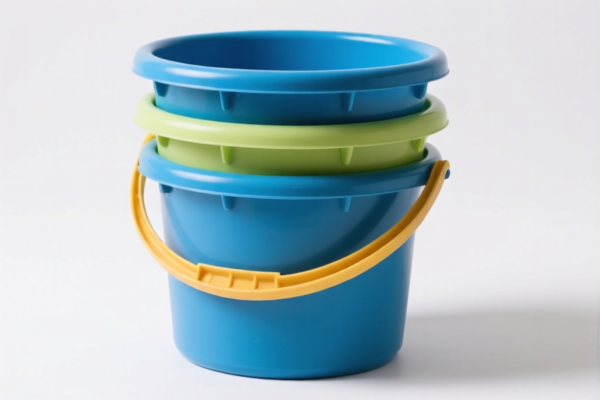
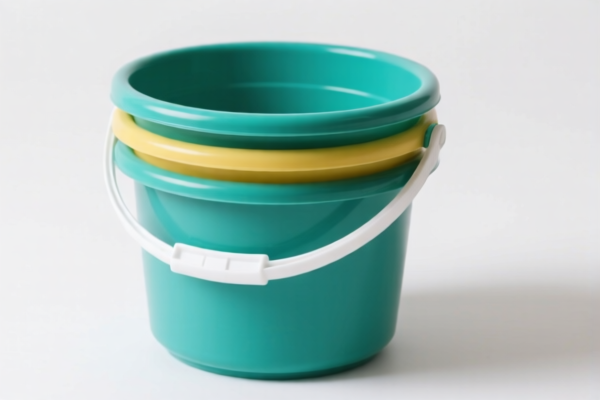
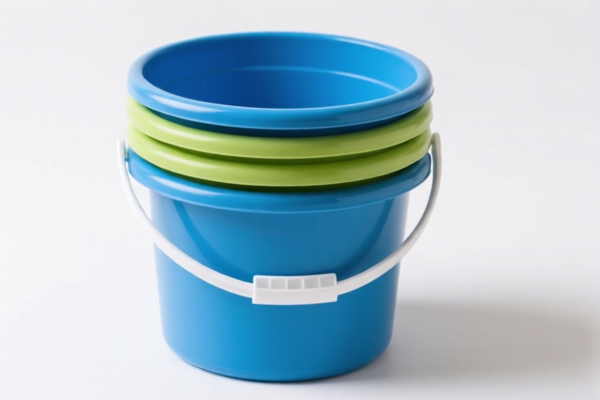
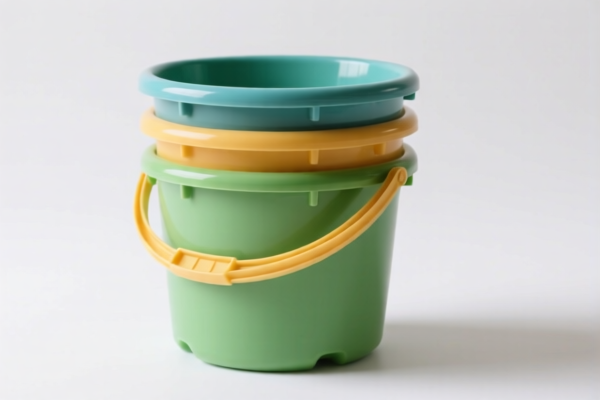
AI Analysis
🪣 Stackable Plastic Bucket
🌐 HS Code Reference & Customs Clearance Guide | 2026 Latest Tariff Analysis | Professional Entry Strategy
📌 I. Product Definition & Classification: What exactly is a "Stackable Plastic Bucket"?
A Stackable Plastic Bucket is a rigid or semi-rigid container made of plastic, designed for holding liquids or granular materials. In international trade, its classification hinges on two key factors:
1. Material: 100% Plastic.
2. Form & Function: It is classified as a "Bucket" or "Pail" if it meets specific structural criteria (rigid, open-top, often with handles). If it lacks these specific "bucket" characteristics but remains a general plastic article, it falls under "Other Plastic Articles."
⚠️ Key Distinction:
- If it is explicitly shaped as a Bucket/Pail (with a base, vertical sides, and often a handle) → It belongs to Chapter 39.23 (Articles for the conveyance or packing of goods) or 39.26 (Other plastic articles) depending on specific design nuances.
- If it is a generic Plastic Container/Item without specific "bucket" designation → It falls under 3926.90 (Other plastic articles).
📦 II. HS Code Classification Details (2026 Latest Tariff Authority Comparison)
Based on the provided data, here are the 5 matched HS Codes for "Stackable Plastic Bucket":
| HS Code | Product Description | Summary of Match | Applicability |
|---|---|---|---|
| 3926.90.10.00 | Buckets and pails (Plastic) | ✅ Match: Material is plastic; form & use align with "Buckets and pails." | General Plastic Buckets |
| 3923.90.00.14 | Plastic Articles for Packing (Buckets/Pails) | ✅ Match: Plastic material; form is a bucket; fits "packaging articles" category. | Packaging-focused Buckets |
| 3926.90.40.00 | Other Plastic Articles (General) | ✅ Match: Plastic material; form is an article; falls under "regular articles." | General Plastic Containers |
| 3923.90.00.12 | Plastic Buckets/Pails for Handling | ✅ Match: Name contains "Plastic"; "Handling Bucket" matches "Buckets and pails." | Industrial/Hauling Buckets |
| 3926.90.99.89 | Other Plastic Articles (Misc) | ✅ Match: Material is plastic; form is an article; inferred as general plastic item. | Miscellaneous Plastic Items |
🔍 Critical Note:
- 3923.90.00.xx codes are typically for packaging/conveyance items.
- 3926.90.xx codes are for other plastic articles not specified elsewhere.
- The distinction often lies in whether the bucket is intended for commercial packaging/transport (3923) or household/industrial use (3926).
💰 III. 2026 Latest Tariff Rate Breakdown (Including Surcharges & Policy Add-ons)
✅ Applicable Country: United States (US)
✅ Country of Origin: China (CN)
✅ Effective Date: 2025/2026 (Includes subsequent imports)
🎯 1. 3926.90.10.00 — Buckets and Pails (Plastic)
| Item | Content |
|---|---|
| Base Duty Rate | 3.4% (Ad Valorem) |
| Section 301 Surcharge | 7.5% |
| Section 122 Duties | 10% |
| Total Tax Rate | 20.9% |
| Tax Calculation | CIF Value × 20.9% |
| De Minimis Eligibility | ❌ No (High tax rate typically disqualifies from de minimis benefits) |
| Legal Basis Path | Base: 3.4% + Section 301: 7.5% + Section 122: 10% |
📌 Explanation:
- This is the most balanced option for general plastic buckets.
- Section 301 (7.5%) applies to many Chinese plastic goods.
- Section 122 (10%) is a recent addition targeting specific plastic items.
🎯 2. 3923.90.00.14 — Plastic Articles for Packing (Buckets/Pails)
| Item | Content |
|---|---|
| Base Duty Rate | 3.0% |
| Section 301 Surcharge | 25.0% |
| Section 122 Duties | 10% |
| Total Tax Rate | 38.0% |
| Tax Calculation | CIF Value × 38.0% |
| De Minimis Eligibility | ❌ No |
| Legal Basis Path | Base: 3.0% + Section 301: 25.0% + Section 122: 10% |
📌 Explanation:
- This code incurs a higher Section 301 surcharge (25%) compared to 3926.90.10.00.
- Likely used if the bucket is classified strictly as a packaging material rather than a consumer good.
🎯 3. 3926.90.40.00 — Other Plastic Articles (Regular Articles)
| Item | Content |
|---|---|
| Base Duty Rate | 2.8% |
| Section 301 Surcharge | 0.0% |
| Section 122 Duties | 10% |
| Total Tax Rate | 12.8% |
| Tax Calculation | CIF Value × 12.8% |
| De Minimis Eligibility | ❓ Possible (Lower total rate may allow de minimis, but check latest rules) |
| Legal Basis Path | Base: 2.8% + Section 301: 0.0% + Section 122: 10% |
📌 Explanation:
- Lowest Total Tax Rate (12.8%).
- No Section 301 Surcharge is applied here, which is a significant cost saver.
- Use this if the bucket can be argued as a "regular plastic article" rather than a specific "bucket" or "packaging" item.
🎯 4. 3923.90.00.12 — Plastic Buckets/Pails for Handling
| Item | Content |
|---|---|
| Base Duty Rate | 3.0% |
| Section 301 Surcharge | 25.0% |
| Section 122 Duties | 10% |
| Total Tax Rate | 38.0% |
| Tax Calculation | CIF Value × 38.0% |
| De Minimis Eligibility | ❌ No |
| Legal Basis Path | Base: 3.0% + Section 301: 25.0% + Section 122: 10% |
📌 Explanation:
- Same high tax rate as 3923.90.00.14.
- Applies to buckets specifically for handling/transport purposes.
🎯 5. 3926.90.99.89 — Other Plastic Articles (Miscellaneous)
| Item | Content |
|---|---|
| Base Duty Rate | 5.3% |
| Section 301 Surcharge | 7.5% |
| Section 122 Duties | 10% |
| Total Tax Rate | 22.8% |
| Tax Calculation | CIF Value × 22.8% |
| De Minimis Eligibility | ❌ No |
| Legal Basis Path | Base: 5.3% + Section 301: 7.5% + Section 122: 10% |
📌 Explanation:
- A "catch-all" category for plastic articles not elsewhere specified.
- Higher base rate (5.3%) but same Section 301 (7.5%) as 3926.90.10.00.
🛠️ IV. Customs Clearance Practical Advice (Battle-Tested Pitfall Guide)
✅ 1. Required Documentation Checklist
| Document | Mandatory? | Notes |
|---|---|---|
| ✅ Product Specifications | ✔️ | Must include dimensions, volume, material type (e.g., HDPE, PP), stackability features. |
| ✅ Product Photos | ✔️ | Clear images showing the bucket shape, handles (if any), and stacking mechanism. |
| ✅ Commercial Invoice | ✔️ | Must clearly state "Stackable Plastic Bucket" and HS Code. |
| ✅ Packing List | ✔️ | Detail how buckets are packed (nested? separate?). |
| ✅ Material Certificate | ✔️ | Proof of 100% plastic composition. |
✅ 2. Declaration Strategy (Key Mantra)
🔥 "Material First, Form Second, Function Third!"
| Scenario | Recommended HS Code | Risk Level |
|---|---|---|
| General Household Bucket | 3926.90.10.00 (20.9%) |
🟡 Medium |
| Industrial Hauling Bucket | 3923.90.00.12 (38.0%) |
🔴 High (High Tax) |
| Packaging/Transport Bucket | 3923.90.00.14 (38.0%) |
🔴 High (High Tax) |
| General Plastic Container | 3926.90.40.00 (12.8%) |
🟢 Lowest Cost |
| Unclear/Misc Plastic Item | 3926.90.99.89 (22.8%) |
🟡 Medium |
📌 Pro Tip:
- If the bucket is not primarily for packaging/transport, argue for 3926.90.40.00 to save 25.2% in taxes compared to 3923 codes.
- Avoid 3923 codes unless the bucket is explicitly used as a shipping container or packaging material.
✅ 3. Special Cases Handling
| Situation | Advice |
|---|---|
| Buckets with Wheels | May be classified as "Vehicles" (Chapter 87) or "Parts" → Do not use 3926/3923 without legal review. |
| Buckets with Handles | Still "Buckets" if handles are integral. If removable, still likely 3926/3923. |
| Buckets for Food/Chemicals | Provide FDA/REACH compliance documents to avoid detention for safety concerns. |
| Stackable Feature | Highlight "Stackable" in description to justify structural rigidity, supporting 3926 classification. |
🌍 V. Global Market Comparison (2026 Latest)
| Country/Region | Recommended HS Code | Tariff (China Origin) | Notes |
|---|---|---|---|
| 🇺🇸 USA | 3926.90.40.00 |
12.8% | Lowest tax among options. Avoid 3923 codes (38%). |
| 🇨🇳 China | 3926.90.99.00 |
~9.5% | No Section 301/122 surcharges. |
| 🇪🇺 EU | 3926.90.99 |
0-4.7% | Generally low duty; no Section 301. |
| 🇬🇧 UK | 3926.90.99 |
0-4.5% | Post-Brexit tariffs apply; no US-style surcharges. |
📌 Conclusion:
- USA is the most complex market due to Section 301 and Section 122 tariffs.
- Strategic Classification: Aim for 3926.90.40.00 (12.8%) to minimize costs.
- Avoid 3923 codes unless legally required for packaging classification.
📌 VI. Common Mistakes & Pitfalls (Blood-Learnings)
❌ Mistake 1: Classifying all buckets as 3923 (Packaging)
👉 Consequence: 38% tax vs. 12.8% tax → Loss of 25.2% profit margin!
❌ Mistake 2: Ignoring Section 122 Duties
👉 Consequence: Under-declaration of tax → Penalties & Delays.
❌ Mistake 3: Not specifying "Stackable" in Description
👉 Consequence: Customs may classify as "General Plastic Container" but miss structural details → Risk of Re-classification.
❌ Mistake 4: Using 3926.90.99.89 when 3926.90.10.00 is more accurate
👉 Consequence: 22.8% tax vs. 20.9% → Unnecessary cost increase.
✅ Correct Declaration Example:
"Stackable Plastic Bucket, 5 Gallon, HDPE Material, With Integrated Handles, For Household Storage, Model XYZ"
🎯 VII. Conclusion: Precise Classification Saves Money!
🎯 Remember the Mantra:
🔹 "Not Packaging? Use 3926!"
🔹 "Avoid 3923 Unless It's for Shipping!"
🔹 "Lowest Tax: 3926.90.40.00 at 12.8%!"
🔹 "Highest Tax: 3923 Codes at 38.0%!"
📌 Pro Tip:
If your bucket is originating from Vietnam, Thailand, or Malaysia, you may qualify for IEEPA Exemptions or FTZ Benefits, reducing taxes significantly.
Apply for Advance Rulings to lock in the 12.8% rate for3926.90.40.00.
📣 Immediate Action:
📞 Consult a Customs Broker + Provide Product Photos + Request HS Code Advance Ruling
🚀 Clear Customs Smoothly, Boost Margins, and Ship Efficiently!
✨ Professional Customs Clearance Starts with Accurate Classification!
💼 Every Percent of Tax Saved is Pure Profit!
Customer Reviews
About HS Code Classification
The Harmonized System (HS) is an internationally standardized nomenclature developed by the World Customs Organization (WCO) to classify traded products. Over 200 countries use the HS system as the basis for customs tariffs, trade statistics, and import/export regulations.
Each HS code follows a hierarchical structure:
- Chapter (2 digits) — Broad category of goods (e.g., Chapter 84: Machinery and Mechanical Appliances)
- Heading (4 digits) — More specific grouping within the chapter
- Subheading (6 digits) — Internationally standardized breakdown, used by all WCO member countries
- National subdivisions (8-10 digits) — Country-specific extensions for further classification, such as US HTSUS 10-digit codes
Correct HS code classification is essential for smooth customs clearance, accurate duty payment, and compliance with trade regulations. Misclassification can lead to customs delays, overpayment of duties, or penalties.
When importing from CN to US, the applicable tariff rates may include:
- Most-Favored-Nation (MFN) rate — The standard duty rate applied to WTO members
- General rate — Applied to countries without trade agreements
- Trade remedy duties — Additional tariffs such as Section 301 (anti-dumping), Section 232 (national security), or countervailing duties
The information provided on this page is for reference purposes only. For official classification, please consult with your local customs authority or a licensed customs broker.