Stainless Steel Aluminum Teapot
CN → US| HS Code | Tariff Rate | Origin | Destination | Doc |
|---|---|---|---|---|
| 8516710080 | 21.2% | CN | US | Official Doc |
| 7615107155 | 63.1% | CN | US | Official Doc |
| 7615107180 | 63.1% | CN | US | Official Doc |
| 8419819080 | 17.5% | CN | US | Official Doc |
| 7323930015 | 62.0% | CN | US | Official Doc |
Product Images
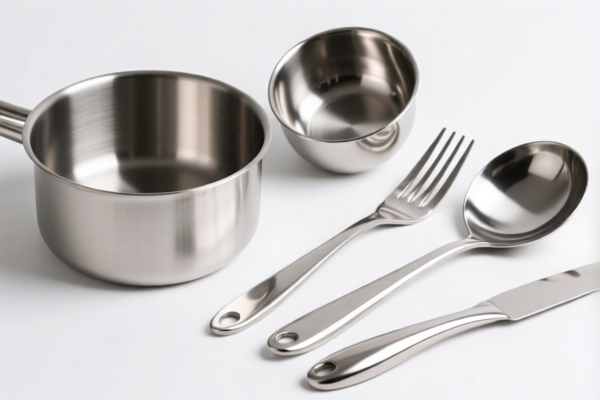
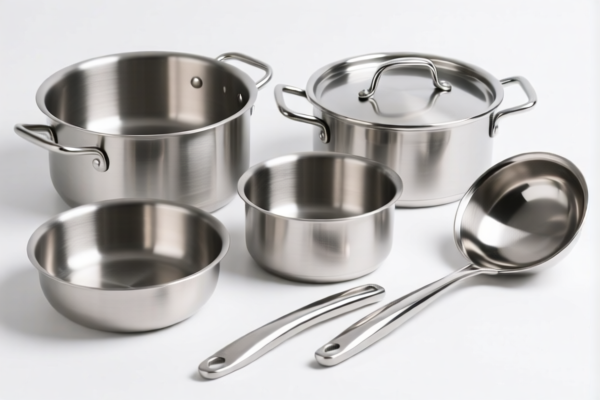
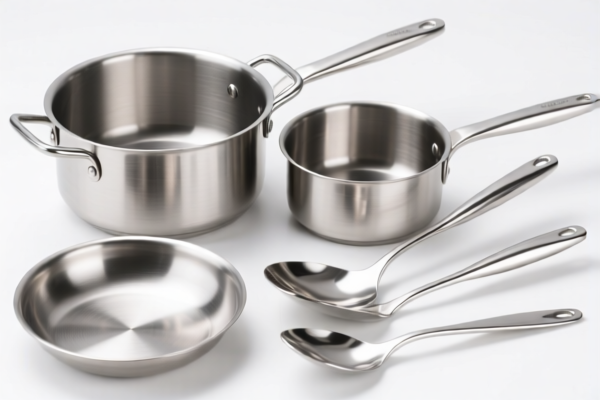
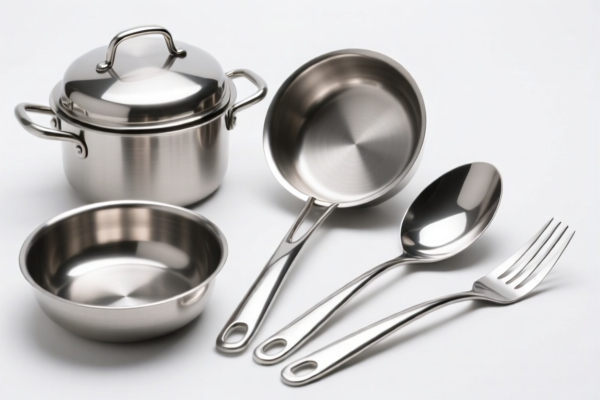
AI Analysis
🫖 Stainless Steel Aluminum Teapot (Mixed Material Teapots)
🌐 HS Code Reference & Customs Clearance Guide | 2026 Latest Tariff Analysis | Professional Strategy for Mixed-Metal Kitchenware
📌 I. Product Definition & Classification: Do You Really Understand "Mixed-Material Teapots"?
Teapots made of stainless steel and aluminum are common in the global kitchenware market. However, in international trade, their classification depends heavily on material composition, functionality, and structure. The data provided highlights five distinct HS codes, reflecting different interpretations by customs authorities regarding whether the item is an "electrical appliance," a "simple kitchen utensil," or a "metal article."
⚠️ Key Distinction Points:
- Electrical vs. Non-Electrical: If the teapot has heating elements, plugs, or is designed for electric tea makers, it falls under Chapter 85 (Electrical Machinery).
- Material Specificity: If purely non-electric, the classification splits based on specific metal composition and usage (e.g., "Stainless Steel" vs. "Aluminum" vs. "Mixed").
- Coating & Design: Some classifications depend on whether the aluminum has coatings or is used for specific culinary purposes.
📦 II. HS Code Classification Details (2026 Latest Tariff Authority Comparison)
Based on the provided data, here are the five distinct classifications for "Stainless Steel Aluminum Teapots":
| HS Code | Product Description | Applicable Scenario | Key Characteristics |
|---|---|---|---|
| 8516.71.00.80 | Other electrical appliances for heating | Electric Tea Makers / Electric Utensils | Electrical: Contains heating elements, used with electric tea makers. |
| 7615.10.71.55 | Aluminum cookware (Steel/Aluminum mix) | Kitchen Utensils / Cookware | Non-Electrical: Aluminum-based, mixed materials, general kitchen use. |
| 7615.10.71.80 | Aluminum cookware (Steel/Aluminum mix) | Kitchen Utensils (Uncoated) | Non-Electrical: Aluminum-based, no coating, specific culinary use. |
| 8419.81.90.80 | Machinery for heating liquids | Hot Beverage Makers (Mixed Metal) | Machinery: Used specifically for making hot drinks, contains stainless steel & aluminum. |
| 7323.93.00.15 | Stainless Steel Teapots (Men's Style?) | Stainless Steel Teapots | Stainless Steel Dominant: Primarily stainless steel, possibly specific design ("Men's style" may be a translation artifact for "Daily use" or specific form). |
🔍 Critical Insight:
- The highest tax burden comes from misclassifying a non-electric aluminum teapot as a simple metal article subject to Section III metal tariffs (HS 7615/7323).
- The lowest tax burden is for electrical appliances (HS 8516) or specific machinery (HS 8419), which often have lower base tariffs despite additional levies.
💰 III. 2026 Latest Tariff Rate Breakdown (Including Surtaxes & Policy Add-ons)
✅ Applicable Country: United States (US)
✅ Origin: China (CN)
✅ Effective Time: Current trade restrictions apply (Section 301, Section 122, etc.)
🎯 1. 8516.71.00.80 —— Electrical Appliances for Heating (Tea Makers)
| Item | Content |
|---|---|
| Base Tariff | 3.7% |
| Section 301 Surcharge | 7.5% |
| Section 122 Tariff | 10% |
| Total Tax Rate | 21.2% |
| Tax Calculation | CIF Value × 21.2% |
| De Minimis Exemption | ❌ Not Applicable (Commercial shipment) |
| Legal Basis | Standard HTSUS 8516.71.00 + USITC Footnotes for Section 301 & 122 |
📌 Explanation:
- This is the most favorable classification among the options if the product is indeed an electric tea maker.
- The base tariff is low, and while surcharges apply, the total (21.2%) is significantly lower than the metal article classifications.
- Crucial: Must provide proof of electrical functionality (plugs, heaters, controls).
🎯 2. 7615.10.71.55 & 7615.10.71.80 —— Aluminum Cookware (Steel/Aluminum Mix)
| Item | Content |
|---|---|
| Base Tariff | 3.1% |
| Section 301 Surcharge | 0.0% (Note: Data shows 0.0%, but see below) |
| Section 122 Tariff | 10% |
| Steel/Aluminum/Copper Surcharge | 50% |
| Total Tax Rate | 63.1% |
| Tax Calculation | CIF Value × 63.1% |
| De Minimis Exemption | ❌ Not Applicable |
| Legal Basis | HTSUS 7615.10 + Special Tariff for Steel/Aluminum/Copper Articles |
📌 Critical Warning:
- Despite a low base tariff (3.1%) and no Section 301 surcharge (according to the data provided), the 50% surcharge on Steel/Aluminum/Copper products is devastating.
- Total Tax: 63.1%. This is a high-risk classification.
- Note: The data indicates "Section 301: 0.0%" but includes a specific 50% tariff for "Steel, Aluminum, Copper Products." This likely refers to specific trade actions affecting base metals and articles thereof.
🎯 3. 8419.81.90.80 —— Machinery for Heating Liquids (Hot Beverage Makers)
| Item | Content |
|---|---|
| Base Tariff | 0.0% |
| Section 301 Surcharge | 7.5% |
| Section 122 Tariff | 10% |
| Total Tax Rate | 17.5% |
| Tax Calculation | CIF Value × 17.5% |
| De Minimis Exemption | ❌ Not Applicable |
| Legal Basis | HTSUS 8419.81.90 + USITC Footnotes |
📌 Explanation:
- This is the lowest total tax rate (17.5%) among all options.
- However, classification as "Machinery" (Chapter 84) is stricter. The product must be clearly defined as equipment for heating liquids, not just a passive container.
- Strategy: If the teapot is part of a system or has specific mechanical heating functions, this is the optimal HS code.
🎯 4. 7323.93.00.15 —— Stainless Steel Teapots (Stainless Steel Dominant)
| Item | Content |
|---|---|
| Base Tariff | 2.0% |
| Section 301 Surcharge | 0.0% |
| Section 122 Tariff | 10% |
| Steel/Aluminum/Copper Surcharge | 50% |
| Total Tax Rate | 62.0% |
| Tax Calculation | CIF Value × 62.0% |
| De Minimis Exemption | ❌ Not Applicable |
| Legal Basis | HTSUS 7323.93.00 + Special Tariff for Steel Articles |
📌 Warning:
- Similar to the aluminum classification, the 50% surcharge on Steel Products makes the total tax 62.0%.
- Even though the base tariff is only 2.0%, the additional metal-specific tariffs negate any savings.
- "Men's Teapot": The description "Stainless Steel Men's Teapot" may be a translation error for "Daily Use" or a specific design. Ensure the product is purely stainless steel to fit this code.
🛠️ IV. Customs Clearance Practical Advice (Real-World Pitfall Guide)
✅ 1. Documentation Checklist (Must-Have)
| Document | Required | Description |
|---|---|---|
| ✅ Product Specifications | ✔️ | Material breakdown (e.g., 70% Aluminum, 30% Stainless Steel), dimensions, weight. |
| ✅ Electrical Certifications | ✔️ | If claiming HS 8516 or 8419: UL, ETL, FCC, CE certificates are mandatory. |
| ✅ Photos of the Product | ✔️ | Clear images showing handles, spouts, base, and any electrical components. |
| ✅ Commercial Invoice | ✔️ | Accurate description: "Electric Tea Maker" vs. "Aluminum Teapot." |
| ✅ Material Declaration | ✔️ | Explicitly state if the product contains steel, aluminum, or copper to avoid the 50% surcharge ambiguity. |
| ✅ Packing List | ✔️ | Detail items in the package to prove it’s a complete unit, not parts. |
✅ 2. Classification Strategy (Key Rules)
| Scenario | Correct HS Code | Risk of Misclassification |
|---|---|---|
| Electric Tea Maker | 8516.71.00.80 |
High: If misclassified as non-electric, tax drops from 21.2% to 63.1%? No, wait—electrical is cheaper. Misclassifying as 7615 leads to 63.1% tax. |
| Non-Electric, Aluminum Main | 7615.10.71.55 |
High: Subject to 50% metal surcharge. Tax: 63.1%. |
| Non-Electric, Stainless Steel Main | 7323.93.00.15 |
High: Subject to 50% metal surcharge. Tax: 62.0%. |
| Heating Machinery (Specific) | 8419.81.90.80 |
Medium: Requires proof of "machinery" function. Tax: 17.5%. |
🔥 Golden Rule:
"Electrical/Machinery = Low Tax (~17-21%). Non-Electric Metal = High Tax (~62-63%)."
Always strive to classify under Chapter 85 (Electrical) or Chapter 84 (Machinery) if the product supports it. Avoid Chapter 73/76 unless absolutely necessary.
✅ 3. Special Handling Tips
| Situation | Recommendation |
|---|---|
| Mixed Materials | Clearly declare the primary material. If >50% aluminum, HS 7615 applies. If >50% stainless steel, HS 7323 applies. |
| Heating Function | If the teapot has a base that plugs in, always use HS 8516. Do not use "Aluminum Teapot" description; use "Electric Tea Kettle/Maker." |
| Section 122 Tariff | Note that Section 122 (10%) applies to most goods from China. Plan for this in cost calculations. |
| 50% Metal Surcharge | This is the biggest cost driver. If you can prove the product is "machinery" or "electrical," you avoid this 50% penalty. |
🌍 V. Global Market Customs Comparison (2026 Latest)
| Country/Region | Recommended HS Code | Estimated Total Tax | Certification Requirements | Notes |
|---|---|---|---|---|
| 🇺🇸 USA | 8516.71.00.80 |
21.2% | FCC, UL, ETL | Avoid HS 7615/7323 due to 50% surcharge. |
| 🇨🇳 China | 8516.71.00.80 |
~13% (Import) | CCC | Lower overall tax burden. |
| 🇪🇺 EU | 8516.71.00.00 |
14-16% | CE, RoHS, WEEE | No Section 301/122 surcharges. |
| 🇬🇧 UK | 8516.71.00.00 |
14-16% | UKCA, CE | Post-Brexit rules apply. |
| 🇦🇺 Australia | 8516.71.00.00 |
5% | RCM, SAA | No additional surcharges for China origin. |
📌 Conclusion:
- USA is the most challenging market due to Section 301, Section 122, and specific metal surcharges.
- Strategy for USA: Push for HS 8516 or HS 8419 to keep taxes under 22%. Avoid metal-only classifications.
📌 VI. Common Mistakes & Pitfalls (Lessons from Blood and Tears)
❌ Mistake 1: Classifying an Electric Tea Maker as "Aluminum Teapot" (HS 7615)
👉 Consequence: Tax jumps from 21.2% to 63.1% → Loss of Profit Margin!
❌ Mistake 2: Classifying a Stainless Steel Teapot as "Electrical Appliance" without proof
👉 Consequence: Customs rejection, delays, and potential fines for false declaration.
❌ Mistake 3: Ignoring the 50% Metal Surcharge
👉 Consequence: Unexpected high duties on HS 7323/7615 shipments. Always check the "Steel/Aluminum/Copper" surcharge footnote.
❌ Mistake 4: Vague Product Descriptions
👉 Consequence: Customs cannot determine the correct HS code → Audit Risk.
✅ Correct Approach:
"Electric Tea Maker, Stainless Steel & Aluminum Body, 120V, UL Listed, Model XYZ"
Use keywords like "Electric," "Heater," "Appliance" to steer classification toward Chapter 85.
🎯 VII. Conclusion: Precision Classification Saves Money!
🎯 Remember the Rule:
🔹 "Electrical/Machinery = 17-21% Tax. Metal Utensils = 62-63% Tax."
🔹 "If it plugs in, call it an Appliance. If it doesn't, prepare for 50% Surcharge."
🔹 "HS Code Choice = Profitability. Choose Wisely!"
📌 Pro Tip:
If your product is non-electric but has complex heating functions, consult a customs broker to see if it can be classified under HS 8419 (Machinery for heating liquids) instead of HS 7615. The 45% tax difference is significant!
📣 Immediate Action:
📞 Contact a Customs Broker: Provide product images and electrical specs.
🚀 Request a Binding Ruling: If possible, get a pre-classification ruling from US Customs to avoid surprises.
💰 Calculate Landed Cost: Include 21.2% (for electrical) or 63.1% (for metal) in your pricing model.
✨ Professional Customs Clearance Starts with Accurate Classification!
💼 Your Bottom Line Depends on Your HS Code!
Customer Reviews
About HS Code Classification
The Harmonized System (HS) is an internationally standardized nomenclature developed by the World Customs Organization (WCO) to classify traded products. Over 200 countries use the HS system as the basis for customs tariffs, trade statistics, and import/export regulations.
Each HS code follows a hierarchical structure:
- Chapter (2 digits) — Broad category of goods (e.g., Chapter 84: Machinery and Mechanical Appliances)
- Heading (4 digits) — More specific grouping within the chapter
- Subheading (6 digits) — Internationally standardized breakdown, used by all WCO member countries
- National subdivisions (8-10 digits) — Country-specific extensions for further classification, such as US HTSUS 10-digit codes
Correct HS code classification is essential for smooth customs clearance, accurate duty payment, and compliance with trade regulations. Misclassification can lead to customs delays, overpayment of duties, or penalties.
When importing from CN to US, the applicable tariff rates may include:
- Most-Favored-Nation (MFN) rate — The standard duty rate applied to WTO members
- General rate — Applied to countries without trade agreements
- Trade remedy duties — Additional tariffs such as Section 301 (anti-dumping), Section 232 (national security), or countervailing duties
The information provided on this page is for reference purposes only. For official classification, please consult with your local customs authority or a licensed customs broker.