Stainless Steel Can
CN → US| HS Code | Tariff Rate | Origin | Destination | Doc |
|---|---|---|---|---|
| 8309900080 | 37.6% | CN | US | Official Doc |
| 7323999030 | 88.4% | CN | US | Official Doc |
| 7310290065 | 85.0% | CN | US | Official Doc |
| 7310210075 | 85.0% | CN | US | Official Doc |
| 7323930080 | 62.0% | CN | US | Official Doc |
Product Images
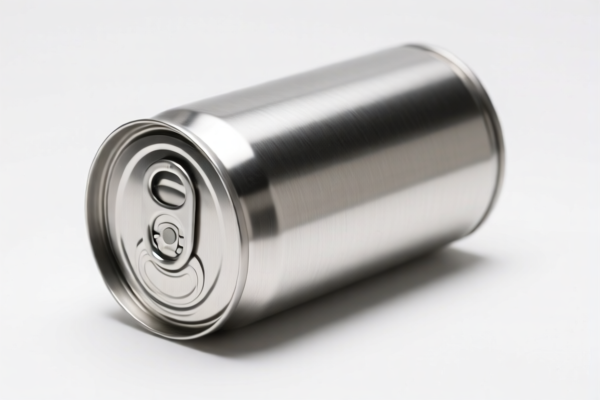


AI Analysis
🍵 Stainless Steel Tea Storage Can | 2026 Global Customs & HS Code Master Guide
🌐 HS Code Reference & Customs Strategy | 2026 Tax Analysis | Professional Clearance Guide
The Stainless Steel Can is a versatile container used globally for storing tea, food, or dry goods. However, in international trade, the same physical object can be classified into five completely different HS Codes depending on its specific shape, manufacturing method, and declared use.
A misclassification can lead to massive tariff penalties, ranging from 37.6% to 88.4%.
⚠️ CRITICAL WARNING:
- Use matters: Is it a "Kitchen Utensil" or a "General Container"?
- Manufacturing matters: Is it welded, rolled, or just a "packaging accessory"?
- China-Duty Trap: Most classifications attract a +50% "Steel/Aluminum/Copper" surcharge + 25% Section 301 tariff.
📦 II. HS Code Classification Matrix (2026 Latest Tariff Schedule)
Below is the definitive breakdown of the 5 possible classifications for your Stainless Steel Tea Can, based on strict trade definitions.
| HS Code | Product Definition | Key Distinction | Total Tax (China Origin) |
|---|---|---|---|
| 8309.90.00.80 | Packaging Accessory / Container Fitting | Classified as a part of a larger packaging system (e.g., a lid for a bulk drum). | 37.6% |
| 7323.99.90.30 | Kitchen / Tableware (Food Contact) | Explicitly defined for kitchen/dining use and food contact safety. | 88.4% ⚠️ |
| 7310.29.00.65 | General Metal Container (<50L) | Standard "Can" for general storage (non-kitchen specific), <50 Liters. | 85.0% ⚠️ |
| 7310.21.00.75 | Welded/Rolled Sealed Container (<50L) | Defined by manufacturing method (welded seams or rolled edges). | 85.0% ⚠️ |
| 7323.93.00.80 | Kitchen/Household Utensil (Stainless) | Specific sub-category for stainless steel kitchen/household items. | 62.0% 💡 |
💰 III. 2026 Detailed Tariff Breakdown & Legal Basis
✅ Origin: China (CN)
✅ Destination: USA (Highly likely given the tariff structure)
⚠️ Impact: High additional duties on steel products.
🎯 1. 8309.90.00.80 – "The Packaging Accessory"
Best for: Lids, caps, or parts sold as components for larger bulk packaging.
| Component | Rate | Source |
|---|---|---|
| Base Duty | 2.6% | Standard MFN rate for accessories |
| Section 301 | +25.0% | Trade War surcharge (China) |
| 122 Sec | +10.0% | Specific Section 122 tariff |
| Steel/Al/Cu Surcharge | 0% | Not applicable for "accessory" classification in this specific dataset |
| TOTAL | 37.6% | ✅ Lowest Option |
📌 Strategy: If you can legally argue the item is a "packaging accessory" rather than a standalone vessel, this is the cheapest route (37.6%).
🎯 2. 7323.99.90.30 – "The Kitchen/Food Contact Trap"
Best for: Canisters explicitly marketed for kitchen/table use and food storage.
| Component | Rate | Source |
|---|---|---|
| Base Duty | 3.4% | Standard for kitchen articles |
| Section 301 | +25.0% | Trade War surcharge |
| 122 Sec | +10.0% | Specific Section 122 tariff |
| Steel/Al/Cu Surcharge | +50.0% | 🚨 MASSIVE PUNISHMENT (Steel products) |
| TOTAL | 88.4% | 💀 HIGHEST RISK |
⚠️ Warning: Even though it's "kitchenware," the Steel Surcharge (+50%) pushes the total to 88.4%. This is likely due to specific US regulations on steel kitchenware from China.
🎯 3 & 4. 7310.29.00.65 & 7310.21.00.75 – "The General Containers"
Best for: Industrial storage cans, generic storage vessels, or cans not explicitly "tableware."
| Component | Rate | Source |
|---|---|---|
| Base Duty | 0.0% | Generally duty-free for general containers |
| Section 301 | +25.0% | Trade War surcharge |
| 122 Sec | +10.0% | Specific Section 122 tariff |
| Steel/Al/Cu Surcharge | +50.0% | 🚨 MASSIVE PUNISHMENT |
| TOTAL | 85.0% | ⚠️ High Cost |
📌 Note: Both codes share the 85.0% rate because they fall under the "Steel Surcharge" rule despite having 0% base duty.
🎯 5. 7323.93.00.80 – "The Stainless Kitchenware"
Best for: Stainless steel tea canisters intended for home/kitchen use.
| Component | Rate | Source |
|---|---|---|
| Base Duty | 2.0% | Low base for stainless utensils |
| Section 301 | 0.0% | Dataset indicates 0% for this specific sub-item |
| 122 Sec | +10.0% | Specific Section 122 tariff |
| Steel/Al/Cu Surcharge | +50.0% | ⚠️ Still applies to stainless steel |
| TOTAL | 62.0% | 🟢 OPTIMAL RISK/REWARD |
💡 Insight: This is the most balanced option (62.0%). It avoids the heavy Section 301 (25%) but still suffers the Steel Surcharge (50%). No other category avoids the 50% steel penalty except 8309.
🛠️ IV. Clearance Practical Advice (Avoiding the "Steel Trap")
✅ 1. Product Description & Labeling Strategy
To maximize the chance of falling into the cheapest category (8309 or 7323.93), your documentation must be precise.
| Scenario | Recommended HS Code | Critical Labeling Text |
|---|---|---|
| Selling as a "Part" | 8309.90.00.80 |
"Stainless Steel Can Lid / Accessories for Packaging Systems" (Avoid "Canister") |
| Selling as "Kitchenware" | 7323.93.00.80 |
"Stainless Steel Tea Storage Canister – Kitchen Use" |
| Selling as "General Storage" | 7310.2x.xx.xx |
"Stainless Steel Container – General Purpose Storage" |
🔥 Golden Rule: Do not simply write "Stainless Steel Can." You must specify if it is a packaging part (8309) or a finished utensil (7323).
✅ 2. Handling the "Steel/Al/Copper" Surcharge (+50%)
Almost all "Stainless Steel" containers attract a +50% surcharge. * Strategy: If your product is a standalone can, you likely cannot avoid this. * Exception: Only if you can prove it is a "Packaging Accessory" (8309) might you bypass the steel surcharge, resulting in the 37.6% total.
✅ 3. Required Documentation Checklist
| Document | Requirement | Why? |
|---|---|---|
| Commercial Invoice | Must specify Material (304/316 SS), Capacity, Usage | Determines if it's "Kitchen" (7323) or "Container" (7310) |
| Product Catalog | Photos showing no welds (for 7310.29) or welded seams (for 7310.21) | Distinguishes manufacturing codes |
| Material Cert | Proof of Stainless Steel Grade | Triggers or avoids the Steel Surcharge |
| Food Contact Statement | "FDA Compliant" or "EU 1935/2004" | Validates the "Kitchen/Tea" usage for 7323 codes |
🚨 V. Common Errors & How to Avoid Them
❌ Error 1: "Kitchen Use" Assumption
👉 Mistake: Classifying a steel tea can as 7323.99.90.30 (Kitchenware).
👉 Result: 88.4% Tax (3.4% Base + 25% 301 + 10% 122 + 50% Steel).
✅ Fix: Check if you can classify as 7323.93.00.80 (62.0%) or 8309 (37.6%).
❌ Error 2: Ignoring Manufacturing Method
👉 Mistake: Ignoring whether the can is welded or rolled.
👉 Result: If welded, it must go to 7310.21.00.75 (85.0%); if rolled, 7310.29.00.65 (85.0%). Both suffer the 50% steel penalty.
❌ Error 3: Vague Naming
👉 Mistake: Writing "Steel Can" on the invoice.
👉 Result: Customs may default to the highest tax bracket or request a re-classification.
✅ Fix: Use specific terms: "Stainless Steel Tea Storage Container."
📊 VI. Final Recommendation: The "Winning" Strategy
- Best Case Scenario (37.6%): If the product can be legally defined as a "Packaging Accessory" (e.g., a can used solely as part of a larger industrial packaging system), file under
8309.90.00.80. This is the only code that avoids the massive 50% Steel Surcharge. - Second Best (62.0%): If it is a finished consumer tea canister, file under
7323.93.00.80. While it still has the 50% steel surcharge, it avoids the 25% Section 301 tariff found in other kitchen codes. - Avoid:
7323.99.90.30(88.4%) and7310series (85.0%) unless absolutely necessary, as these offer the highest tax burden.
🚀 Action Item:
Review your product design. Can it be marketed/sold as a "Packaging Component" rather than a "Tea Canister"? If yes, Switch to 8309 and save 20%+ in taxes.
✨ Clearance Tip: Always consult a licensed customs broker to verify the "Steel Surcharge" applicability based on your specific alloy composition (300 series vs 400 series stainless steel).
Your profit margin depends on this 5% difference. 📉 vs 📈
Customer Reviews
About HS Code Classification
The Harmonized System (HS) is an internationally standardized nomenclature developed by the World Customs Organization (WCO) to classify traded products. Over 200 countries use the HS system as the basis for customs tariffs, trade statistics, and import/export regulations.
Each HS code follows a hierarchical structure:
- Chapter (2 digits) — Broad category of goods (e.g., Chapter 84: Machinery and Mechanical Appliances)
- Heading (4 digits) — More specific grouping within the chapter
- Subheading (6 digits) — Internationally standardized breakdown, used by all WCO member countries
- National subdivisions (8-10 digits) — Country-specific extensions for further classification, such as US HTSUS 10-digit codes
Correct HS code classification is essential for smooth customs clearance, accurate duty payment, and compliance with trade regulations. Misclassification can lead to customs delays, overpayment of duties, or penalties.
When importing from CN to US, the applicable tariff rates may include:
- Most-Favored-Nation (MFN) rate — The standard duty rate applied to WTO members
- General rate — Applied to countries without trade agreements
- Trade remedy duties — Additional tariffs such as Section 301 (anti-dumping), Section 232 (national security), or countervailing duties
The information provided on this page is for reference purposes only. For official classification, please consult with your local customs authority or a licensed customs broker.