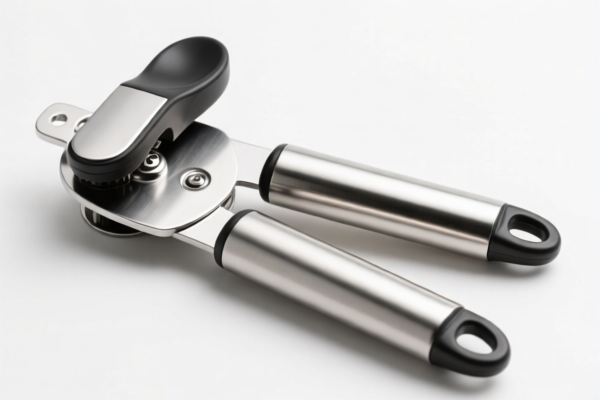
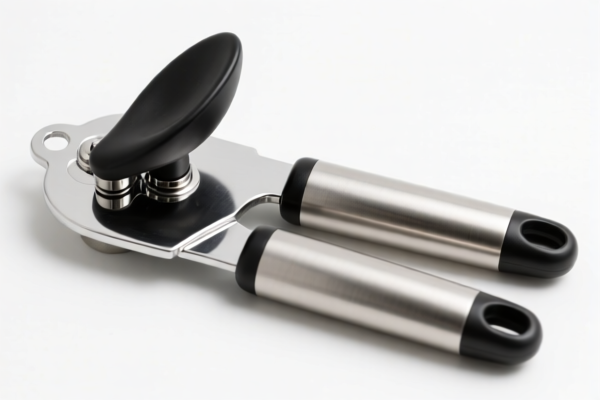
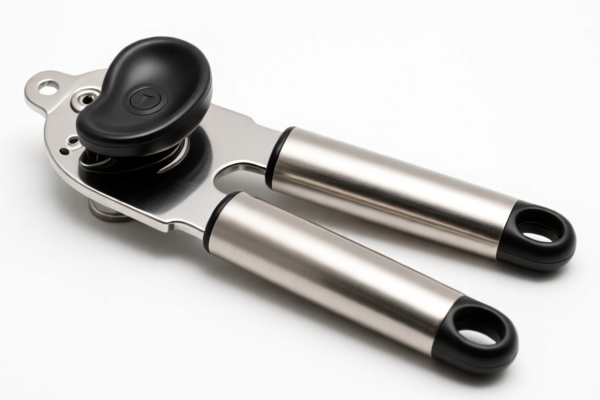
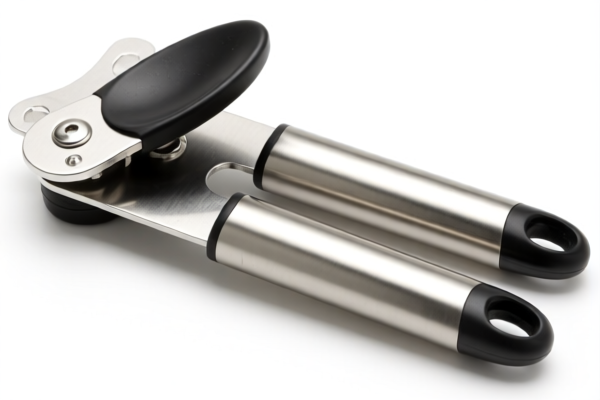
Stainless Steel Egg Opener
CN → US| HS Code | Tariff Rate | Origin | Destination | Doc |
|---|---|---|---|---|
| 8205517500 | 38.7% | CN | US | Official Doc |
| 8205513030 | 38.7% | CN | US | Official Doc |
| 8215995000 | 15.3% | CN | US | Official Doc |
| 7323930035 | 62.0% | CN | US | Official Doc |
| 7323930045 | 62.0% | CN | US | Official Doc |
Product Images
AI Analysis
🥚 Stainless Steel Egg Opener (Kitchen Utensil)
🌐 HS Code Reference & Customs Clearance Guide | 2026 Latest Tariff Analysis | Professional Clearance Strategy
📌 I. Product Definition & Classification: What Exactly is an "Egg Opener"?
The Stainless Steel Egg Opener is a small kitchen tool designed to crack, peel, or serve eggs efficiently. In international trade, its classification varies significantly based on how customs authorities perceive its function: as a hand tool, a tableware item, or a household article. This distinction drastically impacts the tariff burden due to specific trade restrictions (Section 301 and Section 122).
⚠️ Key Classification Distinction:
- If viewed as a Hand Tool (Section 82): High tariffs due to Section 301/122叠加;
- If viewed as Tableware/Cutlery (Section 8215): Lower base tariff, but still subject to Section 122;
- If viewed as Household Article (Section 73): Highest tariffs due to the additional 50% steel/aluminum surcharge.
📦 II. HS Code Classification Details (2026 Latest Tariff Authority Comparison)
Based on the provided data, here are the five possible HS Codes for a Stainless Steel Egg Opener, along with the reasoning and total tax rates.
| HS Code | Product Description & Logic | Total Tax Rate | Tax Breakdown |
|---|---|---|---|
| 8205.51.75.00 | Logic: Classified as "Hand Tools" (Other hand tools). The opener is seen as a specialized metal tool for cracking/shelling. Summary: Stainless steel egg opener, household shelling tool, metal material. |
38.7% | Base: 3.7% + Sec 301: 25.0% + Sec 122: 10% |
| 8205.51.30.30 | Logic: Also classified under "Hand Tools" (Specific subcategory for kitchen-related hand tools). Summary: Stainless steel egg opener, kitchen utensil, hand tool category. |
38.7% | Base: 3.7% + Sec 301: 25.0% + Sec 122: 10% |
| 8215.99.50.00 | Logic: Classified as "Tableware/Cutlery" (Other tableware). Seen as a utensil for eating/serving rather than a construction/handy tool. Summary: Stainless steel egg opener, kitchen tool, base metal tableware category. |
15.3% | Base: 5.3% + Sec 301: 0.0% + Sec 122: 10% |
| 7323.93.00.35 | Logic: Classified as "Household Articles" (Iron/Steel). Viewed as a general kitchen appliance item. CRITICAL: Subject to additional steel tariffs. Summary: Stainless steel egg opener, cooking vessel, iron/steel household item. |
62.0% | Base: 2.0% + Sec 301: 0.0% + Sec 122: 10% + Steel/Al/Cu Surcharge: 50% |
| 7323.93.00.45 | Logic: Same as above, different sub-subheading for "Other cooking vessels/appliances". Also subject to the heavy steel surcharge. Summary: Stainless steel egg opener, other cooking vessels, iron/steel kitchen utensil. |
62.0% | Base: 2.0% + Sec 301: 0.0% + Sec 122: 10% + Steel/Al/Cu Surcharge: 50% |
🔍 重点提醒 (Key Reminder):
- Avoid HS 7323 if possible. The 50% additional steel tariff makes it the most expensive option (62%).
- HS 8215 offers the lowest tax burden (15.3%) because it does not trigger the 25% Section 301 tariff (Sec 301 is 0% for this code), only the 10% Section 122 tariff.
- HS 8205 falls in the middle (38.7%) because it triggers both Section 301 (25%) and Section 122 (10%).
💰 III. 2026 Latest Tariff Rate Detailed Explanation (Including Surcharges)
✅ Applicable Country: United States (US)
✅ Origin: China (CN)
✅ Effective Date: Current trade policies (Section 301 & Section 122)
🎯 1. 8215.99.50.00 —— Tableware (Base Metal) | RECOMMENDED FOR LOWEST TAX
| Item | Content |
|---|---|
| Base Duty | 5.3% (ad valorem) |
| USITC Section 301 Surcharge | +0.0% (Exempt or not applicable for this specific subheading) |
| Section 122 Surcharge | +10.0% (Specific to certain Chinese imports under Trade Expansion Act) |
| Total Tax Rate | 15.3% |
| Calculation | CIF Value × 15.3% |
| De Minimis Eligibility | ❌ No (Deny de minimis for China-origin goods under current rules) |
| Legal Basis Path | USITC:8215.99.50.00 → FOOTNOTE:Section 122 |
📌 Interpretation:
- This code treats the egg opener as "Cutlery/Tableware" rather than a "Tool" or "Steel Article".
- It avoids the heavy 25% Section 301 tariff that applies to tools (HS 8205) and many other industrial goods.
- Savings: Compared to HS 7323 (62%), this saves 46.7% in taxes. Compared to HS 8205 (38.7%), it saves 23.4%.
🎯 2. 8205.51.75.00 & 8205.51.30.30 —— Hand Tools | HIGH TAX RISK
| Item | Content |
|---|---|
| Base Duty | 3.7% |
| USITC Section 301 Surcharge | +25.0% (Heavy tariff on Chinese tools) |
| Section 122 Surcharge | +10.0% |
| Total Tax Rate | 38.7% |
| Calculation | CIF Value × 38.7% |
| Legal Basis Path | IEEPA:9903.01.25 → USITC:8205.51.75.00 → FOOTNOTE:9903.88.01 |
📌 Interpretation:
- Customs may classify any metal kitchen gadget as a "Hand Tool" if it's seen as a utility device.
- The 25% Section 301 tariff is the main cost driver here.
🎯 3. 7323.93.00.35 & 7323.93.00.45 —— Household Articles (Steel) | HIGHEST TAX RISK
| Item | Content |
|---|---|
| Base Duty | 2.0% |
| USITC Section 301 Surcharge | 0.0% |
| Section 122 Surcharge | 10.0% |
| Steel/Aluminum/Copper Surcharge | +50.0% (Specific to iron/steel articles under specific trade actions) |
| Total Tax Rate | 62.0% |
| Legal Basis Path | Steel/Al/Cu Surcharge Rule → USITC:7323.93.00.35 |
📌 Interpretation:
- This is the worst-case scenario. The 50% surcharge on steel articles is punitive.
- Only use this if no other classification is viable and you have no choice (e.g., if the product is a complex cooking vessel, not just a simple opener).
🛠️ IV. Customs Clearance Practical Advice (Battle-Tested Tips)
✅ 1. Preparation Checklist (Must-Haves)
| Document | Required? | Explanation |
|---|---|---|
| ✅ Product Specifications | ✔️ | Detail: Material (Stainless Steel 304/430), Function (Cracking/Peeling), Use (Household). |
| ✅ Photos (Clear & Labeled) | ✔️ | Show the item alongside common kitchen tools (spoon/fork) to support "Tableware" claim for HS 8215. |
| ✅ Commercial Invoice | ✔️ | Description: "Stainless Steel Kitchen Egg Cracker/Opener, Household Use." Avoid words like "Tool" if aiming for HS 8215. |
| ✅ HS Code Justification Memo | ✔️ | Prepare a brief note explaining why it fits HS 8215 (Tableware) vs. HS 8205 (Hand Tool). |
| ✅ Packing List | ✔️ | Standard format. |
✅ 2. Declaration Strategy (Crucial for Tax Optimization)
🔥 "Claim Tableware, Not Tools or Steel Articles!"
| Scenario | Recommended HS Code | Tax Rate | Reason |
|---|---|---|---|
| Simple Metal Opener/Cracker | 8215.99.50.00 | 15.3% | Best tax rate. Justify as "Cutlery/Tableware" used for eating/serving. |
| Complex Hand-Crank Opener | 8205.51.30.30 | 38.7% | If it has mechanical parts, it might be seen as a "Tool". |
| Heavy-Duty Steel Cooking Device | 7323.93.00.35 | 62.0% | Avoid! Only if it's clearly a cooking vessel (like a pot) and not a simple opener. |
⚠️ Critical Tip:
When declaring, use keywords like "Kitchen Utensil", "Tableware", or "Egg Cracker" rather than "Hand Tool" or "Steel Hardware". This supports the HS 8215 classification, saving you 23.4% - 46.7% in taxes.
✅ 3. Special Circumstances
| Situation | Handling Advice |
|---|---|
| OEM Custom Packaging | Ensure the product description on the invoice matches the HS Code. If the box says "Kitchen Gadget," it supports HS 8215. |
| Mixed Containers | If shipping egg openers with other items, ensure they are listed separately with the correct HS Code to avoid misclassification of the whole container. |
| Audits by CBP | Be prepared to show that the item is used for eating/serving (tableware) rather than construction/repair (hand tool). |
🌍 V. Global Market Comparison (2026 Update)
| Market | Recommended HS Code | Total Tax Rate | Key Certification |
|---|---|---|---|
| 🇺🇸 USA | 8215.99.50.00 |
15.3% | No specific cert needed for steel, but FCC not required. Ensure no lead/nickel leaching (FDA compliance). |
| 🇨🇳 China | 8215.99.50.00 |
5% | CCC (if applicable), RoHS. |
| 🇪🇺 EU | 8215.99.50.00 |
0% | CE, LFGB (Food Contact), RoHS. |
| 🇬🇧 UK | 8215.99.50.00 |
0% | UKCA, Food Standards Agency compliance. |
📌 Conclusion:
- The USA has the most complex and high-tariff environment due to Section 301 and Section 122.
- Strategic Classification is the most effective way to reduce costs in the US market. Choose HS 8215 for the lowest duty.
📌 VI. Common Mistakes & Pitfalls (Lessons Learned)
❌ Mistake 1: Classifying as 7323 (Household Steel Article)
👉 Consequence: 62% Tax! Avoid this at all costs. The 50% steel surcharge is a trap.
❌ Mistake 2: Using "Hand Tool" in the description for 8205
👉 Consequence: 38.7% Tax. You can likely save 23.4% by reclassifying as "Tableware" (8215).
❌ Mistake 3: Ignoring Section 122
👉 Consequence: All three options (8205, 8215, 7323) have a 10% Section 122 tariff. Do not assume it's exempt.
❌ Mistake 4: De Minimis Abuse
👉 Consequence: The de minimis exemption (Section 321) is denied for China-origin goods under current rules. Do not try to split shipments to avoid duties.
✅ Correct Approach:
"Stainless Steel Kitchen Egg Cracker/Opener, Household Use, FDA Compliant Material" → Declare under 8215.99.50.00 → 15.3% Total Tax.
🎯 VII. Conclusion: Smart Classification, Lower Costs!
🎯 Remember the Rule of Thumb:
🔹 "Tableware (8215) < Tools (8205) << Steel Articles (7323)"
🔹 "15.3% vs 38.7% vs 62.0% – Choose Wisely!"
🔹 "Avoid 'Tool' and 'Steel Article' keywords; Use 'Kitchen Utensil' and 'Tableware'."
📌 Pro Tip:
- If your product is a simple cracker or peeler, aggressively pursue HS 8215.99.50.00.
- If it is a complex mechanical opener with gears, you may be forced into HS 8205, but still try to argue for Tableware if possible.
- Never classify a simple opener as a Steel Household Article (7323) unless you have no other option.
📣 Immediate Action:
📞 Consult with your customs broker to confirm HS 8215.99.50.00 eligibility.
📝 Update your product descriptions to emphasize "Kitchen Utensil/Tableware".
🚀 Save 23-47% in tariffs by choosing the right HS Code!
✨ Professional Clearance Starts with Precise Classification!
💼 Every percentage point of tax saved is pure profit!
Customer Reviews
About HS Code Classification
The Harmonized System (HS) is an internationally standardized nomenclature developed by the World Customs Organization (WCO) to classify traded products. Over 200 countries use the HS system as the basis for customs tariffs, trade statistics, and import/export regulations.
Each HS code follows a hierarchical structure:
- Chapter (2 digits) — Broad category of goods (e.g., Chapter 84: Machinery and Mechanical Appliances)
- Heading (4 digits) — More specific grouping within the chapter
- Subheading (6 digits) — Internationally standardized breakdown, used by all WCO member countries
- National subdivisions (8-10 digits) — Country-specific extensions for further classification, such as US HTSUS 10-digit codes
Correct HS code classification is essential for smooth customs clearance, accurate duty payment, and compliance with trade regulations. Misclassification can lead to customs delays, overpayment of duties, or penalties.
When importing from CN to US, the applicable tariff rates may include:
- Most-Favored-Nation (MFN) rate — The standard duty rate applied to WTO members
- General rate — Applied to countries without trade agreements
- Trade remedy duties — Additional tariffs such as Section 301 (anti-dumping), Section 232 (national security), or countervailing duties
The information provided on this page is for reference purposes only. For official classification, please consult with your local customs authority or a licensed customs broker.