Stainless Steel Fork
CN → US| HS Code | Tariff Rate | Origin | Destination | Doc |
|---|---|---|---|---|
| 8215991000 | 0.0% | CN | US | Official Doc |
| 8215200000 | 0.0% | CN | US | Official Doc |
| 7323930060 | 62.0% | CN | US | Official Doc |
| 7323930045 | 62.0% | CN | US | Official Doc |
| 8215990500 | 0.0% | CN | US | Official Doc |
Product Images
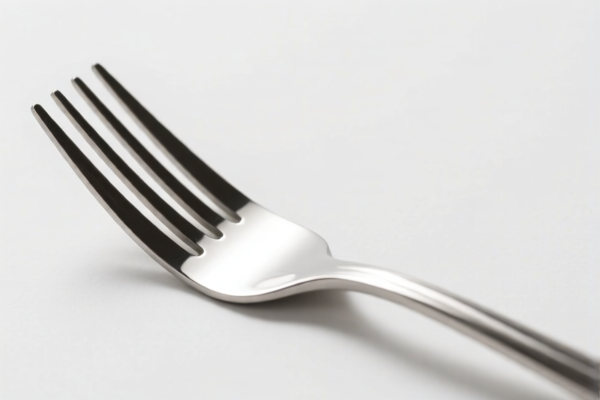
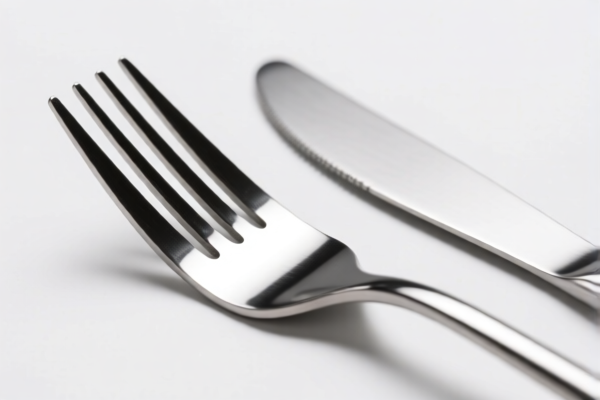
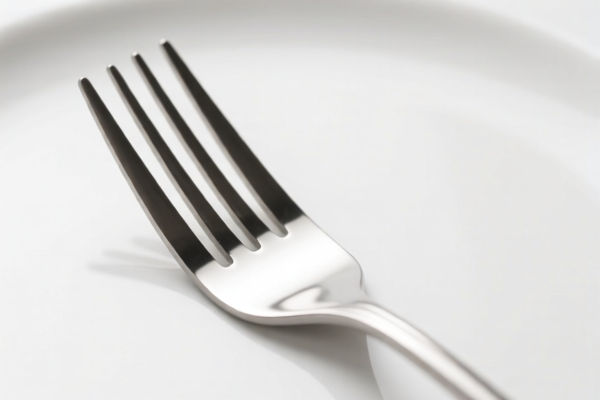
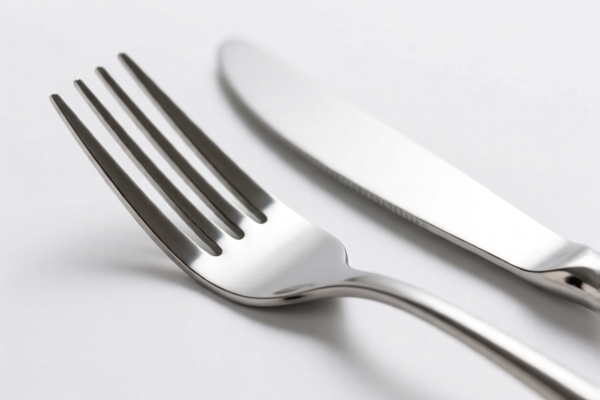
AI Analysis
🍴 Stainless Steel Fork (不锈钢叉)
🌐 HS Code Reference & Customs Clearance Guide | 2026 Latest Tariff Analysis | Professional Clearance Strategy
📌 I. Product Definition & Classification: Do You Truly Understand "Stainless Steel Forks"?
Stainless steel forks are essential cutlery items used in dining, culinary arts, and food service. In international trade, they are classified based on material composition, manufacturing process, and packaging (single vs. set). The key distinction lies in whether the item is a single utensil, a set, or a kitchen tool distinct from standard cutlery.
⚠️ Key Distinction Points:
- Single Utensil: A standalone fork, not part of a set → Governed by 8215.99.10.00 or 8215.99.05.00.
- Cutlery Set: A fork packaged with spoons/knives in a retail box → Governed by 8215.20.00.00.
- Kitchen Utensil: If it lacks the typical "cutlery" form (e.g., heavy-duty serving spoons/forks for cooking) → May fall under 7323.93 (Iron/Steel articles).
📦 II. HS Code Classification Details (2026 Latest Tariff Authority Comparison)
| HS Code | Product Description | Applicable Scenario | Includes Set? |
|---|---|---|---|
8215.99.10.00 |
Stainless steel fork, material is stainless steel, use is fork-type | Single stainless steel fork, basic dining utensil | ❌ No (Single Item) |
8215.20.00.00 |
Stainless steel fork and spoon set, material is stainless steel, use is tableware | Fork+Spoons packaged together as a retail set | ✅ Yes (Set) |
7323.93.00.60 |
Stainless steel kitchen utensil, material is stainless steel, use is spoon-type | Heavy-duty spoons/forks used for cooking, not formal dining | ❌ No (Cookware Category) |
8215.99.05.00 |
Stainless steel fork, material is stainless steel, use is tableware | General stainless steel fork (alternative classification for single forks) | ❌ No (Single Item) |
🔍 Critical Reminder:
- Sets are taxed differently: If a fork is sold within a set (e.g., 24-piece cutlery set), it must be declared under 8215.20.00.00, not as a single fork.
- Material matters: If the fork is made of iron/steel (not stainless) and used for cooking, it may fall under 7323.93, which carries a higher additional tariff (50%) under Section 122.
- Misclassification Risk: Declaring a set as a single fork to avoid set tariffs will result in severe penalties and back taxes.
💰 III. 2026 Latest Tariff Rate Breakdown (Including Additional Taxes, Policy Surcharges)
✅ Applicable Country: United States (US)
✅ Origin: China (CN)
✅ Effective Time: 2025 November 10 onwards (for imports after this date)
🎯 1. 8215.99.10.00 —— Stainless Steel Fork (Single Item)
| Item | Content |
|---|---|
| Base Duty Rate | 0.5¢ each + 6.3% (ad valorem) |
| Section 301 Additional Duty | 0.0% |
| Section 122 Duty | +10% |
| Total Effective Rate | 6.3% + 0.5¢/piece + 10% surcharge on base value |
| Tax Calculation | (CIF Value × 6.3%) + (0.5¢ × Quantity) + (CIF Value × 10%) |
| De Minimis Eligibility | ❌ Not Eligible (Deny De Minimis for Section 122 goods) |
| Legal Basis Path | USITC:8215.99.10.00 → SECTION_122:10% |
📌 Explanation:
- This classification applies to single stainless steel forks.
- The 0.5¢/piece is a specific duty per unit.
- The 6.3% is the standard ad valorem duty.
- The 10% is a Section 122 tariff, which applies to certain steel/iron products from China.
- Total Cost Impact: High due to the combination of specific + ad valorem + 122 tariff.
🎯 2. 8215.20.00.00 —— Stainless Steel Fork & Spoon Set
| Item | Content |
|---|---|
| Base Duty Rate | Rate applicable to the article in the set (subject to tariff treatment) |
| Section 301 Additional Duty | +25.0% |
| Section 122 Duty | +10% |
| Total Effective Rate | Base Rate + 25% + 10% |
| Tax Calculation | Depends on the base rate of the principal item in the set |
| De Minimis Eligibility | ❌ Not Eligible |
| Legal Basis Path | USITC:8215.20.00.00 → SECTION_301:25% → SECTION_122:10% |
📌 Explanation:
- For sets, the duty is applied to the entire set based on the component with the highest duty rate.
- The 25% is the Section 301 tariff (trade war tariff).
- The 10% is the Section 122 tariff.
- Combined Burden: Sets face 35% additional tariffs on top of the base rate, making them significantly more expensive to import.
🎯 3. 7323.93.00.60 —— Stainless Steel Kitchen Utensil (Spoon/Fork for Cooking)
| Item | Content |
|---|---|
| Base Duty Rate | 2.0% |
| Section 301 Additional Duty | 0.0% |
| Section 122 Duty | +10% |
| Steel/Aluminum/Copper Additional Duty | +50% |
| Total Effective Rate | 62.0% |
| Tax Calculation | CIF Value × 62.0% |
| De Minimis Eligibility | ❌ Not Eligible |
| Legal Basis Path | USITC:7323.93.00.60 → SECTION_122:10% → SECTION_751:50% |
📌 Explanation:
- This classification is for non-cutlery stainless steel items used in cooking (e.g., large serving spoons, ladles, heavy-duty forks).
- The 50% is a Section 751 tariff specific to steel, aluminum, and copper products.
- The 10% is the Section 122 tariff.
- Warning: If your item is a standard dining fork, do not use this code unless it is clearly a kitchen tool. Misclassification here can lead to audits.
🎯 4. 8215.99.05.00 —— Stainless Steel Fork (General Tableware)
| Item | Content |
|---|---|
| Base Duty Rate | 0.5¢ each + 8.5% |
| Section 301 Additional Duty | +25.0% |
| Section 122 Duty | +10% |
| Total Effective Rate | 8.5% + 0.5¢/piece + 35% surcharge |
| Tax Calculation | (CIF Value × 8.5%) + (0.5¢ × Quantity) + (CIF Value × 35%) |
| De Minimis Eligibility | ❌ Not Eligible |
| Legal Basis Path | USITC:8215.99.05.00 → SECTION_301:25% → SECTION_122:10% |
📌 Explanation:
- Similar to8215.99.10.00, but with a higher base rate (8.5% vs 6.3%).
- Also faces 35% additional tariffs (25% Section 301 + 10% Section 122).
- Choice Between 10.00 and 05.00: Depends on specific product features (e.g., handle design, material grade). Consult a customs broker for the best fit.
🛠️ IV. Customs Clearance Practical Advice (Battle-Tested Pitfall Avoidance Guide)
✅ 1. Required Documentation Checklist (None of These Are Optional)
| Document | Required | Description |
|---|---|---|
| ✅ Product Specification Sheet | ✔️ | Material grade (e.g., 304, 316), dimensions, weight |
| ✅ Product Photos (Clear) | ✔️ | Show handle, tines, logo, and any packaging |
| ✅ Commercial Invoice | ✔️ | Clearly state “Stainless Steel Fork” or “Cutlery Set” |
| ✅ Packing List | ✔️ | Detail quantity per box, total pieces |
| ✅ Origin Certificate (CO) | ✔️ | If non-China origin, may qualify for lower tariffs |
| ✅ Labeling Compliance | ✔️ | “Made in China” must be visible on product/packaging |
✅ 2. Declaration Strategies (Key Mantras)
🔥 “Single vs. Set, Name Matters, Tax Rate Varies!”
| Scenario | Correct Declaration | Wrong Action |
|---|---|---|
| Single fork in polybag | 8215.99.10.00 or 8215.99.05.00 |
Declaring as “Set” → Higher tax |
| Fork+Spoons in box | 8215.20.00.00 |
Declaring as “Single Fork” → Penalty |
| Cooking ladle/spoon | 7323.93.00.60 |
Declaring as “Cutlery” → 62% tax vs ~6% |
| Gift set (fork + napkin) | Still 8215.20.00.00 |
Splitting declaration → Risk of audit |
✅ 3. Special Case Handling
| Case | Handling Advice |
|---|---|
| OEM Custom Forks | Provide design drawings to confirm HS code. Avoid generic terms. |
| Stainless Steel Grade | Specify “304” or “316” to distinguish from lower-grade steel articles (which may fall under 7323). |
| Packaging Type | Retail-ready boxes are more likely to be classified as “Sets” if containing multiple utensils. |
| Origin Transshipment | If shipped via Vietnam/Mexico, ensure no substantial transformation occurred. Otherwise, “Made in China” still applies. |
🌍 V. Global Market Comparison (2026 Latest)
| Country/Region | Recommended HS Code | Tariff (China Origin) | Certification | Notes |
|---|---|---|---|---|
| 🇺🇸 USA | 8215.99.10.00 (Single) |
~6.3% + 0.5¢/pc + 10% (Sec 122) | None | Sets face 25% Sec 301 |
| 🇪🇺 EU | 8215.20 (Set) |
4.2% | CE (if applicable) | No Section 122/301 |
| 🇨🇳 China | 8215.20 |
9% | None | No additional tariffs |
| 🇯🇵 Japan | 8215.20 |
2.8% | JIS | Low base rate |
📌 Conclusion:
- USA is the most complex market due to Section 122 and Section 301 tariffs.
- Sets are significantly more taxed than single items in the US.
- Cooking utensils (7323.93) face a 62% tariff, so accurate classification is critical.
📌 VI. Common Errors & Pitfall Guide (Lessons from Experience)
❌ Error 1: Declaring a 24-piece cutlery set as single forks
👉 Consequence: Customs flags inconsistency → Back taxes + 25% Section 301 + 10% Section 122 on entire value → Total 35%+ penalty.
❌ Error 2: Classifying cooking spoons as cutlery forks
👉 Consequence: Tax drops from 62% to ~6.3% → Audit triggered → 62% applied retroactively.
❌ Error 3: Ignoring “Made in China” labeling
👉 Consequence: Section 122 (10%) may not be applied if origin is unclear, but customs may deny this and apply 25% Section 301 instead → Higher cost.
❌ Error 4: Using vague terms like “Kitchen Tool” for dining forks
👉 Consequence: Misclassification → Delays + Potential Rejection.
✅ Correct Approach:
“Stainless Steel Dining Fork, 304 Grade, 7.5 Inches, 12 Pcs/Box, Made in China”
🎯 VII. Conclusion: Precision Classification Saves Money!
🎯 Remember Mantras:
🔹 “Single Fork: 6.3% + 10% Sec 122”
🔹 “Set: Base Rate + 25% Sec 301 + 10% Sec 122”
🔹 “Cooking Spoon: 62% Total Tax”
🔹 “Never Split a Set!”
📌 Pro Tip:
- If your forks are originating from Vietnam, Mexico, or Thailand, apply for Section 301 Exclusion or prove substantial transformation to avoid 25% tariff.
- Request a Binding Ruling from US Customs for high-volume imports to lock in your HS code.
📣 Take Action Now:
📞 Contact a Licensed Customs Broker + Provide Product Images + Apply for Advance Ruling
🚀 Ensure Smooth Clearance, Minimize Costs, Maximize Profits!
✨ Professional Clearance Starts with Accurate Classification!
💼 Every Cent Saved is a Cent Earned!
Customer Reviews
About HS Code Classification
The Harmonized System (HS) is an internationally standardized nomenclature developed by the World Customs Organization (WCO) to classify traded products. Over 200 countries use the HS system as the basis for customs tariffs, trade statistics, and import/export regulations.
Each HS code follows a hierarchical structure:
- Chapter (2 digits) — Broad category of goods (e.g., Chapter 84: Machinery and Mechanical Appliances)
- Heading (4 digits) — More specific grouping within the chapter
- Subheading (6 digits) — Internationally standardized breakdown, used by all WCO member countries
- National subdivisions (8-10 digits) — Country-specific extensions for further classification, such as US HTSUS 10-digit codes
Correct HS code classification is essential for smooth customs clearance, accurate duty payment, and compliance with trade regulations. Misclassification can lead to customs delays, overpayment of duties, or penalties.
When importing from CN to US, the applicable tariff rates may include:
- Most-Favored-Nation (MFN) rate — The standard duty rate applied to WTO members
- General rate — Applied to countries without trade agreements
- Trade remedy duties — Additional tariffs such as Section 301 (anti-dumping), Section 232 (national security), or countervailing duties
The information provided on this page is for reference purposes only. For official classification, please consult with your local customs authority or a licensed customs broker.