Stainless Steel Powder Cup
CN → US| HS Code | Tariff Rate | Origin | Destination | Doc |
|---|---|---|---|---|
| 7326903500 | 92.8% | CN | US | Official Doc |
| 7323930060 | 62.0% | CN | US | Official Doc |
| 7323930045 | 62.0% | CN | US | Official Doc |
| 7326908688 | 87.9% | CN | US | Official Doc |
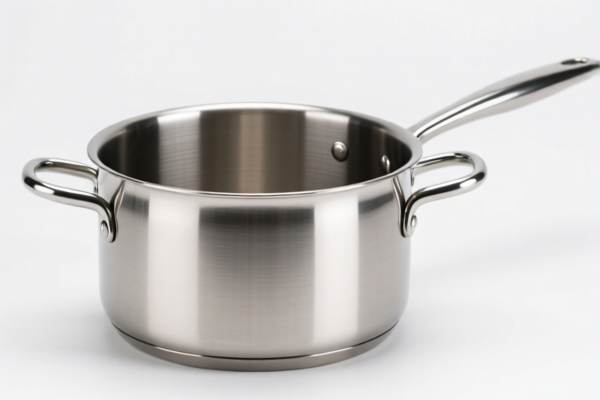
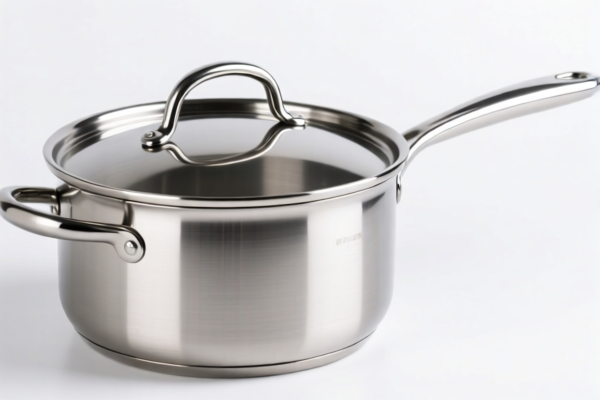
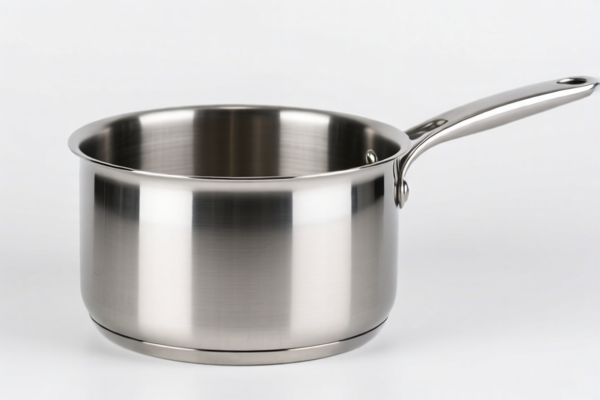
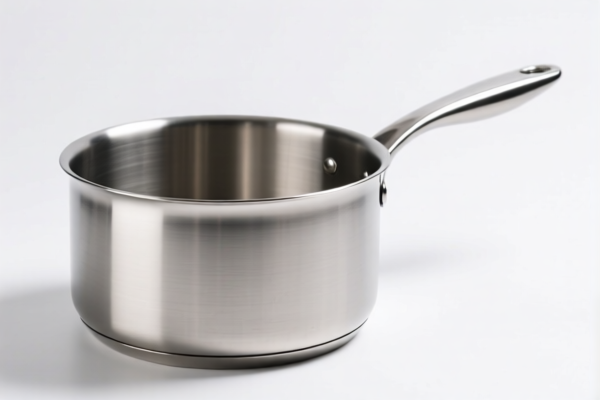
Product Images
AI Analysis
🥤 Stainless Steel Powder Cup (Shaker Bottle)
🌐 HS Code Reference & Customs Clearance Guide | 2026 Latest Tariff Analysis | Professional Clearance Strategy
📌 I. Product Definition & Classification: Do You Really Know Your "Powder Cup"?
A Stainless Steel Powder Cup (also known as a Shaker Bottle) is a container primarily used for mixing protein powders, supplements, or beverages. In international trade, its classification depends heavily on its design purpose and structural features. It is not a single HS code but falls into two main categories:
- General/Tableware Use (7323 Series): Cups designed for kitchen, household, or general dining purposes. Even if made of stainless steel, if they are not specifically for "carrying" during travel/transport as a primary function, they often fall here.
- Travel/Portable Containers (7326 Series): Cups specifically designed as "containers for carrying" (e.g., insulated thermos-style shakers, travel mugs with leak-proof seals for transport).
⚠️ Key Distinction Point:
- If the product is marketed as a kitchen utensil or household item (e.g., standard shaker for home gym/kitchen) → HS 7323
- If the product is marketed as a travel container, thermos, or portable carrying vessel → HS 7326
📦 II. HS Code Classification Details (2026 Latest Tariff Authority Comparison)
Based on the provided data for "Stainless Steel Cups/Powder Cups," here are the specific classifications and their associated tax implications.
| HS Code | Product Description | Application Scenario | Key Characteristics |
|---|---|---|---|
7326.90.35.00 |
Stainless steel cup, material: stainless steel, purpose: carrying container | Travel shakers, insulated thermos bottles, portable containers for transport | ✅ Carrying/Travel Focus |
7323.93.00.60 |
Stainless steel cup, material: stainless steel, purpose: kitchen utensil | Kitchen shakers, bar tools, non-insulated drinkware for immediate use | ✅ Kitchen/Utility Focus |
7323.93.00.45 |
Stainless steel cup, material: stainless steel, purpose: household or kitchen goods | Household shakers, general purpose stainless steel cups | ✅ Household/Kitchen Focus |
7326.90.86.88 |
Stainless steel cup, material: stainless steel, purpose: other iron/steel articles | Non-standard containers, industrial stainless steel vessels, or miscellaneous steel articles | ✅ Miscellaneous/Other Steel |
🔍 Critical Reminder:
- Do not mix categories: If you declare a "travel thermos" as "kitchen utensil" (7323), you risk under-declaration of tax.
- If you declare a "kitchen shaker" as "carrying container" (7326), you risk over-declaration and delayed clearance due to mismatched intent.
- The tax difference is significant:7323codes attract 62.0% total tax, while7326codes attract 87.9% - 92.8% total tax. Classification choice directly impacts cost by ~25-30%!
💰 III. 2026 Latest Tariff Rate Breakdown (Including Surtaxes & Policy Add-ons)
✅ Applicable Country: United States (US)
✅ Origin: China (CN)
✅ Effective Date: Current 2026 tariffs apply (including Section 301 and IEEPA measures)
🎯 1. 7326.90.35.00 —— Stainless Steel Cup (Carrying Container)
| Item | Detail |
|---|---|
| Base Duty Rate | 7.8% |
| Section 301 Surtax | +25.0% |
| Section 122 & Aluminum/Copper Surtax | +50.0% (Note: Data labels this as "122 Clause Tariff 10% Steel, Aluminum, Copper Products Surtax: 50%") |
| Total Tax Rate | 92.8% |
| Tax Calculation | CIF Value × 92.8% |
| De Minimis Exemption | ❌ Not Applicable (Deny De Minimis for China-origin steel/aluminum products under current IEEPA/Section 301) |
| Legal Basis Path | Section 301:9903.01.25 → IEEPA:9903.01.24 → USITC:7326.90.35.00 → FOOTNOTE:Steel/Aluminum/Copper Surtax |
📌 Explanation:
- Base 7.8%: Standard MFN rate for other articles of iron/steel.
- 25% Surtax: Standard Section 301 tariff for Chinese steel/iron articles.
- 50% Surtax: Specific additional tariff for steel/aluminum/copper products (often under Section 232 or special IEEPA provisions).
- Total 92.8%: This is an extremely high tariff. Importers must factor this into pricing strategies.
🎯 2. 7323.93.00.60 & 7323.93.00.45 —— Stainless Steel Cup (Kitchen/Household)
| Item | Detail |
|---|---|
| Base Duty Rate | 2.0% |
| Section 301 Surtax | 0.0% (Exempted for certain household kitchen articles under specific subheading rules) |
| Section 122 & Aluminum/Copper Surtax | +50.0% (Note: Data indicates 50% surtax still applies to steel/copper articles regardless of base exemption) |
| Total Tax Rate | 62.0% |
| Tax Calculation | CIF Value × 62.0% |
| De Minimis Exemption | ❌ Not Applicable |
| Legal Basis Path | IEEPA:9901.25 → IEEPA:9903.01.24 → USITC:7323.93.00.60 → FOOTNOTE:Steel/Aluminum/Copper Surtax |
📌 Important Note:
- Even though the Section 301 surtax is 0.0%, the 50% steel/aluminum surtax still applies.
- Total 62.0% is significantly lower than the 92.8% for "carrying containers."
- Strategy: If your product can be reasonably defined as a "kitchen utensil" or "household good" rather than a "travel container," you save 30.8% in taxes.
🎯 3. 7326.90.86.88 —— Stainless Steel Cup (Other Iron/Steel Articles)
| Item | Detail |
|---|---|
| Base Duty Rate | 2.9% |
| Section 301 Surtax | +25.0% |
| Section 122 & Aluminum/Copper Surtax | +50.0% |
| Total Tax Rate | 87.9% |
| Tax Calculation | CIF Value × 87.9% |
| Legal Basis Path | Section 301 + IEEPA + USITC:7326.90.86.88 |
📌 Caution: This code is for "other" articles. Misclassification here can lead to customs audits. Only use if the product does not fit "carrying container" or "kitchen utensil" definitions.
🛠️ IV. Customs Clearance Practical Advice (Field Pitfall Avoidance Guide)
✅ 1. Required Documentation Checklist (Non-negotiable)
| Document | Must Provide | Description |
|---|---|---|
| ✅ Product Specification Sheet | ✔️ | Must clearly state Material (e.g., 304/316 Stainless Steel), Capacity, Lid Type |
| ✅ Product Photos | ✔️ | Clear images of the cup, lid mechanism, base, and packaging. Highlight if it's insulated (thermos) or open-top (shaker). |
| ✅ Commercial Invoice | ✔️ | Must accurately describe the product. Avoid generic terms like "Cup." Use "Stainless Steel Protein Shaker Bottle" or "Insulated Travel Mug." |
| ✅ Packing List | ✔️ | Details on weight, dimensions, and quantity. |
| ✅ Certificate of Origin (CO) | ✔️ | Essential for verifying Chinese origin and applying surtaxes. |
| ✅ Third-Party Test Report | ✔️ | FDA compliance for food contact, LFGB, or RoHS if applicable. |
✅ 2. Declaration Strategy (Key Rules)
🔥 “Define Intent, Not Just Material: Kitchen vs. Travel!”
| Scenario | Correct Declaration | Incorrect Action |
|---|---|---|
| Open-top shaker with ball whisk (for home/gym) | 7323.93.00.60 or 7323.93.00.45(Kitchen/Household) |
Declaring as "Travel Container" → Tax jumps to 92.8% |
| Insulated, leak-proof, with strap (for transport) | 7326.90.35.00(Carrying Container) |
Declaring as "Kitchen Utensil" → Risk of penalty for misdeclaration |
| Generic stainless steel bottle (no specific intent) | 7326.90.86.88(Other Steel Article) |
Use only if intent is unclear; higher risk of audit. |
📌 Pro Tip:
- If your product is not insulated and has a standard screw-top lid, argue for 7323 (Kitchen/Household).
- If your product is double-walled, vacuum-insulated, and marketed for travel, argue for 7326 (Carrying Container).
- Keywords to Avoid in "9000" Declarations: "Travel," "Portable," "Insulated" if you want to avoid7326.
- Keywords to Use: "Shaker," "Mixing Cup," "Beverage Container," "Household Item" for7323.
✅ 3. Special Circumstances Handling
| Situation | Handling Advice |
|---|---|
| OEM Custom Shakers | Provide design specs. If the design mimics a kitchen tool (e.g., standard shaker ball), push for 7323. |
| Insulated vs. Non-Insulated | Insulated = 7326 (Carrying). Non-Insulated = 7323 (Kitchen). This is the biggest differentiator. |
| Mixed Containers | If a shipment contains both 7323 and 7326 items, declare separately. Do not lump them. |
| Free Samples | Even samples are subject to de minimis rules. For China-origin steel/aluminum, no de minimis exemption applies. Taxes apply even on free goods. |
🌍 V. Global Market Clearance Comparison (2026 Latest)
| Country/Region | Recommended HS Code | Estimated Tax (CN Origin) | Certification Requirements | Notes |
|---|---|---|---|---|
| 🇺🇸 United States | 7323.93.00.60 (Kitchen) or 7326.90.35.00 (Travel) |
62.0% (Kitchen) 92.8% (Travel) |
FDA Food Contact, Prop 65 (if CA) | High surtaxes apply. Classification is critical. |
| 🇨🇳 China (Import) | 7323.93.00.00 |
~5-7% | CCC (if applicable) | Lower tariffs for household goods. |
| 🇪🇺 European Union | 7323.93.00.00 |
0-1.7% (if GSP) | LFGB, EU Food Contact | No Section 301/IEEPA surtaxes. |
| 🇦🇺 Australia | 7323.93.00.00 |
5% | AS/NZS 4256 | Standard GST 10% applies. |
| 🇯🇵 Japan | 7323.93.00.00 |
0-3% | Food Sanitation Law | Low tariffs, strict food safety checks. |
📌 Conclusion:
- USA is the most challenging market due to Section 301 + IEEPA surtaxes.
- EU and Asia have significantly lower barriers.
- If exporting to the US, optimize classification to7323whenever possible to save ~30% in duties.
📌 VI. Common Mistakes & Pitfall Guide (Lessons Learned)
❌ Mistake 1: Declaring a vacuum-insulated travel mug as "Kitchen Utensil" (7323)
👉 Consequence: Customs may reclassify it to 7326, charging 92.8% instead of 62.0%. Back taxes + penalties!
❌ Mistake 2: Declaring a basic shaker bottle as "Travel Container" (7326)
👉 Consequence: Overpaying 30.8% in taxes unnecessarily. Profit margin erosion!
❌ Mistake 3: Using vague descriptions like "Stainless Steel Cup"
👉 Consequence: Customs officer discretion leads to random classification, often the highest possible rate.
❌ Mistake 4: Assuming De Minimis ($800) applies
👉 Consequence: No exemption for China-origin steel/aluminum products under current IEEPA rules. Taxes apply on every single unit, even samples.
✅ Correct Approach:
"Double-Walled Vacuum Insulated Stainless Steel Shaker Bottle, 32oz, Leak-Proof Lid, for Travel Use" →
7326.90.35.00
"Stainless Steel Protein Shaker with Whisk Ball, 20oz, For Kitchen/Gym Use" →7323.93.00.60
🎯 VII. Conclusion: Precise Classification for Cost Efficiency
🎯 Remember the Golden Rule:
🔹 "Insulated = Travel = 92.8% Tax"
🔹 "Non-Insulated/Kitchen = 62.0% Tax"
🔹 "De Minimis = No Exemption for Steel/Aluminum from China"
📌 Pro Tip:
If your product is not insulated, clearly market and describe it as a "Kitchen Shaker" or "Mixing Cup" to qualify for HS 7323, saving you 30.8% in US import duties.
For insulated products, ensure all documentation highlights "Travel" and "Carrying" features to align with HS 7326 and avoid misdeclaration penalties.
📣 Immediate Action:
📞 Consult a licensed customs broker before shipping.
📦 Provide high-resolution photos and product intent statements.
🚀 Optimize your HS Code today to maximize your profit margin!
✨ Professional Customs Clearance Starts with Accurate Classification!
💼 Every Percent Saved is Pure Profit!
Customer Reviews
About HS Code Classification
The Harmonized System (HS) is an internationally standardized nomenclature developed by the World Customs Organization (WCO) to classify traded products. Over 200 countries use the HS system as the basis for customs tariffs, trade statistics, and import/export regulations.
Each HS code follows a hierarchical structure:
- Chapter (2 digits) — Broad category of goods (e.g., Chapter 84: Machinery and Mechanical Appliances)
- Heading (4 digits) — More specific grouping within the chapter
- Subheading (6 digits) — Internationally standardized breakdown, used by all WCO member countries
- National subdivisions (8-10 digits) — Country-specific extensions for further classification, such as US HTSUS 10-digit codes
Correct HS code classification is essential for smooth customs clearance, accurate duty payment, and compliance with trade regulations. Misclassification can lead to customs delays, overpayment of duties, or penalties.
When importing from CN to US, the applicable tariff rates may include:
- Most-Favored-Nation (MFN) rate — The standard duty rate applied to WTO members
- General rate — Applied to countries without trade agreements
- Trade remedy duties — Additional tariffs such as Section 301 (anti-dumping), Section 232 (national security), or countervailing duties
The information provided on this page is for reference purposes only. For official classification, please consult with your local customs authority or a licensed customs broker.