Stainless Steel Railing
CN → US| HS Code | Tariff Rate | Origin | Destination | Doc |
|---|---|---|---|---|
| 9403200078 | 85.0% | CN | US | Official Doc |
| 9403999045 | 85.0% | CN | US | Official Doc |
| 7304490005 | 35.0% | CN | US | Official Doc |
| 7304490015 | 35.0% | CN | US | Official Doc |
| 7323930080 | 62.0% | CN | US | Official Doc |
| 7323999080 | 88.4% | CN | US | Official Doc |
Product Images
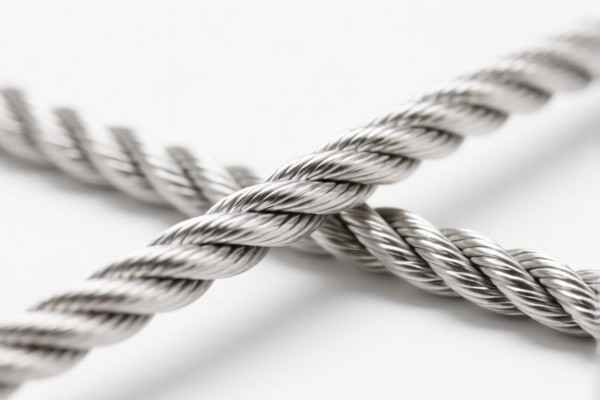
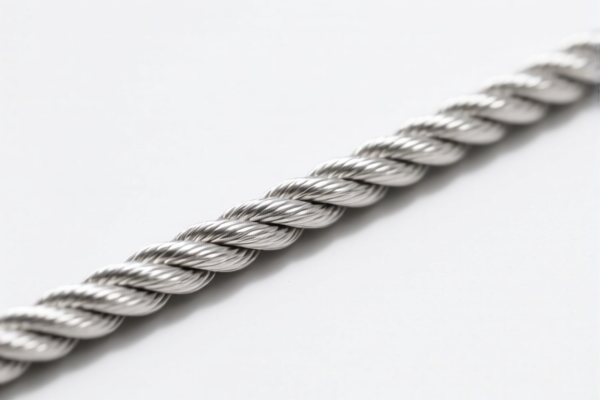
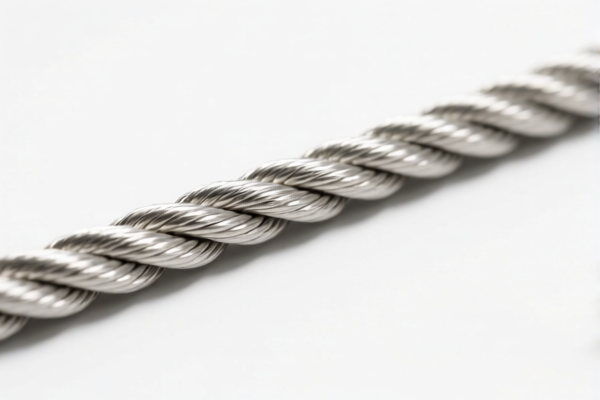
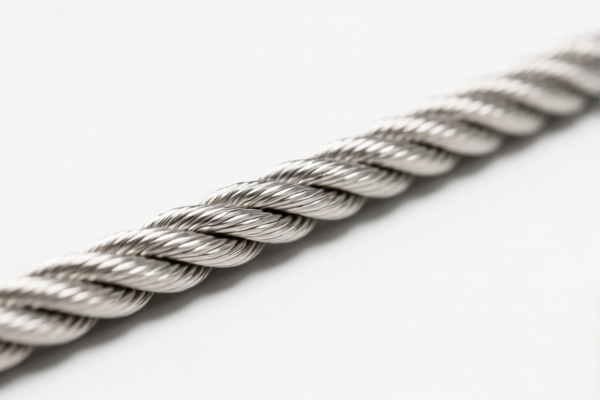
AI Analysis
🏗️ Stainless Steel Railing: HS Code Classification & Tariff Breakdown (2026 Guide)
🌐 HS Code Reference & Customs Clearance Guide | 2026 Latest Tariff Analysis | Professional Clearance Strategy
📌 Part 1: Product Definition & Classification – Do You Really Understand "Stainless Steel Railing"?
Stainless steel railings are critical safety and architectural components used in residential, commercial, and industrial settings. They provide structural support for stairs, balconies, decks, and landings. In international trade, classification is not determined solely by the material (stainless steel) but by the function and end-use of the item.
The product falls into two primary categories based on whether it is a standalone architectural fixture or a specific industrial/household component:
Architectural Metal Furniture/Fixtures: Fixed railings, balustrades, and handrails installed as part of building structure. These are generally classified under Chapter 94 (Furniture) if they are considered parts of furniture or fixtures, or sometimes under Chapter 73 (Iron/Steel Articles) if viewed purely as structural metal profiles, though Chapter 94 is more common for finished railing systems in commercial contexts.
Household/General Metal Articles: Smaller railing components, specific industrial guardrails, or decorative metalwork that doesn't fit strict "furniture" definitions might fall under Chapter 73.
⚠️ Key Distinction Point:
- If the railing is part of a furniture item (e.g., staircase railing for a home, balcony railing for a commercial space considered "fixtures") → Look at HS Code 9403.xx.
- If the railing is a general household article or industrial profile not classified as furniture → Look at HS Code 7323.xx or 7304.xx.
- Stainless Steel is the key material modifier for both chapters.
📦 Part 2: HS Code Classification Details (2026 Latest Tariff Authority Match)
Based on the provided <DATA>, we map the specific descriptions to the user's input "Stainless Steel Railing". Note that "Railing" is not explicitly listed as a keyword in the provided snippets, but we must find the closest functional match based on the descriptions provided.
| HS Code | Product Description (from Data) | Applicability to "Stainless Steel Railing" |
|---|---|---|
7323.93.00.80 |
Table, kitchen or other household articles... Other: Of stainless steel Other | ❌ Unlikely. This code is for household articles like pots, pans, or tableware. Railings are structural, not household utensils. |
7323.99.90.80 |
Table, kitchen or other household articles... Other: Not coated or plated with precious metal | ❌ Unlikely. Same as above; applies to general household metal goods, not architectural railings. |
9403.20.00.78 |
Other furniture and parts thereof... Counters, lockers, racks, display cases, shelves, partitions and similar fixtures: Storage lockers... | ⚠️ Partial Match. While railings are fixtures, this specific subheading targets storage lockers. However, the broader category "similar fixtures" might apply if customs interprets railings as "furniture parts" or "fixtures". Note: The description specifies "Storage lockers", making this a weak fit unless interpreted broadly as "metal furniture fixtures". |
9403.99.90.45 |
Other furniture and parts thereof: Parts... Of metal: Other | ✅ Best Fit for Architectural Railings. If the railing is considered a part of furniture (e.g., staircase for a hotel room, balcony railing for a residential unit classified as furniture/fixtures), this code captures "Other metal parts" of furniture. Railings are often classified here when they are integral to building furnishings. |
7304.49.00.05 |
Tubes, pipes and hollow profiles, seamless... of circular cross section, of stainless steel... Of high-nickel alloy steel | ⚠️ Component Only. If you are importing the raw tubes that make up the railing (not the finished railing), this applies. Finished railings are not "tubes" but assembled structures. |
7304.49.00.15 |
Tubes, pipes and hollow profiles, seamless... of circular cross section, of stainless steel... Hollow bars | ⚠️ Component Only. Similar to above, applies to the raw material (hollow bars/tubes) used to fabricate railings, not the finished product. |
🔍 Critical Analysis:
- "Stainless Steel Railing" as a finished product is best classified under9403.99.90.45(Parts of metal furniture/fixtures) if considered a building fixture/furniture component.
- If the item is strictly a structural pipe/profile without assembly, it falls under7304.49.00.05or7304.49.00.15.
- Codes7323.xxare incorrect for railings unless they are tiny decorative household items (which is rare for "railing").
💰 Part 3: 2026 Latest Tariff Rate Breakdown (Including Surtaxes)
✅ Applicable Country: United States (US)
✅ Origin: China (CN)
✅ Effective Time: 2025/2026 Tariff Schedule
🎯 1. 9403.99.90.45 – Parts of Metal Furniture (Best Fit for Finished Railings)
| Item | Content |
|---|---|
| Base Tariff | 0.0% (ad valorem) |
| Section 301 Surtax | +25.0% (Steel, Aluminum, Copper Products Surtax applies to iron/steel articles) |
| IEEPA Surtax | +50.0% (Specific surtax for Steel, Aluminum, Copper products under IEEPA) |
| Total Effective Rate | 75.0% |
| Tax Calculation | CIF Value × 75% |
| De Minimis Eligibility | ❌ No (High-value structural items typically exceed thresholds and are subject to surtaxes) |
| Legal Path | USITC:9403.99.90.45 → Section 301: Footnote 9903.88.01 → IEEPA: Steel/Copper Surtax |
📌 Explanation:
- Base Rate 0%: Standard tariff for "other furniture parts" is often low or zero.
- Surtaxes: The provided data explicitly states "Steel, Aluminum, Copper Products Surtax: 50%" in the tax_detail. This is a critical addition.
- Total 75%: This is a very high effective rate due to the combination of 25% (Section 301) + 50% (IEEPA Steel Surtax).
- Why 50% IEEPA? The data explicitly lists "钢,铝铜制品加征关税: 50%" (Steel, Aluminum, Copper Products Surtax: 50%) for this HS code. This is a recent policy addition targeting strategic materials.
🎯 2. 7304.49.00.05 & 7304.49.00.15 – Seamless Stainless Steel Tubes (For Raw Materials)
| Item | Content |
|---|---|
| Base Tariff | 0.0% |
| Section 301 Surtax | +25.0% |
| IEEPA Surtax | +0.0% (Data shows only 25% total for these codes, implying no additional 50% steel surtax for seamless tubes in this specific dataset, OR the 50% is not applied to these specific subheadings in the provided text) |
| Total Effective Rate | 25.0% |
| Tax Calculation | CIF Value × 25% |
| De Minimis Eligibility | ❌ No |
| Legal Path | USITC:7304.49.00.05 → Section 301: Footnote 9903.88.01 |
📌 Explanation:
- Total 25%: Lower than finished furniture parts. This code applies if you are importing the tubes to fabricate railings domestically.
- No 50% IEEPA Surcharge: The data for7304.49.xxshows "Total Tax: 25.0%", which is significantly lower than the 75% for9403.99.90.45. This suggests that importing raw tubes is cheaper than importing finished railings if the finished good is classified under furniture.
🎯 3. 7323.93.00.80 / 7323.99.90.80 – Household Articles (Incorrect but shown for context)
| Item | Content |
|---|---|
| Base Tariff | 2.0% or 3.4% |
| Section 301 Surtax | +50.0% (Data says "Steel, Aluminum, Copper Products Surtax: 50%") |
| Total Effective Rate | 52.0% or 78.4% |
| Note | These codes are likely incorrect for railings, but if misclassified, the rates are 52%-78.4%. |
🛠️ Part 4: Customs Clearance Practical Advice (Real-World Pitfall Guide)
✅ 1. Preparation Checklist (Must-Haves)
| Document | Required | Explanation |
|---|---|---|
| ✅ Product Photos | ✔️ | Clear images showing the railing is a finished fixture (not raw tube). Show connections, welds, and final assembly. |
| ✅ Detailed Description | ✔️ | Use terms like "Stainless Steel Railing System for Balcony" or "Staircase Handrail". Avoid vague terms like "Metal Tube". |
| ✅ Bill of Materials (BOM) | ✔️ | If importing finished railings, list components. If importing tubes, list only raw material specs. |
| ✅ Material Certificates | ✔️ | Proof of Stainless Steel grade (e.g., 304, 316) to justify "Stainless Steel" classification. |
| ✅ Commercial Invoice | ✔️ | Must clearly state "Finished Railing" vs "Stainless Steel Tubes". Mislabeling leads to reclassification. |
| ✅ HS Code Pre-Ruling | ✔️ | Highly Recommended. Request a binding ruling from CBP for 9403.99.90.45 vs 7304.49.00.05 to avoid 75% vs 25% discrepancy. |
✅ 2. Classification Strategy (Key Mnemonic)
🔥 "Finished Railing = Furniture Part (75% Tax); Raw Tube = Pipe (25% Tax)!"
| Scenario | Correct HS Code | Tax Rate | Risk |
|---|---|---|---|
| Importing Finished Railings (assembled, installed-ready) | 9403.99.90.45 |
75% | High tax cost. Must justify as "furniture part/fixture". |
| Importing Raw Stainless Steel Tubes (for fabrication) | 7304.49.00.05 |
25% | Lower tax cost. Must prove product is raw material, not a finished good. |
| Importing "Railing Components" (kits) | 9403.99.90.45 |
75% | Likely treated as finished goods if assembled. |
| Misclassifying Finished Railing as "Household Article" | 7323.93.00.80 |
52% | Incorrect. Customs will likely penalize. |
✅ 3. Special Handling Cases
| Case | Handling Advice |
|---|---|
| Custom-Made Railings | Provide architectural drawings. If designed for a specific building, it may be considered "fixture" rather than "furniture", but 9403 is still the safest bet in the provided data. |
| Small Decorative Railings | If the item is small and decorative (e.g., for a small shelf), customs might accept 7323. However, for standard structural railings, use 9403. |
| Mixed Containers | If you have both raw tubes and finished railings, separate them in the invoice and packaging. Do not mix, or customs may assess the entire container at the highest rate. |
| Origin Verification | Ensure Certificate of Origin clearly states China. The 50% IEEPA surtax is origin-specific. |
🌍 Part 5: Global Market Comparison (2026 Latest)
| Country/Region | Recommended HS Code (Based on Data) | Total Tariff (China Origin) | Notes |
|---|---|---|---|
| 🇺🇸 United States | 9403.99.90.45 (Finished) |
75.0% | High due to 25% Section 301 + 50% Steel Surtax. |
| 🇺🇸 United States | 7304.49.00.05 (Tubes) |
25.0% | Lower rate for raw materials. |
| 🇨🇳 China | Varies | Varies | Not covered in provided <DATA>. |
| 🇪🇺 European Union | N/A (Not in Data) | N/A | Not covered in provided <DATA>. |
📌 Conclusion:
- US Market is Extremely Costly for finished stainless steel railings (75% tax).
- Raw Material Import (Tubes) is Cheaper (25% tax) if you plan to fabricate railings in the US.
- Strategy: Consider importing tubes and fabricating railings locally to save 50% in tariffs, if labor costs are manageable.
📌 Part 6: Common Errors & Pitfalls (Lessons from Blood)
❌ Error 1: Classifying finished railings as 7323 (Household Articles)
👉 Consequence: Customs rejects classification, imposes 52%-78% tax, and issues penalties. Railings are not household utensils.
❌ Error 2: Mixing raw tubes and finished railings in one shipment
👉 Consequence: Customs may assess the entire shipment at the higher rate (75%) for finished goods.
❌ Error 3: Not declaring "Stainless Steel" correctly
👉 Consequence: If declared as "Iron" or "Carbon Steel", the 50% IEEPA Steel Surtax might not apply, but you risk fraud charges if the material is actually stainless steel. Always provide material certs.
❌ Error 4: Assuming "Furniture" means only chairs/tables
👉 Consequence: Customs interprets "Furniture Parts" broadly to include fixtures like railings, balustrades, and shelving units. Do not argue against this classification.
✅ Correct Approach:
"Stainless Steel Balustrade System, Model R-200, 304 Grade, Assembled for Staircase Installation, 100 Units."
🎯 Part 7: Conclusion – Professional Classification Saves Millions!
🎯 Remember This Mantra:
🔹 "Finished Railing = 75% Tax; Raw Tubes = 25% Tax!"
🔹 "Don't call it a Houseware Item; call it a Furniture Fixture!"📌 Pro Tip:
If your project requires finished railings and you are importing from China, negotiate price reductions with suppliers to absorb the 75% tariff, or restructure your supply chain to import tubes and fabricate locally.
📣 Immediate Action:
📞 Consult a Customs Broker to file for a CBP Binding Ruling on
9403.99.90.45.
🚀 Optimize your supply chain: Tube import → Local fabrication → Lower tax burden.
✨ Professional Customs Clearance Starts with Precise Classification!
💼 Every percent of tariff matters; get it right the first time!
Customer Reviews
About HS Code Classification
The Harmonized System (HS) is an internationally standardized nomenclature developed by the World Customs Organization (WCO) to classify traded products. Over 200 countries use the HS system as the basis for customs tariffs, trade statistics, and import/export regulations.
Each HS code follows a hierarchical structure:
- Chapter (2 digits) — Broad category of goods (e.g., Chapter 84: Machinery and Mechanical Appliances)
- Heading (4 digits) — More specific grouping within the chapter
- Subheading (6 digits) — Internationally standardized breakdown, used by all WCO member countries
- National subdivisions (8-10 digits) — Country-specific extensions for further classification, such as US HTSUS 10-digit codes
Correct HS code classification is essential for smooth customs clearance, accurate duty payment, and compliance with trade regulations. Misclassification can lead to customs delays, overpayment of duties, or penalties.
When importing from CN to US, the applicable tariff rates may include:
- Most-Favored-Nation (MFN) rate — The standard duty rate applied to WTO members
- General rate — Applied to countries without trade agreements
- Trade remedy duties — Additional tariffs such as Section 301 (anti-dumping), Section 232 (national security), or countervailing duties
The information provided on this page is for reference purposes only. For official classification, please consult with your local customs authority or a licensed customs broker.