Stainless Steel Round Bar
CN → US| HS Code | Tariff Rate | Origin | Destination | Doc |
|---|---|---|---|---|
| 7222110057 | 35.0% | CN | US | Official Doc |
| 7222200041 | 35.0% | CN | US | Official Doc |
Product Images
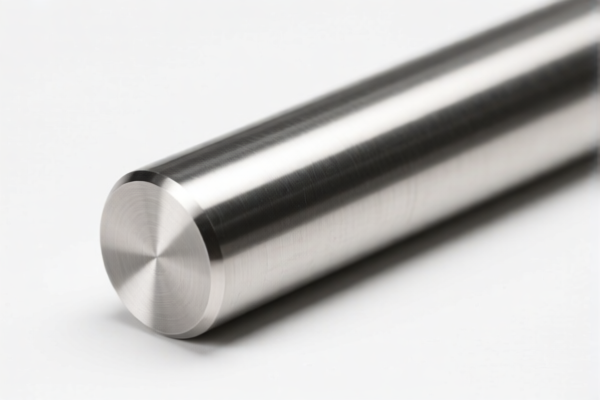
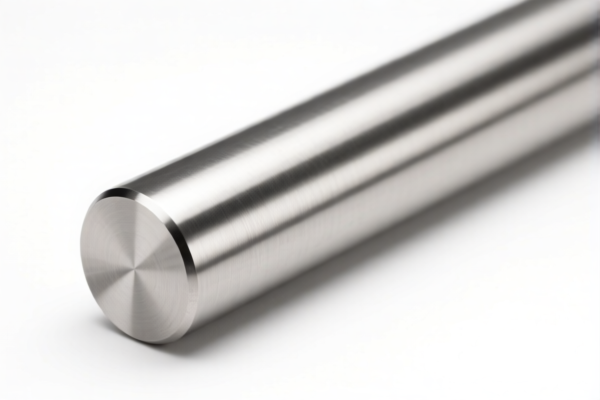
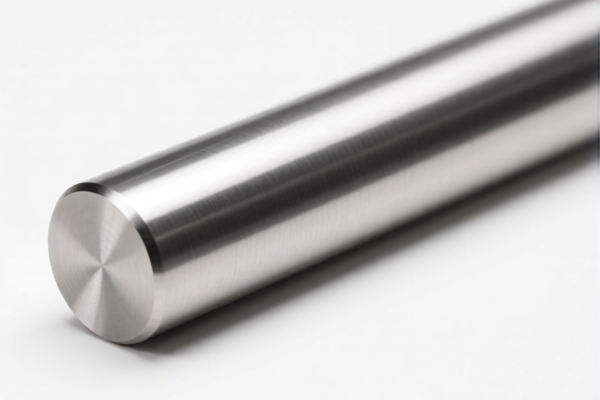
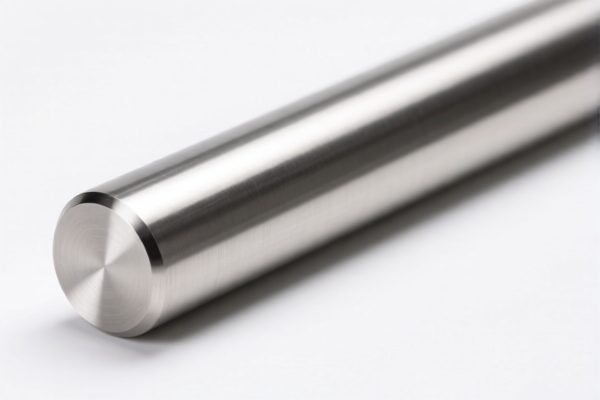
AI Analysis
🏗️ Stainless Steel Round Bar
🌐 HS Code Reference & Customs Clearance Guide | 2026 Latest Tariff Analysis | Professional Entry Strategy
📌 I. Product Definition and Classification: Do You Really Understand "Stainless Steel Round Bar"?
Stainless steel round bars are essential raw materials used in precision machining, construction, automotive parts, and industrial equipment manufacturing. In international trade, they are strictly classified based on processing method, cross-sectional shape, and chemical composition (specifically Nickel content).
Key Distinction:
The classification hinges on two critical factors:
1. Processing Status: Are they hot-rolled/drawn/extruded (7222.11) or cold-formed/finished (7222.20)?
2. Size & Nickel Content:
- For Hot-worked bars: Size < 152.4 mm AND Nickel < 8% → 7222.11.00.57
- For Cold-finished bars: Circular cross-section < 18 mm AND Nickel < 8% → 7222.20.00.41
⚠️ Critical Note:
- If the nickel content is ≥ 8%, these specific codes DO NOT APPLY. They would fall under different subheadings (e.g., 7222.11.00.51 or similar).
- If the diameter of cold-finished bars is ≥ 18 mm, it falls under a different code.
- "Round Bar" implies circular cross-section. Non-circular sections (angles, shapes) are classified elsewhere.
📦 II. HS Code Classification Details (2026 Latest Tariff Authority Comparison)
| HS Code | Product Description | Applicable Scenario | Key Criteria |
|---|---|---|---|
7222.11.00.57 |
Stainless Steel Bars/Rods, Hot-rolled/Drawn/Extruded, Circular, Max Dim < 152.4 mm, Ni < 8% | General industrial use, large diameter structural bars, hot-finished components | ✅ Hot-processed ✅ Ø < 152.4 mm ✅ Ni < 8% |
7222.20.00.41 |
Stainless Steel Bars/Rods, Cold-formed/Finished, Circular, Max Dim < 18 mm, Ni < 8% | Precision shafts, small components, high-accuracy machining blanks | ✅ Cold-finished ✅ Ø < 18 mm ✅ Ni < 8% |
🔍 Key Reminder:
-7222.11.00.57is for larger, coarser bars that have been hot-worked. It covers a wide range of diameters up to ~6 inches (152.4 mm).
-7222.20.00.41is for smaller, finer bars that have been cold-worked for better surface finish and tolerance.
- Misclassification Risk: Declaring a small, cold-finished bar as "hot-rolled" to avoid scrutiny, or vice versa, can lead to penalties. Always match the physical state and dimensions.
💰 III. 2026 Latest Tariff Rate Details (Including Additional Duties)
✅ Applicable Country: United States (US)
✅ Origin: China (CN)
✅ Effective Time: Current rates apply (Subject to Trade War Policies)
🎯 1. 7222.11.00.57 —— Stainless Steel Round Bars (Hot-worked, Large Diameter)
| Item | Content |
|---|---|
| Base Tariff Rate | 0% (ad valorem) |
| Section 301 Additional Duty | +25% |
| Total Tariff Rate | 25.0% |
| Tax Calculation | CIF Value × 25% |
| De Minimis Exemption | ❌ Not Applicable (Section 301 goods are excluded from de minimis relief under current enforcement) |
| Legal Basis Path | HTSUS: 7222.11.00.57 → USITC Footnote 9903.88.01 (Section 301 List 3/4A) |
📌 Explanation:
- Although the base MFN rate is 0%, the Section 301 additional tariff of 25% applies to stainless steel bars from China.
- This is a flat 25% on the total declared value.
- No hidden fees, but the 25% is significant for high-volume shipments.
🎯 2. 7222.20.00.41 —— Stainless Steel Round Bars (Cold-finished, Small Diameter)
| Item | Content |
|---|---|
| Base Tariff Rate | 0% (ad valorem) |
| Section 301 Additional Duty | +25% |
| Total Tariff Rate | 25.0% |
| Tax Calculation | CIF Value × 25% |
| De Minimis Exemption | ❌ Not Applicable |
| Legal Basis Path | HTSUS: 7222.20.00.41 → USITC Footnote 9903.88.01 (Section 301 List 3/4A) |
📌 Note:
- Identical tariff treatment to the hot-worked bars.
- Both codes are subject to the same 25% additional duty.
- This confirms that processing method (hot vs. cold) does not change the tariff rate for these specific nickel-content subsets, only the HS Code itself.
🛠️ IV. Customs Clearance Practical Advice (Combat Pitfall Guide)
✅ 1. Required Document Checklist (Missing Any = Delay)
| Document | Mandatory? | Description |
|---|---|---|
| ✅ Commercial Invoice | ✔️ | Must clearly state "Stainless Steel Round Bar," Grade (e.g., 304, 316, 410), and Nickel Content %. |
| ✅ Packing List | ✔️ | Detail weight, quantity, and dimensions. |
| ✅ Certificate of Analysis (CoA) | ✔️ | CRITICAL: Must verify Nickel Content < 8%. If ≥ 8%, the HS Code changes, and the 25% might still apply but to a different code. |
| ✅ Bill of Lading/Air Waybill | ✔️ | Standard shipping doc. |
| ✅ Material Test Report | ✔️ | Proves mechanical properties and composition. |
| ✅ Product Photos | ✔️ | Show circular cross-section and surface finish (hot vs. cold). |
✅ 2. Declaration Tips (Key Mantras)
🔥 “Check Nickel, Check Size, Check Finish: 25% is the King!”
| Scenario | Correct Declaration | Wrong Practice |
|---|---|---|
| Hot-rolled, Ø 100mm, 410 SS (Ni ~10%) | ❌ Do NOT use 7222.11.00.57. Use correct code for Ni ≥ 8%. | Misdeclaring to get 0% base rate → Audit Risk |
| Cold-finished, Ø 10mm, 430 SS (Ni ~16%) | ❌ Do NOT use 7222.20.00.41. Use code for Ni ≥ 8%. | Same as above |
| Hot-rolled, Ø 100mm, 409 SS (Ni < 8%) | 7222.11.00.57 |
Correct if Ni < 8% |
| Cold-finished, Ø 10mm, 409 SS (Ni < 8%) | 7222.20.00.41 |
Correct if Ni < 8% |
| Any Stainless Steel Bar from China | Declare 25% Additional Duty | Assume 0% total → Seizure |
✅ 3. Special Case Handling
| Case | Handling Advice |
|---|---|
| Nickel Content Boundary | If CoA shows 7.9% Ni, it fits. If 8.0% or higher, it moves to a different subheading (e.g., 7222.11.00.51 for Ni ≥ 8%, hot-worked). Verify exact Ni % on CoA. |
| Mixed Shipment | If a container has both Ni < 8% and Ni ≥ 8%, you must separate the HS Codes and declare separately. Mixed declarations lead to rejection. |
| Cold-Drawn vs. Cold-Finished | Ensure the description matches. "Cold-drawn" is a subset of "cold-finished." Use 7222.20.00 for all cold-finished bars < 18mm. |
| Origin Proof | Provide a Certificate of Origin stating China. No FTA preferences apply to China for these goods in the US. |
🌍 V. Global Market Comparison (2026 Latest)
| Country/Region | Recommended HS Code (Ni<8%) | Total Tariff (China Origin) | Notes |
|---|---|---|---|
| 🇺🇸 USA | 7222.11.00.57 / 7222.20.00.41 |
25.0% | Section 301 applies. Base rate 0%. |
| 🇨🇳 China | 7222.11.00 / 7222.20.00 |
~0.5% - 10% | Depends on exact subheading. Low import duty. |
| 🇪🇺 EU | 7222.11.00 / 7222.20.00 |
0% - 5% | Generally low or 0% for steel. No Section 301 equivalent. |
| 🇬🇧 UK | 7222.11.00 / 7222.20.00 |
0% - 5% | Post-Brexit, generally favorable for steel. |
| 🇯🇵 Japan | 7222.11.00 / 7222.20.00 |
0% - 3.2% | Low tariffs under CPTPP/JTEPA. |
📌 Conclusion:
- The US is the most expensive market due to the 25% Section 301 tariff.
- EU, UK, Japan offer near-zero tariffs, making them preferred export destinations if logistics allow.
📌 VI. Common Errors & Pitfall Guide (Lessons Learned)
❌ Error 1: Ignoring Nickel Content
👉 Consequence: If Ni ≥ 8%, the code 7222.11.00.57 is wrong. You must use a code for Ni ≥ 8%. While the 25% may still apply, the misdeclaration can cause delays and potential penalties for incorrect classification.
❌ Error 2: Confusing Hot-Rolled and Cold-Finished
👉 Consequence: Misdeclaring a cold-finished bar as hot-rolled (or vice versa) may attract scrutiny. If dimensions are borderline (e.g., 17mm cold-finished vs. 100mm hot-rolled), the size criteria must be strictly met.
❌ Error 3: Assuming 0% Total Tariff
👉 Consequence: Base rate is 0%, but 25% Section 301 applies. Assuming 0% leads to underpayment and seizures.
❌ Error 4: Not Providing CoA
👉 Consequence: Customs cannot verify Ni < 8% without a Certificate of Analysis. The shipment may be held for lab testing, causing weeks of delay.
✅ Correct Action:
"Stainless Steel Round Bar, Grade 409, Hot-Rolled, Ø 50mm, Nickel Content 4.5%, Origin China"
🎯 VII. Conclusion: Professional Declaration, Save Time and Money!
🎯 Remember the Mantra:
🔹 "Nickel Less Than 8, Size Check is Key, 25% Duty is a Must!"
🔹 "HS Code 7222.11.57 or 7222.20.41, Get it Wrong, Pay the Price!"
📌 Pro Tip:
- Pre-Ruling: If unsure about Nickel content or processing status, apply for a Binding Ruling from US Customs and Border Protection (CBP) before shipping.
- Supplier Verification: Ensure your supplier’s Mill Test Report (MTR) explicitly states the chemical composition, especially Nickel and Chromium percentages.
📣 Immediate Action:
📞 Contact your customs broker with the CoA and Product Specs.
🚀 Ensure your commercial invoice clearly states the HS Code and 25% Duty Liability.
✨ Professional Clearance, Starting with Accurate Classification!
💼 Every Percent Matters in Global Trade!
Customer Reviews
About HS Code Classification
The Harmonized System (HS) is an internationally standardized nomenclature developed by the World Customs Organization (WCO) to classify traded products. Over 200 countries use the HS system as the basis for customs tariffs, trade statistics, and import/export regulations.
Each HS code follows a hierarchical structure:
- Chapter (2 digits) — Broad category of goods (e.g., Chapter 84: Machinery and Mechanical Appliances)
- Heading (4 digits) — More specific grouping within the chapter
- Subheading (6 digits) — Internationally standardized breakdown, used by all WCO member countries
- National subdivisions (8-10 digits) — Country-specific extensions for further classification, such as US HTSUS 10-digit codes
Correct HS code classification is essential for smooth customs clearance, accurate duty payment, and compliance with trade regulations. Misclassification can lead to customs delays, overpayment of duties, or penalties.
When importing from CN to US, the applicable tariff rates may include:
- Most-Favored-Nation (MFN) rate — The standard duty rate applied to WTO members
- General rate — Applied to countries without trade agreements
- Trade remedy duties — Additional tariffs such as Section 301 (anti-dumping), Section 232 (national security), or countervailing duties
The information provided on this page is for reference purposes only. For official classification, please consult with your local customs authority or a licensed customs broker.