Stainless Steel Spoon
CN → US| HS Code | Tariff Rate | Origin | Destination | Doc |
|---|---|---|---|---|
| 7323930045 | 62.0% | CN | US | Official Doc |
| 8215200000 | 0.0% | CN | US | Official Doc |
| 8215991000 | 0.0% | CN | US | Official Doc |
| 7323930060 | 62.0% | CN | US | Official Doc |
| 8215993500 | 24.3% | CN | US | Official Doc |
Product Images
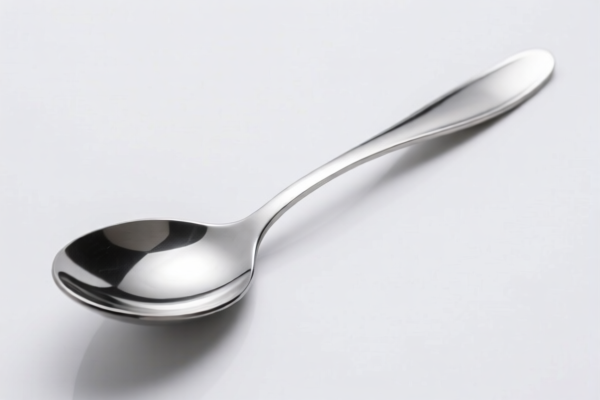
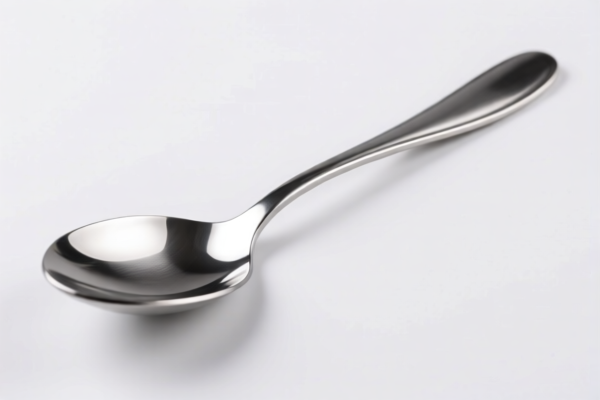
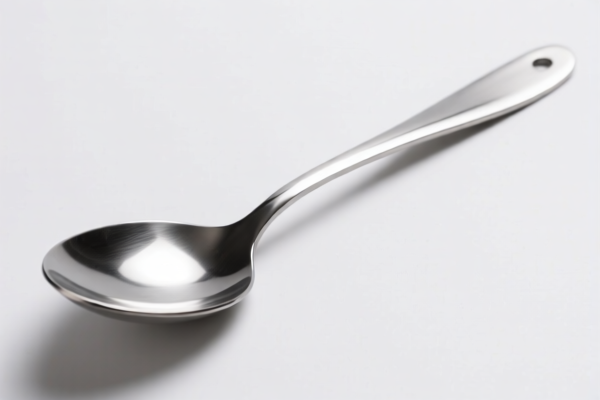
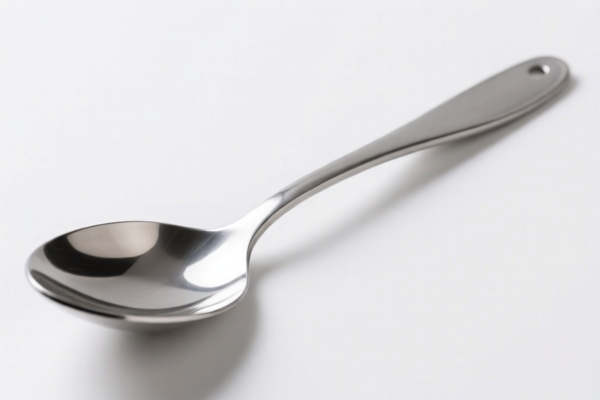
AI Analysis
🥄 Stainless Steel Spoon (Kitchenware & Tableware)
🌐 HS Code Reference & Customs Clearance Guide | 2026 Latest Tariff Analysis | Professional Entry Strategy
📌 I. Product Definition & Classification: Understanding the "Stainless Steel Spoon"
In international trade, a "Stainless Steel Spoon" is not a single unified commodity. Its classification depends heavily on specific usage, form (single vs. set), and target demographic. Misclassification can lead to drastic tariff differences, ranging from 0.5% to 62.0%.
There are two main categories in the data provided: 1. General Kitchen/Tableware (Chapter 73): Items primarily used for cooking or general dining, often classified under iron/steel articles. 2. Cutlery Sets/Utensils (Chapter 82): Items classified as cutlery, specifically spoon/fork combinations or specific utensil sets.
⚠️ Critical Distinction:
- If it is a single spoon or a general kitchen tool (e.g., ladle, serving spoon) made of stainless steel → Usually Chapter 73 (7323).
- If it is a cutlery item (often part of a set or defined as "spoons, forks, etc.") → Usually Chapter 82 (8215).
- If it is for infants/babies → It has a specific sub-category with different tax rates.
📦 II. HS Code Classification Details (2026 Latest Tariff Authority Match)
Based strictly on the provided <DATA>, here are the applicable HS Codes for Stainless Steel Spoons:
| HS Code | Product Description (from Data) | Key Characteristics | Applicable Context |
|---|---|---|---|
7323.93.00.45 |
Stainless steel material, used for kitchen fork/spoon utensils | General kitchen use, stainless steel | Standard household kitchen spoons/ladles |
7323.93.00.60 |
Stainless steel material, kitchen utensils (spoon type) | Spoon-focused kitchen utensil | Specific spoon variants in kitchenware |
8215.20.00.00 |
Stainless steel fork and spoon combination | Set or Combination item | Cutlery sets (spoon + fork together) |
8215.99.10.00 |
Stainless steel fork/spoon type extension or combination utensils | Extension/Combination tools | Specific cutlery tools, possibly ergonomic or specialized |
8215.99.35.00 |
Infant stainless steel spoon, compliant with stainless steel handle & spoon features | Infant/Baby specific | Baby feeders, teething spoons, pediatric tableware |
🔍 Key Reminder:
- Single Household Spoons often fall under7323.93(Kitchenware).
- Cutlery (Fork/Spoon Sets) fall under8215.20.
- Baby Spoons have a unique code8215.99.35with lower but still significant taxes.
- Do not mix these categories; the tax rate varies from 0.5¢/each to 62%.
💰 III. 2026 Latest Tariff Rate Breakdown (Including Surcharges & Policies)
✅ Applicable Country: United States (US)
✅ Origin: China (CN) (Implied by "10% Steel/Aluminum/Copper" and "Section 301" context)
✅ Effective Time: 2025/2026 (Current Data Context)
🎯 1. 7323.93.00.45 & 7323.93.00.60 —— General Kitchen Stainless Steel Spoons/Utensils
These two codes share the same tax structure in the provided data. This is the highest risk category for general kitchenware.
| Item | Content |
|---|---|
| Base Duty (MFN) | 2.0% |
| Section 301 Surcharge | 0.0% (Note: Data says 0.0% for "Added Tariff", but see below) |
| Section 232 Tariff | 50% (Specifically for "Steel, Aluminum, Copper Products" under Section 232) |
| Other Surcharges | 10% (Labeled as "10% Steel/Aluminum/Copper Product Surcharge" in tax_detail) |
| Total Tax Rate | 62.0% |
| Calculation Basis | CIF Value × 62% |
| De Minimis Exemption | ❌ Not Applicable (High value tariff items usually denied de minimis) |
📌 Interpretation:
- The 62% total rate is driven by the 50% Section 232 tariff on steel products + 10% additional steel surcharge + 2% base duty.
- Even though "Section 301" (often 25%) is listed as 0.0% in thetax_detail, the Section 232 and specific steel surcharges make this category extremely expensive.
- Warning: Many stainless steel kitchen items are classified here. Ensure your product is clearly "kitchenware" and not "cutlery" to see if a lower rate applies (see below).
🎯 2. 8215.20.00.00 —— Stainless Steel Fork & Spoon Combination (Cutlery Sets)
If your product is a set (e.g., a packaged set of forks and spoons) or considered a "set subject to tariff," the calculation is complex.
| Item | Content |
|---|---|
| Base Duty | The rate applicable to the article in the set (Typically varies by component, but often lower base rate) |
| Section 301 Surcharge | 25.0% |
| Section 232/Other | 10% (Labeled as "10% in tax_detail") |
| Total Tax Rate | 35.0% (Explicitly stated as "subject to +35.0%") |
| Calculation Basis | CIF Value × 35% |
📌 Interpretation:
- If classified as a cutlery set, you pay 35% total.
- This is significantly cheaper than the 62% rate for general kitchenware (7323).
- Strategy: If you are selling spoon/fork sets, ensure they are packaged and declared as a set under8215.20to leverage this lower rate.
🎯 3. 8215.99.10.00 —— Stainless Steel Fork/Spooon Type Extension/Combination Utensils
This is a unique category for "extension or combination utensils."
| Item | Content |
|---|---|
| Base Duty | 0.5¢ each + 6.3% ad valorem |
| Section 301 Surcharge | 0.0% |
| Section 232/Other | 10% (Labeled as "10% in tax_detail") |
| Total Effective Rate | 6.3% + 0.5¢/unit (Plus the 10% surcharge if applicable to the base) |
| Note | The data lists total tax as "0.5¢ each + 6.3%+10.0%". This implies a combination duty. |
| De Minimis | ⚠️ Check Eligibility (Low-value items sometimes qualify, but 10% surcharge may block it) |
📌 Interpretation:
- This code offers a mixed duty (per-unit + percentage).
- It is much lower than the 62% kitchenware rate.
- Use this only if the product fits the definition of "extension or combination utensils" (e.g., specialized long-handled spoons, combination tools).
🎯 4. 8215.99.35.00 —— Infant Stainless Steel Spoon
Specialized category for baby products.
| Item | Content |
|---|---|
| Base Duty | 6.8% |
| Section 301 Surcharge | 7.5% |
| Section 232/Other | 10% (Labeled as "10% in tax_detail") |
| Total Tax Rate | 24.3% |
| Calculation Basis | CIF Value × 24.3% |
📌 Interpretation:
- 24.3% Total.
- This is a middle-ground rate. Lower than general cutlery sets (35%) and much lower than general kitchenware (62%).
- Requirement: Must be clearly marketed and labeled as "Infant/Baby" with evidence (e.g., size, packaging, safety certifications).
🛠️ IV. Customs Clearance Practical Advice (Avoiding Pitfalls)
✅ 1. Documentation Checklist (Must-Haves)
| Document | Required? | Explanation |
|---|---|---|
| ✅ Product Specification Sheet | ✔️ | Must specify: Material (18/8 Stainless Steel?), Usage (Kitchen/Baby), Set vs. Single |
| ✅ Product Photos | ✔️ | Show the spoon clearly. If it's a set, show the packaging. If baby, show size relative to hand. |
| ✅ Commercial Invoice | ✔️ | Clearly state the HS Code and correct description (e.g., "Infant Spoon" vs. "Kitchen Ladle") |
| ✅ Certificate of Origin (CO) | ✔️ | Critical for determining if Section 232/301 surcharges apply (China origin = high taxes) |
| ✅ Set Composition Proof | ✔️ | For 8215.20, prove it is a "set" to avoid being split into high-tax individual items |
✅ 2. Classification Strategy (Key Tips)
🔥 "Don't Pay 62% If You Can Pay 24%! Know Your Product!"
| Product Scenario | Recommended HS Code | Total Tax | Why? |
|---|---|---|---|
| Generic Kitchen Ladle/Spoon | 7323.93.00.45 / .60 |
62.0% | High steel surcharges. Hard to avoid if declared as general kitchenware. |
| Fork & Spoon Set (Dinnerware) | 8215.20.00.00 |
35.0% | Classified as cutlery set. Lower than general kitchenware. |
| Baby Spoon (Solo or Set) | 8215.99.35.00 |
24.3% | Specific infant category. Best for baby products. |
| Specialized Combination Tool | 8215.99.10.00 |
~6.3% + 0.5¢ | Lowest rate, but strict definition ("extension/combination"). |
📌 Critical Advice:
- Avoid7323.93if possible. If you are a cutlery seller, try to classify under Chapter 82 (Cutlery).
- Baby Products: Always use8215.99.35.00for infant spoons. Do not mislabel as kitchenware.
- Sets: Ensure forks and spoons are packaged together as a "set" to qualify for8215.20.
✅ 3. Special Circumstances
| Situation | Handling Advice |
|---|---|
| Section 232 Tariff | The 50% steel tariff applies to most stainless steel kitchenware (7323). Check if your steel is "alloyed" or exempt, but usually, it applies. |
| De Minimis (Section 321) | Items under $800 may be exempt from duties. However, Section 232 and 301 surcharges may still apply or be blocked from de minimis. Consult a broker. |
| Infant Safety Standards | For 8215.99.35.00, ensure compliance with CPSC (Consumer Product Safety Commission) standards for baby products. |
🌍 V. Global Market Comparison (2026 Context)
| Market | Best HS Code for Spoons | Estimated Duty (China Origin) | Notes |
|---|---|---|---|
| 🇺🇸 USA | 8215.99.35.00 (Baby) |
24.3% | Lowers cost vs. 62% kitchenware |
| 🇺🇸 USA | 7323.93.00.45 (Kitchen) |
62.0% | High due to Section 232 |
| 🇪🇺 EU | 7323.93 / 8215 |
0% - 12% | No Section 232/301. Lower base duties. |
| 🇨🇳 China | 7323.93 / 8215 |
5% - 10% | Import duties for foreign stainless steel. |
📌 Conclusion:
- USA is the most expensive market for stainless steel kitchenware due to Section 232 (Steel) and Section 301 surcharges.
- Strategy: Optimize classification to Infant (24.3%) or Cutlery Set (35.0%) rather than General Kitchenware (62.0%).
📌 VI. Common Errors & Pitfalls (Blood & Tears Lessons)
❌ Error 1: Declaring a Baby Spoon as a Kitchen Spoon (7323.93)
👉 Consequence: Tax jumps from 24.3% to 62.0%.
💡 Fix: Use 8215.99.35.00 and provide baby-specific labeling.
❌ Error 2: Declaring a Cutlery Set (Spoon+Fork) as Individual Kitchen Utensils
👉 Consequence: May be split and taxed at higher rates or miss the "set" benefit.
💡 Fix: Declare as "Cutlery Set" under 8215.20.00.00 (35% total).
❌ Error 3: Ignoring Section 232 on Stainless Steel
👉 Consequence: Unexpected 50% tariff on kitchenware.
💡 Fix: Budget for steel surcharges in 7323 codes.
🎯 VII. Conclusion: Professional Declaration, Save Money!
🎯 Remember the Golden Rules:
🔹 "Baby Spoons = 24.3% (Use 8215.99.35)"
🔹 "Cutlery Sets = 35% (Use 8215.20)"
🔹 "General Kitchen Spoons = 62% (Avoid 7323 if possible)"
🔹 "Steel Tariffs = 50% (Section 232 applies to most steel items)"
📌 Pro Tip:
If you are exporting Stainless Steel Spoons to the US:
1. Identify the exact product type (Baby, Kitchen, or Cutlery Set).
2. Choose the lowest applicable HS Code from the list above.
3. Prepare documentation proving the classification (e.g., baby certification, set packaging).
4. Consult a customs broker to confirm Section 232 applicability.
✨ Accurate Classification = Lower Costs!
💼 Don't let a wrong HS Code cost you 40% more in duties!
Customer Reviews
About HS Code Classification
The Harmonized System (HS) is an internationally standardized nomenclature developed by the World Customs Organization (WCO) to classify traded products. Over 200 countries use the HS system as the basis for customs tariffs, trade statistics, and import/export regulations.
Each HS code follows a hierarchical structure:
- Chapter (2 digits) — Broad category of goods (e.g., Chapter 84: Machinery and Mechanical Appliances)
- Heading (4 digits) — More specific grouping within the chapter
- Subheading (6 digits) — Internationally standardized breakdown, used by all WCO member countries
- National subdivisions (8-10 digits) — Country-specific extensions for further classification, such as US HTSUS 10-digit codes
Correct HS code classification is essential for smooth customs clearance, accurate duty payment, and compliance with trade regulations. Misclassification can lead to customs delays, overpayment of duties, or penalties.
When importing from CN to US, the applicable tariff rates may include:
- Most-Favored-Nation (MFN) rate — The standard duty rate applied to WTO members
- General rate — Applied to countries without trade agreements
- Trade remedy duties — Additional tariffs such as Section 301 (anti-dumping), Section 232 (national security), or countervailing duties
The information provided on this page is for reference purposes only. For official classification, please consult with your local customs authority or a licensed customs broker.