Stainless Steel Valve
CN → US| HS Code | Tariff Rate | Origin | Destination | Doc |
|---|---|---|---|---|
| 8481302090 | 40.0% | CN | US | Official Doc |
| 8481803090 | 40.6% | CN | US | Official Doc |
Product Images
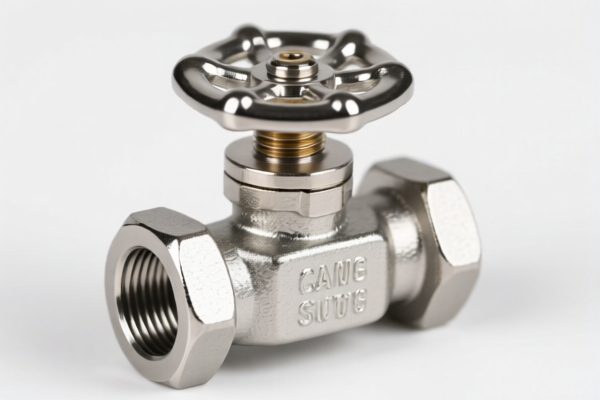
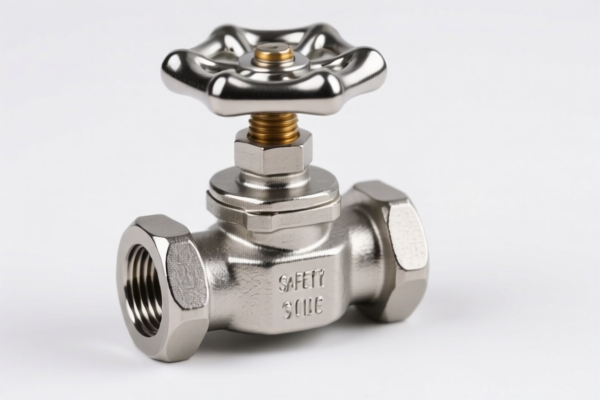
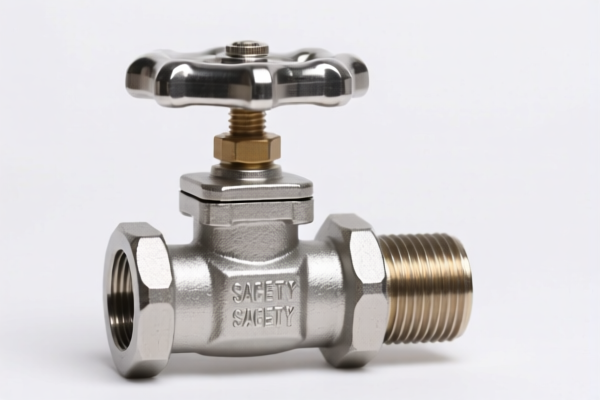
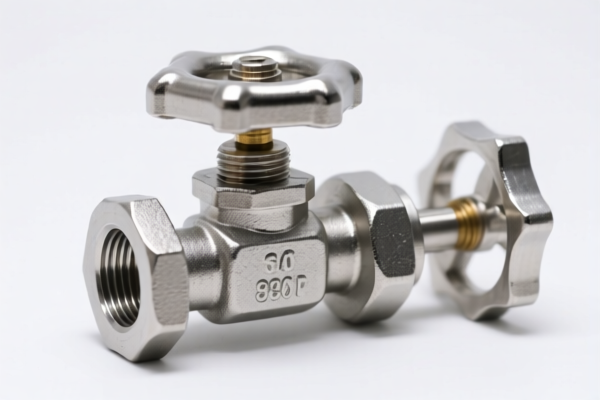
AI Analysis
⚙️ Stainless Steel Valves (Check & Manual Valves)
🌐 HS Code Reference & Customs Clearance Guide | 2026 Latest Tariff Analysis | Professional-Level Clearance Strategy
📌 I. Product Definition & Classification: Do You Really Know "Stainless Steel Valves"?
Stainless steel valves are critical components in fluid control systems, widely used in oil & gas, chemical processing, food & beverage, and water treatment industries. In international trade, they are primarily classified under Chapter 84: Nuclear reactors, boilers, machinery and mechanical appliances; parts thereof.
They fall into two main categories based on function:
1. Check (Non-Return) Valves: Devices that allow fluid to flow in only one direction, preventing backflow.
2. Hand-Operated Valves (Taps, Cocks, General Appliances): Devices manually operated to start, stop, or regulate flow.
⚠️ Key Distinction Point:
- If the valve is designed to automatically prevent backflow without manual intervention →归入 Check Valves (8481.30).
- If the valve requires manual operation (e.g., handle, wheel, lever) for control →归入 Other Appliances/Hand Operated (8481.80).
- Material: Stainless Steel is a subset of "Of steel" in HS codes.
📦 II. HS Code Classification Details (2026 Latest Tariff Authority Comparison)
| HS Code | Product Description | Application Scenario | Operation Type | Material |
|---|---|---|---|---|
8481.30.20.90 |
Check (Non-Return) Valves | Prevent backflow in pipes, boiler shells, tanks, vats | Automatic (Passive) | Of Steel (Stainless) |
8481.80.30.90 |
Other Hand-Operated Valves | Manual on/off or flow control in industrial plumbing | Manual (Active) | Of Steel (Stainless) |
🔍 Important Reminder:
- "Of Steel" in HS nomenclature includes Stainless Steel.
- Do not confuse these with valve parts (HS 8481.90). The codes provided below are for complete valves.
- If the valve is pneumatic or electrically actuated, it may fall under different subheadings (e.g., 8481.80.30 for other actuators), but theDATAprovided specifically highlights Hand Operated and Check valves.
💰 III. 2026 Latest Tariff Rate Details (Including Surtaxes, Policy Surcharges)
✅ Applicable Country: United States (US)
✅ Country of Origin: China (CN)
✅ Effective Date: Current (Based on providedDATA)
🎯 1. 8481.30.20.90 —— Check (Non-Return) Valves of Steel
| Item | Content |
|---|---|
| Description | Check valves; Of steel; Other |
| Basic Tariff Rate | 0.0% |
| Additional Tariff (Section 301 / IEEPA) | 0.0% |
| Total Tax Rate | 0.0% |
| Tax Detail | 基础关税: 0.0%, 加征关税: 0.0% |
| De Minimis Exemption | ✅ Eligible (if value < $800) |
| Legal Basis | Standard Harmonized Tariff Schedule (HTSUS) for Chapter 84 |
📌 Interpretation:
- Check valves made of stainless steel currently enjoy a 0% tariff on both the basic rate and any additional surtaxes (such as Section 301 tariffs that often apply to other steel products).
- This makes stainless steel check valves a highly competitive product for import into the US from China compared to other steel hardware.
🎯 2. 8481.80.30.90 —— Hand-Operated Valves of Steel (Other)
| Item | Content |
|---|---|
| Description | Other appliances; Hand operated; Of steel; Other |
| Basic Tariff Rate | 0.0% |
| Additional Tariff (Section 301 / IEEPA) | 0.0% |
| Total Tax Rate | 0.0% |
| Tax Detail | 基础关税: 0.0%, 加征关税: 0.0% |
| De Minimis Exemption | ✅ Eligible (if value < $800) |
| Legal Basis | Standard Harmonized Tariff Schedule (HTSUS) for Chapter 84 |
📌 Interpretation:
- Hand-operated valves (e.g., ball valves, gate valves, globe valves with manual handles) also enjoy a 0% total tariff.
- This is significantly lower than many other iron/steel products which may face 25% or higher Section 301 tariffs.
- Crucial: Ensure the valve is truly hand-operated. If it has an electric actuator attached, it might be classified differently, but the core valve unit as described here is tariff-free.
🛠️ IV. Customs Clearance Practical Advice (实战避坑指南)
✅ 1. Preparation Checklist (Indispensable Documents)
| Document | Required | Description |
|---|---|---|
| ✅ Product Specification Sheet | ✔️ | Must specify: Material (e.g., 304/316 Stainless Steel), Size, Pressure Rating, Connection Type (Flanged/Threaded). |
| ✅ Commercial Invoice | ✔️ | Clearly state "Stainless Steel Valve" and correct HS Code. Avoid vague terms like "Pipe Fitting". |
| ✅ Packing List | ✔️ | Detail quantity, gross weight, net weight. |
| ✅ Certificate of Origin | ✔️ | If claiming preferential rates under other FTAs (though current US-China is 0%, this is good practice). |
| ✅ Photos of Product & Label | ✔️ | Show material marking (e.g., "SS316") and valve type. |
✅ 2. Declaration Tips (Key Mnemonics)
🔥 "Material is Key, Operation Defines Code, 0% Tariff for Valves!"
| Scenario | Correct Declaration | Error to Avoid |
|---|---|---|
| Check Valve (Prevents Backflow) | HS 8481.30.20.90 |
Misdeclare as "Hand Operated" → Still 0%, but risky if structure differs. |
| Manual Ball Valve | HS 8481.80.30.90 |
Misdeclare as "Parts" → Parts may have different scrutiny. |
| Stainless Steel Material | Declare as "Of Steel" | Do not declare as "Of Iron" → Different subheadings, potentially different tariff history. |
| Valve Parts (Disc, Seat, Stem) | HS 8481.90 |
Do not declare as "Complete Valve" → Parts have their own 8481.90 codes. |
⚠️ Critical Note on "Steel" vs. "Stainless":
In HS Codes, "Stainless Steel" is classified under "Of Steel". The tariff data provided (0.0%) applies to all steel valves under these specific subheadings, including stainless steel. Do not assume "Stainless" triggers a different, higher tariff bracket unless specified in Footnotes (which it is not here).
✅ 3. Special Case Handling
| Situation | Handling Advice |
|---|---|
| Valve with Actuator | If an electric/pneumatic actuator is permanently attached, it may be classified as a "Control Valve" under 8481.80.30 or other, but still often 0%. Verify if the actuator is separable. |
| Used Valves | If imported as "Used," ensure they are in new condition or meet US safety standards. Used valves may face additional scrutiny for safety. |
| High-Pressure Valves | Ensure pressure ratings are clearly documented. High-pressure valves may require additional safety certifications (ASME, API). |
🌍 V. Global Market Comparison (2026 Latest)
| Country/Region | Recommended HS Code | Tariff (China Origin) | Certification Requirements | Notes |
|---|---|---|---|---|
| 🇺🇸 USA | 8481.30.20.90 / 8481.80.30.90 |
0.0% | No special certs for basic valves | Tariff-Free! |
| 🇨🇳 China | 8481.30.20.90 / 8481.80.30.90 |
0.0% ~ 2.5% | CCC (if applicable) | Low import duty for domestic use |
| 🇪🇺 EU | 8481.30 / 8481.80 |
0.0% | CE (Pressure Equipment Directive PED) | Mandatory PED compliance for >0.5 bar |
| 🇯🇵 Japan | 8481.30 / 8481.80 |
0.0% | JIS Standard | High quality standards |
| 🇦🇺 Australia | 8481.30 / 8481.80 |
5.0% | AS/NZS Standards | No FTA with China currently |
📌 Conclusion:
- The USA offers the best tariff advantage (0%) for stainless steel valves from China under these specific HS codes.
- EU also offers 0% but has strict PED (Pressure Equipment Directive) compliance requirements.
- Japan and Australia have minimal tariffs but may have technical barriers.
📌 VI. Common Mistakes & Pitfalls (Lessons Learned)
❌ Mistake 1: Declaring a Check Valve as a Hand-Operated Valve
👉 Consequence: Technically both are 0%, but if the valve has a manual override that is critical, misclassification can lead to disputes. Be precise.
❌ Mistake 2: Declaring Valve Parts (e.g., just a disc) as Complete Valves
👉 Consequence: Parts are not "appliances." Misdeclaration can lead to penalties for incorrect classification, even if the tariff rate is similar.
❌ Mistake 3: Ignoring Material Specification
👉 Consequence: If the invoice says "Iron" but the product is "Stainless Steel," customs may detain for inspection, causing delays. Always match material to HS Code "Of Steel."
❌ Mistake 4: Assuming Actuated Valves fall under these codes automatically
👉 Consequence: If the valve is fully automated (electric/pneumatic), it might need a different subheading. Check if the actuator is integral. For Hand-Operated with a separate actuator kit, the valve itself may still qualify under 8481.80.30.
✅ Correct Practice:
"Stainless Steel 316 Check Valve, Flanged, 2-Inch, API 602, Model XYZ, Part of Piping System"
🎯 VII. Conclusion: Professional Declaration, Zero Tariff, Smooth Clearance!
🎯 Remember the Mantra:
🔹 "Valves are Steel, Not Iron, Check or Hand, Code is Clear!"
🔹 "0% Tariff for Stainless Valves, Declare Precisely, Save Thousands!"
📌 Pro Tip:
- If your valves are for food/beverage or pharmaceutical use, ensure they are Sanitary Grade (e.g., 316L SS, polished interior). This doesn't change the HS Code but is critical for customs inspection and market acceptance.
- Always include Material Certificates (MTC) with shipments to prove "Stainless Steel" content, avoiding delays.
📣 Immediate Action:
📞 Consult your customs broker with exact HS Codes:
8481.30.20.90(Check) or8481.80.30.90(Hand).
🚀 Ship with Confidence: 0% Tariff, Full Compliance!
✨ Professional Clearance Starts with Accurate Classification!
💼 Every Valve Counts, Every Percentage Saves!
Customer Reviews
About HS Code Classification
The Harmonized System (HS) is an internationally standardized nomenclature developed by the World Customs Organization (WCO) to classify traded products. Over 200 countries use the HS system as the basis for customs tariffs, trade statistics, and import/export regulations.
Each HS code follows a hierarchical structure:
- Chapter (2 digits) — Broad category of goods (e.g., Chapter 84: Machinery and Mechanical Appliances)
- Heading (4 digits) — More specific grouping within the chapter
- Subheading (6 digits) — Internationally standardized breakdown, used by all WCO member countries
- National subdivisions (8-10 digits) — Country-specific extensions for further classification, such as US HTSUS 10-digit codes
Correct HS code classification is essential for smooth customs clearance, accurate duty payment, and compliance with trade regulations. Misclassification can lead to customs delays, overpayment of duties, or penalties.
When importing from CN to US, the applicable tariff rates may include:
- Most-Favored-Nation (MFN) rate — The standard duty rate applied to WTO members
- General rate — Applied to countries without trade agreements
- Trade remedy duties — Additional tariffs such as Section 301 (anti-dumping), Section 232 (national security), or countervailing duties
The information provided on this page is for reference purposes only. For official classification, please consult with your local customs authority or a licensed customs broker.