Stainless Steel Wire Rope
CN → US| HS Code | Tariff Rate | Origin | Destination | Doc |
|---|---|---|---|---|
| 7312101070 | 85.0% | CN | US | Official Doc |
| 7223009000 | 35.0% | CN | US | Official Doc |
| 8307106000 | 38.8% | CN | US | Official Doc |
| 7312101050 | 85.0% | CN | US | Official Doc |
Product Images
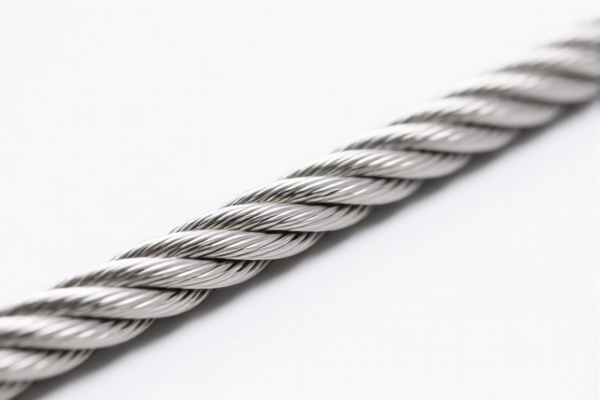
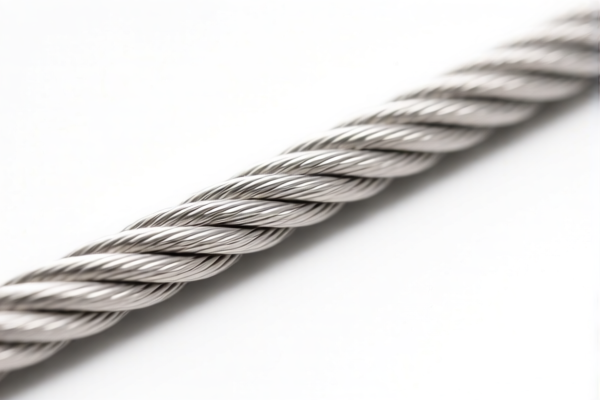
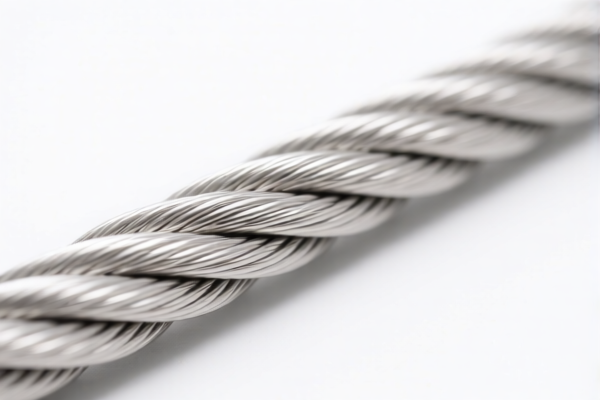
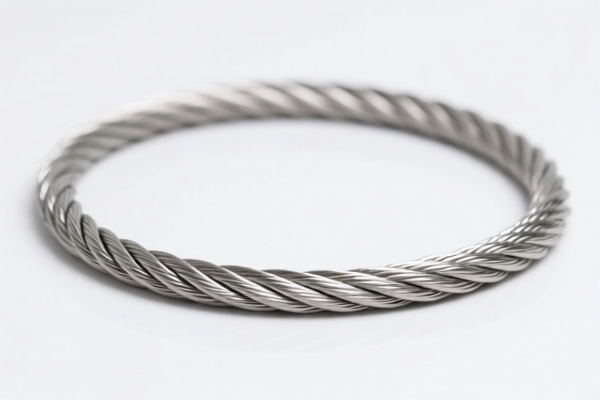
AI Analysis
🏗️ Stainless Steel Wire Rope (Wires, Strands, and Cables)
🌐 HS Code Reference & Customs Clearance Guide | 2026 Latest Tariff Analysis | Professional Compliance Strategy
📌 I. Product Definition & Classification: What Exactly Is "Stainless Steel Wire Rope"?
Stainless Steel Wire Rope is a critical industrial component used in construction, lifting, mining, and marine applications. In international trade, the classification hinges strictly on material composition and physical form. The core confusion often lies in distinguishing between "finished rope assemblies" and "raw stainless steel wires."
1. Raw Stainless Steel Wires (7312.10 / 7223.00)
- These are individual strands or wires made primarily of stainless steel, used for further manufacturing (e.g., weaving into ropes, springs, or meshes).
- Key Feature: No twisting into multi-strand ropes yet, or simple single-strand forms.
2. Stainless Steel Strands/Ropes (8307.10)
- These are twisted assemblies of wires, forming a structural cable or hose-like structure.
- Key Feature: Multi-strand construction, often used as flexible connectors, lifting cables, or structural supports.
⚠️ Key Distinction Point:
- If the product is raw wire (single or simple bundle) → Look at 7312.10.10.70 or 7223.00.90.00.
- If the product is a twisted cable/stranded structure → Look at 8307.10.60.00 or 7312.10.10.50.
📦 II. HS Code Classification Details (2026 Latest Tariff Authority Mapping)
| HS Code | Product Description | Applicable Scenario | Material/Form Logic |
|---|---|---|---|
7312.10.10.70 |
Other stainless steel wires, not further worked than twisted | Raw stainless steel wire, core material is stainless steel, classified under other categories | ✅ Raw Wire |
7223.00.90.00 |
Other stainless steel wire | Material and form fully consistent with classification explanations for raw wire | ✅ Raw Wire |
8307.10.60.00 |
Iron/Steel category wires, form as wire rope, logic extension of base metal hoses/tubes | Stainless steel (considered ferrous/steel category), form is wire rope/strand | ✅ Stranded/Rope |
7312.10.10.50 |
Material: Stainless Steel, Form: Wire Rope, similar product in twisted/rope/cable category | Twisted, rope, cable-like structures made of stainless steel | ✅ Stranded/Rope |
🔍 Critical Reminder:
-7312.10and7223.00are for raw wires. If you import raw stainless steel wire to weave into ropes yourself, use these.
-8307.10and7312.10.10.50are for ropes/strands. If you are importing finished wire ropes or multi-strand cables, use these.
- Misclassification Risk: Declaring a finished wire rope as "raw wire" (7312.10.10.70) may lead to higher duties due to the "Section 122" additional tariffs if not properly justified as raw material vs. finished good.
💰 III. 2026 Latest Tariff Rate Breakdown (Including Additional Taxes & Policies)
✅ Applicable Country: United States (US)
✅ Origin: China (CN)
✅ Effective Date: Post-2025 Policies (including Section 122 & 301 Tariffs)
🎯 1. 7312.10.10.70 —— Raw Stainless Steel Wire (High Risk Category)
| Item | Content |
|---|---|
| Base Duty | 0% (ad valorem) |
| Section 301 Surcharge | +25% |
| Section 122 Surcharge | +50% (Specific to Steel, Aluminum, Copper Products) |
| Total Duty Rate | 85.0% |
| Tax Calculation | CIF Value × 85% |
| De Minimis Eligibility | ❌ None (deny_de_minimis) |
| Legal Path | IEEPA:9903.01.25 → Section 122 Steel Surcharge → USITC:7312.10.10.70 |
📌 Explanation:
- This code attracts the highest combined tax burden (85%) because it is classified under steel products subject to the aggressive Section 122 tariff (50%) in addition to Section 301 (25%).
- Note: Even though the base duty is 0%, the surcharges make this extremely costly.
🎯 2. 7223.00.90.00 —— Other Stainless Steel Wire
| Item | Content |
|---|---|
| Base Duty | 0% |
| Section 301 Surcharge | +25% |
| Section 122 Surcharge | +10% (Standard 122 Clause for 10% steel/aluminum) |
| Total Duty Rate | 35.0% |
| Tax Calculation | CIF Value × 35% |
| De Minimis Eligibility | ❌ None |
| Legal Path | IEEPA:9903.01.24 → Section 122 10% Steel → USITC:7223.00.90.00 |
📌 Note:
- This is a significant cost saver compared to7312.10.10.70(35% vs 85%).
- Ensure the product description strictly matches "other stainless steel wire" to avoid being reclassified into the 85% bracket. The key is whether it falls under the specific "122 Clause" definition for steel products.
🎯 3. 8307.10.60.00 —— Wire Rope/Strand (Ferrous Category)
| Item | Content |
|---|---|
| Base Duty | 3.8% |
| Section 301 Surcharge | +25% |
| Section 122 Surcharge | +10% |
| Total Duty Rate | 38.8% |
| Tax Calculation | CIF Value × 38.8% |
| De Minimis Eligibility | ❌ None |
| Legal Path | IEEPA:9903.01.24 → Section 122 10% → USITC:8307.10.60.00 |
📌 Explanation:
- Although the base duty is higher (3.8%), the total rate (38.8%) is still far lower than the 85% applied to certain stainless steel wires.
- This code treats stainless steel as a "ferrous/steel category" for the purpose of the 122 clause, applying the standard 10% steel tariff, not the punitive 50%.
🎯 4. 7312.10.10.50 —— Stainless Steel Wire Rope/Cable (Similar Products)
| Item | Content |
|---|---|
| Base Duty | 0% |
| Section 301 Surcharge | +25% |
| Section 122 Surcharge | +50% (Specific to Steel, Aluminum, Copper Products) |
| Total Duty Rate | 85.0% |
| Tax Calculation | CIF Value × 85% |
| De Minimis Eligibility | ❌ None |
| Legal Path | IEEPA:9903.01.25 → Section 122 Steel Surcharge → USITC:7312.10.10.50 |
📌 Critical Warning:
- This code also attracts the 85% total duty due to the 50% Section 122 surcharge.
- It is categorized similarly to7312.10.10.70. If you are importing finished ropes, check if8307.10.60.00(38.8%) is a more appropriate fit for your specific product type to save nearly half the taxes.
🛠️ IV. Customs Clearance Practical Advice (Real-World Pitfall Avoidance)
✅ 1. Preparation Checklist (Essential Documents)
| Document | Required | Explanation |
|---|---|---|
| ✅ Product Specification Sheet | ✔️ | Must detail: Material (e.g., 304/316 SS), Diameter, Stranding Configuration (e.g., 6x19), Breaking Strength. |
| ✅ Material Certificate (MTC) | ✔️ | Proves the "Stainless Steel" content. Critical for avoiding misclassification as carbon steel. |
| ✅ High-Resolution Photos | ✔️ | Show the cross-section of the wire/rope to prove if it is a single wire or multi-strand rope. |
| ✅ Commercial Invoice | ✔️ | Description must be precise: e.g., "Stainless Steel Wire Rope, 304, 6x19, 10mm Dia." Avoid vague terms like "Metal Rope." |
| ✅ Packing List | ✔️ | Clear indication of net/gross weight and dimensions. |
✅ 2. Declaration Strategy (Key Mnemonics)
🔥 “Raw Wire vs. Rope: Check the Twist, Check the Tax!”
| Scenario | Correct HS Code | Risk of Wrong Declaration |
|---|---|---|
| Single Strand / Raw Wire | 7223.00.90.00 (35%) |
If declared as 7312.10.10.70 → 85% Tax! (Save 50%) |
| Finished Multi-Strand Rope | 8307.10.60.00 (38.8%) |
If declared as 7312.10.10.50 → 85% Tax! (Save 46.2%) |
| Wire Rope with Fittings (Turnbuckles) | Declare as Assembly or Split | Splitting may trigger 89.5% on components. Better to declare as a complete assembly if possible, or ensure fittings are correctly classified. |
📌 Pro Tip:
-7223.00.90.00and8307.10.60.00are the "Golden Codes" for minimizing duties.
- Always argue for the 10% Section 122 rate (via7223or8307) rather than the 50% Section 122 rate (via7312.10.10.70or50).
- Contact your customs broker before shipping to confirm the "Twist" vs. "Single Wire" distinction.
✅ 3. Special Circumstances Handling
| Scenario | Handling Advice |
|---|---|
| OEM Custom Wire Rope | Provide design drawings showing the stranding pattern. This supports classification under 8307 (rope/strand) rather than raw wire. |
| Mixed Container (SS Wire + Carbon Steel Parts) | Do not mix unless declared separately. Carbon steel may have different tariffs. Segregate clearly in the packing list. |
| Small Quantity Samples | No De Minimis Exemption applies due to the 301/122 tariffs. Even samples under $800 are subject to full tax. |
🌍 V. Global Market Comparison (2026 Latest)
| Country/Region | Recommended HS Code | Duty Rate | Certification | Remarks |
|---|---|---|---|---|
| 🇺🇸 USA | 7223.00.90.00 or 8307.10.60.00 |
35%~38.8% (CN Origin) | N/A (Customs Focus on Material) | Avoid 7312.10.10.70 (85%) |
| 🇨🇳 China | 7312.10.10.00 / 8307.10.00 |
~5-10% | CCC (if applicable) | Lower baseline duties |
| 🇪🇺 EU | 7312.10.00 / 8307.10.00 |
~5-6.5% | CE (if structural) | No Section 122 equivalent |
| 🇬🇧 UK | 7312.10.00 |
~6% | UKCA | Post-Brexit tariffs apply |
| 🇦🇺 Australia | 7312.10.00 |
~5% | N/A | No major surcharges |
📌 Conclusion:
- The US is the only market with punitive Section 122 and 301 tariffs.
- Strategic Recommendation: If you are exporting to the US, optimize your product classification by ensuring proper documentation for7223.00.90.00or8307.10.60.00to stay in the 35-39% range instead of the 85% range.
📌 VI. Common Mistakes & Pitfalls (Lessons Learned)
❌ Mistake 1: Declaring all stainless steel products as 7312.10.10.70
👉 Consequence: 85% Duty. Fix: Differentiate between raw wire (7223) and rope (8307).
❌ Mistake 2: Using generic terms like "Steel Wire" on the Invoice
👉 Consequence: Customs may assume the highest applicable tariff or demand further inspection. Fix: Use "Stainless Steel Wire Rope, 304/316."
❌ Mistake 3: Ignoring the "Section 122" definition
👉 Consequence: Misapplying the 10% vs 50% rate. Fix: Consult legal/customs experts to determine if your specific wire/rope falls under the broader "steel products" definition for the 10% rate.
✅ Correct Practice:
"Stainless Steel Wire Rope, Grade 316L, 6x36IWRC, Galvanized Core, 12mm Diameter, Compliant with ASTM A1023"
🎯 VII. Conclusion: Precision Classification Saves Millions
🎯 Remember the Mantra:
🔹 "Raw is 35%, Rope is 38.8%, Wrongly Classified is 85%!"
🔹 "Check the Twist, Check the Code, Save the Tax!"
🔹 "Section 122 is the Enemy, Proper HS Code is the Shield!"
📌 Pro Tip:
If your stainless steel wire/rope is originating from Vietnam, Mexico, or Thailand, you may be eligible for IEEPA Exemptions or lower tariffs under USMCA/EFTA agreements.
Recommendation: Always apply for an Advance Ruling from US Customs and Border Protection (CBP) before shipping high-volume stainless steel wire ropes to the US.
📣 Immediate Action:
📞 Contact a licensed Customs Broker + Provide Product Cross-Section Photos + Apply for HS Code Pre-Ruling
🚀 Let your stainless steel wire rope clear smoothly, avoid 85% tax traps, and maximize profit margins!
✨ Professional Clearance Starts with Accurate Classification!
💼 Every percent of duty saved is pure profit!
Customer Reviews
About HS Code Classification
The Harmonized System (HS) is an internationally standardized nomenclature developed by the World Customs Organization (WCO) to classify traded products. Over 200 countries use the HS system as the basis for customs tariffs, trade statistics, and import/export regulations.
Each HS code follows a hierarchical structure:
- Chapter (2 digits) — Broad category of goods (e.g., Chapter 84: Machinery and Mechanical Appliances)
- Heading (4 digits) — More specific grouping within the chapter
- Subheading (6 digits) — Internationally standardized breakdown, used by all WCO member countries
- National subdivisions (8-10 digits) — Country-specific extensions for further classification, such as US HTSUS 10-digit codes
Correct HS code classification is essential for smooth customs clearance, accurate duty payment, and compliance with trade regulations. Misclassification can lead to customs delays, overpayment of duties, or penalties.
When importing from CN to US, the applicable tariff rates may include:
- Most-Favored-Nation (MFN) rate — The standard duty rate applied to WTO members
- General rate — Applied to countries without trade agreements
- Trade remedy duties — Additional tariffs such as Section 301 (anti-dumping), Section 232 (national security), or countervailing duties
The information provided on this page is for reference purposes only. For official classification, please consult with your local customs authority or a licensed customs broker.