Stainless steel free aluminum tea kettle
CN → US| HS Code | Tariff Rate | Origin | Destination | Doc |
|---|---|---|---|---|
| 7615107155 | 63.1% | CN | US | Official Doc |
| 7615107180 | 63.1% | CN | US | Official Doc |
| 8419819080 | 17.5% | CN | US | Official Doc |
| 8516710080 | 21.2% | CN | US | Official Doc |
| 8516710080 | 21.2% | CN | US | Official Doc |
Product Images
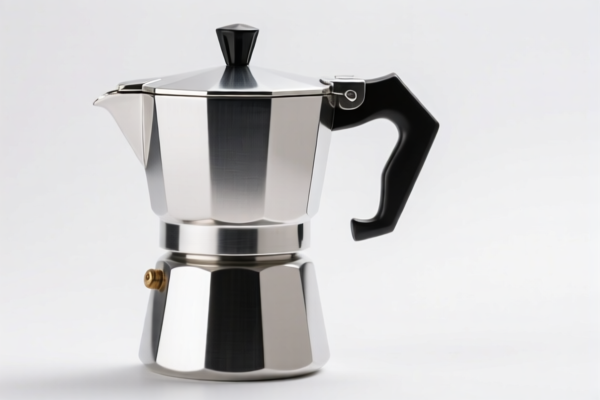
AI Analysis
🍵 Stainless Steel & Aluminum Tea Kettle: HS Code & Taxation Guide (2026 Update)
Global Trade Compliance | Strategic Customs Clearance | Tax Optimization
🌐 Product Definition & Classification Logic
The product "Stainless Steel Free Aluminum Tea Kettle" (often interpreted as an aluminum kettle with no coating, or a hybrid device involving aluminum and stainless steel) falls under two primary classification categories in international trade:
- Manual Cooking Vessels (Aluminum): Uncoated aluminum kettles used for making hot beverages.
- Electric Thermal Appliances: Devices designed specifically for heating liquids, regardless of material composition (Aluminum/Stainless Steel mix).
⚠️ Critical Distinction: * Non-Electric (Manual): If it is a stovetop kettle with no heating element, it falls under HS 7615. * Electric (Heated): If it has an integrated heating element (immersion or base), it falls under HS 8419 or HS 8516. * Material Nuance: "Stainless Steel Free" implies the body is primarily Aluminum. "Free" might also imply no non-stick coating (uncoated aluminum), which affects the specific sub-category within 7615.
📦 HS Code Classification & Tax Breakdown (2026 Data)
Based on the provided dataset, here is the precise classification for your product, categorized by function and material.
| HS Code | Product Description | Material/Structure | Total Tax Rate | Key Tax Components |
|---|---|---|---|---|
| 7615.10.71.55 | Aluminum Tea Kettle (Cooking Vessel) | Aluminum, Classified as "Others" (Catch-all) | 63.1% | Base: 3.1% Additional: 0% 122-Cl: 10% (Steel/Aluminum/Copper) 122-Cl: 50% |
| 7615.10.71.80 | Aluminum Tea Kettle (Uncoated) | Aluminum, No Coating/No Non-stick | 63.1% | Base: 3.1% Additional: 0% 122-Cl: 10% 122-Cl: 50% |
| 8419.81.90.80 | Hot Beverage Maker (Hybrid Device) | Stainless Steel + Aluminum, Electric/Thermal | 17.5% | Base: 0.0% Additional: 7.5% 122-Cl: 10% |
| 8516.71.00.80 | Electric Tea Kettle (Metal) | Metal (Aluminum/Steel), General Electric | 21.2% | Base: 3.7% Additional: 7.5% 122-Cl: 10% |
| 8516.71.00.80 | Electric Tea Kettle (Stainless) | Stainless Steel Body, Electric Tea Maker | 21.2% | Base: 3.7% Additional: 7.5% 122-Cl: 10% |
🔍 Decoding the Tax Structure (The "122-Clause" Rule)
The high tax rates (63.1% vs 17.5%/21.2%) are driven by specific Section 232 / "122-Clause" provisions targeting steel and aluminum products.
-
Scenario A (Pure Aluminum Manual Kettles - 7615):
- Base Tariff: 3.1%
- 122-Cl (10% Steel/Aluminum/Copper): Applied to the raw material content.
- 122-Cl (50% Penalty): A punitive tariff specifically on aluminum/steel/copper products under this clause.
- Result: $3.1\% + 10\% + 50\% = \mathbf{63.1\%}$.
-
Scenario B (Electric/Heating Devices - 8419/8516):
- Base Tariff: 0.0% or 3.7% (depending on specific sub-category).
- Additional Tariff: 7.5% (Often Section 301 or specific sectoral tariffs).
- 122-Cl (10%): Applied only once here.
- Result: $3.7\% + 7.5\% + 10\% = \mathbf{21.2\%}$ (or $0+7.5+10=17.5\%$).
🛠️ Customs Clearance Strategy & Recommendations
To minimize costs and ensure smooth clearance, you must choose the correct HS Code based on the product's actual function and design.
✅ 1. The "Electric vs. Manual" Decision
-
If the kettle has a heating element:
- Strategy: Declare as 8419.81.90.80 or 8516.71.00.80.
- Why? The tax rate is significantly lower (17.5% - 21.2%) compared to the manual aluminum vessel (63.1%).
- Requirement: Must clearly state "Electric," "Heating Element," or "Hot Beverage Maker" in the description. Do not call it a "Cooking Vessel" if it is electric.
-
If the kettle is for stovetop use only (No electricity):
- Strategy: You are forced into 7615.10.71.xx (63.1% tax).
- Mitigation:
- Ensure the product is not misclassified as an electric appliance.
- Check if the "Stainless Steel Free" implies it is made of a different alloy that might avoid the "Aluminum" 122-Cl penalty (highly unlikely for standard aluminum kettles).
- Alternative: If the product is a "Thermos" or "Vacuum Flask" rather than a heating pot, investigate HS 7323 or 7326 (though unlikely for "kettle" shape).
✅ 2. Material Composition Clarity
- Uncoated Aluminum (7615.10.71.80):
- If the "Stainless Steel Free" description implies no non-stick coating (e.g., bare aluminum), declare exactly as "Uncoated Aluminum Tea Kettle."
- Risk: If the surface is anodized or coated, it might fall under a different sub-category, potentially changing the tax base.
- Hybrid Materials (8419/8516):
- If the kettle is Aluminum body + Stainless Steel interior or vice versa, the "122-Clause" 10% applies, but the 50% penalty for pure aluminum vessels might be avoided depending on the "Article" classification logic in 8419/8516.
✅ 3. Documentation Checklist for Clearance
| Document | Requirement | Why It Matters |
|---|---|---|
| Technical Datasheet | Must explicitly state "Electric" or "Stovetop" | Determines if HS 8419/8516 (Low Tax) or 7615 (High Tax) applies. |
| Material Declaration | Specify % of Aluminum vs. Stainless Steel | Crucial for verifying the "122-Clause" applicability. |
| Product Photos | Show heating element, base, and lack of coating (if claimed) | Customs inspectors verify "Uncoated" claims. |
| Declaration of Use | "For domestic hot beverage preparation" | Prevents classification as "Industrial" or "Commercial" equipment. |
| Origin Certificate | Prove Origin (CN) | Essential for calculating the correct Section 301/122 tariffs. |
🚨 Common Pitfalls to Avoid
- ❌ Mislabeling Electric Kettles as "Cooking Vessels":
- Result: If you sell an electric kettle but declare it under 7615 (Manual), you might pay 63.1% or face audits.
- Correction: Always use 8419.81.90.80 or 8516.71.00.80 for electric devices.
- ❌ Ignoring the "122-Clause" 50% Penalty:
- This is the biggest cost driver for 7615. If you can structure the product as an "Electric Hot Beverage Machine" (8419), you avoid this specific 50% surcharge entirely (paying only 10%).
- ❌ Vague Material Description:
- Saying "Stainless Steel Free" is ambiguous. Use "Aluminum Alloy Body, No Non-Stick Coating" or "Stainless Steel & Aluminum Hybrid."
💡 Final Verdict & Cost Optimization
- Best Case Scenario (Lowest Tax):
- HS Code: 8419.81.90.80 (Hot Beverage Maker).
- Total Tax: 17.5%.
- Condition: The device must be electric/thermal and not just a simple pot.
- Second Best:
- HS Code: 8516.71.00.80 (Electric Tea Kettle).
- Total Tax: 21.2%.
- Worst Case (High Tax):
- HS Code: 7615.10.71.xx (Manual Aluminum Kettle).
- Total Tax: 63.1%.
- Condition: Purely manual, uncoated aluminum vessel.
💡 Pro Tip: If your product is electric, strictly avoid declaring it under 7615. The tax saving is massive (~45% difference). Ensure your marketing materials and packaging clearly highlight the "Electric" or "Heating" function to justify the lower HS Code classification.
🚀 Ready to Ship? Ensure your commercial invoice explicitly states: "Electric Tea Kettle, Stainless Steel & Aluminum, For Hot Beverage Preparation." This will trigger the 17.5%-21.2% tax bracket and bypass the punitive 63.1% aluminum penalty.
Customer Reviews
About HS Code Classification
The Harmonized System (HS) is an internationally standardized nomenclature developed by the World Customs Organization (WCO) to classify traded products. Over 200 countries use the HS system as the basis for customs tariffs, trade statistics, and import/export regulations.
Each HS code follows a hierarchical structure:
- Chapter (2 digits) — Broad category of goods (e.g., Chapter 84: Machinery and Mechanical Appliances)
- Heading (4 digits) — More specific grouping within the chapter
- Subheading (6 digits) — Internationally standardized breakdown, used by all WCO member countries
- National subdivisions (8-10 digits) — Country-specific extensions for further classification, such as US HTSUS 10-digit codes
Correct HS code classification is essential for smooth customs clearance, accurate duty payment, and compliance with trade regulations. Misclassification can lead to customs delays, overpayment of duties, or penalties.
When importing from CN to US, the applicable tariff rates may include:
- Most-Favored-Nation (MFN) rate — The standard duty rate applied to WTO members
- General rate — Applied to countries without trade agreements
- Trade remedy duties — Additional tariffs such as Section 301 (anti-dumping), Section 232 (national security), or countervailing duties
The information provided on this page is for reference purposes only. For official classification, please consult with your local customs authority or a licensed customs broker.