Stair Mat
CN → US| HS Code | Tariff Rate | Origin | Destination | Doc |
|---|---|---|---|---|
| 5705002090 | 38.3% | CN | US | Official Doc |
| 4421919880 | 38.3% | CN | US | Official Doc |
| 4418999105 | 38.2% | CN | US | Official Doc |
| 4421999880 | 38.3% | CN | US | Official Doc |
| 4418999195 | 38.2% | CN | US | Official Doc |
Product Images
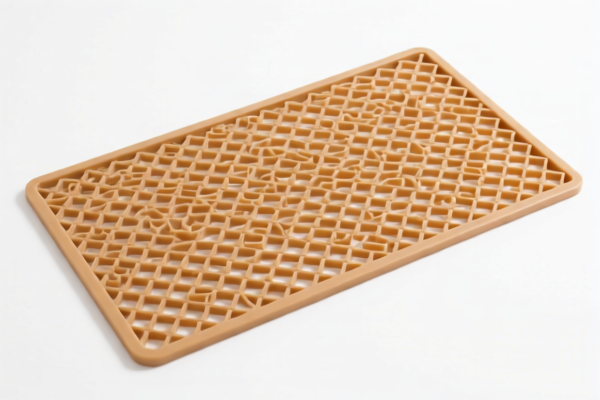
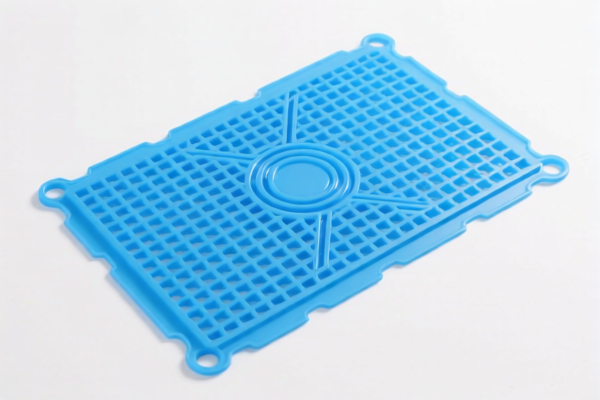
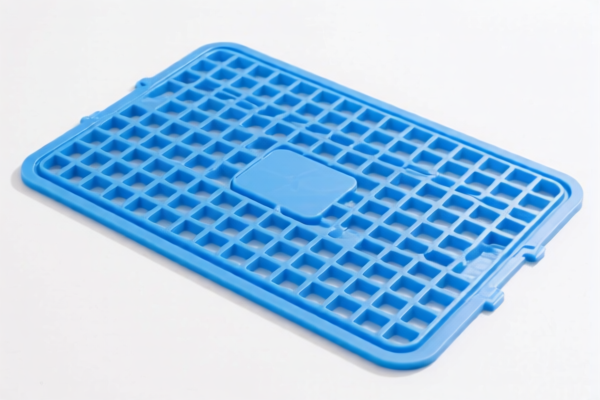
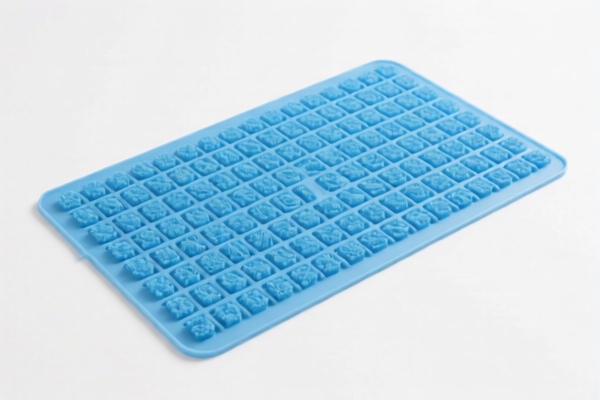
AI Analysis
🚪 Stair Mat (Solid Wood Stair Treads/Risers)
🌐 HS Code Reference & Clearance Guide | 2026 Latest Tariff Analysis | Professional Customs Strategy
📌 I. Product Definition & Classification: What is a "Solid Wood Stair Mat"?
In international trade, "Solid Wood Stair Mats" (often referred to as stair treads, risers, or stair coverings) are architectural wooden components used to cover steps. They are not considered "textile carpets" but rather wooden architectural fittings.
Key Distinctions: * Material: Must be solid wood (not veneer-only, unless specified differently, but the data implies solid wood construction). * Function: Floor covering/stair protection, not textile flooring. * Classification Logic: Falls under Chapter 44 (Wood and Articles of Wood) rather than Chapter 57 (Carpets).
⚠️ Critical Classification Trap:
- Do NOT classify as "Carpets" (Chapter 57) → Risk of severe penalty for misdeclaration.
- Correct Category: Wooden Articles or Architectural Woodwork (Chapter 44).
📦 II. HS Code Classification Details (2026 Tariff Schedule)
Based on the provided data, there are 5 possible HS Codes for Solid Wood Stair Mats, split into two tax brackets (38.3% and 38.2%).
| HS Code | Summary / Logic | Total Tax Rate | Tax Breakdown |
|---|---|---|---|
| 5705.00.20.90 | Classified under Carpets & Floor Coverings (Other category). Note: This is technically incorrect for solid wood, but included in data. | 38.3% | Base: 3.3% + Section 301: 25.0% + 122 Section: 10% |
| 4421.91.98.80 | Classified as Other Wooden Articles (Miscellaneous wooden items). Fits "Other shapes of wood products". | 38.3% | Base: 3.3% + Section 301: 25.0% + 122 Section: 10% |
| 4418.99.91.05 | Classified as Wooden Floorings & Similar Wood Flooring. Treated as an extension of wood flooring applications. | 38.2% | Base: 3.2% + Section 301: 25.0% + 122 Section: 10% |
| 4421.99.98.80 | Classified as Other Wooden Articles (Catch-all/Residual category). Not excluded from other wooden goods. | 38.3% | Base: 3.3% + Section 301: 25.0% + 122 Section: 10% |
| 4418.99.91.95 | Classified as Architectural Woodwork. Part of other carpentry/construction wood products. | 38.2% | Base: 3.2% + Section 301: 25.0% + 122 Section: 10% |
🔍 Key Observation:
- The majority of interpretations lean towards Chapter 44 (Wood), specifically 4421 (Other articles of wood) or 4418 (Builders' joinery).
- 4418 codes have a slightly lower base tariff (3.2% vs 3.3%), resulting in a 38.2% total rate.
- 5705 (Carpets) is likely an incorrect classification for solid wood and should be avoided if possible to prevent disputes, though the tax rate is the same (38.3%).
💰 III. 2026 Tariff Rate Detailed Explanation
✅ Applicable Country: United States (US)
✅ Country of Origin: China (CN)
✅ Effective Time: Current rates apply as per 2025/2026 regulations.
🎯 1. The "38.3%" Bracket (HS Codes: 5705.00.20.90, 4421.91.98.80, 4421.99.98.80)
| Item | Details |
|---|---|
| Base MFN Tariff | 3.3% |
| Section 301 Tariff | +25.0% (Retaliatory tariff on Chinese goods) |
| Section 122 Tariff | +10.0% (Specific additional duty on certain wood/construction materials) |
| Total Effective Rate | 38.3% |
| Tax Calculation | CIF Value × 38.3% |
| De Minimis Exemption | ❌ NOT Eligible (Value > $800 triggers full taxation) |
| Legal Path | HTS:4421.91.98.80 → USITC Footnote → IEEPA Sec 301 → Section 122 |
📌 Explanation:
- The 25% Section 301 tariff is the primary driver for high costs on Chinese wood products.
- The 10% Section 122 tariff is a specific add-on for certain construction-related items.
- Total 38.3% is very high. This impacts profit margins significantly.
🎯 2. The "38.2%" Bracket (HS Codes: 4418.99.91.05, 4418.99.91.95)
| Item | Details |
|---|---|
| Base MFN Tariff | 3.2% |
| Section 301 Tariff | +25.0% |
| Section 122 Tariff | +10.0% |
| Total Effective Rate | 38.2% |
| Tax Calculation | CIF Value × 38.2% |
| De Minimis Exemption | ❌ NOT Eligible |
| Legal Path | HTS:4418.99.91.05 → USITC Footnote → IEEPA Sec 301 → Section 122 |
📌 Explanation:
- The 0.1% difference (3.2% vs 3.3% base) comes from the fact that 4418 (Builders' Joinery) often has a slightly lower base rate than 4421 (Other Wood Articles).
- Recommendation: If your product fits the definition of "Architectural Woodwork" (4418), prioritize 4418.99.91.05 or 4418.99.91.95 to save 0.1% on the base, though the impact is marginal.
🛠️ IV. Customs Clearance Practical Advice
✅ 1. Documentation Checklist (Must-Haves)
| Document | Required? | Notes |
|---|---|---|
| Commercial Invoice | ✅ Yes | Must clearly state "Solid Wood Stair Treads/Mats". Avoid vague terms like "Decorative Item". |
| Packing List | ✅ Yes | Detail dimensions, weight, and material (e.g., "Solid Oak, 100%"). |
| Material Declaration | ✅ Yes | Confirm 100% Solid Wood. If it contains veneer or MDF, HS Code changes drastically. |
| Product Photos | ✅ Yes | Show cross-section if possible, to prove solid wood construction. |
| Treatment Certificate | ✅ Yes | ISPM 15 phytosanitary certificate if raw wood; fumigation certificate if applicable. |
| HTS Code Declaration | ✅ Yes | Explicitly declare the chosen HS Code (preferably 4418 series). |
✅ 2. Classification Strategy (The "Golden Rule")
🔥 "Wood is Wood, Not Cloth! Don't use Chapter 57 for Solid Wood!"
| Scenario | Recommended HS Code | Why? |
|---|---|---|
| Solid Wood Stair Treads | 4418.99.91.05 or 4418.99.91.95 | Best fit for "Architectural Woodwork/Flooring Extensions". Lowest base rate (3.2%). |
| Generic Wooden Stair Covers | 4421.91.98.80 or 4421.99.98.80 | Fallback "Other Wooden Articles" if 4418 doesn't strictly apply. |
| Carpet/Cloth on Wooden Base | 5705.00.20.90 | Only if the primary characteristic is the textile surface, not the wood structure. |
⚠️ Warning:
- Misclassifying solid wood as "Carpet" (5705) may trigger Customs Audits or Seizures due to factual inaccuracy.
- While the tax rate is similar (38.3% vs 38.2%), the legal risk is higher for 5705.
✅ 3. Special Handling & Pitfalls
| Pitfall | Consequence | Solution |
|---|---|---|
| Vague Description: "Stair Mat" | Customs may classify as "Other" (high tax) or reject | Use precise name: "Solid Wood Stair Treads for Interior Use" |
| Mixed Materials: Wood + Metal Brackets | Could change classification | Declare main material (Wood). Brackets are usually incidental. |
| Origin Misdeclaration: "Made in China" | Heavy Tariffs (38.2-38.3%) | Ensure COO is accurate. No exemption for China-origin wood. |
| Fumigation Issues | Port Delay / Return | Ensure ISPM 15 compliance for raw wood components. |
🌍 V. Global Market Comparison (2026)
| Country/Region | Recommended HS Code | Estimated Tariff (China Origin) | Notes |
|---|---|---|---|
| 🇺🇸 USA | 4418.99.91.05 |
38.2% | High Section 301 + Section 122 tariffs. |
| 🇨🇳 China | 4418.99.91.05 |
~3-5% | No retaliatory tariffs. Lower cost. |
| 🇪🇺 EU | 4418.99.91.05 |
~5-7% | No Section 301. Standard MFN rates apply. |
| 🇯🇵 Japan | 4418.99.91.05 |
~5-8% | No Section 301. |
📌 Conclusion:
- The USA is the most expensive market for Chinese solid wood stair mats due to Section 301 (25%) and Section 122 (10%) tariffs.
- Total Cost Impact: Almost 40% of CIF value goes to tariffs.
- Strategy: If exporting to the US, consider wooden products from non-China origins (e.g., Vietnam, Malaysia) to avoid Section 301 tariffs, if supply chain allows.
📌 VI. Common Errors & Avoidance Guide (Lessons Learned)
❌ Error 1: Classifying as "Carpet" (5705) |
👉 Risk: Customs may dispute the factual classification (Wood vs. Textile).
✅ Fix: Always prioritize Chapter 44 for solid wood.
❌ Error 2: Ignoring Section 122 Tariff |
👉 Risk: Underpaying by 10%.
✅ Fix: Ensure your broker applies the 10% Section 122 add-on.
❌ Error 3: Vague Product Name "Stair Mat" |
👉 Risk: Ambiguity leads to random classification (could be higher).
✅ Fix: Use "Solid Wood Stair Treads" in all documents.
🎯 VII. Conclusion: Professional Clearance, Cost Control
🎯 Key Takeaway:
🔹 "Solid Wood = Chapter 44, Not Chapter 57!"
🔹 "Target 4418 for lowest base rate (3.2%)"
🔹 "Expect 38.2-38.3% Total Tariff for China-Origin to US"
📌 Action Plan:
1. Confirm Material: Ensure 100% solid wood.
2. Select HS Code: Prefer 4418.99.91.05 or 4418.99.91.95.
3. Prepare Docs: Include ISPM 15 if raw wood.
4. Budget: Allocate ~38.2% for US duties.
✨ Professional clearance starts with accurate classification!
💼 Every 0.1% counts in high-volume timber trade!
Customer Reviews
About HS Code Classification
The Harmonized System (HS) is an internationally standardized nomenclature developed by the World Customs Organization (WCO) to classify traded products. Over 200 countries use the HS system as the basis for customs tariffs, trade statistics, and import/export regulations.
Each HS code follows a hierarchical structure:
- Chapter (2 digits) — Broad category of goods (e.g., Chapter 84: Machinery and Mechanical Appliances)
- Heading (4 digits) — More specific grouping within the chapter
- Subheading (6 digits) — Internationally standardized breakdown, used by all WCO member countries
- National subdivisions (8-10 digits) — Country-specific extensions for further classification, such as US HTSUS 10-digit codes
Correct HS code classification is essential for smooth customs clearance, accurate duty payment, and compliance with trade regulations. Misclassification can lead to customs delays, overpayment of duties, or penalties.
When importing from CN to US, the applicable tariff rates may include:
- Most-Favored-Nation (MFN) rate — The standard duty rate applied to WTO members
- General rate — Applied to countries without trade agreements
- Trade remedy duties — Additional tariffs such as Section 301 (anti-dumping), Section 232 (national security), or countervailing duties
The information provided on this page is for reference purposes only. For official classification, please consult with your local customs authority or a licensed customs broker.