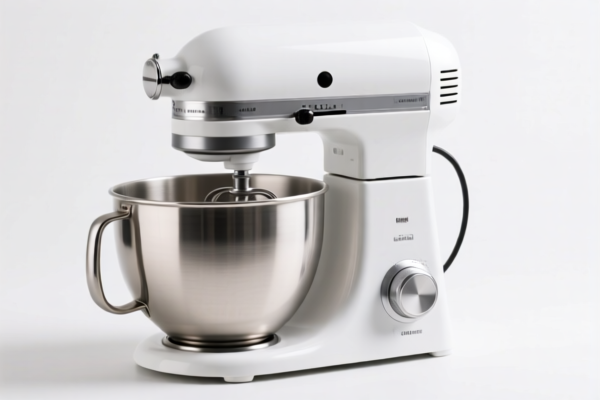
Stand Mixer
CN → US| HS Code | Tariff Rate | Origin | Destination | Doc |
|---|---|---|---|---|
| 8438100010 | 17.5% | CN | US | Official Doc |
| 8438100090 | 17.5% | CN | US | Official Doc |
| 8509400015 | 14.2% | CN | US | Official Doc |
| 8509400025 | 14.2% | CN | US | Official Doc |
| 8479820040 | 35.0% | CN | US | Official Doc |
| 8438800000 | 35.0% | CN | US | Official Doc |
Product Images



AI Analysis
🥣 Stand Mixer (Culinary & Food Prep Machines)
🌐 HS Code Reference & Customs Clearance Guide | 2026 Duty Rate Breakdown | Strategic Classification for Food Mixers
📌 1. Product Definition & Classification: Is Your Mixer "Industrial" or "Domestic"?
A Stand Mixer (Chef's Mixer) is a versatile kitchen appliance designed for mixing, kneading, and whipping dough or batters. In international trade, the classification hinges on two critical factors:
- Functionality: Is it designed for home use (countertop, low volume) or industrial food preparation (high volume, continuous operation)?
- Mechanism: Is it a standard household blender/mixer (electric hand-held or stand unit) or a specialized industrial food preparation machine?
⚠️ Key Distinction:
- If the mixer is a standard household appliance (e.g., KitchenAid-style) → Likely 8509 (Electric household appliances).
- If the mixer is a heavy-duty industrial unit (e.g., planetary mixer for bakeries) → Likely 8438 (Food preparation machinery) or 8479 (Other machinery).
📦 2. HS Code Classification Details (Based on 2026 Trade Data)
| HS Code | Product Description | Application Logic | Typical Use Case |
|---|---|---|---|
| 8438.10.00.10 | Bread Machinery | Logic: Fits "Food Preparation Machinery" specifically for bread/baking. No Material Conflict: Purely functional classification. |
Professional bakery mixers, heavy-duty dough kneaders. |
| 8438.10.00.90 | Other Food Preparation Machinery | Logic: Fits "Machinery for industrial preparation of food" & "Bakery Machinery". | Large-scale commercial food mixers not covered by specific bread codes. |
| 8479.82.00.40 | Mixing/Kneading/Blending Machines | Logic: Directly matches "Mixing, kneading or blending machines". | Heavy industrial mixers for dough, meat, or chemicals. |
| 8509.40.00.15 | Household Electric Mixers (Blin) | Logic: Falls under "Blenders/Mixers" for household appliances. | Standard countertop Stand Mixers (Home use). |
| 8509.40.00.25 | Other Food Mixers (Blenders) | Logic: Classified as "Other food mixers and processors". | Versatile mixers for home or light commercial food processing. |
| 8438.80.00.00 | Other Food/Drink Preparation Machinery | Logic: Fits "Machinery for industrial preparation of food/beverages" generally. | Industrial mixers not covered by bread-specific codes. |
🔍 Critical Reminder:
- Home Use Mixers (e.g., 5-Quart KitchenAid) should NOT be declared as "Industrial Food Machinery" (8438). They belong to 8509.
- Industrial Mixers (e.g., 20+ Quart Planetary Mixers) should NOT be declared as "Household Appliances" (8509). They belong to 8438 or 8479.
- Misclassification leads to severe duty penalties (see Tax Details below).
💰 3. 2026 Duty Rate Breakdown (Detailed Tax Analysis)
✅ Target Market: USA (US)
✅ Origin: China (CN)
✅ Effective Date: As per current USITC & Section 301 rules (2025-2026 context)
🎯 A. The "Household" Trap: HS Codes 8509.40.00.15 & 8509.40.00.25
Lowest Risk Category for Home Appliances
| Item | Details |
|---|---|
| Base Duty | 4.2% |
| Section 301 (Add'l Tariff) | 0.0% |
| Section 122 (China Tariff) | 10.0% |
| Total Effective Rate | 14.2% |
| Calculation | CIF Value × 14.2% |
| Legal Basis | USITC:8509.40 + 122 Clause: China Origin |
📌 Explanation:
- This is the most favorable rate for standard home Stand Mixers.
- Why so low? Because Section 301 (25%) does not apply to most household electric appliances in this subheading, only the specific 10% Section 122 surcharge applies.
- Strategy: Prove it is a household appliance (not industrial) to save ~20% tax compared to industrial codes.
🎯 B. The "Industrial" Penalty: HS Codes 8438.10.00.10, 8438.10.00.90, 8438.80.00.00
High Risk Category for Food Processing Machinery
| Item | Details |
|---|---|
| Base Duty | 0.0% |
| Section 301 (Add'l Tariff) | 7.5% |
| Section 122 (China Tariff) | 10.0% |
| Total Effective Rate | 17.5% |
| Calculation | CIF Value × 17.5% |
| Legal Basis | USITC:8438.10/80 + Section 301 Footnote + 122 Clause |
📌 Explanation:
- If your mixer is deemed "Industrial Food Machinery", you pay 7.5% (Section 301) + 10% (122) = 17.5%.
- Note: While Base Duty is 0%, the Section 301 surcharge (7.5%) pushes the total higher than the home appliance rate (14.2%).
🎯 C. The "Heavy Industry" Penalty: HS Code 8479.82.00.40
Highest Risk Category - Heavy Machinery
| Item | Details |
|---|---|
| Base Duty | 0.0% |
| Section 301 (Add'l Tariff) | 25.0% |
| Section 122 (China Tariff) | 10.0% |
| Total Effective Rate | 35.0% |
| Calculation | CIF Value × 35.0% |
| Legal Basis | USITC:8479.82 + Section 301 (Full 25%) + 122 Clause |
📌 CRITICAL WARNING:
- This code applies if the mixer is classified as a "Mixing, Kneading, or Blending Machine" in a general industrial context (non-food specific or heavy-duty).
- Section 301 penalty is 25%, resulting in a 35% total tax burden.
- Avoid this code unless the machine is strictly non-food industrial mixing equipment. Most "Stand Mixers" (even commercial) fit better in 8438 (17.5%).
🛠️ 4. Customs Clearance Strategy (Practical Advice)
✅ 1. Preparation Checklist (Must-Have)
| Document | Requirement | Why it Matters |
|---|---|---|
| Product Specs | ✔️ Voltage, Power, Capacity (Quarts/Liters) | Distinguishes Home vs. Industrial. |
| User Manual | ✔️ "For Home/Kitchen Use" vs. "Commercial Bakery" | Crucial for determining 8509 vs. 8438. |
| Photographs | ✔️ Clear shots of control panel, bowl, attachments | Proof of appliance type. |
| Invoice | ✔️ Must state "Stand Mixer" & "Intended Use" | Prevents arbitrary re-classification by CBP. |
| Material Data | ✔️ Stainless steel bowls, plastic housing | Confirms no "raw material" conflicts. |
✅ 2. Declaration Strategy (The Golden Rule)
🔥 "Define Usage First: Home = 14.2%, Industrial = 17.5%, Heavy = 35.0%"
| Scenario | Correct Declaration | Tax Rate | Risk Level |
|---|---|---|---|
| Standard Home Mixer (e.g., KitchenAid) | 8509.40.00.15 (Household Blender/Mixer) |
14.2% | ✅ Low |
| Commercial Bakery Mixer (Small/Medium) | 8438.10.00.90 (Food Prep Machinery) |
17.5% | ⚠️ Medium |
| Industrial Heavy Mixer (Large Scale) | 8438.80.00.00 (General Food Machinery) |
17.5% | ⚠️ Medium |
| General Industrial Mixer (Non-Food Focus) | 8479.82.00.40 (Mixing Machine) |
35.0% | ❌ High |
Pro Tip: If selling a "commercial" mixer that looks like a home mixer, try to classify under 8438 (17.5%) rather than 8479 (35%). Never use 8479 unless it's a true industrial process machine.
✅ 3. Special Case Handling
| Situation | Advice |
|---|---|
| OEM/Custom Mixers | Provide design drawings showing intended use (Bakery vs. Home). |
| Multi-Function Units | If it mixes and grinds, declare as the primary function (Mixing). |
| Accessory Sets | If sold with whisks/paddles, declare as a "Set" (Mixer + Accessories). |
| Pre-Order / Sample | Use "Sample" declaration but clarify HS Code to avoid duty shock. |
🌍 5. Global Market Comparison (2026)
| Region | Recommended HS Code | Duty Rate | Notes |
|---|---|---|---|
| 🇺🇸 USA | 8509.40.00.15 |
14.2% | Best for home mixers. Avoid 8479! |
| 🇪🇺 EU | 8509.40.00.15 |
0% (FET) | Generally no duty, but strict CE/RoHS. |
| 🇨🇳 China | 8438.10.00.10 |
5% | Domestic production is exempt; imports vary. |
| 🇯🇵 Japan | 8509.40.00.15 |
0% | Low duty, PSE certification required. |
| 🇦🇺 Australia | 8509.40.00.15 |
5% | Standard appliance rate. |
📌 Conclusion:
- USA is the most complex market due to Section 301 and 122 clauses.
- Avoid 8479 unless absolutely necessary (35% tax is a killer).
- Prove "Household" intent to lock in the 14.2% rate for standard mixers.
📌 6. Common Pitfalls & Lessons Learned
❌ Mistake 1: Declaring a Commercial Mixer as 8509 (Home Appliance).
👉 Consequence: CBP rejects, demands proof of industrial use, delays shipment, or reclassifies to 17.5% + penalties.
❌ Mistake 2: Declaring a Standard Home Mixer as 8438 (Industrial).
👉 Consequence: Unnecessary 17.5% tax (vs 14.2%), losing price competitiveness.
❌ Mistake 3: Using vague terms like "Kitchen Machine" without specifying 8509 vs 8438.
👉 Consequence: Manual inspection required, high risk of audit.
✅ Correct Approach:
"Stand Mixer, Countertop, 5-Quart, Home Use, 120V, Model XYZ, FCC Certified" → 8509.40.00.15
"Planetary Mixer, 20-Quart, Commercial Bakery Use, 230V, Model ABC" → 8438.10.00.90
🎯 7. Final Verdict: Strategic Summary
🎯 Remember the Formula:
🔹 Home Use =
8509→ 14.2% (Safest, Lowest)
🔹 Bakery/Industrial =8438→ 17.5% (Moderate)
🔹 Heavy General Mixer =8479→ 35.0% (Avoid if possible!)
📌 Action Item:
📞 Verify your product's "Intended Use" immediately.
🚀 Submit pre-classification request (Advance Ruling) if the product is borderline (Commercial vs. Home).
💼 Ensure your Commercial Invoice clearly states "Home Use" or "Commercial Use" to match the HS Code.
✨ Precision Classification = Cost Savings!
💼 Your Stand Mixer deserves the right code – don't let a wrong digit cost you 20% in taxes!
Customer Reviews
About HS Code Classification
The Harmonized System (HS) is an internationally standardized nomenclature developed by the World Customs Organization (WCO) to classify traded products. Over 200 countries use the HS system as the basis for customs tariffs, trade statistics, and import/export regulations.
Each HS code follows a hierarchical structure:
- Chapter (2 digits) — Broad category of goods (e.g., Chapter 84: Machinery and Mechanical Appliances)
- Heading (4 digits) — More specific grouping within the chapter
- Subheading (6 digits) — Internationally standardized breakdown, used by all WCO member countries
- National subdivisions (8-10 digits) — Country-specific extensions for further classification, such as US HTSUS 10-digit codes
Correct HS code classification is essential for smooth customs clearance, accurate duty payment, and compliance with trade regulations. Misclassification can lead to customs delays, overpayment of duties, or penalties.
When importing from CN to US, the applicable tariff rates may include:
- Most-Favored-Nation (MFN) rate — The standard duty rate applied to WTO members
- General rate — Applied to countries without trade agreements
- Trade remedy duties — Additional tariffs such as Section 301 (anti-dumping), Section 232 (national security), or countervailing duties
The information provided on this page is for reference purposes only. For official classification, please consult with your local customs authority or a licensed customs broker.