Standard Format Film Roll
CN → US| HS Code | Tariff Rate | Origin | Destination | Doc |
|---|---|---|---|---|
| 3706106030 | 35.0% | CN | US | Official Doc |
| 3704000000 | 35.0% | CN | US | Official Doc |
| 3702560030 | 35.0% | CN | US | Official Doc |
| 3702530030 | 38.7% | CN | US | Official Doc |
| 3702540030 | 38.7% | CN | US | Official Doc |
Product Images
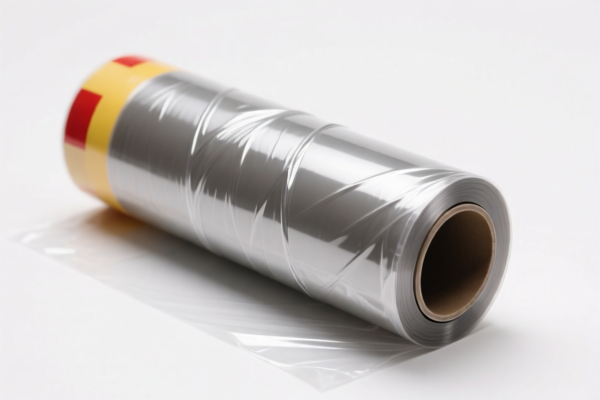

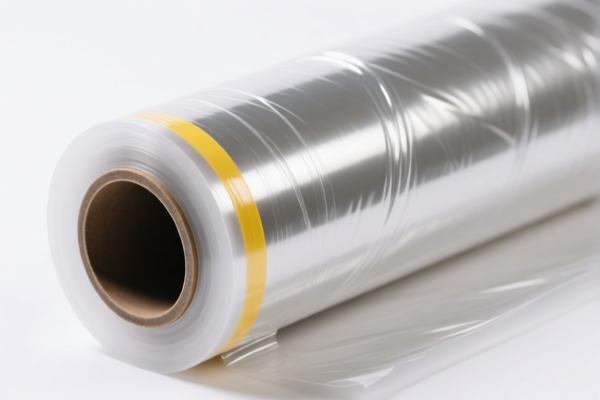
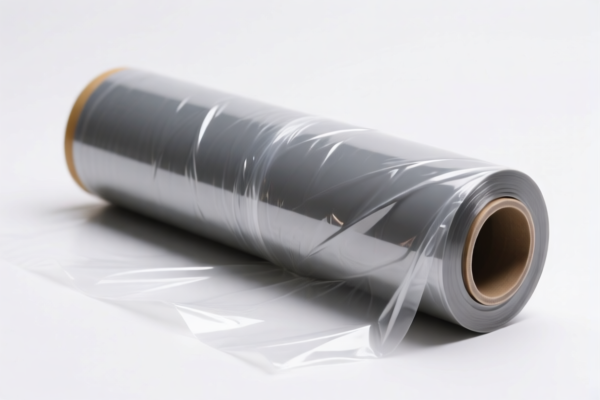
AI Analysis
🎞️ Standard Format Film Roll (Standard Movie Negative/Positive Film)
🌐 HS Code Reference & Customs Clearance Guide | 2026 Latest Tariff Analysis | Professional Clearance Strategy
📌 I. Product Definition & Classification: Do You Truly Understand "Standard Format Film Roll"?
Standard Format Film Rolls are the physical backbone of the cinematic industry, serving as the medium for capturing and distributing motion pictures. In international trade, these are not generic "plastic strips" but highly specialized photosensitive materials. They are strictly categorized under Chapter 37 of the Harmonized System.
The classification depends entirely on the state of the film (raw, exposed, or finished) and its specific format (width, roll type).
⚠️ Key Distinction Points:
- Finished Positive Film (Reversal): Used for distribution copies. Classified under 3706.10.
- Unexposed Photo Materials: Broad category for raw film. Classified under 3704.00.
- Raw Sensitized Roll Film (Negative): The base material for shooting. Classified under 3702.5x.
- Width Matters: 35mm and specific widths have different sub-headings (e.g., .53, .54, .56).
📦 II. HS Code Classification Details (2026 Latest Tariff Authority Comparison)
| HS Code | Product Description | Application Scenario | Tax Detail Breakdown |
|---|---|---|---|
3706.10.60.30 |
Standard Motion Picture Positive Film | For Distribution Copies: Finished positive film used for projecting movies in theaters. Matches 35mm+ material specs. | Total: 35.0% • Base: 0.0% • Add'l (Sec 301): 25.0% • 122 Clause: 10% |
3704.00.00.00 |
Standard Motion Picture Positive Film | Already Exposed but Unfixed: Fits the category of "exposed but undeveloped photographic materials." | Total: 35.0% • Base: 0.0% • Add'l (Sec 301): 25.0% • 122 Clause: 10% |
3702.56.00.30 |
Standard Motion Picture Positive Film | Raw Sensitized Roll Film: Specifically for film purposes, in roll form. | Total: 35.0% • Base: 0.0% • Add'l (Sec 301): 25.0% • 122 Clause: 10% |
3702.53.00.30 |
Film Roll, Standard Width | Sensitized Roll Film: In roll form, used for photosensitive materials. Note: Higher Base Rate. | Total: 38.7% • Base: 3.7% • Add'l (Sec 301): 25.0% • 122 Clause: 10% |
3702.54.00.30 |
Film Roll, Standard Width | Sensitized Roll Film: Exposed but undeveloped state. Specific to 35mm standard width features. | Total: 38.7% • Base: 3.7% • Add'l (Sec 301): 25.0% • 122 Clause: 10% |
🔍 Critical Insight:
- Codes3706,3704, and3702.56share a 35.0% total tax rate.
- Codes3702.53and3702.54incur a 38.7% total tax rate due to a 3.7% Base Tariff.
- Why the difference? The 3.7% base often applies to specific sub-categories of raw sensitized film that do not meet the strict "Motion Picture Positive" definition of 3706, or fall under broader "other" categories in 3702.
💰 III. 2026 Latest Tariff Rate Breakdown (Including Surcharges & Policy Add-ons)
✅ Applicable Country: United States (US)
✅ Origin: China (CN)
✅ Effective Date: Ongoing (Based on current Trade War & Section 122 policies)
🎯 1. The "35% Bracket" (3706.10.60.30, 3704.00.00.00, 3702.56.00.30)
| Item | Content |
|---|---|
| Base Tariff Rate | 0.0% (Ad Valorem) |
| USITC Supplementary Tariff (Section 301) | +25.0% |
| Section 122 Tariff | +10.0% |
| Total Effective Rate | 35.0% |
| Tax Calculation | CIF Value × 35% |
| De Minimis Eligibility | ❌ No (deny_de_minimis) |
| Legal Basis Path | USITC:3706.10.60.30 → FOOTNOTE:301_Applicable → Section 122 Authority |
📌 Explanation:
- The 25% comes from the Section 301 list targeting Chinese goods.
- The 10% is specifically attributed to Section 122 (often related to national security or specific trade remedies).
- No base duty means the tax is purely punitive/additive.
🎯 2. The "38.7% Bracket" (3702.53.00.30, 3702.54.00.30)
| Item | Content |
|---|---|
| Base Tariff Rate | 3.7% (Ad Valorem) |
| USITC Supplementary Tariff (Section 301) | +25.0% |
| Section 122 Tariff | +10.0% |
| Total Effective Rate | 38.7% |
| Tax Calculation | CIF Value × 38.7% |
| De Minimis Eligibility | ❌ No (deny_de_minimis) |
| Legal Basis Path | USITC:3702.53.00.30 → Base Duty Schedule → FOOTNOTE:301_Applicable → Section 122 |
📌 Note:
- Even though the base rate is low (3.7%), the addition of 25% + 10% pushes the total higher than the 35% bracket.
- 3702.54 specifically highlights 35mm standard width. If your film is 35mm and falls under "exposed/undeveloped" or specific "sensitized" rules not covered by 3706, it may land here.
🛠️ IV. Customs Clearance Operational Advice (Practical Pitfall Avoidance Guide)
✅ 1. Required Documentation Checklist (Non-Negotiable)
| Document | Mandatory | Explanation |
|---|---|---|
| ✅ Product Spec Sheet | ✔️ | Must explicitly state: "Motion Picture Film," "35mm" (or other width), "Sensitized," "Positive/Negative." |
| ✅ Composition Analysis | ✔️ | Detail the emulsion type (Silver Halide, etc.) to confirm Chapter 37 classification. |
| ✅ Commercial Invoice | ✔️ | Must match the HS Code exactly. Do not use generic terms like "Plastic Roll." |
| ✅ Letter of Indemnity (LOI) | ✔️ | Confirming the goods are not for military/espionage use (relevant for Section 122 scrutiny). |
| ✅ Country of Origin Cert | ✔️ | Critical for applying Section 301 & 122 surcharges. |
✅ 2. Declaration Tips (Key Mantras)
🔥 "Define State, Define Width, Avoid Ambiguity!"
| Scenario | Correct Declaration | Wrong Practice |
|---|---|---|
| Finished Positive Film | "35mm Standard Motion Picture Positive Film, for Distribution" → 3706.10.60.30 |
Calling it "Raw Film" → Risk of misclassification to 3702 (38.7%). |
| Unexposed Raw Film | "Sensitized Film in Rolls, 35mm, for Cinematography" → Check 3702.53 vs 3702.56. |
Vague term "Camera Film" → Delays for customs inspection. |
| Exposed but Unfixed | "Photographic Material, Exposed but Not Fixed, 35mm" → 3704.00.00.00 or 3702.54. |
Labeling as "Waste Film" → Potential rejection or hazardous goods handling. |
| Mixed Widths | Separate declarations for 35mm vs 70mm if HS codes differ significantly. | Mixing widths in one line item → Customs may audit and assign highest applicable rate. |
✅ 3. Special Situation Handling
| Situation | Handling Advice |
|---|---|
| OEM Custom Film | Provide contract specs. If it's a unique format not listed in standard 3706, it may fall to general 3702 codes (higher base rate). |
| Film with Developer | If shipped with chemicals, it might be considered a "set." Declare separately to avoid mixed classification errors. |
| Digital Alternatives? | Ensure you are not importing "Digital Cinema Packages" (DCPs) which are 8523 or 8517, not 370x. This data is strictly for analog film. |
🌍 V. Global Market Comparison (2026 Latest)
| Country/Region | Recommended HS Code | Tariff (China Origin) | Certification | Note |
|---|---|---|---|---|
| 🇺🇸 USA | 3706.10.60.30 / 3702.53.00.30 |
35.0% - 38.7% | No specific tech cert, but strict origin verification | High punitive tariff. No de minimis. |
| 🇨🇳 China | 3706.10 / 3702.53 |
0% - 3.7% | CCC (if applicable for domestic sales) | Low entry barrier, but export controls may apply. |
| 🇪🇺 EU | 3706.10 / 3702.53 |
~4% - 5% | CE (if part of a device), RoHS | No Section 301/122 equivalent. Standard MFN rates apply. |
| 🇬🇧 UK | 3706.10 / 3702.53 |
~4% - 5% | UKCA | Post-Brexit tariffs similar to EU. |
| 🇯🇵 Japan | 3706.10 / 3702.53 |
0% - 3% | PSE (if part of equipment) | Favorable JETPA/CEPA rates if applicable. |
📌 Conclusion:
- The US market is the most expensive for importing Chinese film due to the 25% (301) + 10% (122) surcharge on top of even minimal base duties.
- Total cost burden: 35-39%.
- For non-US markets, tariffs drop significantly (often <5%), making EU/Asia/Japan more attractive for importers sourcing from China.
📌 VI. Common Errors & Pitfall Guide (Lessons Learned)
❌ Error 1: Declaring "Positive Film" as "General Plastic Roll"
👉 Consequence: Misclassification to Chapter 39 (Plastics). If discovered, heavy penalties + back taxes.
❌ Error 2: Ignoring the "Exposed vs. Unexposed" status
👉 Consequence:
- If you declare unexposed film (3702) as finished positive film (3706), you might face inventory audits.
- If you declare exposed film (3704) as raw material, you risk hazardous material flags if chemicals are present.
❌ Error 3: Underestimating the "122 Clause"
👉 Consequence: Even if Section 301 (25%) is exempted or negotiated, the 10% Section 122 often remains. Do not plan for 0% duty.
❌ Error 4: Confusing 35mm with "Standard Width" in 3702.53 vs 3702.54
👉 Consequence:
- 3702.54 is specific to 35mm exposed/undeveloped.
- 3702.53 is broader.
- Using the wrong sub-code can lead to customs hold for re-verification.
✅ Correct Approach:
"35mm Standard Motion Picture Positive Film, Sensitized, in Rolls, for Theatrical Distribution" →
3706.10.60.30(35% Total).
🎯 VII. Conclusion: Precision in Classification Saves Profit!
🎯 Remember the Mantra:
🔹 "Positive for Projection (3706), Raw for Shooting (3702).
🔹 Base 0% or 3.7%, Plus 35% Total in the US.
🔹 De Minimis is Dead for Film, Plan Your Cash Flow!"
📌 Pro Tip:
If you are importing large volumes (> $200k annually), consider applying for an Exclusion under Section 301 if eligible, though Section 122 exclusions are rarer.
Always request a Pre-Ruling from US Customs (CBP) for high-value shipments to lock in the 35.0% vs 38.7% distinction.
📣 Immediate Action:
📞 Consult a licensed customs broker.
📄 Provide your film's Emulsion Data Sheet and Usage Intent.
🚀 Avoid the 38.7% trap by correctly identifying your film state!
✨ Professional Clearance Starts with Accurate Classification!
💼 Every percentage point of tax impact is a percentage point of your margin!
Customer Reviews
About HS Code Classification
The Harmonized System (HS) is an internationally standardized nomenclature developed by the World Customs Organization (WCO) to classify traded products. Over 200 countries use the HS system as the basis for customs tariffs, trade statistics, and import/export regulations.
Each HS code follows a hierarchical structure:
- Chapter (2 digits) — Broad category of goods (e.g., Chapter 84: Machinery and Mechanical Appliances)
- Heading (4 digits) — More specific grouping within the chapter
- Subheading (6 digits) — Internationally standardized breakdown, used by all WCO member countries
- National subdivisions (8-10 digits) — Country-specific extensions for further classification, such as US HTSUS 10-digit codes
Correct HS code classification is essential for smooth customs clearance, accurate duty payment, and compliance with trade regulations. Misclassification can lead to customs delays, overpayment of duties, or penalties.
When importing from CN to US, the applicable tariff rates may include:
- Most-Favored-Nation (MFN) rate — The standard duty rate applied to WTO members
- General rate — Applied to countries without trade agreements
- Trade remedy duties — Additional tariffs such as Section 301 (anti-dumping), Section 232 (national security), or countervailing duties
The information provided on this page is for reference purposes only. For official classification, please consult with your local customs authority or a licensed customs broker.