Standing Pole
CN → US| HS Code | Tariff Rate | Origin | Destination | Doc |
|---|---|---|---|---|
| 7216990090 | 35.0% | CN | US | Official Doc |
| 7604105000 | 13.0% | CN | US | Official Doc |
| 7308200090 | 85.0% | CN | US | Official Doc |
| 7604101000 | 40.0% | CN | US | Official Doc |
Product Images
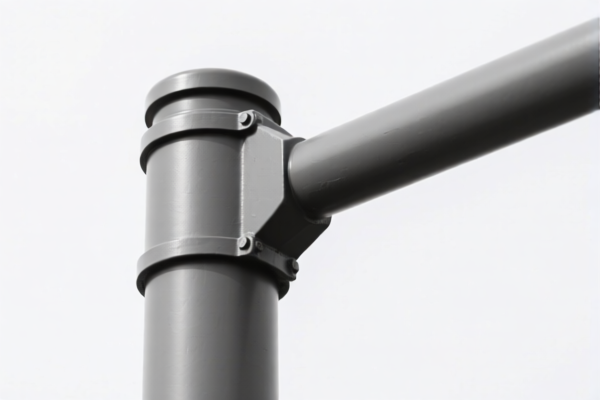
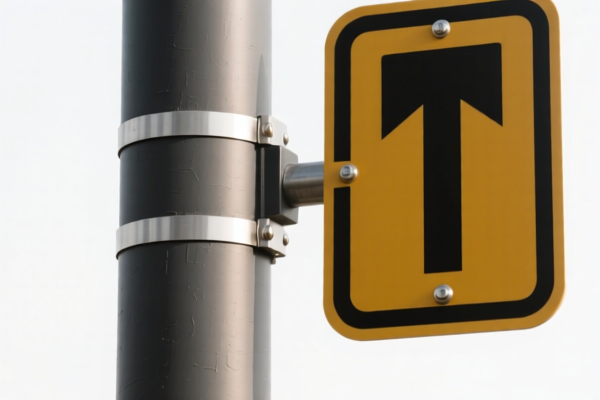
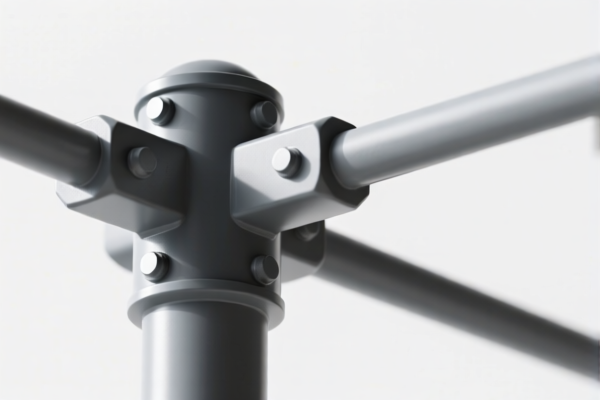
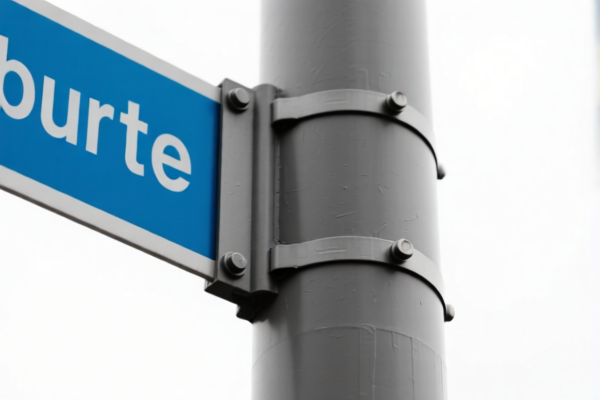
AI Analysis
🚩 Standing Poles (Structural Supports, Masts & Posts)
🌐 HS Code Reference & Customs Clearance Guide | 2026 Latest Tariff Analysis | Professional Clearance Strategy
📌 I. Product Definition: What Exactly is a "Standing Pole"?
A "Standing Pole" is a broad term in international trade, generally referring to vertical structural components used for support, signaling, or mounting purposes. In customs classification, the critical factor determining the HS Code is Material Composition (Iron/Steel vs. Aluminum) and Form (Structural Section vs. Simple Bar/Post).
These items typically fall into two main categories: 1. Structural Components: Lattices, towers, and complex桅杆 (masts) made of steel/iron. 2. Profile/Post Products: Simple vertical posts, often made of aluminum or basic steel sections, used for lighting, fencing, or signage.
⚠️ Key Distinction Point:
- If the item is a complex lattice structure or tower section → It is classified under Structural Works (Chapter 73).
- If the item is a simple solid or hollow post/profile made of Aluminum → It is classified under Aluminum Profiles (Chapter 76).
- If the item is a simple solid or hollow post/profile made of Iron/Steel → It is classified under Steel Sections (Chapter 72).
📦 II. HS Code Classification Details (Based on Provided Data)
| HS Code | Product Description | Material & Form | Application Scenario |
|---|---|---|---|
| 7308.20.00.90 | Other structures and parts of structures (Iron/Steel) | Iron/Steel, Structural components (Towers, Lattice Masts, Grids) | Communication towers, light poles with complex bases, structural frameworks |
| 7604.10.10.00 | Aluminum profiles and sections | Non-alloy Aluminum, Profile/Post shape | Decorative poles, light posts, signage supports made of aluminum |
| 7216.99.00.90 | Other sections and profiles of iron or non-alloy steel | Iron/Non-alloy Steel, Section/Bar shape | Simple steel posts, fence posts, basic structural bars |
| 7604.10.50.00 | Other profiles and sections of aluminum | Non-alloy Aluminum, Bar/Post shape | Simple aluminum rods, thin aluminum posts |
🔍 Critical Note:
- 7308.20.00.90 applies to structural items (like towers/lattices). It is not for simple pipes but for "structures."
- 7604.10.10.00 vs 7604.10.50.00: Both are aluminum, but 10.10 often refers to specific profile shapes, while 10.50 is a catch-all for other aluminum bars/profiles. The tax burden differs significantly.
- 7216.99.00.90: For steel "other sections." If the pole is a simple solid bar, it might technically fit here, but often steel structural poles go to 7308 if they are part of a larger structure. The data suggests this code for "metal (iron/steel) sections."
💰 III. 2026 Tariff Rate Breakdown (Detailed Tax Clauses)
✅ Applicable Country: United States (US)
✅ Origin: China (CN) (Implied by "Section 122" and typical high-tariff context)
✅ Effective Date: Current rates apply for imports from China.
🎯 1. 7308.20.00.90 —— Iron/Steel Structures (Towers & Masts)
Summary: Based on common sense, materials are iron/steel; belongs to other structural parts under towers and lattice masts.
| Item | Content |
|---|---|
| Base Tariff | 0.0% |
| Additional Tariff (Section 301) | +25.0% |
| Section 232 Tariff (Steel/Aluminum) | +50.0% |
| Total Tax Rate | 75.0% |
| Tax Detail | Base (0%) + Section 301 (25%) + Section 232 Steel (50%) = 75% |
| Key Policy | 122 Clause: Specifically targets steel and aluminum products. |
📌 Explanation:
- This is the most heavily taxed category due to the Section 232 national security tariffs on steel.
- Even though the base tariff is 0%, the 50% steel tariff + 25% Section 301 tariff creates a massive barrier.
- Total Impact: For every $100 of value, $75 is paid in duties. This is extremely high and often prohibitive for low-margin goods.
🎯 2. 7604.10.10.00 —— Aluminum Profiles (Posts)
Summary: Vertical poles often used in aluminum profile processing; form falls under the profile category.
| Item | Content |
|---|---|
| Base Tariff | 5.0% |
| Additional Tariff (Section 301) | +25.0% |
| Section 232 Tariff | +10.0% |
| Total Tax Rate | 40.0% |
| Tax Detail | Base (5%) + Section 301 (25%) + Section 232 Aluminum (10%) = 40% |
| Key Policy | 122 Clause: Applies to aluminum products. |
📌 Explanation:
- Aluminum also faces Section 232 tariffs, but at 10% instead of 50%.
- The base tariff is higher (5% vs 0%).
- Total Impact: 40% total duty. While still high, it is significantly lower than the steel structural option.
🎯 3. 7216.99.00.90 —— Other Steel Sections/Profiles
Summary: Material is metal (iron or non-alloy steel); form is section/bar; fits "other" category description.
| Item | Content |
|---|---|
| Base Tariff | 0.0% |
| Additional Tariff (Section 301) | +25.0% |
| Section 232 Tariff (Steel) | +10.0% (Note: Data lists 10% for this specific code) |
| Total Tax Rate | 35.0% |
| Tax Detail | Base (0%) + Section 301 (25%) + Section 232 Steel (10%) = 35% |
| Key Policy | 122 Clause: Steel tariffs. |
📌 Explanation:
- This code applies to "other" steel sections.
- The Section 232 rate here is listed as 10% (likely due to specific product form or exclusion, unlike the 50% for structural steel).
- Total Impact: 35% total duty. This is the most cost-effective steel option in the dataset.
🎯 4. 7604.10.50.00 —— Other Aluminum Profiles/Bars
Summary: Form is bar/post type; material is non-alloy aluminum.
| Item | Content |
|---|---|
| Base Tariff | 3.0% |
| Additional Tariff (Section 301) | 0.0% (Note: Data lists 0% for Section 301 on this code) |
| Section 232 Tariff | 10.0% |
| Total Tax Rate | 13.0% |
| Tax Detail | Base (3%) + Section 301 (0%) + Section 232 Aluminum (10%) = 13% |
| Key Policy | 122 Clause: Aluminum tariffs. |
📌 Explanation:
- This is the BEST option in terms of cost.
- Section 301 Tariff is 0% for this specific sub-code.
- Only the 10% Section 232 Aluminum tariff applies.
- Total Impact: 13% total duty. Ideal for simple aluminum posts.
🛠️ IV. Customs Clearance Practical Advice (Avoid Pitfalls)
✅ 1. Preparation Checklist (Mandatory)
| Document | Must Provide | Description |
|---|---|---|
| ✅ Product Specification | ✔️ | Dimensions, material grade (e.g., 6061 Aluminum, Q235 Steel), surface treatment (galvanized, painted). |
| ✅ Photos (Clear) | ✔️ | Show cross-section, end views, and any markings/branding. Crucial for distinguishing "Profile" vs "Structure." |
| ✅ Commercial Invoice | ✔️ | Clearly state "Standing Pole," material, and HS Code. |
| ✅ Packing List | ✔️ | Weight and dimensions per package. |
| ✅ Material Certificate | ✔️ | Proof of alloy composition (especially for Aluminum to confirm "Non-alloy" status). |
✅ 2. Declaration Tips (Key Mantra)
🔥 “Material First, Form Second; Aluminum Saves Tax, Steel Needs Caution!”
| Scenario | Correct HS Code | Wrong Approach | Consequence |
|---|---|---|---|
| Complex Steel Tower/Lattice | 7308.20.00.90 |
Declaring as simple "Steel Bar" | 75% Tax (if correctly classified as structure) |
| Simple Aluminum Post | 7604.10.50.00 |
Declaring as 7604.10.10.00 |
Higher Tax (40% vs 13%) |
| Simple Steel Bar/Post | 7216.99.00.90 |
Declaring as 7308.20.00.90 |
Higher Tax (35% vs 75%) |
| Aluminum Profile Post | 7604.10.10.00 |
Declaring as 7604.10.50.00 |
Risk of Correction (if it doesn't fit "other") |
Strategic Advice:
- If the pole is simple (not a lattice tower), try to classify it as a Section/Profile rather than a Structure.
- Aluminum is king for cost savings here:7604.10.50.00at 13% is vastly superior to steel options.
- If you must use steel,7216.99.00.90(35%) is better than7308.20.00.90(75%).
✅ 3. Special Handling Cases
| Case | Handling Suggestion |
|---|---|
| Galvanized Steel Poles | Ensure the invoice specifies "Hot-dip Galvanized." Section 232 applies regardless of treatment. |
| Aluminum with Coating/Paint | Still considered Aluminum Profile. Base material determines chapter. |
| Mixed Packaging (Steel Base + Aluminum Top) | Do NOT split. Declare as the primary component or the whole set under the most applicable code. Risk of misclassification if split. |
| Custom Shapes | If the cross-section is unique, it is definitely a "Profile" (7216 or 7604), not a "Structure" (7308). |
🌍 V. Global Market Comparison (2026 Context)
| Market | Recommended HS Code (Aluminum Post) | Tax Rate (China Origin) | Notes |
|---|---|---|---|
| 🇺🇸 USA | 7604.10.50.00 |
13% | Best option due to 0% Section 301. |
| 🇺🇸 USA | 7216.99.00.90 (Steel) |
35% | High, but better than structural steel. |
| 🇺🇸 USA | 7308.20.00.90 (Steel Structure) |
75% | Avoid if possible. Extremely high. |
| 🇪🇺 EU | Check Chapter 73/76 | Varies (usually 0-5%) | No Section 232/301 equivalents. |
| 🇨🇳 China | Same HS Codes | 5-7% | Low tariff, no US-style surcharges. |
📌 Conclusion:
- The US market is harsh on steel and aluminum from China due to Section 232 and 301.
- Aluminum Profile (7604.10.50.00) is the clear winner for cost efficiency at 13%.
- Steel Structures (7308.20.00.90) are prohibitive at 75%.
📌 VI. Common Errors & Pitfalls (Lessons Learned)
❌ Error 1: Classifying a simple aluminum pole as a "Steel Structure" to save on "structural" duties.
👉 Result: Misclassification penalty + 75% tax applied incorrectly or rejected.
❌ Error 2: Not distinguishing between 7604.10.10.00 (40%) and 7604.10.50.00 (13%).
👉 Result: Overpaying 27% duty unnecessarily by choosing the wrong aluminum sub-code.
❌ Error 3: Declaring "Standing Pole" without material specification.
👉 Result: Customs will default to the highest risk category (often Steel Structure) or request samples, causing delays.
❌ Error 4: Assuming Section 232 doesn't apply to "finished" poles.
👉 Result: It does apply. Section 232 targets raw and semi-finished steel/aluminum products, including profiles.
✅ Correct Practice:
"Aluminum Standing Pole, 6061-T6 Alloy, Anodized Finish, 100mm Diameter, Hollow Profile, Model XYZ"
HS Code:7604.10.50.00
Tax: 13%
🎯 VII. Conclusion: Professional Declaration, Cost Optimization!
🎯 Remember the Mantra:
🔹 "Aluminum Profile is Gold (13%), Steel Bar is Silver (35%), Steel Tower is Lead (75%)."
🔹 "HS Code determines profit margin; 27% difference is huge!"
📌 Pro Tip:
If your product is Aluminum, always verify if it fits 7604.10.50.00 (Other Profiles) rather than 7604.10.10.00 to save 27%.
If Steel, avoid 7308 (Structures) at all costs. Use 7216 (Sections) if possible.
📣 Immediate Action:
📞 Consult a customs broker to confirm the cross-sectional shape of your pole.
📸 Provide clear photos of the end profile.
🚀 Optimize your supply chain to Aluminum or Steel Sections for the US market to survive the 2026 tariff landscape.
✨ Professional Customs Clearance Starts with Accurate Classification!
💼 Every percentage point of tax saved is profit earned!
Customer Reviews
About HS Code Classification
The Harmonized System (HS) is an internationally standardized nomenclature developed by the World Customs Organization (WCO) to classify traded products. Over 200 countries use the HS system as the basis for customs tariffs, trade statistics, and import/export regulations.
Each HS code follows a hierarchical structure:
- Chapter (2 digits) — Broad category of goods (e.g., Chapter 84: Machinery and Mechanical Appliances)
- Heading (4 digits) — More specific grouping within the chapter
- Subheading (6 digits) — Internationally standardized breakdown, used by all WCO member countries
- National subdivisions (8-10 digits) — Country-specific extensions for further classification, such as US HTSUS 10-digit codes
Correct HS code classification is essential for smooth customs clearance, accurate duty payment, and compliance with trade regulations. Misclassification can lead to customs delays, overpayment of duties, or penalties.
When importing from CN to US, the applicable tariff rates may include:
- Most-Favored-Nation (MFN) rate — The standard duty rate applied to WTO members
- General rate — Applied to countries without trade agreements
- Trade remedy duties — Additional tariffs such as Section 301 (anti-dumping), Section 232 (national security), or countervailing duties
The information provided on this page is for reference purposes only. For official classification, please consult with your local customs authority or a licensed customs broker.