Stanley Ice Cube Tray
CN → US| HS Code | Tariff Rate | Origin | Destination | Doc |
|---|---|---|---|---|
| 3926909989 | 22.8% | CN | US | Official Doc |
| 3926909910 | 22.8% | CN | US | Official Doc |
Product Images
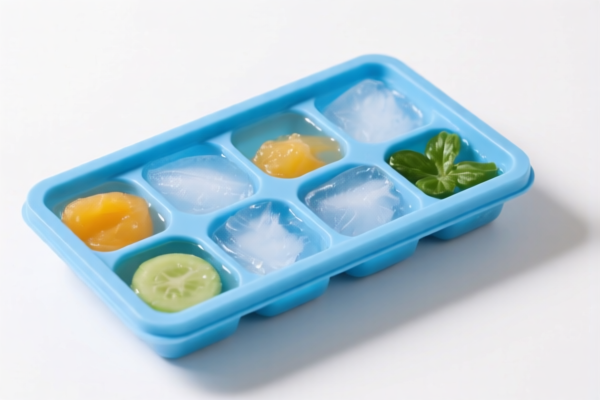
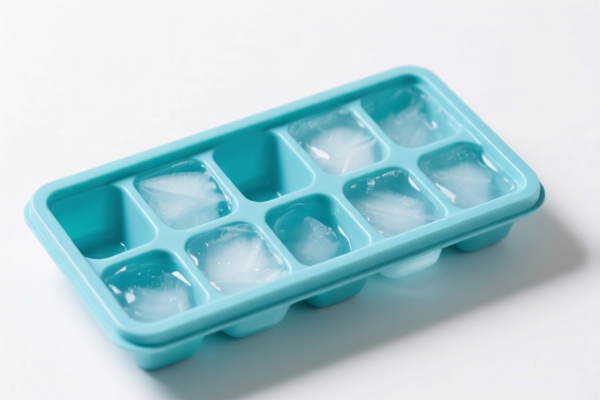
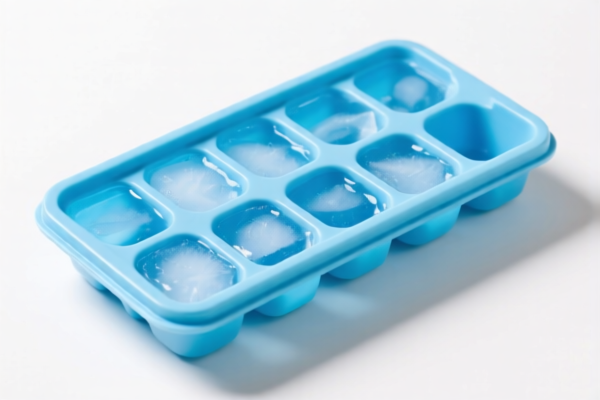
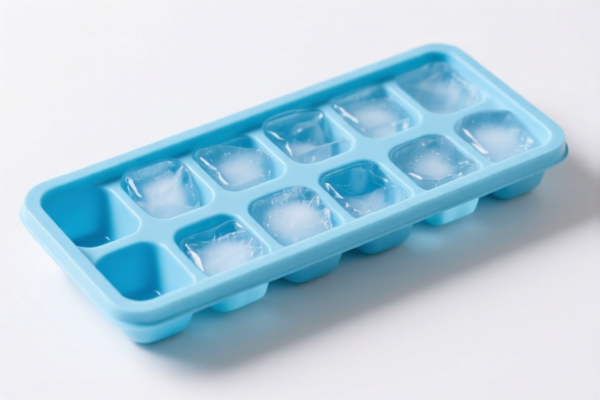
AI Analysis
🧊 Stanley Ice Cube Tray
🌐 HS Code Reference & Customs Clearance Guide | 2024/2025 Latest Tariff Analysis | Professional Compliance Strategy
📌 Part I: Product Definition & Classification: Is it Really Just a "Tray"?
The Stanley Ice Cube Tray is a specialized kitchen accessory designed for freezing water into ice cubes. In international trade, plastic articles are strictly categorized based on their material composition and intended use. While often perceived as simple kitchenware, customs authorities scrutinize these items under Chapter 39 (Plastics and Articles Thereof).
The key distinction lies in whether the item is classified as general "household articles" or specific "laboratory ware" (though ice trays rarely fall under laboratory ware, the HS code structure requires careful exclusion or inclusion based on the 10-digit suffix).
⚠️ Critical Distinction:
- If the item is made of plastics (ABS, Tritan, PP, etc.) and is not laboratory equipment, it falls under Heading 3926.
- Within Heading 3926, it is further细分 (sub-divided) into "Other articles of plastics" or "Other."
- Note: The provided data indicates two specific US HTS codes for "Other articles of plastics... Other" and "Other: Other Laboratory ware." Since an ice cube tray is not laboratory ware, it must be classified under the general "Other" category unless specific exclusions apply.
📦 Part II: HS Code Classification Details (Latest Tariff Alignment)
Based on the provided data (<DATA>), here are the relevant HS Codes for plastic articles similar to an Ice Cube Tray:
| HS Code | Product Description | Applicability | Key Feature |
|---|---|---|---|
3926.90.99.89 |
Other articles of plastics and articles of other materials of headings 3901 to 3914: Other: Other: Other | ✅ Correct for Ice Cube Tray | General plastic household/kitchen articles not specified elsewhere. |
3926.90.99.10 |
Other articles of plastics... Other: Other Laboratory ware | ❌ Incorrect for Ice Cube Tray | Specifically for lab equipment (beakers, flasks). Ice trays are not lab ware. |
🔍 Key Insight:
- Stanley Ice Cube Trays are typically made of durable plastics (like BPA-free Tritan or ABS).
- They do not fit the description of "Laboratory ware" (3926.90.99.10).
- Therefore, they correctly fall under3926.90.99.89("Other... Other").
- Misclassifying as lab ware (...10) is a common error that may trigger scrutiny due to different tax treatments.
💰 Part III: 2024/2025 Tariff Rate Breakdown (Including Section 301 & IEEPA Surcharges)
✅ Applicable Country: United States (US)
✅ Country of Origin: China (CN) (Note: Many Stanley products are manufactured in China or other countries; check COO. This analysis assumes CN origin for maximum tax impact.)
✅ Effective Date: Current Trade Policies (Section 301 & IEEPA)
🎯 1. 3926.90.99.89 —— Plastic Ice Cube Tray (General Household/Kitchen)
| Item | Detail |
|---|---|
| Base Duty Rate | 5.3% |
| Section 301 Surcharge | +7.5% |
| Total Tax Rate | 12.8% |
| Tax Calculation | CIF Value × 12.8% |
| De Minimis Exemption | ❌ Not Eligible for values > $800 (if shipped via 86110) |
| Legal Authority | HTSUS 3926.90.99.89 + Section 301 Footnotes |
📌 Explanation:
- Base Duty (5.3%): The standard Most Favored Nation (MFN) rate for "Other plastic articles."
- Section 301 Surcharge (7.5%): Applied to Chinese-origin plastic goods under the trade war tariffs.
- Total (12.8%): This is the effective landed duty cost for a China-made Stanley Ice Cube Tray.
- ⚠️ Warning: If the tray is made of silicone (some Stanley products use silicone liners), it may fall under Chapter 40 (Rubber). However, the provided data only covers plastics (Chapter 39). If silicone, please re-evaluate under HTS 4016.93.50 or similar. Based strictly on<DATA>, we assume plastic.
🎯 2. 3926.90.99.10 —— Laboratory Ware (For Exclusion Only)
| Item | Detail |
|---|---|
| Base Duty Rate | 0.0% |
| Surcharge | 0.0% |
| Total Tax Rate | 0.0% |
| Eligibility | N/A for Consumer Ice Trays |
📌 Note:
- This code has a 0% tax rate, which is attractive.
- However, you cannot classify an Ice Cube Tray under this code unless it is explicitly manufactured and marketed as scientific laboratory equipment (e.g., cryogenic sample storage).
- Misclassification here is considered fraudulent and can lead to severe penalties, seizure, and back taxes.
🛠️ Part IV: Customs Clearance Practical Advice (Avoiding Pitfalls)
✅ 1. Required Documentation Checklist
| Document | Mandatory? | Notes |
|---|---|---|
| ✅ Commercial Invoice | ✔️ | Must clearly state: "Plastic Ice Cube Tray, Model XYZ, Material: Tritan/ABS" |
| ✅ Packing List | ✔️ | Include net weight/gross weight |
| ✅ Product Photos | ✔️ | Show material texture (plastic vs. silicone) and any labeling |
| ✅ Country of Origin Certificate | ✔️ | Critical for determining Section 301 applicability |
| ✅ Material Declaration | ✔️ | Confirm if made of Plastic (Chapter 39) or Silicone/Rubber (Chapter 40) |
⚠️ Critical Note on Material:
Many "Stanley" branded ice trays use silicone inserts.
- If Silicone: Does NOT fall under3926.90.99.89.
- If Plastic: Falls under3926.90.99.89with 12.8% tax.
The provided<DATA>only covers plastic codes. If your product is silicone, you must find the correct rubber code (e.g., 4016.93) outside this dataset.
✅ 2. Classification Strategy (Key Rules)
| Scenario | Correct HS Code (Per <DATA>) |
Tax Rate | Reason |
|---|---|---|---|
| Plastic Ice Tray | 3926.90.99.89 |
12.8% | General plastic article, not lab ware |
| Silicone Ice Tray | ❌ Not in <DATA> |
N/A | Falls under Chapter 40 (Rubber), requires separate analysis |
| Lab-Style Ice Block | 3926.90.99.10 |
0% | Only if sold as scientific lab equipment, not consumer goods |
🔥 Golden Rule:
"Consumer goods are NOT lab ware."
Do not attempt to misclassify household ice trays as laboratory equipment to save taxes. CBP (Customs and Border Protection) actively audits such claims.
✅ 3. Special Handling Tips
| Situation | Recommendation |
|---|---|
| OEM/Custom Colors | Ensure invoice matches physical product color/material |
| Bundled Sets | If sold with a cooler box, the tray may be considered a part/accessory. Still classify by primary material |
| Multi-Material | If the tray has a plastic frame + silicone insert, classify based on essential character (usually plastic frame for structure) |
🌍 Part V: Global Market Comparison (Contextual)
| Market | Typical HS Code for Plastic Ice Tray | Est. Duty | Notes |
|---|---|---|---|
| 🇺🇸 USA | 3926.90.99.89 |
12.8% | Includes Section 301 surcharge for CN origin |
| 🇨🇳 China | 3926.90.99 |
~5-10% | Import duty varies by trade agreements |
| 🇪🇺 EU | 3926.90.97 |
6.5% | No equivalent 301 surcharge |
| 🇨🇦 Canada | 3926.90.90 |
5% | No surcharge for CN origin under CUSMA |
📌 Part VI: Common Errors & Pitfalls
❌ Error 1: Classifying Silicone Trays under Plastic Codes (3926.90.99.89)
👉 Consequence: Misdeclaration. CBP may reject or reclassify, leading to delays and potential penalties.
👉 Solution: Verify material composition. If silicone, use Chapter 40 codes.
❌ Error 2: Using "Laboratory Ware" Code (3926.90.99.10) for Consumer Products
👉 Consequence: Customs fraud suspicion. Risk of seizure and 3x penalty.
👉 Solution: Only use lab codes for actual scientific equipment.
❌ Error 3: Ignoring Section 301 Surcharges
👉 Consequence: Underpaying duties by 7.5%.
👉 Solution: Always include the 7.5% surcharge in cost calculations for China-origin plastic goods.
🎯 Part VII: Conclusion
🎯 Summary:
For a Stanley Ice Cube Tray made of plastic, the correct HS Code from the provided data is 3926.90.99.89 with a total tax rate of 12.8% (5.3% base + 7.5% surcharge).
⚠️ Do NOT use 3926.90.99.10 (Lab Ware) unless it is genuinely scientific equipment.
✅ Action Plan:
1. Confirm Material: Plastic vs. Silicone.
2. Use 3926.90.99.89 if plastic.
3. Budget 12.8% for US import duties (if China-origin).
4. Prepare Clear Documentation to avoid misclassification alerts.
✨ Professional Clearance Starts with Accurate Classification!
💼 Your Compliance, Your Profitability!
Customer Reviews
About HS Code Classification
The Harmonized System (HS) is an internationally standardized nomenclature developed by the World Customs Organization (WCO) to classify traded products. Over 200 countries use the HS system as the basis for customs tariffs, trade statistics, and import/export regulations.
Each HS code follows a hierarchical structure:
- Chapter (2 digits) — Broad category of goods (e.g., Chapter 84: Machinery and Mechanical Appliances)
- Heading (4 digits) — More specific grouping within the chapter
- Subheading (6 digits) — Internationally standardized breakdown, used by all WCO member countries
- National subdivisions (8-10 digits) — Country-specific extensions for further classification, such as US HTSUS 10-digit codes
Correct HS code classification is essential for smooth customs clearance, accurate duty payment, and compliance with trade regulations. Misclassification can lead to customs delays, overpayment of duties, or penalties.
When importing from CN to US, the applicable tariff rates may include:
- Most-Favored-Nation (MFN) rate — The standard duty rate applied to WTO members
- General rate — Applied to countries without trade agreements
- Trade remedy duties — Additional tariffs such as Section 301 (anti-dumping), Section 232 (national security), or countervailing duties
The information provided on this page is for reference purposes only. For official classification, please consult with your local customs authority or a licensed customs broker.