Stapler Accessories
CN → US| HS Code | Tariff Rate | Origin | Destination | Doc |
|---|---|---|---|---|
| 8205517500 | 38.7% | CN | US | Official Doc |
| 8472909080 | 35.0% | CN | US | Official Doc |
| 8472300000 | 36.8% | CN | US | Official Doc |
| 8205906000 | 0.0% | CN | US | Official Doc |
| 8205517500 | 38.7% | CN | US | Official Doc |
Product Images
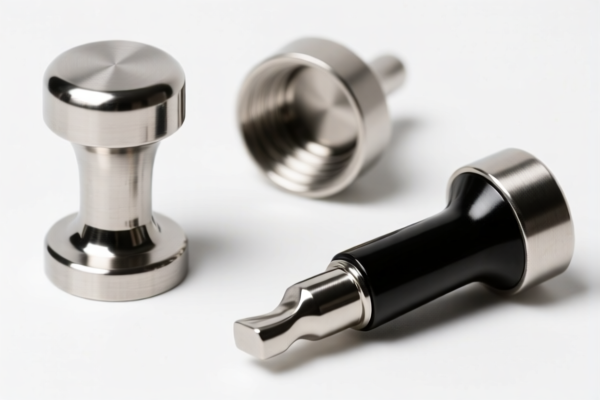
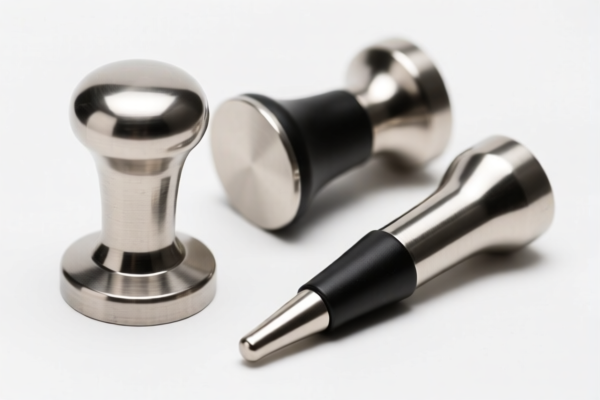
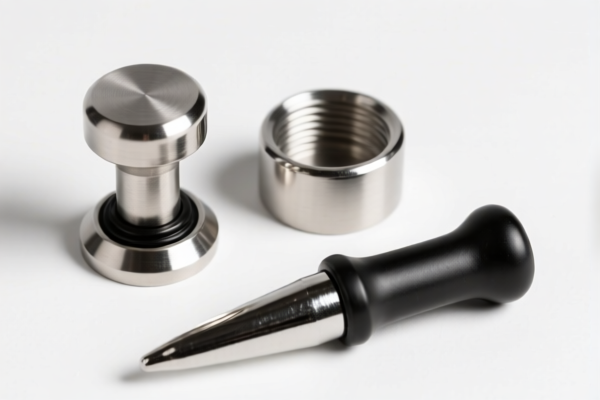
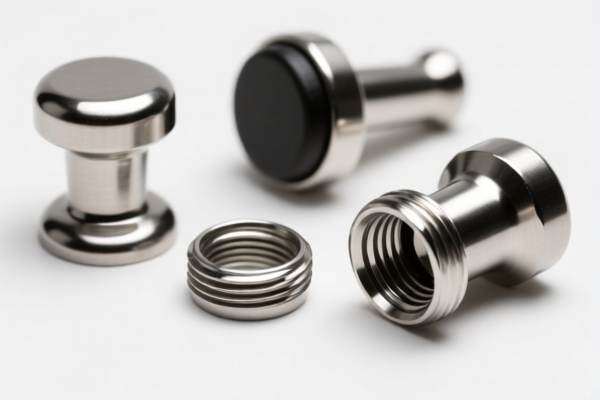
AI Analysis
🖊️ Stapler Accessories: The Ultimate HS Code Guide & Customs Clearance Strategy (2026)
🌐 HS Code Reference & Customs Clearance Guide | 2026 Latest Tariff Analysis | Professional-Level Strategy
📌 I. Product Definition & Classification: Do You Really Know "Stapler Accessories"?
Staplers are not just simple office tools; they are categorized based on their function, material, and set composition. In international trade, "Stapler Accessories" (such as staplers themselves, staple removers, or stapler sets) fall into two main categories:
- Office Machinery Category: If the item is an integrated machine designed for binding, punching, or stapling papers.
- Hand Tool Category: If the item is a manual hand tool, often grouped under "Household Tools" or "Hand Tools."
⚠️ Key Distinction Point: - If it is a standalone stapler machine or part of an office machine set → Likely falls under Chapter 84 (Machinery). - If it is a hand-held stapler (manual, metal/plastic) → Likely falls under Chapter 82 (Tools/Articles of Base Metal). - If it is a Set containing multiple items → Subject to "GRI 3(b)" rules for sets, often leading to a specific "Other" category.
📦 II. HS Code Classification Details (2026 Latest Tariff Authority Mapping)
Based on the provided data, here are the specific HS Codes, summaries, and tax implications for "Stapler Accessories":
| HS Code | Summary / Justification | Total Tax Rate | Tax Detail Breakdown |
|---|---|---|---|
| 8205.51.75.00 | Household/Office Tool: Classified as "Other household tools and parts." No material conflict. Assumed metal/plastic manual stapler. | 38.7% | Base: 3.7% Add'l: 25.0% Section 122: 10% |
| 8472.90.90.80 | Office Machine: Explicitly listed under office machines (punching/stapling). No material conflict. | 35.0% | Base: 0.0% Add'l: 25.0% Section 122: 10% |
| 8472.30.00.00 | Office Machine Set: Stapler sets belong to office machinery for binding/fixing. Logical consistency with "Other office machines" for paper handling. | 36.8% | Base: 1.8% Add'l: 25.0% Section 122: 10% |
| 8205.90.60.00 | Stapler Set (Hand Tool): "Set" format (2+ articles). Since staplers are hand tools, it falls under the "Other" catch-all for sets. | Variable + 35.0% | Base: Rate of article in set Add'l: 25.0% Section 122: 10% |
| 8205.51.75.00 | Stapler (Hand Tool): Staplers are common household/office tools. Inferring metal/plastic material, no conflict with "Other household tools." | 38.7% | Base: 3.7% Add'l: 25.0% Section 122: 10% |
🔍 Key Takeaway: - Chapter 84 (8472) generally offers lower base tariffs (0%-1.8%) but is subject to the 25% + 10% add-on tariffs. - Chapter 82 (8205) has a higher base tariff (3.7%+) but is also subject to the same add-on tariffs. - Section 122 (10%) is a critical additional tariff layer for these goods, significantly impacting the final landed cost.
💰 III. 2026 Latest Tariff Rate Details (Including Add-ons & Policy Surcharges)
✅ Applicable Country: United States (US)
✅ Origin: China (CN)
✅ Effective Time: Post-2025 (Current Policy Context)
🎯 1. HS Code 8472.90.90.80 – Other Office Machinery (Staplers/Punchers)
| Item | Details |
|---|---|
| Base Tariff | 0.0% |
| USITC Additional Tariff | +25.0% (Section 301) |
| Section 122 Tariff | +10.0% (Specific to China imports) |
| Total Effective Rate | 35.0% |
| Calculation | CIF Value × 35.0% |
| De Minimis Exemption | ❌ Not Applicable |
📌 Explanation: - The 0% base makes this attractive for pure machinery classification. - However, the 35% total is high due to the mandatory 25% + 10% surcharges. - Note: Ensure the product is clearly defined as a "machine" or "mechanical device" for paper handling to qualify.
🎯 2. HS Code 8205.51.75.00 – Other Household/Office Tools (Manual Staplers)
| Item | Details |
|---|---|
| Base Tariff | 3.7% |
| USITC Additional Tariff | +25.0% (Section 301) |
| Section 122 Tariff | +10.0% (Specific to China imports) |
| Total Effective Rate | 38.7% |
| Calculation | CIF Value × 38.7% |
| De Minimis Exemption | ❌ Not Applicable |
📌 Explanation: - This code treats the stapler as a hand tool or household item. - The 3.7% base is higher than 8472, leading to a 3.7% higher total tax compared to the machine classification. - Best for: Simple, manual, metal/plastic staplers not integrated into a complex office machine.
🎯 3. HS Code 8472.30.00.00 – Office Machinery Sets
| Item | Details |
|---|---|
| Base Tariff | 1.8% |
| USITC Additional Tariff | +25.0% (Section 301) |
| Section 122 Tariff | +10.0% (Specific to China imports) |
| Total Effective Rate | 36.8% |
| Calculation | CIF Value × 36.8% |
| De Minimis Exemption | ❌ Not Applicable |
📌 Explanation: - Applies to sets of office machines (e.g., stapler + hole punch + cutter in one box). - The 1.8% base is moderate, resulting in a 36.8% total rate. - Key: Must be a genuine "set" where the essential character is office machinery.
🎯 4. HS Code 8205.90.60.00 – Other Tools Sets (Stapler Sets)
| Item | Details |
|---|---|
| Base Tariff | Rate of the article in the set |
| USITC Additional Tariff | +25.0% (Section 301) |
| Section 122 Tariff | +10.0% (Specific to China imports) |
| Total Effective Rate | Base + 35.0% |
| Calculation | (Base Rate + 35%) × CIF Value |
| De Minimis Exemption | ❌ Not Applicable |
📌 Explanation: - This is the "Other" catch-all for sets of hand tools. - The base tariff depends on the primary component of the set. - Risk: If the set is complex, classification becomes ambiguous. Use only if clearly a "set of hand tools."
🛠️ IV. Customs Clearance Practical Advice (Battle-Tested Tips)
✅ 1. Documentation Checklist (Must-Have)
| Document | Required | Explanation |
|---|---|---|
| Product Specification Sheet | ✔️ | Include dimensions, material (metal/plastic), mechanism type (manual/auto). |
| Product Photos | ✔️ | Clear shots of the stapler, mechanism, and any accessories. Show if it's a "set." |
| Commercial Invoice | ✔️ | Describe precisely: "Manual Metal Stapler, Model XYZ" or "Office Machine Set with Stapler." Avoid vague terms like "Stapler Accessories" without context. |
| Packing List | ✔️ | List all items in the set. If it's a set, ensure all items are included in one shipment for proper classification. |
| Origin Certificate | ✔️ | Proof of origin is critical for applying/additional tariffs. |
✅ 2. Classification Strategy (Key Mnemonics)
🔥 "Machine vs. Hand Tool: Check the Function!"
| Scenario | Recommended HS Code | Reason |
|---|---|---|
| Standalone Manual Stapler | 8205.51.75.00 |
Classified as a hand tool/household tool. |
| Automated/Office Machine Stapler | 8472.90.90.80 |
Classified as office machinery. |
| Set of Office Machines | 8472.30.00.00 |
Essential character is office machinery. |
| Set of Hand Tools (incl. Stapler) | 8205.90.60.00 |
Essential character is hand tools. |
⚠️ Critical Warning: - Do NOT use generic terms like "Stapler Accessories" on the invoice. Customs may classify under "Parts and Accessories" with 89.5% penalty rates if not properly described. - Always specify the material (e.g., "Base Metal," "Plastic") and function (e.g., "Binding," "Punching").
✅ 3. Special Cases & Pitfalls
| Scenario | Handling Advice |
|---|---|
| OEM Custom Staplers | Provide customer order + design specs. Prove it's a standard office tool, not a specialized industrial machine. |
| Staplers with Non-Standard Parts | If it includes electronic components, it may shift to Chapter 85. Stick to 8205 or 8472 if purely mechanical. |
| Sets with Mixed Materials | Ensure the "essential character" is clear. If it's 90% stapler, classify as stapler. |
| High-Value Luxury Staplers | Even if luxury, if it's a hand tool, it still falls under 8205. No "luxury" tariff exemption. |
🌍 V. Global Market Comparison (2026)
| Country/Region | Recommended HS Code | Total Tariff (China Origin) | Notes |
|---|---|---|---|
| 🇺🇸 USA | 8472.90.90.80 or 8205.51.75.00 |
35% - 38.7% | High add-ons (25% + 10%) make it expensive. |
| 🇨🇳 China | 8472.90.90.80 |
~5-10% | Lower base tariffs, no Section 122. |
| 🇪🇺 EU | 8472.90.90.80 |
~0-4% | No Section 122. CE Certification required. |
| 🇬🇧 UK | 8472.90.90.80 |
~0-5% | Post-Brexit rules apply. No Section 122. |
| 🇦🇺 Australia | 8472.90.90.80 |
~5% | No Section 122. RCM Certification if electrical. |
📌 Conclusion: - USA is the most expensive market for staplers due to Section 122 (10%) and Section 301 (25%) tariffs. - EU/UK/Asia offer significantly lower landed costs. Consider supply chain diversification if targeting the US market heavily.
📌 VI. Common Mistakes & Pitfalls (Lessons Learned)
❌ Mistake 1: Labeling as "Stapler Parts" for the whole unit
👉 Consequence: If the whole unit is misclassified as "parts," you may face 89.5% rates or rejection.
✅ Fix: Always declare the main product (Stapler) unless it's strictly a spare part like a spring or lever.
❌ Mistake 2: Ignoring "Set" Classification
👉 Consequence: If sold as a set but declared as individual items, customs may reclassify and charge higher duties or penalties.
✅ Fix: Declare as a "Set" with the correct set HS code if it contains multiple tools.
❌ Mistake 3: Vague Description "Office Supplies"
👉 Consequence: Customs will assign a default high rate or delay clearance.
✅ Fix: Use specific terms: "Manual Desktop Stapler, Metal, Model ABC."
❌ Mistake 4: Assuming De Minimis Exemption
👉 Consequence: Staplers are not eligible for de minimis exemptions under current Section 122 rules.
✅ Fix: Budget for full tariffs even for small shipments.
🎯 VII. Conclusion: Professional Declaration, Lower Costs, Faster Clearance!
🎯 Remember the Mnemonic:
🔹 "Machine 35%, Tool 38.7%, Set Depends."
🔹 "No De Minimis, Pay Full Tariff."
🔹 "Be Specific, Avoid Penalties."
📌 Pro Tip:
If your staplers are originating from Vietnam, Mexico, Thailand, or Malaysia, you may be eligible to avoid the Section 122 and Section 301 tariffs, reducing rates to 0-5%. Recommendation: Obtain Advance Rulings from US Customs and Border Protection (CBP) for large shipments to ensure correct classification and avoid surprises.
📣 Action Required:
📞 Contact a licensed customs broker + Provide product images + Apply for HS Code Advance Ruling. 🚀 Ensure your staplers clear customs smoothly, avoid delays, and maximize profit margins!
✨ Professional clearance starts with precise classification!
💼 Every percentage point counts in global trade!
Customer Reviews
About HS Code Classification
The Harmonized System (HS) is an internationally standardized nomenclature developed by the World Customs Organization (WCO) to classify traded products. Over 200 countries use the HS system as the basis for customs tariffs, trade statistics, and import/export regulations.
Each HS code follows a hierarchical structure:
- Chapter (2 digits) — Broad category of goods (e.g., Chapter 84: Machinery and Mechanical Appliances)
- Heading (4 digits) — More specific grouping within the chapter
- Subheading (6 digits) — Internationally standardized breakdown, used by all WCO member countries
- National subdivisions (8-10 digits) — Country-specific extensions for further classification, such as US HTSUS 10-digit codes
Correct HS code classification is essential for smooth customs clearance, accurate duty payment, and compliance with trade regulations. Misclassification can lead to customs delays, overpayment of duties, or penalties.
When importing from CN to US, the applicable tariff rates may include:
- Most-Favored-Nation (MFN) rate — The standard duty rate applied to WTO members
- General rate — Applied to countries without trade agreements
- Trade remedy duties — Additional tariffs such as Section 301 (anti-dumping), Section 232 (national security), or countervailing duties
The information provided on this page is for reference purposes only. For official classification, please consult with your local customs authority or a licensed customs broker.