Static Wiping Paper
CN → US| HS Code | Tariff Rate | Origin | Destination | Doc |
|---|---|---|---|---|
| 5603110070 | 35.0% | CN | US | Official Doc |
| 5603110010 | 35.0% | CN | US | Official Doc |
| 4823908680 | 35.0% | CN | US | Official Doc |
Product Images
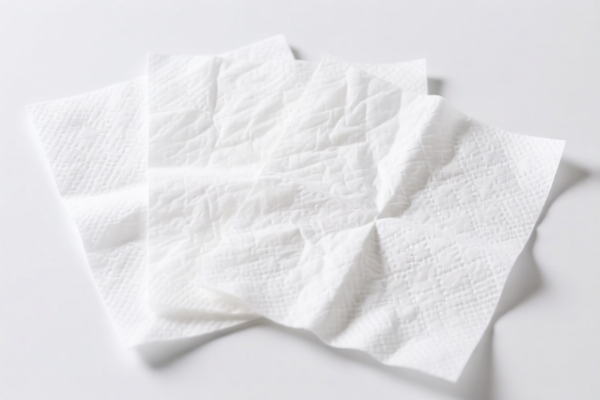
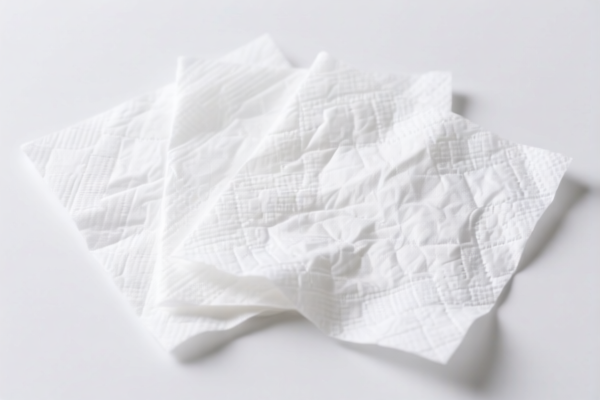
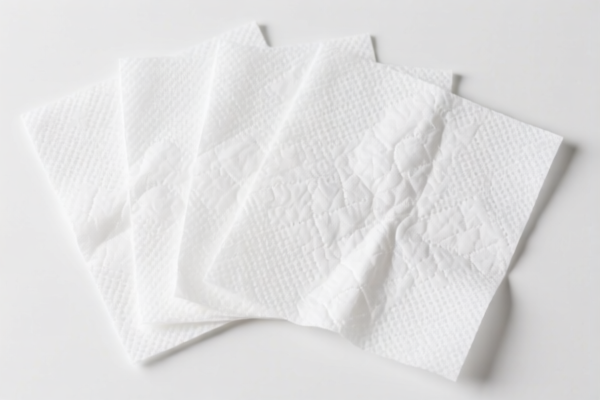
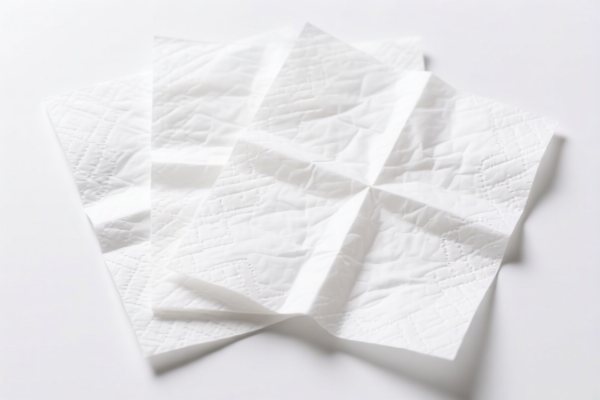
AI Analysis
🧻 Static Wiping Paper (Electrostatic Cleaning Cloths)
🌐 HS Code Reference & Customs Clearance Guide | 2026 Latest Tariff Analysis | Professional Entry Strategies
📌 1. Product Definition and Classification: Do You Really Understand "Static Wiping Paper"?
Static Wiping Paper is a specialized consumable used in electronics manufacturing, optical lens cleaning, and high-precision industrial environments. Its defining feature is electrostatic attraction, which allows it to trap dust and particles without leaving lint or residues.
In international trade, the classification depends heavily on the material composition (Non-woven vs. Paper) and the form (Ready-to-use vs. Roll/Blank). Based on the provided data, these products typically fall into three main HS Code categories:
⚠️ Key Distinction Points:
- If made of Polyester or synthetic fibers in a non-woven structure → Chapter 56
- If made of Paper/Pulp with electrostatic properties → Chapter 48
- Crucial Note: All three identified HS Codes in the data share the same total tax rate of 35% due to US trade policy specifics.
📦 2. HS Code Classification Details (2026 Latest Tariff Authority Comparison)
| HS Code | Product Description | Applicable Scenario | Material Type |
|---|---|---|---|
5603.11.00.70 |
Non-woven fabric articles | Electrostatic wipes made from prepared non-woven fabrics | Non-woven (Polyester/Fiber) |
5603.11.00.10 |
Other non-woven fabrics | Electrostatic wipes where synthetic filaments/fibers are treated for static | Non-woven (Synthetic Filaments) |
4823.90.86.80 |
Other paper articles | Electrostatic wipes that meet paper material requirements | Paper/Pulp |
🔍 Focus Reminder:
- Although these codes belong to different chapters (56 vs. 48), the tax burden is identical in the provided dataset.
- The distinction lies in the customs inspector’s interpretation of the material. Non-woven fabrics (5603) are the most common for high-end electrostatic wipes, while Paper (4823) is used for lower-cost or specific fiber blends.
- Do not misclassify as general cleaning cloths (Chapter 63) without verifying the "non-woven" or "paper" nature.
💰 3. 2026 Latest Tariff Rate Breakdown (Including Surtaxes and Policy Surcharges)
✅ Applicable Country: United States (US)
✅ Country of Origin: China (CN)
✅ Effective Time: Current rates apply (based on provided data)
🎯 1. 5603.11.00.70 / 5603.11.00.10 — Non-woven Fabric Articles
| Item | Detail |
|---|---|
| Basic Duty Rate | 0.0% (Ad Valorem) |
| Section 301 Surcharge | +25.0% |
| Section 122 Surcharge | +10.0% |
| Total Effective Tax Rate | 35.0% |
| Tax Calculation Base | CIF Value (Cost + Insurance + Freight) × 35% |
| De Minimis Exemption | ❌ Not Applicable (Usually denied for China-origin goods under these sections) |
| Legal Basis Path | HTSUS:5603.11.00 → USITC Footnote 301 (25%) → Section 122 (10%) |
📌 Explanation:
- The 0% base rate reflects standard MFN (Most Favored Nation) treatment for non-wovens.
- The 25% Section 301 duty is the standard additional tariff on Chinese goods.
- The 10% Section 122 duty is a lesser-known but critical surcharge often applied to specific textile/apparel imports, adding to the total burden.
- Total 35% is a significant cost factor that must be included in FOB pricing strategies.
🎯 2. 4823.90.86.80 — Other Paper Articles
| Item | Detail |
|---|---|
| Basic Duty Rate | 0.0% (Ad Valorem) |
| Section 301 Surcharge | +25.0% |
| Section 122 Surcharge | +10.0% |
| Total Effective Tax Rate | 35.0% |
| Tax Calculation Base | CIF Value × 35% |
| De Minimis Exemption | ❌ Not Applicable |
| Legal Basis Path | HTSUS:4823.90.86 → USITC Footnote 301 (25%) → Section 122 (10%) |
📌 Note:
- Even though this is a "paper" product, it is subject to the same 35% total tax as the non-woven counterparts in this dataset.
- Ensure the product description clearly states "Electrostatic Wiping Paper" to avoid confusion with general office paper (which may have different duty structures).
🛠️ 4. Customs Clearance Practical Advice (Real-World Pitfall Avoidance Guide)
✅ 1. Preparation Checklist (Missing items lead to delays)
| Document | Required | Explanation |
|---|---|---|
| ✅ Product Specification Sheet | ✔️ | Must detail material composition (e.g., "100% Polyester Non-woven" or "Wood Pulp Paper") and electrostatic treatment method. |
| ✅ Material Composition Declaration | ✔️ | Critical for distinguishing between HS 5603 (Non-woven) and HS 4823 (Paper). |
| ✅ Product Photos | ✔️ | Clear images showing packaging, label, and texture. |
| ✅ Commercial Invoice | ✔️ | Clearly state "Static Wiping Paper" and HS Code. Avoid vague terms like "Cleaning Cloth." |
| ✅ Bill of Lading/Air Waybill | ✔️ | Ensure weight and volume match the invoice. |
| ✅ Certificate of Origin | ✔️ | Confirm China origin to calculate accurate Section 301/122 duties. |
✅ 2. Declaration Tips (Key Mnemonic)
🔥 "Material First, Static Second, Paper or Non-woven, Declare Clearly!"
| Scenario | Correct Declaration | Common Mistake |
|---|---|---|
| Polyester-based wipes | 5603.11.00.70/10 as "Non-woven Electrostatic Wipes" |
Declaring as "Textile Rags" (Wrong Chapter) |
| Paper-based wipes | 4823.90.86.80 as "Electrostatic Paper Towels/Wipes" |
Declaring as "Household Paper" (Lower duty risk, but wrong classification) |
| Mixed packs | Split declaration if possible | Mixing HS Codes in one line item → Customs Rejection |
✅ 3. Special Case Handling
| Situation | Handling Advice |
|---|---|
| Lack of Material Detail | Provide a lab test report showing fiber content. If it’s synthetic, aim for 5603. |
| "Electrostatic" Claim | Ensure the product actually has anti-static properties. Misrepresentation can lead to fraud allegations. |
| Bulk vs. Retail | Bulk rolls may be classified differently than pre-cut individual wipes. Stick to the provided HS codes for "ready-to-use" items. |
| High Duty Cost (35%) | Consider pricing strategies to absorb this cost or explore if the product qualifies for any specific exemptions (rare for China-origin). |
🌍 5. Global Market Comparison (2026 Latest)
| Country/Region | Recommended HS Code | Estimated Duty (China Origin) | Certification Requirements | Notes |
|---|---|---|---|---|
| 🇺🇸 USA | 5603.11.00.70/10 or 4823.90.86.80 |
35% (0% Base + 25% S301 + 10% S122) | No specific FCC/CE required for cleaning supplies | High tax burden; precise material description is key. |
| 🇨🇳 China | 5603.11.00.70 or 4823.90.86.80 |
0% - 10% (Domestic Trade) | N/A | Export tax rebates may apply. |
| 🇪🇺 EU | 5603.11.00 (Harmonized) |
~4% - 6% | CE (if marked as PPE) | No Section 301/122 equivalent. |
| 🇯🇵 Japan | 5603.11.00 |
~5% - 8% | PSE (if electrical components involved, unlikely here) | Lower duties than US. |
📌 Conclusion:
- The US market is the most expensive for Chinese-made static wipes due to the 35% total effective tax rate.
- Accurate material declaration is the single most important factor to ensure smooth clearance and avoid misclassification penalties.
📌 6. Common Errors & Pitfall Guide (Lessons Learned)
❌ Mistake 1: Declaring as "Cleaning Rags" (Chapter 63)
👉 Consequence: If classified as cotton/textile rags, duties may differ, but if misclassified, it leads to seizure and fines. Static wipes are specifically non-woven or paper.
❌ Mistake 2: Ignoring Section 122 Surcharge
👉 Consequence: Assuming only 25% (Section 301) tax. The 10% Section 122 adds significantly to the cost. Total is 35%, not 25%.
❌ Mistake 3: Vague Product Description ("Wiping Cloth")
👉 Consequence: Customs officers may default to the highest duty rate or request additional testing, causing delays.
👉 Fix: Use "Electrostatic Non-woven Wiping Paper" or "Electrostatic Cleaning Paper."
❌ Mistake 4: Confusing Non-woven with Woven Fabric
👉 Consequence: Woven fabrics fall under Chapter 55/62, which have different duties. Static wipes are non-woven.
✅ Correct Practice:
"Electrostatic Wiping Paper, 100% Polyester Non-woven, Pre-cut Sheets, for Industrial Cleaning, HS Code 5603.11.00.70"
🎯 7. Conclusion: Professional Declaration, Cost Control, Efficient Clearance!
🎯 Remember the Mnemonic:
🔹 "Non-woven or Paper, Both 35% for US, Section 301 is 25%, Section 122 is 10%, Don't Forget!"
🔹 "Declare Material Clearly, Avoid Misclassification, Save Time and Money!"
📌 Tips:
- If your static wiping paper is made in Vietnam, Thailand, or Mexico, you may avoid US Section 301/122 surcharges, drastically reducing costs.
- For US imports, pre-classification rulings are highly recommended if the material composition is ambiguous (e.g., blended fibers).
📣 Immediate Action:
📞 Contact your freight forwarder + Provide Material Data Sheet + Apply for HS Code Pre-ruling
🚀 Ensure your Static Wiping Paper clears US Customs smoothly, efficiently, and cost-effectively!
✨ Professional Customs Clearance Starts with Accurate Classification!
💼 Every cent of tax paid should be legally justified and optimized!
Customer Reviews
About HS Code Classification
The Harmonized System (HS) is an internationally standardized nomenclature developed by the World Customs Organization (WCO) to classify traded products. Over 200 countries use the HS system as the basis for customs tariffs, trade statistics, and import/export regulations.
Each HS code follows a hierarchical structure:
- Chapter (2 digits) — Broad category of goods (e.g., Chapter 84: Machinery and Mechanical Appliances)
- Heading (4 digits) — More specific grouping within the chapter
- Subheading (6 digits) — Internationally standardized breakdown, used by all WCO member countries
- National subdivisions (8-10 digits) — Country-specific extensions for further classification, such as US HTSUS 10-digit codes
Correct HS code classification is essential for smooth customs clearance, accurate duty payment, and compliance with trade regulations. Misclassification can lead to customs delays, overpayment of duties, or penalties.
When importing from CN to US, the applicable tariff rates may include:
- Most-Favored-Nation (MFN) rate — The standard duty rate applied to WTO members
- General rate — Applied to countries without trade agreements
- Trade remedy duties — Additional tariffs such as Section 301 (anti-dumping), Section 232 (national security), or countervailing duties
The information provided on this page is for reference purposes only. For official classification, please consult with your local customs authority or a licensed customs broker.