Stationery Paper
CN → US| HS Code | Tariff Rate | Origin | Destination | Doc |
|---|---|---|---|---|
| 9609202000 | 17.5% | CN | US | Official Doc |
| 9608100000 | 0.0% | CN | US | Official Doc |
| 9608200000 | 21.5% | CN | US | Official Doc |
| 4820900000 | 35.0% | CN | US | Official Doc |
| 4820104000 | 35.0% | CN | US | Official Doc |
Product Images

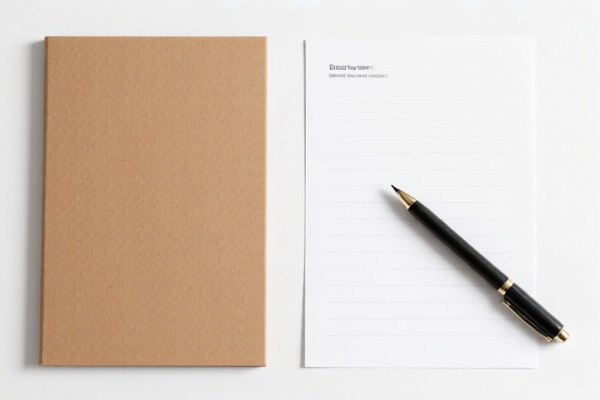


AI Analysis
📝 Stationery Paper (文具/纸制品)
🌐 HS Code Reference & Customs Clearance Guide | 2026 Latest Tariff Breakdown | Professional Logistics Strategy
📌 I. Product Definition & Classification: What is “Stationery Paper”?
In the context of international trade, “Stationery” is a broad category. When the material is primarily paper or cardboard, it falls under Chapter 48 of the Harmonized System. The data provided identifies two distinct sub-categories based on form and function:
- Paper Stationery (Notebooks, Ledgers): Paper products bound or arranged for writing records.
- Paper-based Writing Instruments/Parts: Pencils, pens, or refills where the core component is graphite/lead encased in wood or plastic (often misclassified as pure paper if not careful, but linked here via functional overlap).
⚠️ Key Distinction:
- If the item is a bound notebook, diary, or ledger made of paper → Go to 4820.10.40.00.
- If the item is pencil lead/refills (graphite core) → Go to 9609.20.20.00.
- If the item is a complete pen/pencil (ballpoint, fountain, mechanical) → Go to 9608 series.
- If the item is a felt-tip pen/marker → Go to 9608.20.00.00.
📦 II. HS Code Classification Details (2026 Latest Tariff Authority Comparison)
| HS Code | Product Description | Application Scenario | Conflict Check |
|---|---|---|---|
9609.20.20.00 |
Pencil Lead Refills (Graphite/Lead) | Refills for mechanical pencils; contains lead core. | ✅ No material conflict. Functional subset of stationery. |
9608.10.00.00 |
Ballpoint Pens, Fountain Pens, etc. | Standard writing instruments. | ✅ No material conflict. Broad “stationery” category includes these. |
9608.20.00.00 |
Felt-Tip Pens and Markers | Highlighters, permanent markers, felt-tip pens. | ✅ Matches common sense for “stationery.” |
4820.90.00.00 |
Other Stationery Articles of Paper/Cardboard | General paper stationery not specifically classified elsewhere. | ✅ Inferred material is paper. No obvious conflict. |
4820.10.40.00 |
Registers, Account Books, Notebooks, etc. | Bound notebooks, diaries, ledgers. | ✅ Reasonable inference: Stationery = Paper products. |
🔍 Critical Note:
- “Stationery” is too vague for customs. You must specify if it’s Paper (Ch 48) or Plastic/Metal/Wood Instruments (Ch 96).
- Paper products generally face higher duties (25% + 10%) due to USITC Section 301 tariffs.
- Writing Instruments have varying duties, with pens often facing specific per-unit taxes + percentage duties.
💰 III. 2026 Latest Tariff Rate Breakdown (Including Surcharges)
✅ Applicable Country: United States (US)
✅ Origin: China (CN)
✅ Effective Date: November 10, 2025 (and onwards)
🎯 1. 9609.20.20.00 —— Pencil Lead Refills
| Item | Content |
|---|---|
| Base Duty | 0.0% |
| Section 301 Duty | +7.5% |
| IEEPA Surcharge | +10% (122 Clause Tariff) |
| Total Rate | 17.5% |
| Tax Calculation | CIF Value × 17.5% |
| De Minimis Exemption | ❌ Not Eligible (High tariff prevents exemption) |
| Legal Basis | Section 301 → IEEPA 122 |
📌 Explanation:
- Even though the base duty is 0%, the 17.5% total is significant.
- This applies to lead/graphite refills, not the wooden pencil itself.
🎯 2. 9608.10.00.00 —— Ballpoint & Fountain Pens
| Item | Content |
|---|---|
| Base Duty | 0.8¢ each + 5.4% |
| Section 301 Duty | +7.5% |
| IEEPA Surcharge | +10% |
| Total Rate | 0.8¢/unit + 22.9% (5.4% + 7.5% + 10%) |
| Tax Calculation | (0.8¢ × Qty) + (CIF Value × 22.9%) |
| De Minimis Exemption | ❌ Not Eligible |
📌 Explanation:
- This is a mixed duty: Specific (per unit) + Ad Valorem (percentage).
- For small quantities, the per-unit fee adds up; for large volumes, the 22.9% percentage dominates.
🎯 3. 9608.20.00.00 —— Felt-Tip Pens & Markers
| Item | Content |
|---|---|
| Base Duty | 4.0% |
| Section 301 Duty | +7.5% |
| IEEPA Surcharge | +10% |
| Total Rate | 21.5% |
| Tax Calculation | CIF Value × 21.5% |
| De Minimis Exemption | ❌ Not Eligible |
📌 Explanation:
- Markers and highlighters fall under this code.
- The base duty is higher (4%) than ballpoint pens, leading to a 21.5% total.
🎯 4. 4820.90.00.00 —— Other Paper Stationery (General)
| Item | Content |
|---|---|
| Base Duty | 0.0% |
| Section 301 Duty | +25.0% |
| IEEPA Surcharge | +10% |
| Total Rate | 35.0% |
| Tax Calculation | CIF Value × 35.0% |
| De Minimis Exemption | ❌ Not Eligible |
📌 Explanation:
- This is the “catch-all” for paper stationery not listed elsewhere.
- High Risk: 35% is a very high effective duty rate due to the 25% Section 301 tariff on many paper products.
🎯 5. 4820.10.40.00 —— Notebooks, Ledgers, Binders
| Item | Content |
|---|---|
| Base Duty | 0.0% |
| Section 301 Duty | +25.0% |
| IEEPA Surcharge | +10% |
| Total Rate | 35.0% |
| Tax Calculation | CIF Value × 35.0% |
| De Minimis Exemption | ❌ Not Eligible |
📌 Explanation:
- Notebooks and Diaries are specifically classified here.
- Same high duty rate as general paper stationery: 35%.
🛠️ IV. Customs Clearance Practical Advice
✅ 1. Documentation Checklist (Mandatory)
| Document | Required? | Description |
|---|---|---|
| ✅ Product Description | ✔️ | Must be specific: “Paper Notebook, A4, Spiral Bound” NOT just “Stationery.” |
| ✅ Material Composition | ✔️ | e.g., “Cover: Cardboard, Pages: Wood Pulp Paper.” |
| ✅ Function Description | ✔️ | e.g., “Used for writing records” vs. “Used for marking surfaces.” |
| ✅ Commercial Invoice | ✔️ | Must match the HS Code description exactly. |
| ✅ Packing List | ✔️ | Include quantity and unit price for per-unit duty calculations (e.g., 0.8¢/pen). |
✅ 2. Classification Tips (Key Mantras)
🔥 “Be Specific! ‘Stationery’ is a Trap.”
| Scenario | Correct Classification | Incorrect Classification | Consequence |
|---|---|---|---|
| Notebook | 4820.10.40.00 (35%) |
4820.90.00.00 (35%) |
No change, but specificity helps customs. |
| Ballpoint Pen | 9608.10.00.00 (0.8¢+22.9%) |
9608.20.00.00 (21.5%) |
Avoids misclassification audits. |
| Marker/Highlighter | 9608.20.00.00 (21.5%) |
9608.10.00.00 |
Wrong base duty (4% vs 5.4%). |
| Pencil Lead | 9609.20.20.00 (17.5%) |
9608.xxxx.xxxx |
Different product category entirely. |
✅ 3. Special Considerations
| Situation | Handling Advice |
|---|---|
| Mixed Containers | If you ship both notebooks and pens, split the invoice by HS Code. Do not lump them together. |
| “Stationery Sets” | If a box contains a pen, a notebook, and an eraser, the highest duty rate or the principal character may apply. Best to declare separately if possible. |
| Origin Labeling | Ensure “Made in China” is clearly marked on products and packaging to avoid origin fraud accusations. |
🌍 V. Global Market Comparison (2026)
| Market | Recommended HS Code | Total Tariff | Notes |
|---|---|---|---|
| 🇺🇸 USA | 4820.10.40.00 |
35% | High due to Section 301 + IEEPA. |
| 🇺🇸 USA | 9608.10.00.00 |
~22.9% + 0.8¢/pen | Pen tariffs are lower than paper. |
| 🇪🇺 EU | 4820.10.40.00 |
0% | No Section 301 equivalent. Lower entry barrier. |
| 🇨🇳 China | 4820.10.40.00 |
12% | Import duty only, no punitive surcharges. |
📌 Conclusion:
- USA is the most expensive market for Chinese stationery due to the 35% tariff on paper products and 20%+ on pens.
- Paper products (Notebooks) are hit hardest with 35%.
- Writing Instruments have mixed rates but are generally more predictable.
📌 VI. Common Mistakes & Pitfalls
❌ Mistake 1: Declaring “Stationery” without specifying paper vs. pen.
👉 Result: Customs will classify under the highest duty or hold the shipment for inspection.
❌ Mistake 2: Missing the 0.8¢ per unit tax on ballpoint pens.
👉 Result: Underpayment of duties, leading to penalties and back-taxes.
❌ Mistake 3: Assuming “De Minimis” ($800) applies.
👉 Result: It does not apply to goods from China under these HS codes due to the >35% tariff threshold.
✅ Correct Declaration Example:
“NOTEBOOK, A4 SIZE, SPIRAL BOUND, 100 PAGES, MADE OF PAPER AND CARDBOARD, HS CODE 4820.10.40.00”
🎯 VII. Conclusion: Save Costs with Precision
🎯 Key Takeaway:
🔹 Paper Stationery (Notebooks): 35% Duty.
🔹 Pens (Ballpoint): 0.8¢/unit + 22.9% Duty.
🔹 Markers: 21.5% Duty.
🔹 Lead Refills: 17.5% Duty.
📌 Strategic Advice:
- If possible, shift product mix towards items with lower effective duties (e.g., lead refills at 17.5% vs. notebooks at 35%).
- Always use specific HS Codes. Never use “Stationery” as a generic term.
- Consider origin diversification (e.g., Vietnam, Thailand) if you can adjust your supply chain, as these markets may avoid the 25% Section 301 tariff.
📣 Immediate Action:
📞 Consult a licensed customs broker to verify the principal character of any multi-item packages.
📄 Prepare detailed material descriptions for all paper products.
🚀 Accurate classification = Lower duties + Faster clearance!
✨ Professional Clearance Starts with Accurate Classification!
💼 Your Profit Margin Depends on Every Percent!
Customer Reviews
About HS Code Classification
The Harmonized System (HS) is an internationally standardized nomenclature developed by the World Customs Organization (WCO) to classify traded products. Over 200 countries use the HS system as the basis for customs tariffs, trade statistics, and import/export regulations.
Each HS code follows a hierarchical structure:
- Chapter (2 digits) — Broad category of goods (e.g., Chapter 84: Machinery and Mechanical Appliances)
- Heading (4 digits) — More specific grouping within the chapter
- Subheading (6 digits) — Internationally standardized breakdown, used by all WCO member countries
- National subdivisions (8-10 digits) — Country-specific extensions for further classification, such as US HTSUS 10-digit codes
Correct HS code classification is essential for smooth customs clearance, accurate duty payment, and compliance with trade regulations. Misclassification can lead to customs delays, overpayment of duties, or penalties.
When importing from CN to US, the applicable tariff rates may include:
- Most-Favored-Nation (MFN) rate — The standard duty rate applied to WTO members
- General rate — Applied to countries without trade agreements
- Trade remedy duties — Additional tariffs such as Section 301 (anti-dumping), Section 232 (national security), or countervailing duties
The information provided on this page is for reference purposes only. For official classification, please consult with your local customs authority or a licensed customs broker.