Statue of Other Materials
CN → US| HS Code | Tariff Rate | Origin | Destination | Doc |
|---|---|---|---|---|
| 8306210000 | 22.0% | CN | US | Official Doc |
| 3926400090 | 15.3% | CN | US | Official Doc |
| 6913905000 | 23.5% | CN | US | Official Doc |
| 3926400010 | 15.3% | CN | US | Official Doc |
Product Images
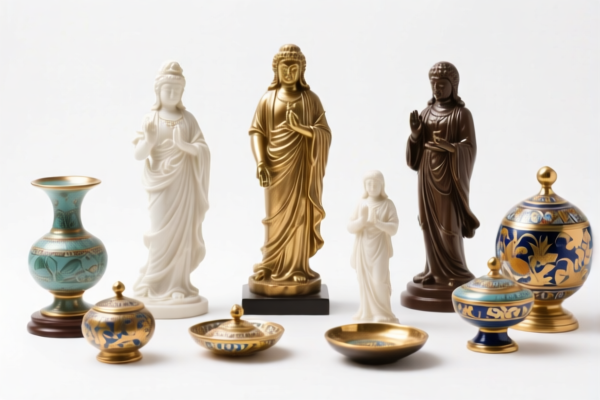

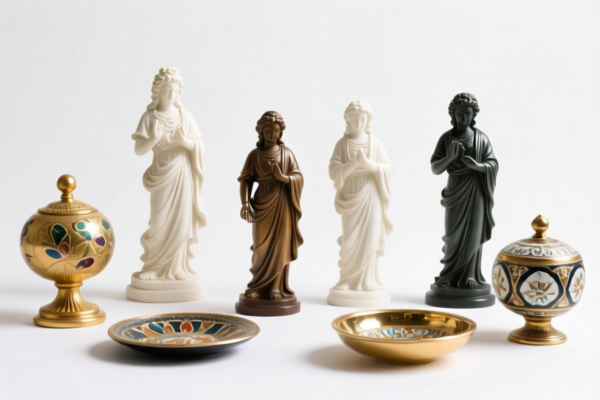
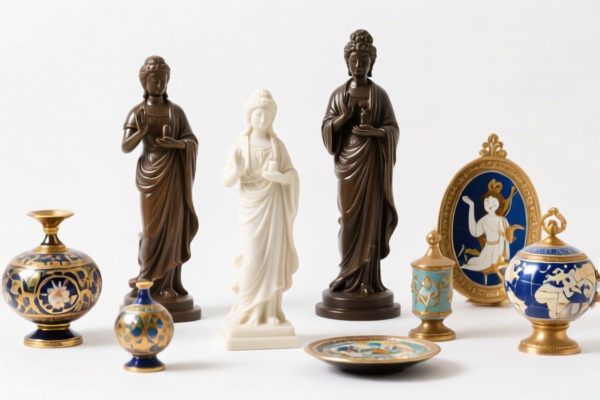
AI Analysis
🗿 Statuettes & Decorative Figurines (Of Other Materials)
🌐 HS Code Reference & Customs Clearance Guide | 2026 Latest Tariff Analysis | Strategic Import Strategy
📌 Part I: Product Definition & Classification: Do You Really Understand "Statues of Other Materials"?
Statues, statuettes, and decorative figurines are broad categories in international trade. The key to accurate classification lies in the material composition and primary function. When the material is not specifically defined (e.g., not gold, silver, or precious stones), but rather "Other Materials," customs authorities look at the residual categories.
The data provided identifies four potential HS Codes based on specific material interpretations: 1. Base Metal Alloys → 8306.21.00.00 2. Plastics → 3926.40.00.90 & 3926.40.00.10 3. Ceramics/Porcelain → 6913.90.50.00
⚠️ Critical Distinction:
- If the item is Metal (even if painted or colored) → 8306.21.00.00
- If the item is Plastic → 3926.40.00.xx
- If the item is Ceramic/Clay → 6913.90.50.00
- "Other Materials" is a catch-all term; you MUST identify the actual physical material to avoid misclassification.
📦 Part II: Detailed HS Code Breakdown (2026 Latest Tariff Authority)
Based on the provided data, here are the specific classifications and their tax implications for imports from China to the USA.
| HS Code | Product Description | Material Scope | Summary of Match Logic |
|---|---|---|---|
8306.21.00.00 |
Figures and other ornamental articles, of base metal | Base Metal (Iron, Copper, Aluminum, etc.) | Matches form (statue) + use (decoration). "Other Materials" logic allows inference if not precious metal. |
3926.40.00.90 |
Statuettes and other ornamental articles, of plastics | Plastics | Perfect match for "Statuettes" + "Other Materials" (Plastic falls under plastics chapter). |
3926.40.00.10 |
Statuettes and other ornamental articles, of plastics | Plastics | Exact match for "Statuettes" + "Other Materials". No material conflict. |
6913.90.50.00 |
Statuettes and other ornamental articles, of ceramic | Ceramics | Matches "Statuettes" + "Other Materials" (Ceramic is a distinct material category). |
🔍 Key Insight:
- Plastics (3926.40.00.xx) offer the lowest total tax burden (15.3%).
- Base Metals (8306.21.00.00) and Ceramics (6913.90.50.00) carry higher taxes (22.0% - 23.5%) due to higher base duties combined with Section 301 and IEEPA tariffs.
- Section 301 Tariffs: Both Base Metal and Ceramic categories are subject to 7.5% additional duties (Section 301), whereas Plastics are exempt from Section 301 duties in this specific classification context.
💰 Part III: 2026 Latest Tariff Rate Breakdown (Including Surcharges)
✅ Applicable Country: United States (US)
✅ Origin: China (CN)
✅ Effective Time: Current rates applied (post-2024 adjustments)
🎯 1. 8306.21.00.00 — Base Metal Ornamental Figures
| Item | Content |
|---|---|
| Base Duty Rate | 4.5% (Ad Valorem) |
| Section 301 Surcharge | +7.5% (Part of 301 Tariff List) |
| IEEPA Surcharge | +10.0% (122 Section, targeting China) |
| Total Effective Rate | 22.0% |
| Tax Calculation | CIF Value × 22.0% |
| De Minimis Exemption | ❌ Not Eligible (Deny De Minimis for Section 301/IEEPA goods) |
| Legal Basis Path | USITC:8306.21.00.00 → SECTION_301:7.5% → IEEPA:9903.01.25:10% |
📌 Explanation:
- Base metal statues are subject to Section 301 tariffs because they fall under Chapter 83 (Common metal articles).
- The 10% IEEPA tariff is applied on top, making this a high-cost classification.
- Risk: Misclassifying a plastic statue as base metal will result in a 6.7% higher tax bill plus potential penalties for incorrect declaration.
🎯 2. 3926.40.00.90 & 3926.40.00.10 — Plastic Statuettes
Note: Both plastic subheadings share the same tax structure in the provided data.
| Item | Content |
|---|---|
| Base Duty Rate | 5.3% (Ad Valorem) |
| Section 301 Surcharge | +0.0% (Exempt in this specific plastic classification context) |
| IEEPA Surcharge | +10.0% (122 Section, targeting China) |
| Total Effective Rate | 15.3% |
| Tax Calculation | CIF Value × 15.3% |
| De Minimis Exemption | ❌ Not Eligible (Due to IEEPA 10% surcharge) |
| Legal Basis Path | USITC:3926.40.00.xx → IEEPA:9903.01.25:10% |
📌 Explanation:
- Why is this cheaper? Plastics in this specific ornamental category are not subject to the additional 7.5% Section 301 tariff in this dataset, likely due to specific USITC footnote exemptions or classification nuances.
- Total Savings: Compared to base metal or ceramic, you save 6.7% to 8.2% on the total duty rate.
- Critical: The 10% IEEPA tax still applies. Do not assume "no Section 301" means "no China tariffs."
🎯 3. 6913.90.50.00 — Ceramic Statuettes
| Item | Content |
|---|---|
| Base Duty Rate | 6.0% (Ad Valorem) |
| Section 301 Surcharge | +7.5% (Part of 301 Tariff List) |
| IEEPA Surcharge | +10.0% (122 Section, targeting China) |
| Total Effective Rate | 23.5% |
| Tax Calculation | CIF Value × 23.5% |
| De Minimis Exemption | ❌ Not Eligible |
| Legal Basis Path | USITC:6913.90.50.00 → SECTION_301:7.5% → IEEPA:9903.01.25:10% |
📌 Explanation:
- Ceramics have the highest base duty (6.0%) among the options.
- They are also subject to Section 301 (7.5%) and IEEPA (10%).
- Total Burden: At 23.5%, this is the most expensive classification for importers.
🛠️ Part IV: Customs Clearance Practical Advice (Battle-Tested Pitfall Guide)
✅ 1. Documentation Checklist (Non-negotiable)
| Document | Required? | Purpose |
|---|---|---|
| ✅ Product Specification Sheet | ✔️ | Must explicitly state material (e.g., "PVC Plastic," "Resin," "Zinc Alloy"). Vague terms like "Mixed Materials" risk rejection. |
| ✅ Product Photos | ✔️ | High-res images showing texture (glossy plastic vs. metallic sheen vs. ceramic glaze). |
| ✅ Commercial Invoice | ✔️ | Describe as "Statuette," "Figurine," or "Decorative Ornament." Avoid generic "Gift." |
| ✅ Material Declaration Letter | ✔️ | Signed statement confirming % composition (e.g., 100% Plastic, 100% Ceramic). |
| ✅ Packing List | ✔️ | Must match invoice exactly. |
✅ 2. Declaration Strategy (Key Mantra)
🔥 "Material Defines HS, Section 301 Defines Cost, IEEPA Defines Surcharge!"
| Scenario | Correct HS Code | Total Tax | Incorrect Classification Risk |
|---|---|---|---|
| Plastic Figurine | 3926.40.00.90 / .10 |
15.3% | If declared as Metal → 22.0% (Overpay 6.7%) |
| Metal Statue | 8306.21.00.00 |
22.0% | If declared as Plastic → Underpayment Risk, Penalty + Interest |
| Ceramic Statue | 6913.90.50.00 |
23.5% | If declared as Plastic → High Penalty, Possible Seizure |
📌 Pro Tip:
- If your product is Composite (e.g., Plastic body with Metal base), consult a customs broker. It may default to the material that gives it its essential character.
- Avoid Vague Terms: Never use "Other" in your commercial invoice. Specify "Plastic," "Metal," or "Ceramic."
✅ 3. Special Cases
| Case | Handling Advice |
|---|---|
| Resin Figurines | Resin is often treated as Plastics (3926.40.xx) if synthetic, or Stone/Ceramic if natural. Clarify with supplier. |
| Painted Metal | Even if painted, if the base is metal, it’s 8306.21.00.00. Paint does not change HS Code. |
| Wooden Statues | Not in the provided dataset. Would likely fall under Chapter 44. Verify separately. |
| Mixed Material (e.g., Plaster + Plastic) | Likely falls under 6913.90.50.00 (Ceramic/Plaster) or 3926.40.00.xx depending on essential character. |
🌍 Part V: Global Market Comparison (2026 Update)
| Market | Recommended HS (Plastic) | Total Tax (China Origin) | Remarks |
|---|---|---|---|
| 🇺🇸 USA | 3926.40.00.90 |
15.3% | Best Option: Lowest base + No 301. |
| 🇺🇸 USA | 8306.21.00.00 |
22.0% | High tax due to 301 + IEEPA. |
| 🇨🇳 China | 3926.40.00.90 |
Varies | Check local import duties. |
| 🇪🇺 EU | 9503.00.00 (Toys) or 6913/8306 |
Varies | EU often classifies decorative statuettes as 9503 (Toys) if for children, which may have 0% duty. |
| 🇬🇧 UK | Similar to EU | Varies | Post-Brexit rules apply. |
📌 Conclusion:
- For the US market, Plastic (3926.40.00.90/.10) is the most cost-effective classification.
- Base Metal (8306.21.00.00) and Ceramic (6913.90.50.00) are significantly more expensive due to Section 301.
- Strategic Recommendation: If your product design allows, consider plastic or resin manufacturing to leverage the 15.3% rate instead of 22%+.
📌 Part VI: Common Mistakes & Pitfalls (Lessons from Tears)
❌ Mistake 1: Labeling a Plastic Statue as "Metal Ornament" to avoid plastic waste claims.
👉 Result: You pay 22.0% instead of 15.3%. Wasted Cost: 6.7%.
❌ Mistake 2: Using "Statue" in the description but declaring as "Toy" (9503).
👉 Result: Customs inspects. If not for play, misclassification penalty. High Risk.
❌ Mistake 3: Ignoring IEEPA 10%.
👉 Result: Even with 0% Section 301, you still pay 10% IEEPA + Base Duty. Total 15.3% for plastic. Do not assume "No 301 = Cheap."
❌ Mistake 4: Vague Invoice Description "Other Statue."
👉 Result: CBP issues Request for Information (RFI) or Hold. Delayed clearance. Cost: Demurrage/Detention.
✅ Correct Practice:
"Decorative Statuette, 10 inches, 100% PVC Plastic, For Home Decoration Only, Not a Toy. HS: 3926.40.00.90."
🎯 Part VII: Conclusion: Precision Saves Money!
🎯 Remember the Mantra:
🔹 "Plastic Wins: 15.3% Total. Metal/Ceramic Lose: 22-23% Total."
🔹 "IEEPA 10% Always Applies to China. Section 301 is the Differentiator."
🔹 "Material Clarity = Cost Efficiency."
📌 Small Tip:
If you are importing mixed materials, use the "Essential Character" rule. If the plastic component defines the appearance and value, 3926.40.00.90 may still apply. Get a Pre-Ruling from CBP if unsure.
📣 Immediate Action:
📞 Contact Your Customs Broker
📝 Provide Material Specs (e.g., "Zinc Alloy" vs. "PVC")
🚀 Optimize for 15.3% by Choosing Plastic/Resin Where Possible!
✨ Professional Clearance Starts with Precise Classification!
💼 Your Profit Margin Depends on These 6.7%!
Customer Reviews
About HS Code Classification
The Harmonized System (HS) is an internationally standardized nomenclature developed by the World Customs Organization (WCO) to classify traded products. Over 200 countries use the HS system as the basis for customs tariffs, trade statistics, and import/export regulations.
Each HS code follows a hierarchical structure:
- Chapter (2 digits) — Broad category of goods (e.g., Chapter 84: Machinery and Mechanical Appliances)
- Heading (4 digits) — More specific grouping within the chapter
- Subheading (6 digits) — Internationally standardized breakdown, used by all WCO member countries
- National subdivisions (8-10 digits) — Country-specific extensions for further classification, such as US HTSUS 10-digit codes
Correct HS code classification is essential for smooth customs clearance, accurate duty payment, and compliance with trade regulations. Misclassification can lead to customs delays, overpayment of duties, or penalties.
When importing from CN to US, the applicable tariff rates may include:
- Most-Favored-Nation (MFN) rate — The standard duty rate applied to WTO members
- General rate — Applied to countries without trade agreements
- Trade remedy duties — Additional tariffs such as Section 301 (anti-dumping), Section 232 (national security), or countervailing duties
The information provided on this page is for reference purposes only. For official classification, please consult with your local customs authority or a licensed customs broker.