Steam Turbine
CN → US| HS Code | Tariff Rate | Origin | Destination | Doc |
|---|---|---|---|---|
| 8483905080 | 37.5% | CN | US | Official Doc |
| 8406904580 | 40.0% | CN | US | Official Doc |
| 8483908010 | 37.8% | CN | US | Official Doc |
| 8406829000 | 35.0% | CN | US | Official Doc |
| 8406819000 | 35.0% | CN | US | Official Doc |
Product Images
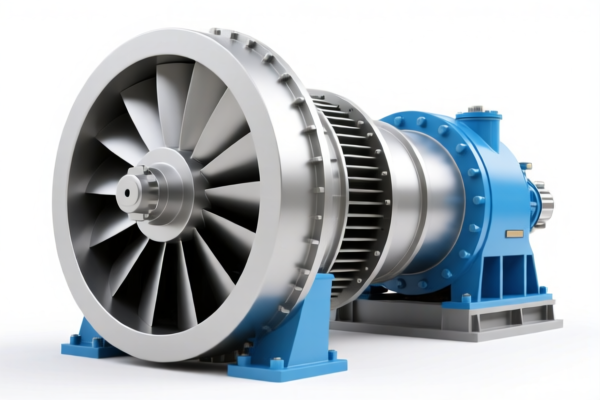
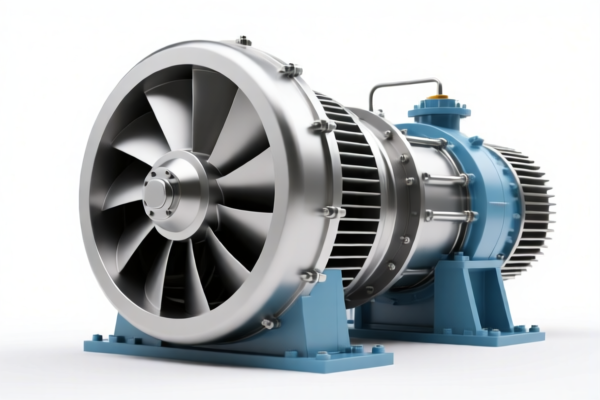
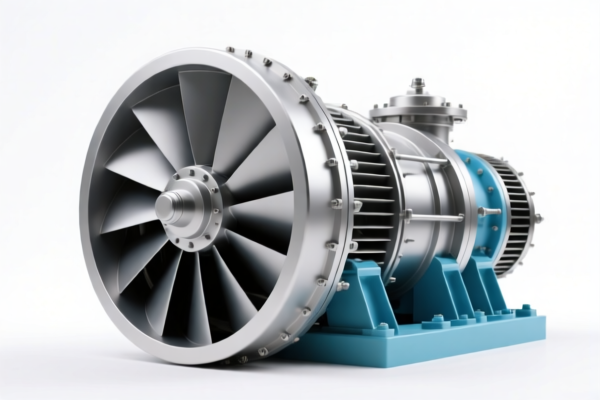
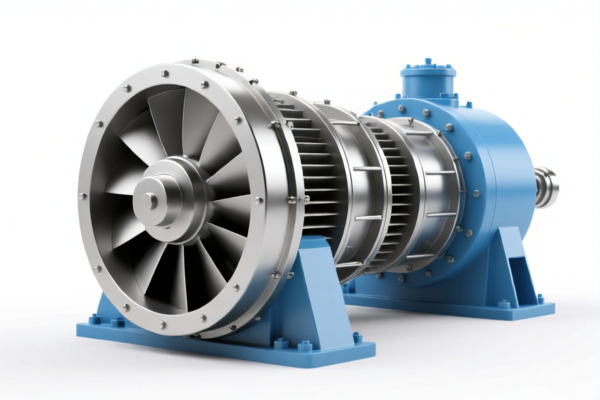
AI Analysis
⚙️ Steam Turbine (蒸汽轮机)
🌐 HS Code Reference & Customs Clearance Guide | 2026 Latest Tariff Analysis | Professional Clearance Strategy
📌 I. Product Definition & Classification: Do You Really Understand "Steam Turbines"?
A Steam Turbine is a rotary mechanical device that extracts thermal energy from pressurized steam and converts it into useful work, usually in the form of rotary motion. It is a critical component in power generation (thermal and nuclear plants), marine propulsion, and large-scale industrial processes.
In international trade, classification depends heavily on whether the item is the main engine or a spare part. The US Customs and Border Protection (CBP) distinguishes between the machine itself (Heading 8406) and its parts (Heading 8483).
⚠️ Key Distinction:
- Main Unit (Engine): The complete turbine assembly with casing, rotor, and nozzles → Classified under 8406.
- Parts/Components: Blades, rotors, casings, gears, or bearings sold separately → Classified under 8483 or 8406.90.
- Misclassification Risk: Declaring parts as the main engine (or vice versa) can lead to significant duty discrepancies due to different base tariff rates.
📦 II. HS Code Classification Details (2026 Latest Tariff Authority Comparison)
Based on the provided data, here are the five applicable HS Codes for "Steam Turbine" related items, ranging from main engines to spare parts.
| HS Code | Product Description | Applicability Scenario | Key Justification from Data |
|---|---|---|---|
8406.82.90.00 |
Steam Turbines (Other) | Complete steam turbines for power generation or marine use | "Highly matched in function/purpose to 'steam turbine'. No material/shape conflict." |
8406.81.90.00 |
Steam Turbines (Other) | Other steam turbines (likely smaller capacity or specific industrial use) | "Consistent in function with 'steam turbines'. Falls under 'Other' residual category." |
8406.90.45.80 |
Parts of Steam Turbines | Specific parts classified under the "Parts" heading of the engine | "Matched by use. No material conflict. 'Other' residual category for parts." |
8483.90.50.80 |
Parts of Transmission/Gearing | Parts classified as general transmission components (e.g., gears, shafts within turbine) | "Falls under 'Other parts' residual principle for transmission/variable speed devices." |
8483.90.80.10 |
Parts of Transmission/Gearing | General mechanical parts/components (metal manufacturing inferred) | "Part/component category. Based on common sense, inferred as metal manufacturing." |
🔍 Critical Note:
- Main Engines (8406.xx) generally have a 0% base tariff (before add-ons), making them significantly cheaper than parts in some contexts, BUT they are subject to strict regulatory scrutiny.
- Parts (8483.xx/8406.90) often have a 2.5% - 5.0% base tariff.
- The "Residual" nature of the8483and8406.90codes suggests that if a part doesn't fit a specific description, it falls into these "Other" buckets.
💰 III. 2026 Latest Tariff Rate Breakdown (Including Add-ons & Policy Surcharges)
✅ Applicable Country: United States (US)
✅ Origin: China (CN)
✅ Effective Date: From November 10, 2025 (including subsequent imports)
🎯 1. 8406.82.90.00 & 8406.81.90.00 —— Steam Turbines (Main Units)
These are the main engines. They benefit from a lower base tariff but still face substantial add-ons.
| Item | Content |
|---|---|
| Base Tariff | 0.0% (Ad Valorem) |
| Section 301 Add-on | +25.0% (USITC Footnote 9903.88.01) |
| Section 122 / IEEPA Add-on | +10.0% (Targeting China/HK products, effective Nov 10, 2025) |
| Total Effective Rate | 35.0% |
| Tax Calculation | CIF Value × 35% |
| De Minimis Exemption? | ❌ No (deny_de_minimis applies) |
| Legal Path | USITC:8406.82.90.00 → FOOTNOTE:9903.88.01 → IEEPA:9903.01.25 |
📌 Explanation:
- Although the base rate is 0%, the 25% Section 301 tariff applies to most Chinese-made machinery.
- The additional 10% IEEPA tariff brings the total to 35%.
- Why this code? It matches the functional description of "Steam Turbine" perfectly without material conflicts.
🎯 2. 8406.90.45.80 —— Parts of Steam Turbines (Specific Category)
| Item | Content |
|---|---|
| Base Tariff | 5.0% |
| Section 301 Add-on | +25.0% |
| Section 122 / IEEPA Add-on | +10.0% |
| Total Effective Rate | 40.0% |
| Tax Calculation | CIF Value × 40% |
| De Minimis Exemption? | ❌ No |
| Legal Path | USITC:8406.90.45.80 → FOOTNOTE:9903.88.01 → IEEPA:9903.01.24 |
📌 Explanation:
- This code is for parts specifically linked to the engine (Heading 8406).
- The base rate of 5% makes the total tax higher (40%) than the main engine itself (35%).
- Risk: Ensure the item is truly a "part" and not a separate machine.
🎯 3. 8483.90.50.80 & 8483.90.80.10 —— General Transmission Parts
These codes apply if the parts are considered "transmission/gearing components" (Heading 8483) rather than direct engine parts.
A. 8483.90.50.80 (Residual "Other Parts" for Transmission)
| Item | Content |
|---|---|
| Base Tariff | 2.5% |
| Section 301 Add-on | +25.0% |
| Section 122 / IEEPA Add-on | +10.0% |
| Total Effective Rate | 37.5% |
| Tax Calculation | CIF Value × 37.5% |
| De Minimis Exemption? | ❌ No |
B. 8483.90.80.10 (Metal Components/Parts)
| Item | Content |
|---|---|
| Base Tariff | 2.8% |
| Section 301 Add-on | +25.0% |
| Section 122 / IEEPA Add-on | +10.0% |
| Total Effective Rate | 37.8% |
| Tax Calculation | CIF Value × 37.8% |
| De Minimis Exemption? | ❌ No |
📌 Explanation:
- These rates (37.5% - 37.8%) are intermediate between the main engine (35%) and specific engine parts (40%).
- They rely on the "Residual" matching principle for "Other Parts" in transmission systems.
- Code8483.90.80.10specifically infers "metal manufacturing" based on common sense, which may affect inspection focus.
🛠️ IV. Customs Clearance Practical Advice (Real-World Pitfall Avoidance Guide)
✅ 1. Documentation Checklist (Non-negotiable)
| Document | Must Provide | Explanation |
|---|---|---|
| ✅ Technical Manual / Schematic | ✔️ | Crucial for distinguishing between a "Main Turbine" (8406) and a "Part" (8483/8406.90). |
| ✅ Commercial Invoice | ✔️ | Must clearly state "Steam Turbine" or "Part of Steam Turbine" + Model Number. |
| ✅ Packing List | ✔️ | Detail contents. If shipping parts, list them individually (e.g., "Rotor Assembly," "Nozzle Block"). |
| ✅ Certificate of Origin (CO) | ✔️ | Essential for determining origin rules and applying correct add-on tariffs. |
| ✅ Product Photos (Nameplate) | ✔️ | Show ratings (MW, RPM, Steam Pressure) to verify it's not a small pump or compressor. |
| ✅ Statement of Composition | ✔️ | List materials (Steel, Nickel Alloys, etc.) if requested for safety/anti-dumping checks. |
✅ 2. Declaration Strategy (Key Mantras)
🔥 "Engine is 8406, Parts are 8483/90, Name is Precise, Tax is Clear!"
| Situation | Correct Declaration | Error to Avoid |
|---|---|---|
| Complete Turbine Unit | 8406.82.90.00 or 8406.81.90.00 |
Misdeclaring as "Parts" (8483) → Higher Tax (37.5-40%) |
| Spare Rotor/Blades | 8406.90.45.80 (if specific) or 8483.90.50.80 |
Misdeclaring as "Engine" → Customs Rejection/Inspection Delay |
| General Metal Gears/Shafts | 8483.90.80.10 |
Misdeclaring as "Engine Parts" → Wrong Legal Path |
| Small Steam Engine | Check Capacity vs. Definition | Confusing "Steam Turbine" with "Steam Engine" (Reciprocating) |
⚠️ Crucial Tip:
- If you are shipping spare parts for maintenance, declare them as "Parts of Steam Turbine" under8406.90or8483.90.
- Do not use vague terms like "Machinery Parts." Be specific: "Steam Turbine Rotor Assembly."
- Tax Impact: Declaring a part as an engine saves you ~2.5-5% in base tax, but it is illegal if the item is clearly a component. CBP uses X-rays and detailed inspections to catch this.
✅ 3. Special Scenarios
| Scenario | Handling Advice |
|---|---|
| OEM Custom Turbines | Provide the original manufacturer’s certification and engineering drawings. |
| Used/Refurbished Turbines | Must declare as "Used." May require EPA/CEPA environmental compliance checks if involving energy efficiency standards. |
| Small Industrial Steam Turbines | Verify if it falls under 8406 (Turbine) or 8411 (Gas Turbines/Propulsion). Steam ≠ Gas. |
| Shipping with Lube Oil/Coolant | If fluids are contained in the machine, declare "Turbine." If shipped separately, declare as "Chemicals/Fluids" with separate HS codes. |
🌍 V. Global Customs Comparison (2026 Latest)
| Country/Region | Recommended HS Code | Base Tariff | Additional Taxes (China Origin) | Notes |
|---|---|---|---|---|
| 🇺🇸 USA | 8406.82.90.00 |
0% | +35% Total (25% Sec 301 + 10% IEEPA) | Highest total cost. Strict part vs. engine scrutiny. |
| 🇺🇸 USA (Parts) | 8483.90.50.80 |
2.5% | +37.5% Total | Parts are taxed higher than engines in base rate. |
| 🇨🇳 China | 8406.82.90.00 |
2-5%* | None | Import duties for China are lower. *Varies by exact subheading. |
| 🇪🇺 EU | 8406.82 |
0-2.5% | None (usually) | No Section 301 equivalents. Lower barrier to entry. |
| 🇬🇧 UK | 8406.82 |
0-2.5% | None | Post-Brexit tariff structure similar to EU for machinery. |
📌 Conclusion:
- USA is the most expensive market for Steam Turbines from China due to the 35% total duty.
- Parts are more expensive than Engines on a base tariff basis (5% vs 0%), leading to higher total costs for maintenance spares (40% vs 35%).
- Strategic Advice: For bulk shipments, consider consolidating parts into "Engine" shipments if legally permissible (e.g., shipped in a crate as a complete unit for final assembly), but ensure proper classification for every box.
📌 VI. Common Errors & Pitfall Guide (Lessons Learned)
❌ Error 1: Declaring a complete turbine as "Parts" to avoid "Engine" scrutiny.
👉 Consequence: Higher tax (37.5-40% vs 35%) + Potential penalty for under-declaration if inspected.
❌ Error 2: Declaring a part (e.g., a rotor) as a "Steam Turbine."
👉 Consequence: Customs Seizure. A rotor alone is not a turbine. This is a clear mismatch of function.
❌ Error 3: Vague description "Steam Power Machine."
👉 Consequence: CBP Request for Information (RFI). Delays of 2-4 weeks for additional documentation.
❌ Error 4: Ignoring the 10% IEEPA Tariff.
👉 Consequence: Underpayment of duties. The 10% add-on is effective from Nov 2025. If your invoice doesn't account for it, you will owe back taxes + interest.
✅ Correct Action:
"Steam Turbine, 50MW, Model ST-5000, Made in China, HS Code 8406.82.90.00"
OR
"Steam Turbine Rotor Assembly, Part No. RT-123, HS Code 8406.90.45.80"
🎯 VII. Conclusion: Precision Saves Money
🎯 Remember the Mantra:
🔹 "Engine 0% Base, Parts 5% Base. Total US Tax: 35% vs 40%."
🔹 "Don't confuse Gas Turbines (8411) with Steam Turbines (8406)."
🔹 "Declare Parts as Parts. Declare Engines as Engines. One Step Wrong, Taxes Double!"
📌 Pro Tip:
If your steam turbine components are shipped from Vietnam, Malaysia, or Thailand, you might be eligible for IEEPA exemptions or lower Section 301 rates due to substantial transformation rules.
Recommendation: Apply for an Advance Ruling with CBP before shipping high-value turbine components.
📣 Immediate Action:
📞 Contact a licensed customs broker + Provide Technical Specs + Verify Origin Certificates
🚀 Ensure your Steam Turbines pass US Customs smoothly, avoid delays, and protect your margins!
✨ Professional Clearance Starts with Accurate Classification!
💼 Every percentage point of duty impacts your bottom line significantly!
Customer Reviews
About HS Code Classification
The Harmonized System (HS) is an internationally standardized nomenclature developed by the World Customs Organization (WCO) to classify traded products. Over 200 countries use the HS system as the basis for customs tariffs, trade statistics, and import/export regulations.
Each HS code follows a hierarchical structure:
- Chapter (2 digits) — Broad category of goods (e.g., Chapter 84: Machinery and Mechanical Appliances)
- Heading (4 digits) — More specific grouping within the chapter
- Subheading (6 digits) — Internationally standardized breakdown, used by all WCO member countries
- National subdivisions (8-10 digits) — Country-specific extensions for further classification, such as US HTSUS 10-digit codes
Correct HS code classification is essential for smooth customs clearance, accurate duty payment, and compliance with trade regulations. Misclassification can lead to customs delays, overpayment of duties, or penalties.
When importing from CN to US, the applicable tariff rates may include:
- Most-Favored-Nation (MFN) rate — The standard duty rate applied to WTO members
- General rate — Applied to countries without trade agreements
- Trade remedy duties — Additional tariffs such as Section 301 (anti-dumping), Section 232 (national security), or countervailing duties
The information provided on this page is for reference purposes only. For official classification, please consult with your local customs authority or a licensed customs broker.