Steamer Cloth
CN → US| HS Code | Tariff Rate | Origin | Destination | Doc |
|---|---|---|---|---|
| 6302910060 | 26.7% | CN | US | Official Doc |
| 6302992000 | 18.4% | CN | US | Official Doc |
| 6307102028 | 22.8% | CN | US | Official Doc |
| 6307102027 | 22.8% | CN | US | Official Doc |
Product Images
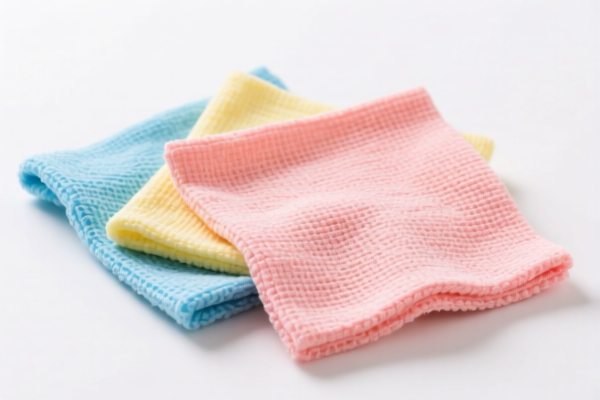
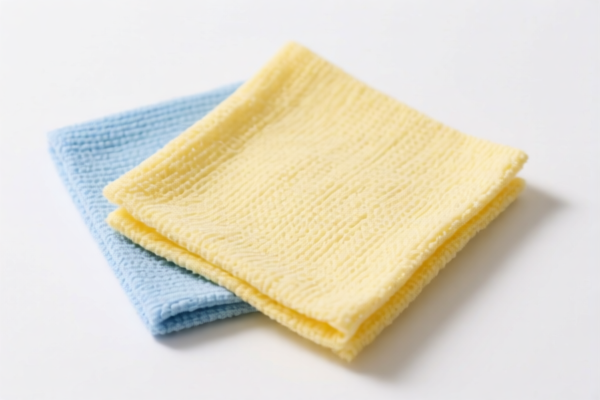
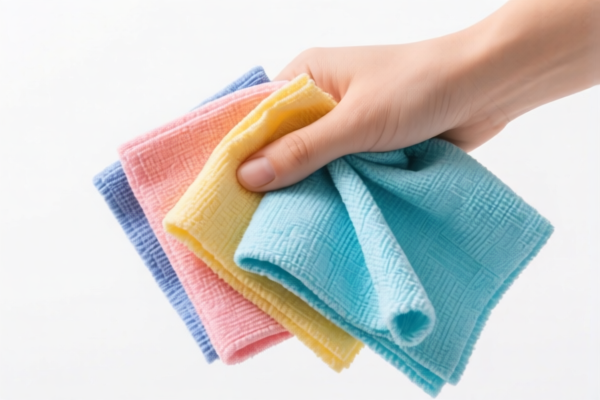
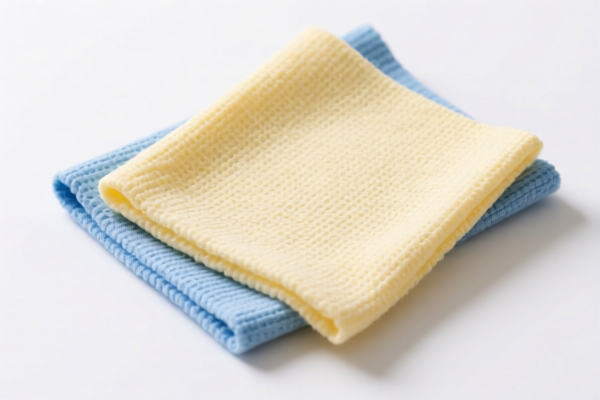
AI Analysis
🧺 Steamer Cloth (Cleaning & Kitchen Linens)
🌐 HS Code Reference & Customs Clearance Guide | 2026 Latest Tariff Analysis | Professional Compliance Strategy
📌 I. Product Definition & Classification: What Exactly is a "Steamer Cloth"?
A Steamer Cloth (often referred to as a steam mop pad, ironing cloth, or steam cleaning towel) is a textile accessory designed to be attached to a steam cleaner or steam iron. Its primary function is to absorb moisture, trap dirt, and provide friction for cleaning surfaces or smoothing fabrics using high-temperature steam.
In international trade, these items are NOT classified as "parts of machines" or "electrical appliances." Instead, they are classified as textile articles, specifically falling under the categories of Dishcloths or Linens, depending on their primary use and material composition.
⚠️ Key Distinction:
- If the cloth is woven or non-woven and used for general cleaning (floors, tables, dishes, clothes) → It falls under 6307 (Other made-up articles).
- If the cloth is part of a complete linens set (e.g., kitchen linen) → It may fall under 6302.
- Crucial Note: Most standalone "Steamer Cloths" are treated as cleaning cloths/dusters rather than pure kitchen linens, unless explicitly sold as part of a domestic linen set.
📦 II. HS Code Classification Details (2026 Latest Tariff Authority Mapping)
Based on the provided data, here are the applicable HS Codes for Steamer Cloths, categorized by material and specific use:
| HS Code | Product Description | Material | Specific Use/Type |
|---|---|---|---|
| 6307.10.20.28 | Other made-up articles: Floorcloths, dishcloths, dusters and similar cleaning cloths: Other Dish cloths: Other | Any material (Mixed) | General cleaning cloths, not made of cotton, or specific non-cotton variants not listed elsewhere. |
| 6307.10.20.27 | Other made-up articles: Floorcloths, dishcloths, dusters and similar cleaning cloths: Other Dish cloths: Of cotton | Cotton | Pure cotton steamer pads, cotton dishcloths, or cleaning towels primarily composed of cotton fibers. |
| 6302.91.00.60 | Bed linen, table linen, toilet linen and kitchen linen: Other: Of cotton Other: Other | Cotton | High-end cotton steamer cloths classified as "Kitchen Linen" (if used specifically in kitchen contexts) rather than general cleaning. |
| 6302.99.20.00 | Bed linen, table linen, toilet linen and kitchen linen: Other: Of other textile materials: Other | Non-Cotton (Polyester, Microfiber, Blends) | Synthetic or blended material cloths classified as "Kitchen Linen" or general textile linen. |
🔍 Important Classification Logic:
- 6307 vs. 6302:
- 6307 is for "Other made-up articles" like dusters, dishcloths, and cleaning cloths. This is the most common classification for disposable or semi-disposable steamer pads used for cleaning floors/counters.
- 6302 is for "Linens" (Bed, Table, Toilet, Kitchen). This applies if the product is marketed as durable, reusable kitchen linen (e.g., high-quality cotton tea towels repurposed for steaming).
- Material Matters:
- Cotton items have specific sub-codes (27, 60).
- Non-cotton items fall under 28 (Other cleaning cloths) or 00 (Other linens of other materials).
💰 III. 2026 Latest Tariff Rate Analysis (Detailed Breakdown)
✅ Applicable Country: United States (US)
✅ Origin: China (CN)
✅ Validity Period: 2025 November 10 onwards (and subsequent imports)
🎯 1. 6307.10.20.28 – Other Dish Cloths (Non-Cotton/Mixed)
| Item | Detail |
|---|---|
| Base Tariff Rate | 0.0% (Ad Valorem) |
| Additional Tariff (USITC Footnote 9903.88.01) | +0.0% (Exempt or Low-Risk Category) |
| IEEPA Additional Tariff (China) | +0.0% |
| Total Effective Tax Rate | 0.0% |
| Tax Calculation | CIF Value × 0.0% = $0 |
| De Minimis Eligibility | ✅ Yes (Likely eligible under $800 threshold if small value, but verify specific trade policy updates) |
| Legal Path | USITC:6307.10.20.28 → No IEEPA Footnote |
📌 Explanation:
- General textile cleaning cloths (non-cotton) currently enjoy 0% total tariff.
- This is a highly competitive tariff line.
- Warning: Ensure the product is not misclassified as "household linens" which might have different footnotes.
🎯 2. 6307.10.20.27 – Dish Cloths (Of Cotton)
| Item | Detail |
|---|---|
| Base Tariff Rate | 0.0% (Ad Valorem) |
| Additional Tariff (USITC Footnote 9903.88.01) | +0.0% |
| IEEPA Additional Tariff (China) | +0.0% |
| Total Effective Tax Rate | 0.0% |
| Tax Calculation | CIF Value × 0.0% = $0 |
| De Minimis Eligibility | ✅ Yes |
| Legal Path | USITC:6307.10.20.27 → No IEEPA Footnote |
📌 Explanation:
- Cotton dishcloths/cleaning cloths are also 0% taxed.
- Key Point: Even though cotton is a strategic material, cleaning cloths (6307.10.20) are exempt from the heavy tariffs that apply to apparel (61/62) or certain home textiles (6301/6302 in some cases).
🎯 3. 6302.91.00.60 – Kitchen Linen (Of Cotton)
| Item | Detail |
|---|---|
| Base Tariff Rate | 0.0% (Ad Valorem) |
| Additional Tariff | +0.0% |
| IEEPA Additional Tariff | +0.0% |
| Total Effective Tax Rate | 0.0% |
| Tax Calculation | CIF Value × 0.0% = $0 |
| De Minimis Eligibility | ✅ Yes |
| Legal Path | USITC:6302.91.00.60 → No IEEPA Footnote |
📌 Explanation:
- If your steamer cloth is marketed as durable kitchen linen (e.g., premium cotton tea towels), it falls here.
- Still 0% tariff.
- Risk: Higher scrutiny on "Linens" vs. "Cleaning Cloths." Must prove it is for domestic kitchen use, not just industrial cleaning.
🎯 4. 6302.99.20.00 – Linen (Of Other Textile Materials)
| Item | Detail |
|---|---|
| Base Tariff Rate | 0.0% (Ad Valorem) |
| Additional Tariff | +0.0% |
| IEEPA Additional Tariff | +0.0% |
| Total Effective Tax Rate | 0.0% |
| Tax Calculation | CIF Value × 0.0% = $0 |
| De Minimis Eligibility | ✅ Yes |
| Legal Path | USITC:6302.99.20.00 → No IEEPA Footnote |
📌 Explanation:
- Synthetic/microfiber steamer cloths classified as "Linens" (non-cotton).
- 0% tariff.
- Note: Most microfiber steamer pads are better classified under 6307 (Cleaning Cloths) as 6307.10.20.28 to avoid ambiguity with "linens."
🛠️ IV. Customs Clearance Practical Advice (Battle-Tested Tips)
✅ 1. Documentation Checklist (Mandatory)
| Document | Required? | Purpose |
|---|---|---|
| ✅ Product Specification Sheet | ✔️ | Must state: Material (100% Cotton vs. Polyester), Weight (GSM), Size, and Intended Use (Cleaning vs. Linen). |
| ✅ Product Photos | ✔️ | Show the cloth without the machine. Must look like a textile item, not an electronic part. |
| ✅ Commercial Invoice | ✔️ | Must clearly describe as "Textile Cleaning Cloth" or "Cotton Dishcloth" NOT "Accessory for Steam Cleaner." |
| ✅ Composition Label | ✔️ | Inner label of the cloth showing fiber content (e.g., "100% Cotton"). |
| ✅ Packing List | ✔️ | Net weight and gross weight are critical for textile duties. |
✅ 2. Declaration Strategy (Golden Rules)
🔥 "Declare by Material & Function, Not by Machine!"
| Scenario | Recommended HS Code | Correct Description | Error to Avoid |
|---|---|---|---|
| Microfiber Steamer Pad | 6307.10.20.28 |
"Synthetic Fiber Cleaning Cloth" | ❌ "Part for Steam Mop" (Could be classified as machine part, leading to 0% or different rules, but risky if considered accessory). |
| Cotton Steamer Towel | 6307.10.20.27 |
"Cotton Dishcloth / Cleaning Towel" | ❌ "Kitchen Linen" (If not explicitly sold as linen set, 6307 is safer for cleaning items). |
| Premium Cotton Tea Towel (for Steam) | 6302.91.00.60 |
"Cotton Kitchen Linen" | ❌ Only use if the product is primarily marketed as a towel/linen, not a disposable pad. |
| Mixed Fabric Pad | 6307.10.20.28 |
"Other Cleaning Cloth" | ❌ Vague description "Textile Product." |
📌 Critical Tip:
- Avoid using the word "Part" or "Accessory" in the product description.
- Use words like "Cleaning Cloth," "Dishcloth," "Duster," or "Linens."
- Customs officers classify textiles by their fiber content and end-use, not by the machine they attach to.
✅ 3. Special Scenarios & Pitfalls
| Scenario | Advice |
|---|---|
| Sold as a Bundle (Machine + Cloth) | If the machine is the main item, the cloth may be considered a free accessory and declared under the machine's HS code. However, if declared separately, use the textile HS codes above. |
| Disposable vs. Reusable | Disposable non-woven pads are definitely 6307.10.20.28. Reusable cotton pads can be 6307 or 6302. |
| Labeling | Ensure the product has a country of origin label ("Made in China") sewn into the cloth. Missing origin labels can cause customs delays. |
🌍 V. Global Market Comparison (2026 Outlook)
| Market | Recommended HS Code | Tariff Rate (China Origin) | Notes |
|---|---|---|---|
| 🇺🇸 USA | 6307.10.20.27 / .28 |
0.0% | Zero tariff for cleaning cloths. Best market. |
| 🇪🇺 EU | 6307.10 |
0.0% - 4.0% | Varies by specific type. Generally low for textiles. |
| 🇨🇳 China | 6307.10 |
0.0% - 5.0% | Import duties on finished textile articles can be low. |
| 🇬🇧 UK | 6307.10 |
0.0% | Post-Brexit tariffs on many textiles are favorable. |
📌 Conclusion:
- USA is the most tariff-friendly for these specific textile cleaning cloths, with 0% duty.
- There are no major trade wars impacting general household cleaning cloths (6307.10) at this time.
📌 VI. Common Errors & Pitfalls (Lessons Learned)
❌ Error 1: Declaring as "Electronic Accessory"
👉 Consequence: Customs may require FCC/CE certification even though it's just a cloth. Delay!
👉 Fix: Declare as Textile Article.
❌ Error 2: Misidentifying Material
👉 Consequence: If declared as "Polyester" but contains 60% Cotton, it could be reclassified to 6302.91 (Cotton Linen) or penalized for misdeclaration.
👉 Fix: Provide lab test reports confirming fiber composition.
❌ Error 3: Using "Steam Mop Pad" in Description
👉 Consequence: May trigger review as a "part of a machine."
👉 Fix: Use "Cotton Cleaning Cloth" or "Synthetic Dust Cloth."
🎯 VII. Conclusion: Maximize Profit, Minimize Risk
🎯 Remember the Golden Rule:
🔹 "Textile, Not Machine!"
🔹 "Cotton = 6307.27, Synthetic = 6307.28"
🔹 "Zero Duty is Ready – Just Declare Correctly!"
📌 Pro Tip:
- If you are exporting large volumes, consider applying for an Advance Ruling from US Customs to confirm the classification of your specific steamer cloth material.
- Ensure all marketing materials align with the HS code description (e.g., call it a "Cleaning Cloth," not a "Machine Part").
📣 Next Steps:
📞 Consult a Customs Broker with your specific product samples.
🚀 Prepare Invoices with clear "Textile Cleaning Cloth" descriptions.
✅ Verify Fiber Content labels on every unit.
✨ Smooth Clearance, Zero Duty, Happy Profits!
💼 Your Steamer Cloth is a Textile Hero – Treat it Like One!
Customer Reviews
About HS Code Classification
The Harmonized System (HS) is an internationally standardized nomenclature developed by the World Customs Organization (WCO) to classify traded products. Over 200 countries use the HS system as the basis for customs tariffs, trade statistics, and import/export regulations.
Each HS code follows a hierarchical structure:
- Chapter (2 digits) — Broad category of goods (e.g., Chapter 84: Machinery and Mechanical Appliances)
- Heading (4 digits) — More specific grouping within the chapter
- Subheading (6 digits) — Internationally standardized breakdown, used by all WCO member countries
- National subdivisions (8-10 digits) — Country-specific extensions for further classification, such as US HTSUS 10-digit codes
Correct HS code classification is essential for smooth customs clearance, accurate duty payment, and compliance with trade regulations. Misclassification can lead to customs delays, overpayment of duties, or penalties.
When importing from CN to US, the applicable tariff rates may include:
- Most-Favored-Nation (MFN) rate — The standard duty rate applied to WTO members
- General rate — Applied to countries without trade agreements
- Trade remedy duties — Additional tariffs such as Section 301 (anti-dumping), Section 232 (national security), or countervailing duties
The information provided on this page is for reference purposes only. For official classification, please consult with your local customs authority or a licensed customs broker.