Stearic Acid
CN → US| HS Code | Tariff Rate | Origin | Destination | Doc |
|---|---|---|---|---|
| 3823194000 | 20.7% | CN | US | Official Doc |
| 2915700120 | 40.0% | CN | US | Official Doc |
| 2915700150 | 40.0% | CN | US | Official Doc |
| 1516209100 | 0.0% | CN | US | Official Doc |
| 1516100000 | 0.0% | CN | US | Official Doc |
| 3823110000 | 0.0% | CN | US | Official Doc |
Product Images



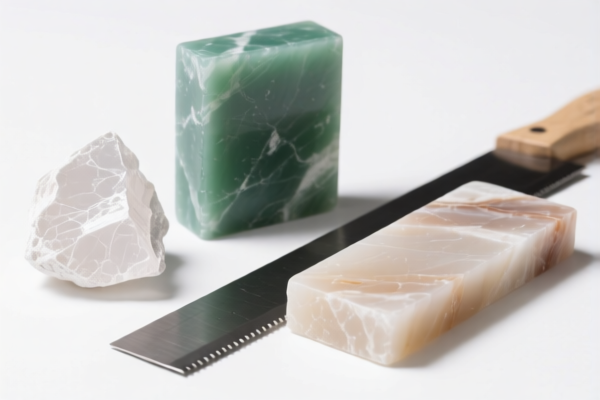
AI Analysis
🧪 Stearic Acid (硬脂酸) – HS Code Classification & 2026 US Customs Clearance Guide
🌐 HS Code Reference & Customs Clearance Guide | 2026 Latest Tariff Analysis | Professional-Level Strategy
📌 I. Product Definition & Classification: Do You Really Understand “Stearic Acid”?
Stearic acid (octadecanoic acid) is a long-chain saturated fatty acid, widely used in cosmetics, pharmaceuticals, plastics, and food industries. In international trade, its classification depends heavily on chemical structure, source (plant vs. animal/industrial), and purity.
Key distinctions: - Pure Chemical Fatty Acid: Directly classified under Chapter 29 (Organic Chemicals). - Refined Oil/Fat Derivative: Classified under Chapter 15 (Animal/Vegetable Fats and Oils) if considered a fractionated or derived product. - Industrial Preparations: Classified under Chapter 38 (Miscellaneous Chemical Products) if mixed or formulated for specific industrial uses.
⚠️ Critical Differentiation Point:
- If it is pure stearic acid (chemical grade) → Chapter 29 (2915.70.xxxx)
- If it is derived from hydrogenated oils/fats → Chapter 15 (1516.xx.xxxx)
- If it is an industrial preparation or mixture → Chapter 38 (3823.xx.xxxx)
📦 II. HS Code Classification Details (2026 Latest Tariff Authority Reference)
| HS Code | Product Description | Application Scenario | Tax Rate (US) |
|---|---|---|---|
2915.70.01.50 |
Stearic Acid, pure organic fatty acid | Chemical-grade raw material | 40.0% |
2915.70.01.20 |
Stearic Acid, pure organic fatty acid | Chemical-grade raw material | 40.0% |
1516.20.91.00 |
Other animal/vegetable fats & oils, refined/fractionated | Derived from plant/animal oil hydrogenation | 8.8¢/kg + 17.5% |
1516.10.00.00 |
Animal fats & oils, refined/fractionated | Derived from animal fat hydrogenation | 7¢/kg + 17.5% |
3823.11.00.00 |
Industrial monocarboxylic fatty acids | Industrial-grade or mixed preparations | 2.1¢/kg + 3.8% + 17.5% |
3823.19.40.00 |
Other industrial monocarboxylic fatty acids | Formulated industrial stearic acid | 20.7% |
🔍 Key Reminder:
- Pure chemical stearic acid falls under2915.70with a flat 40% ad valorem tariff.
- Oil-derived stearic acid (hydrogenated) falls under1516with specific + ad valorem duties.
- Industrial/mixed stearic acid falls under3823with lower base rates but varying附加税.
💰 III. 2026 Latest Tariff Rate Details (Including Surcharges & Policy Add-ons)
✅ Applicable Country: United States (US)
✅ Origin: China (CN)
✅ Effective Date: From November 10, 2025 (including subsequent imports)
🎯 1. 2915.70.01.50 & 2915.70.01.20 —— Pure Stearic Acid (Chemical Grade)
| Item | Content |
|---|---|
| Base Tariff | 5.0% (ad valorem) |
| Section 301 Surcharge | +25% |
| IEEPA Surcharge (China) | +10% |
| Total Rate | 40.0% |
| Calculation Method | CIF Value × 40% |
| De Minimis Eligible? | ❌ No (deny_de_minimis) |
| Legal Basis Path | USITC:2915.70.01.50/20 → FOOTNOTE:301.9903.88.01 → IEEPA:9903.01.24 |
📌 Explanation:
- The 25% comes from Section 301 (Trump-era tariffs, still in effect under Biden).
- The 10% comes from IEEPA (International Emergency Economic Powers Act) targeted at Chinese goods.
- Base rate is only 5%, but surcharges push total to 40% — very high cost.
🎯 2. 1516.20.91.00 —— Vegetable/Animal Oil-Derived Stearic Acid (Fractionated)
| Item | Content |
|---|---|
| Base Tariff | 8.8 cents/kg |
| Section 301 Surcharge | +7.5% |
| IEEPA Surcharge (China) | +10% |
| Total Rate | 8.8¢/kg + 17.5% |
| Calculation Method | Weight-based (¢/kg) + Ad Valorem (17.5% of CIF) |
| De Minimis Eligible? | ❌ No |
| Legal Basis Path | USITC:1516.20.91.00 → FOOTNOTE:301.9903.88.01 → IEEPA:9903.01.24 |
📌 Note:
- This applies if stearic acid is produced via hydrogenation of vegetable oils (e.g., soybean, palm).
- Specific duty (¢/kg) applies, which may be lower or higher than ad valorem depending on volume.
🎯 3. 1516.10.00.00 —— Animal Fat-Derived Stearic Acid
| Item | Content |
|---|---|
| Base Tariff | 7 cents/kg |
| Section 301 Surcharge | +7.5% |
| IEEPA Surcharge (China) | +10% |
| Total Rate | 7¢/kg + 17.5% |
| Calculation Method | Weight-based (¢/kg) + Ad Valorem (17.5% of CIF) |
| De Minimis Eligible? | ❌ No |
| Legal Basis Path | USITC:1516.10.00.00 → FOOTNOTE:301.9903.88.01 → IEEPA:9903.01.24 |
📌 Note:
- Applies to tallow-derived stearic acid.
- Specific duty is lower (7¢/kg) compared to vegetable-derived (8.8¢/kg).
🎯 4. 3823.11.00.00 —— Industrial Monocarboxylic Fatty Acids (Stearic Acid Preparations)
| Item | Content |
|---|---|
| Base Tariff | 2.1 cents/kg + 3.8% |
| Section 301 Surcharge | +7.5% |
| IEEPA Surcharge (China) | +10% |
| Total Rate | 2.1¢/kg + 3.8% + 17.5% |
| Calculation Method | Weight-based + Two-tier Ad Valorem |
| De Minimis Eligible? | ❌ No |
| Legal Basis Path | USITC:3823.11.00.00 → FOOTNOTE:301.9903.88.01 → IEEPA:9903.01.24 |
📌 Note:
- Applies to industrial-grade or mixture stearic acid.
- Lowest base rate among all options, but still subject to surcharges.
🎯 5. 3823.19.40.00 —— Other Industrial Monocarboxylic Fatty Acids
| Item | Content |
|---|---|
| Base Tariff | 3.2% |
| Section 301 Surcharge | +7.5% |
| IEEPA Surcharge (China) | +10% |
| Total Rate | 20.7% |
| Calculation Method | Ad Valorem only |
| De Minimis Eligible? | ❌ No |
| Legal Basis Path | USITC:3823.19.40.00 → FOOTNOTE:301.9903.88.01 → IEEPA:9903.01.24 |
📌 Note:
- For other industrial fatty acid preparations not covered under3823.11.
- Lower total rate (20.7%) than pure chemical grade (40%), but requires proof of industrial formulation.
🛠️ IV. Customs Clearance Practical Advice (Real-World Pitfall Avoidance)
✅ 1. Required Documentation (All Mandatory)
| Document | Required | Notes |
|---|---|---|
| ✅ Product Specification Sheet | ✔️ | Must include purity %, CAS number (57-11-4), source (plant/animal/industrial) |
| ✅ Certificate of Analysis (COA) | ✔️ | Third-party lab report confirming stearic acid content |
| ✅ Commercial Invoice | ✔️ | Must specify “Stearic Acid” and HS Code |
| ✅ Packing List | ✔️ | Detail net/gross weight, packaging type |
| ✅ Bill of Lading/Air Waybill | ✔️ | Standard shipping document |
| ✅ Origin Certificate (CO) | ✔️ | If not Chinese origin, can reduce tariffs |
| ✅ FDA Notification (if food/cosmetic use) | ✔️ | Required for consumer-facing products |
✅ 2. Declaration Tips (Key Rules)
🔥 “Pure vs. Derived Matters: Chemical = 40%, Oil-Derived = Lower, Industrial = Lowest!”
| Scenario | Correct HS Code | Wrong Practice |
|---|---|---|
| Pure chemical stearic acid | 2915.70.01.50 or 2915.70.01.20 |
Declare as “oil derivative” → Audit risk |
| Hydrogenated palm/soybean stearic acid | 1516.20.91.00 |
Declare as pure chemical → 40% instead of ~17.5% |
| Tallow-derived stearic acid | 1516.10.00.00 |
Same as above |
| Industrial-grade/mixture stearic acid | 3823.11.00.00 or 3823.19.40.00 |
Declare as pure chemical → Overpay tariffs |
| Stearic acid in cosmetic cream | Still 3823 or 2915 depending on purity |
Cannot be hidden in “cosmetic preparation” |
✅ 3. Special Cases Handling
| Scenario | Handling Advice |
|---|---|
| OEM/Private Label | Provide formulation sheet; if >90% pure, still 2915 |
| Stearic Acid in Emulsions/Creams | If mixed, may fall under 3823; if pure, 2915 |
| Food-Grade Stearic Acid | Still 2915 or 1516; requires FDA compliance |
| Pharmaceutical-Grade | Same HS, but stricter documentation |
| Bulk vs. Retail Packaging | Packaging does not change HS Code |
🌍 V. Global Market Comparison (2026 Latest)
| Country/Region | Recommended HS Code | Tariff (China Origin) | Certification | Notes |
|---|---|---|---|---|
| 🇺🇸 USA | 2915.70.01.50 |
40.0% | FDA, IEEPA | Highest tariff for pure grade |
| 🇨🇳 China | 2915.70.01.50 |
5.0% | No surcharges | Base rate only |
| 🇪🇺 EU | 2915.70.00.00 |
5.0% | REACH, CosIng | No surcharges |
| 🇯🇵 Japan | 2915.70.00.00 |
5.0% | PMDA, JIS | No surcharges |
| 🇦🇺 Australia | 2915.70.00.00 |
5.0% | TGA | No surcharges |
📌 Conclusion:
- USA imposes the highest tariffs on Chinese-origin stearic acid due to Section 301 + IEEPA.
- Alternative sourcing (Vietnam, India, Brazil) can avoid IEEPA 10% surcharge.
- Consider reclassification to1516or3823if product qualifies.
📌 VI. Common Mistakes & Pitfall Guide (Lessons Learned)
❌ Mistake 1: Declaring oil-derived stearic acid as “pure chemical” (2915)
👉 Consequence: Pay 40% instead of ~17.5% → Overpayment + Audit Risk
❌ Mistake 2: Mixing pure and industrial grades in one shipment
👉 Consequence: Customs may classify entire shipment under highest rate (40%)
❌ Mistake 3: No Certificate of Analysis (COA)
👉 Consequence: Customs rejects classification → Delay or Rejection
❌ Mistake 4: Using vague description “Fatty Acid” without specifying “Stearic”
👉 Consequence: Misclassification → Penalties + Back Duties
✅ Correct Approach:
“Stearic Acid, ≥98% Purity, CAS No. 57-11-4, Hydrogenated Soybean Oil Derived, For Industrial Use, Non-Retail, Model XYZ, FDA Compliant”
🎯 VII. Conclusion: Precise Classification Saves Money!
🎯 Remember the Rule:
🔹 “Pure Chemical = 40%, Oil-Derived = ~17.5%, Industrial = ~20% Max”
🔹 “HS Code Determines Your Cost, Misclassification Costs You Thousands!”
📌 Pro Tip:
If your stearic acid is sourced from non-China countries (e.g., Malaysia, India, Brazil), you can avoid IEEPA 10% surcharge, reducing total tariff to 30% (for 2915) or 7.5% (for 1516/3823).
Recommend Advance Ruling from CBP to confirm classification before shipment.
📣 Immediate Action:
📞 Consult a licensed customs broker + Provide COA + Apply for CBP Advance Ruling
🚀 Ensure smooth clearance, minimized costs, and maximum profit!
✨ Professional clearance starts with accurate classification!
💼 Every cent saved is pure profit!
Customer Reviews
About HS Code Classification
The Harmonized System (HS) is an internationally standardized nomenclature developed by the World Customs Organization (WCO) to classify traded products. Over 200 countries use the HS system as the basis for customs tariffs, trade statistics, and import/export regulations.
Each HS code follows a hierarchical structure:
- Chapter (2 digits) — Broad category of goods (e.g., Chapter 84: Machinery and Mechanical Appliances)
- Heading (4 digits) — More specific grouping within the chapter
- Subheading (6 digits) — Internationally standardized breakdown, used by all WCO member countries
- National subdivisions (8-10 digits) — Country-specific extensions for further classification, such as US HTSUS 10-digit codes
Correct HS code classification is essential for smooth customs clearance, accurate duty payment, and compliance with trade regulations. Misclassification can lead to customs delays, overpayment of duties, or penalties.
When importing from CN to US, the applicable tariff rates may include:
- Most-Favored-Nation (MFN) rate — The standard duty rate applied to WTO members
- General rate — Applied to countries without trade agreements
- Trade remedy duties — Additional tariffs such as Section 301 (anti-dumping), Section 232 (national security), or countervailing duties
The information provided on this page is for reference purposes only. For official classification, please consult with your local customs authority or a licensed customs broker.