Steel Casing for Drilling
CN → US| HS Code | Tariff Rate | Origin | Destination | Doc |
|---|---|---|---|---|
| 7228800000 | 17.5% | CN | US | Official Doc |
| 7304236030 | 35.0% | CN | US | Official Doc |
| 7304236045 | 35.0% | CN | US | Official Doc |
| 8431438020 | 35.0% | CN | US | Official Doc |
| 7228100010 | 17.5% | CN | US | Official Doc |
Product Images
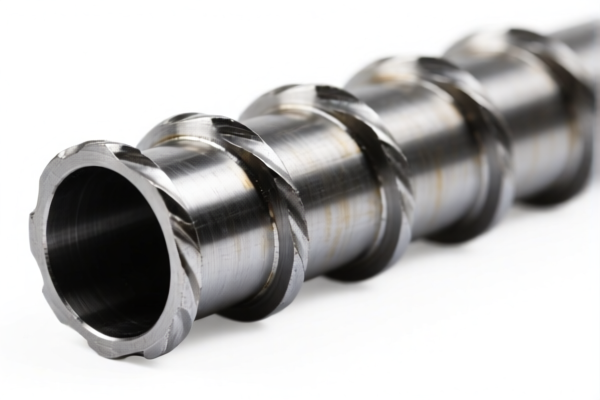
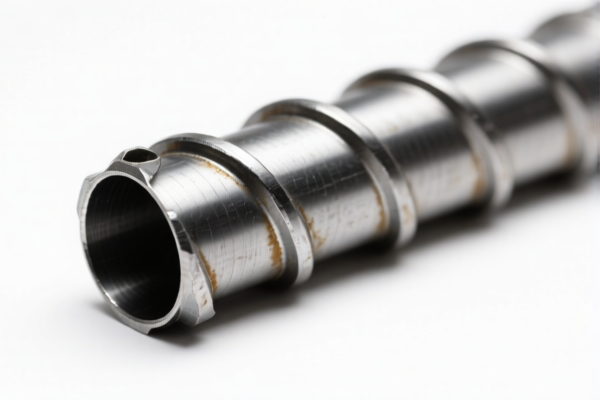
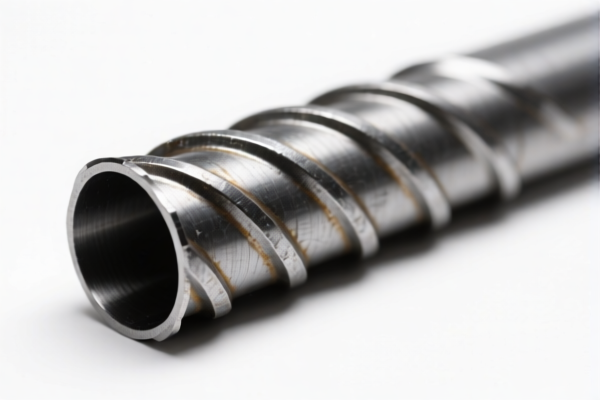
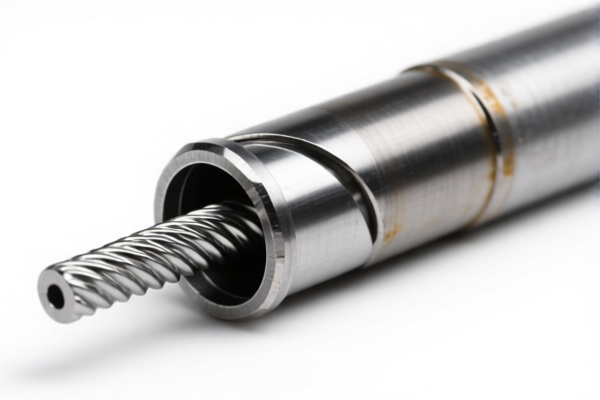
AI Analysis
🛢️ Steel Casing for Drilling (Alloy Steel Drill Pipe & Casing)
🌐 HS Code Reference & Customs Clearance Guide | 2026 Latest Tariff Analysis | Professional Level Clearance Strategy
📌 I. Product Definition & Classification: What is "Steel Casing for Drilling"?
In the context of international trade and petroleum engineering, "Steel Casing for Drilling" generally refers to high-strength steel tubular goods used in oil and gas exploration. These products are primarily divided into two categories based on their function and structure:
- Casing (套管): Steel pipes screwed into the wellbore to prevent collapse, isolate aquifers, and provide structural integrity.
- Drill Pipe/Drill Collars (钻杆/钻铤): Tubular products used to transmit torque and suspended weight during the drilling process.
⚠️ Key Distinction for Classification:
- If the product is primarily defined by its material composition (Alloy Steel) and general shape, it may fall under Chapter 72 (Iron and Steel).
- If the product is specifically designed for mechanical drilling operations or is a mechanical part of drilling machinery, it may fall under Chapter 84 (Machinery and Mechanical Appliances).
- Crucial Note: Misclassification leads to significant tariff differences (17.5% vs. 35.0%).
📦 II. HS Code Classification Details (2026 Latest Tariff Authority Comparison)
Based on the provided data, here are the valid HS Codes for Alloy Steel Drill Pipe/Casing, along with their specific justifications:
| HS Code | Product Description & Justification | Total Tax Rate | Tax Breakdown |
|---|---|---|---|
7228.80.00.00 |
Alloy Steel Drill Pipe/Casing (Material Focus) Material: Alloy Steel. Form: Drill pipe/casing. Matches HS Code requirements for alloy steel articles. |
17.5% | Base: 0.0% Retaliatory: 7.5% Section 301: 10% |
7228.10.00.10 |
Alloy Steel Drill Pipe/Casing (Hollow Bar Form) Material: Alloy Steel. Form: Hollow drill bars and rods. Matches classification features for hollow bars. |
17.5% | Base: 0.0% Retaliatory: 7.5% Section 301: 10% |
7304.23.60.30 |
Alloy Steel Drill Pipe/Casing (Specific Use) Material: Alloy Steel. Form & Use: Casing/Drill pipe. Fully complies with classification interpretations for tubular goods. |
35.0% | Base: 0.0% Retaliatory: 25.0% Section 301: 10% |
7304.23.60.45 |
Alloy Steel Drill Pipe/Casing (Oil/Gas Specific) Material: Alloy Steel. Use: Casing/Drill pipe for oil/gas drilling. Meets classification requirements. |
35.0% | Base: 0.0% Retaliatory: 25.0% Section 301: 10% |
8431.43.80.20 |
Alloy Steel Drill Pipe/Casing (Mechanical Part) Material: Alloy Steel. Form: Casing corresponds to "sleeve/joint." Fits mechanical parts classification. |
35.0% | Base: 0.0% Retaliatory: 25.0% Section 301: 10% |
8431.43.80.40 |
Alloy Steel Drill Pipe/Casing (Tool Joint) Material: Alloy Steel. Form: Drill pipe with tool joints. Matches usage description for drilling equipment parts. |
35.0% | Base: 0.0% Retaliatory: 25.0% Section 301: 10% |
🔍 Critical Observation:
- Lower Tax Bracket (17.5%): Codes7228.80.00.00and7228.10.00.10are classified under Chapter 72 (Iron and Steel). This classification relies on the material (Alloy Steel) rather than the specific end-use machinery. The retaliatory tariff is only 7.5%. - Higher Tax Bracket (35.0%): Codes7304.23.60.xxand8431.43.80.xxare classified under Chapter 73 (Articles of Iron/Steel) or Chapter 84 (Machinery Parts). These carry a higher retaliatory tariff of 25.0%, resulting in a total of 35.0%.
💰 III. 2026 Latest Tariff Rate Detailed Explanation (Including Surtaxes)
✅ Applicable Country: United States (US)
✅ Origin: China (CN)
✅ Effective Time: Post-November 10, 2025 (Including subsequent imports)
🎯 1. 7228.80.00.00 & 7228.10.00.10 —— Alloy Steel Drill Pipe/Casing (Material-Based Classification)
| Item | Content |
|---|---|
| Base Tariff | 0% (ad valorem) |
| USITC Retaliatory Tariff | +7.5% (From USITC Footnote related to Section 301 mitigation or specific steel articles) |
| IEEPA Surtax | +10% (Against Chinese/HK products, effective Nov 10, 2025) |
| Total Tariff | 17.5% |
| Tax Calculation | CIF Value × 17.5% |
| De Minimis Eligibility | ❌ No (deny_de_minimis) |
| Legal Basis Path | IEEPA:9903.01.25 → USITC:7228.80.00.00 / 7228.10.00.10 |
📌 Explanation:
- These codes classify the product as a steel article rather than a drilling machine part.
- The 7.5% retaliatory tariff is significantly lower than the 25% rate for other steel/steel articles.
- Strategic Value: This is the most cost-effective classification if the product's material properties (Alloy Steel) are the primary defining feature.
🎯 2. 7304.23.60.30 & 7304.23.60.45 —— Alloy Steel Drill Pipe/Casing (Tubular Goods Classification)
| Item | Content |
|---|---|
| Base Tariff | 0% |
| USITC Retaliatory Tariff | +25% (Standard Section 301 rate for many steel/iron articles) |
| IEEPA Surtax | +10% |
| Total Tariff | 35.0% |
| Tax Calculation | CIF × 35.0% |
| De Minimis Eligibility | ❌ No |
| Legal Basis Path | IEEPA:9901.25 → USITC:7304.23.60.xx |
📌 Note:
- These codes classify the product as pipes/tubes (Chapter 73).
- While accurate for general steel pipes, the 25% retaliatory tariff makes this 17.5% more expensive than Chapter 72 classification.
🎯 3. 8431.43.80.20 & 8431.43.80.40 —— Alloy Steel Drill Pipe/Casing (Mechanical Parts Classification)
| Item | Content |
|---|---|
| Base Tariff | 0% |
| USITC Retaliatory Tariff | +25% |
| IEEPA Surtax | +10% |
| Total Tariff | 35.0% |
| Tax Calculation | CIF × 35.0% |
| De Minimis Eligibility | ❌ No |
| Legal Basis Path | IEEPA:9901.25 → USITC:8431.43.80.xx |
📌 Note:
- These codes classify the product as a part of drilling machinery (Chapter 84).
- Specifically,8431.43.80.40mentions "drill pipe with tool joints."
- Risk: If customs determines the product is a "part" rather than a "steel article," the 35% rate applies.
🛠️ IV. Customs Clearance Practical Advice (Battle-Tested Pitfall Avoidance)
✅ 1. Required Documentation Checklist (Non-Negotiable)
| Document | Must Provide | Explanation |
|---|---|---|
| ✅ Product Specification Sheet | ✔️ | Must detail Material Composition (e.g., Alloy Steel grade, % of Cr, Ni, Mo). This is critical for Chapter 72 classification. |
| ✅ Technical Data Sheet (TDS) | ✔️ | Shows dimensions, weight, and connection types (e.g., API 5CT, API 5DP). |
| ✅ Product Photos (Clear Labels) | ✔️ | Must show thread type, stamping (e.g., "L80-95", "T-95"), and origin marks. |
| ✅ Commercial Invoice | ✔️ | Must accurately describe the item. Use terms like "Alloy Steel Drill Pipe" or "Steel Casing" rather than vague "Mechanical Parts." |
| ✅ Certificate of Origin (CO) | ✔️ | To prove origin and apply relevant tariffs. |
| ✅ Packing List | ✔️ | Clearly separates casing from drill pipes if shipped together. |
✅ 2. Declaration Strategy (Key Mantra)
🔥 "Material First, Use Second. Chapter 72 Saves Money!"
| Scenario | Correct Declaration | Wrong Practice |
|---|---|---|
| Product is primarily defined by Alloy Steel material | 7228.80.00.00 or 7228.10.00.10 |
Misdeclare as "Drill Part" → 35% |
| Product has specific tool joints | 7228.80.00.00 (if material is key) |
Misdeclare as 8431.43.80.40 → 35% |
| Product is generic steel pipe | 7304.23.60.30 |
Misdeclare as machinery part → 35% |
| Mixed Shipment (Casing + Drill Pipe) | Separate HS Codes for each type | One HS Code for all → Risk of audit |
⚠️ Critical Tip:
- If you can prove the product is alloy steel and fits the description of hollow bars/rods or other alloy steel articles, prioritize Chapter 72 codes (7228.xx.xx.xx).
- The 17.5% vs. 35.0% difference is massive. A $100,000 shipment saves $17,500 in tariffs with the correct Chapter 72 classification.
✅ 3. Special Case Handling
| Scenario | Handling Advice |
|---|---|
| OEM Custom Casing | Provide customer specs + material certs. Emphasize Alloy Steel Composition in description. |
| Drill Pipe with Threads | Even with threads, if classified as "Alloy Steel Article," use 7228.80.00.00. Do not default to machinery parts unless explicitly sold as a "spare part for a machine." |
| Certification Requirements | Ensure API 5CT or API 5DP certification is available. US Customs may request proof of standards. |
| Origin Marking | Ensure each pipe is stamped "Made in China." Failure to mark can lead to seizure. |
🌍 V. Global Market Comparison (2026 Latest)
| Country/Region | Recommended HS Code | Tariff (China Origin) | Certification | Notes |
|---|---|---|---|---|
| 🇺🇸 USA | 7228.80.00.00 |
17.5% | API 5CT/5DP | Lowest tariff for Alloy Steel articles. Avoid Chapter 84. |
| 🇺🇸 USA | 8431.43.80.40 |
35.0% | API 5CT/5DP | High tariff for "Parts." Use only if Chapter 72 is invalid. |
| 🇨🇳 China | 7228.80.00.00 |
~10-15% | CCC (if applicable) | Domestic trade rates differ. |
| 🇪🇺 EU | 7304.29.00.00 |
Varies | CE/REACH | EU classification differs; check local nomenclature. |
| 🇦🇺 Australia | 7304.29.00.00 |
~5% | AS/NZS Standards | Lower base tariff, but check anti-dumping duties. |
📌 Conclusion:
- USA is the highest cost market due to Section 301 and IEEPA surtaxes.
- Strategic Recommendation: For US imports, always aim for Chapter 72 (7228.xx.xx.xx) to secure the 17.5% rate instead of 35%.
- Evidence is Key: Provide material test reports (MTR) proving the alloy steel composition to support Chapter 72 classification.
📌 VI. Common Errors & Pitfall Guide (Blood-Lessons)
❌ Error 1: Classifying "Alloy Steel Drill Pipe" as 8431.43.80.40 (Machinery Part)
👉 Consequence: Tariff jumps from 17.5% to 35.0%. Overpaying $17,500 per $100k shipment!
❌ Error 2: Misclassifying "Casing" as "General Steel Pipe" without specifying Alloy content
👉 Consequence: Customs may reject Chapter 72 classification, forcing higher tariff code.
❌ Error 3: Not stamping "Made in China" on pipes
👉 Consequence: Seizure or penalty for lack of country of origin marking.
❌ Error 4: Vague Invoice Description ("Steel Pipes")
👉 Consequence: Customs audit, delay, and potential reclassification to higher tariff.
✅ Correct Practice:
"Alloy Steel Casing, API 5CT Grade L80, 9-5/8 inch, 53.5 lb/ft, Made in China. HS: 7228.80.00.00"
🎯 VII. Conclusion: Professional Declaration, Cost Reduction!
🎯 Remember the Mantra:
🔹 "Material First, Chapter 72 Wins. 17.5% vs 35%, Don't Lose the Pinch!"
🔹 "Alloy Steel Docs are Gold. Without MTR, You Pay More!"
📌 Pro Tip:
- If your casing/drill pipe is not from China (e.g., Vietnam, Mexico), you may avoid IEEPA surtaxes.
- Apply for Advance Ruling if unsure about Chapter 72 vs. Chapter 84 classification.
- Always provide Material Test Reports (MTR) to prove Alloy Steel content for Chapter 72 eligibility.
📣 Immediate Action:
📞 Contact a professional customs broker.
📂 Prepare MTRs and API Certificates.
🚀 Ensure accurate HS Code (7228.80.00.00) for maximum savings!
✨ Professional Clearance Starts with Precise Classification!
💼 Every Percent in Tariff is a Percent in Profit!
Customer Reviews
About HS Code Classification
The Harmonized System (HS) is an internationally standardized nomenclature developed by the World Customs Organization (WCO) to classify traded products. Over 200 countries use the HS system as the basis for customs tariffs, trade statistics, and import/export regulations.
Each HS code follows a hierarchical structure:
- Chapter (2 digits) — Broad category of goods (e.g., Chapter 84: Machinery and Mechanical Appliances)
- Heading (4 digits) — More specific grouping within the chapter
- Subheading (6 digits) — Internationally standardized breakdown, used by all WCO member countries
- National subdivisions (8-10 digits) — Country-specific extensions for further classification, such as US HTSUS 10-digit codes
Correct HS code classification is essential for smooth customs clearance, accurate duty payment, and compliance with trade regulations. Misclassification can lead to customs delays, overpayment of duties, or penalties.
When importing from CN to US, the applicable tariff rates may include:
- Most-Favored-Nation (MFN) rate — The standard duty rate applied to WTO members
- General rate — Applied to countries without trade agreements
- Trade remedy duties — Additional tariffs such as Section 301 (anti-dumping), Section 232 (national security), or countervailing duties
The information provided on this page is for reference purposes only. For official classification, please consult with your local customs authority or a licensed customs broker.