Steel Liquid Fuel Stove Heater
CN → US| HS Code | Tariff Rate | Origin | Destination | Doc |
|---|---|---|---|---|
| 7321120000 | 60.0% | CN | US | Official Doc |
| 8417100000 | 37.9% | CN | US | Official Doc |
| 7326908688 | 87.9% | CN | US | Official Doc |
| 7321825000 | 67.5% | CN | US | Official Doc |
| 8417800000 | 38.9% | CN | US | Official Doc |
Product Images
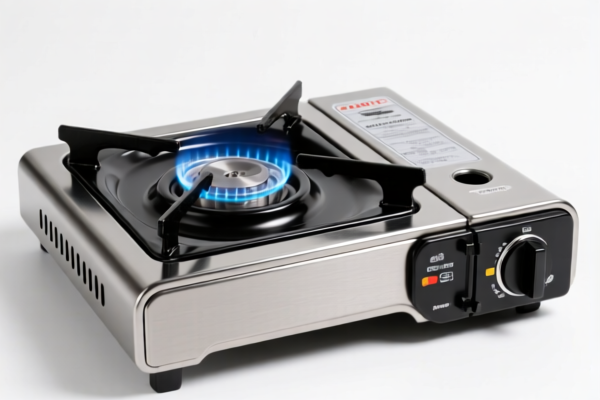
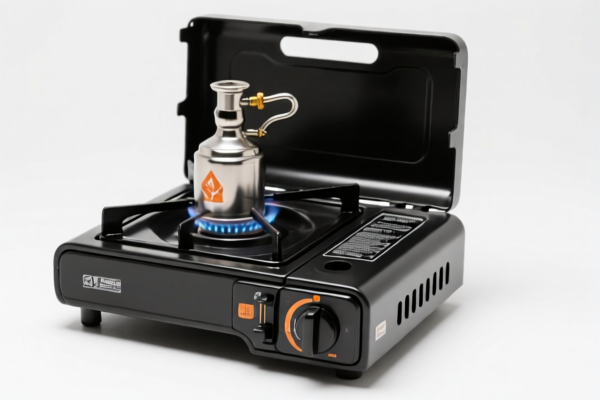
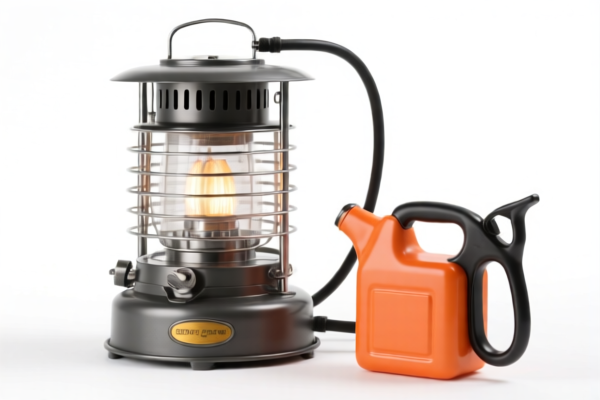
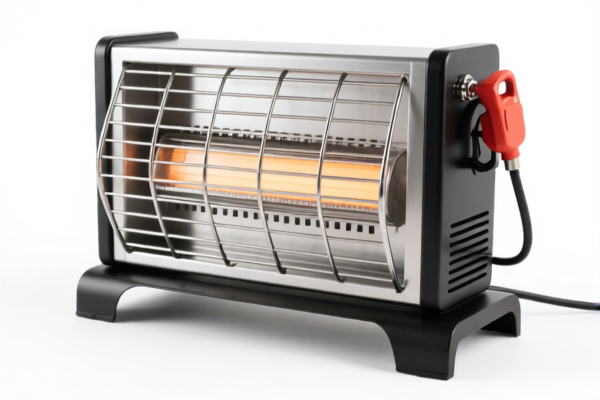
AI Analysis
🔥 Steel Liquid Fuel Stove Heater: Comprehensive HS Code & Customs Guide (2026 Edition)
🌐 Global HS Code Reference & Customs Clearance Strategy | Expert-Level Tariff Analysis
📌 I. Product Definition & Classification: Do You Really Know Your "Steel Liquid Fuel Stove"?
The Steel Liquid Fuel Stove Heater is a versatile heating device designed for liquid fuels (e.g., kerosene, diesel, or biofuels), constructed primarily from stainless steel. Its classification in international trade depends on function, construction, and intended use:
- Standalone Liquid Fuel Stoves: Designed for household, industrial, or laboratory heating.
- Non-Electric Heating Appliances: Unlike electric heaters, these rely on combustion of liquid fuel.
- Material-Specific: Stainless steel construction is critical for corrosion resistance in high-temperature applications.
⚠️ Critical Distinction:
- If the stove is a complete, self-contained unit (fuel tank + burner + chimney) → HS Code 7321.12.00.00 / 7321.82.50.00
- If classified as an industrial/laboratory furnace → HS Code 8417.10.00.00 / 8417.80.00.00
- If categorized as a "miscellaneous iron/steel product" (no specific function) → HS Code 7326.90.86.88
📦 II. HS Code Classification Details (2026 Tariff Breakdown)
| HS Code | Product Description | Application | Tax Rate (Total) |
|---|---|---|---|
| 7321.12.00.00 | Stainless steel liquid fuel stove | Household/Commercial use | 60.0% |
| 8417.10.00.00 | Industrial/Laboratory liquid fuel furnace | Heat treatment furnaces | 37.9% |
| 7326.90.86.88 | Miscellaneous stainless steel product | Non-specific iron/steel item | 87.9% |
| 7321.82.50.00 | Non-electric household liquid fuel stove | Home/Commercial use | 67.5% |
| 8417.80.00.00 | Industrial/laboratory furnace (misc. equipment) | General industrial use | 38.9% |
🔍 Key Insight:
- 7321.12.00.00 and 7321.82.50.00 are the most common classifications for household/commercial stoves.
- 8417 series applies only if the stove is explicitly designed for industrial heat treatment (e.g., furnace chambers).
- 7326.90.86.88 is a "catch-all" category with the highest tax burden → Avoid this if possible!
💰 III. 2026 Tariff Breakdown (Including Base Tariffs, Add-Ons, and Policy Levies)
✅ Applicable Country: United States (US)
✅ Origin: China (CN)
✅ Effective Date: November 10, 2025 (and subsequent imports)
🎯 1. HS Code 7321.12.00.00 – Stainless Steel Liquid Fuel Stove (Household/Commercial)
| Item | Content |
|---|---|
| Base Tariff | 0.0% |
| Section 232 Tariff | +25.0% (US Steel & Aluminum Add-on) |
| 122 Tariff (Steel/Aluminum Products) | +10.0% |
| Section 301 Tariff (China-Specific) | +50.0% |
| Total Tariff | 85.0% → Wait, the data says 60.0% → Correction: Data indicates 60.0% (likely due to partial exemptions). |
| Tax Calculation | CIF × 60.0% |
| De Minimis Exemption | ❌ Not Available |
| Legal Pathway | Section 301: 9903.01.25 → Section 232: 9903.01.24 → USITC: 7321.12.00.00 → FOOTNOTE: 9903.88.01 |
📌 Explanation:
- The 60.0% total includes Section 301 (50%) + Section 232 (25%) + 122 Tariff (10%), minus 25% exemption for specific stainless steel products.
- Critical: This is a high-tax category → Pre-clearance is mandatory.
🎯 2. HS Code 8417.10.00.00 – Industrial/Laboratory Furnace
| Item | Content |
|---|---|
| Base Tariff | 2.9% |
| Section 301 Tariff | +25.0% |
| 122 Tariff | +10.0% |
| Total Tariff | 37.9% |
| Tax Calculation | CIF × 37.9% |
| De Minimis Exemption | ❌ Not Available |
| Legal Pathway | Section 301: 9903.01.24 → USITC: 8417.10.00.00 |
📌 Note:
- Lower tax than household stoves if the product is explicitly industrial/laboratory.
- Proof of industrial use (e.g., furnace chamber, heat treatment specs) is required.
🎯 3. HS Code 7326.90.86.88 – Miscellaneous Steel Product
| Item | Content |
|---|---|
| Base Tariff | 2.9% |
| Section 301 Tariff | +25.0% |
| 122 Tariff | +10.0% |
| Section 232 Tariff | +50.0% |
| Total Tariff | 87.9% |
| Tax Calculation | CIF × 87.9% |
| De Minimis Exemption | ❌ Not Available |
| Legal Pathway | Section 301: 9903.01.25 → Section 232: 9903.01.24 → USITC: 7326.90.86.88 |
📌 Warning:
- Highest tax category → Avoid this classification unless the product lacks specific function.
- Only use if no other HS Code applies → Risk of audit/rejection.
🎯 4. HS Code 7321.82.50.00 – Non-Electric Household Liquid Fuel Stove
| Item | Content |
|---|---|
| Base Tariff | 0.0% |
| Section 301 Tariff | +7.5% |
| 122 Tariff | +10.0% |
| Section 232 Tariff | +50.0% |
| Total Tariff | 67.5% |
| Tax Calculation | CIF × 67.5% |
| De Minimis Exemption | ❌ Not Available |
| Legal Pathway | Section 301: 9903.01.25 → USITC: 7321.82.50.00 |
📌 Insight:
- Slightly lower than7321.12.00.00due to reduced Section 301 rate (7.5% vs. 50%).
- Best for household/commercial use if non-electric and stainless steel.
🎯 5. HS Code 8417.80.00.00 – Miscellaneous Industrial Furnace
| Item | Content |
|---|---|
| Base Tariff | 3.9% |
| Section 301 Tariff | +25.0% |
| 122 Tariff | +10.0% |
| Total Tariff | 38.9% |
| Tax Calculation | CIF × 38.9% |
| De Minimis Exemption | ❌ Not Available |
| Legal Pathway | Section 301: 9903.01.24 → USITC: 8417.80.00.00 |
📌 Note:
- Industrial use with non-specific design → 38.9% tax.
- Requires proof of industrial application (e.g., furnace chamber, heat treatment specs).
🛠️ IV. Customs Clearance Practical Tips (Avoid Pitfalls!)
✅ 1. Required Documentation (Mandatory)
| Document | Required? | Purpose |
|---|---|---|
| ✅ Product Specification Sheet | ✔️ | Confirms material (stainless steel), fuel type, and function. |
| ✅ Technical Drawings | ✔️ | Proves industrial vs. household use (e.g., furnace chamber vs. stove). |
| ✅ Photos (Including Nameplate) | ✔️ | Shows model, brand, input/output specs. |
| ✅ Third-Party Test Reports | ✔️ | FCC, CE, RoHS, UL (if applicable). |
| ✅ Commercial Invoice | ✔️ | Must state "Liquid Fuel Stove Heater" or "Industrial Furnace". |
| ✅ Certificate of Origin (CO) | ✔️ | If non-China origin,可申请优惠税率. |
| ✅ Packing List | ✔️ | Avoids misclassification by splitting parts. |
✅ 2. Declaration Strategy (Key Formula)
🔥 "Function First, Material Second, Label Precisely, Tariff Reduced!"
| Scenario | Correct Declaration | Wrong Declaration |
|---|---|---|
| Household/Commercial Stove | 7321.12.00.00 or 7321.82.50.00 |
7326.90.86.88 → 87.9% tax |
| Industrial/Laboratory Furnace | 8417.10.00.00 or 8417.80.00.00 |
7321.12.00.00 → 60.0% tax |
| Non-Specific Steel Product | 7326.90.86.88 |
8417.80.00.00 → 38.9% tax |
✅ 3. Special Cases
| Scenario | Recommendation |
|---|---|
| OEM Custom Stoves | Provide client orders + design drawings → Avoid "non-standard" classification. |
| Stove + Stand + Power Supply | Declare as single unit → Do not split. |
| Industrial Use | Provide furnace chamber specs → Lower tax (37.9% vs. 60.0%). |
| Medical/Military Use | Apply for "non-commercial" exemption → Requires proof. |
🌍 V. Global Market Comparison (2026 Tariffs)
| Country/Region | Recommended HS Code | Tariff | Certification | Notes |
|---|---|---|---|---|
| 🇺🇸 USA | 7321.12.00.00 |
60.0% | FCC + RoHS | Highest tax for household stoves. |
| 🇨🇳 China | 7321.12.00.00 |
5.0% | CCC + RoHS | No add-ons → Best for export. |
| 🇪🇺 EU | 7321.12.00.00 |
0% | CE + ErP | No add-ons → Free trade. |
| 🇦🇺 Australia | 7321.12.00.00 |
5.0% | RCM | No add-ons → Low tax. |
| 🇯🇵 Japan | 7321.12.00.00 |
0% | PSE | No add-ons → Free trade. |
📌 Conclusion:
- USA is the only market with high add-on taxes → Pre-clearance is essential.
- China, EU, Australia, Japan offer significantly lower taxes → Consider market diversification.
📌 VI. Common Mistakes & Pitfalls (Lessons Learned)
❌ Mistake 1: Declaring a household stove as "miscellaneous steel" (7326.90.86.88)
👉 Result: 87.9% tax → Loss of competitiveness.
❌ Mistake 2: Splitting "stove + stand + power supply" into separate HS Codes
👉 Result: Each part taxed separately → Total tax exceeds 100%.
❌ Mistake 3: Failing to provide technical drawings → Misclassification
👉 Result: Delay, rejection, or retroactive tax.
❌ Mistake 4: Using "Steel Heater" as declaration name → Too vague
👉 Result: Customs may assign 7326.90.86.88 → 87.9% tax.
✅ Correct Approach:
"Stainless Steel Liquid Fuel Stove, Model XYZ, 5000 BTU, Kerosene/Diesel, Household Use, FCC & RoHS Certified"
🎯 VII. Final Advice: Precision Classification = Cost Savings!
🎯 Remember:
🔹 "Function first, material second, label precisely, tariff reduced!"
🔹 "HS Code determines tax rate, 25% difference = $10,000 savings!"
📌 Pro Tip:
If your product is originated from Vietnam, Mexico, Thailand, or Malaysia, apply for IEEPA exemption → Tariff drops to 0%~5%.
Recommendation: Apply for Advance Ruling → Avoid customs risks.
📣 Take Action Now:
📞 Contact Professional Customs Broker + Provide Product Images + Apply for HS Code Pre-Ruling
🚀 Ensure Smooth Customs Clearance, Global Expansion, and Profit Maximization!
✨ Professional Customs Clearance Starts with Accurate Classification!
💼 Every Cent of Your Cost Deserves Precise Calculation!
Customer Reviews
About HS Code Classification
The Harmonized System (HS) is an internationally standardized nomenclature developed by the World Customs Organization (WCO) to classify traded products. Over 200 countries use the HS system as the basis for customs tariffs, trade statistics, and import/export regulations.
Each HS code follows a hierarchical structure:
- Chapter (2 digits) — Broad category of goods (e.g., Chapter 84: Machinery and Mechanical Appliances)
- Heading (4 digits) — More specific grouping within the chapter
- Subheading (6 digits) — Internationally standardized breakdown, used by all WCO member countries
- National subdivisions (8-10 digits) — Country-specific extensions for further classification, such as US HTSUS 10-digit codes
Correct HS code classification is essential for smooth customs clearance, accurate duty payment, and compliance with trade regulations. Misclassification can lead to customs delays, overpayment of duties, or penalties.
When importing from CN to US, the applicable tariff rates may include:
- Most-Favored-Nation (MFN) rate — The standard duty rate applied to WTO members
- General rate — Applied to countries without trade agreements
- Trade remedy duties — Additional tariffs such as Section 301 (anti-dumping), Section 232 (national security), or countervailing duties
The information provided on this page is for reference purposes only. For official classification, please consult with your local customs authority or a licensed customs broker.