Steel Office Desk File Cabinet
CN → US| HS Code | Tariff Rate | Origin | Destination | Doc |
|---|---|---|---|---|
| 8304000000 | 13.9% | CN | US | Official Doc |
| 9403100020 | 85.0% | CN | US | Official Doc |
| 7326908688 | 87.9% | CN | US | Official Doc |
Product Images
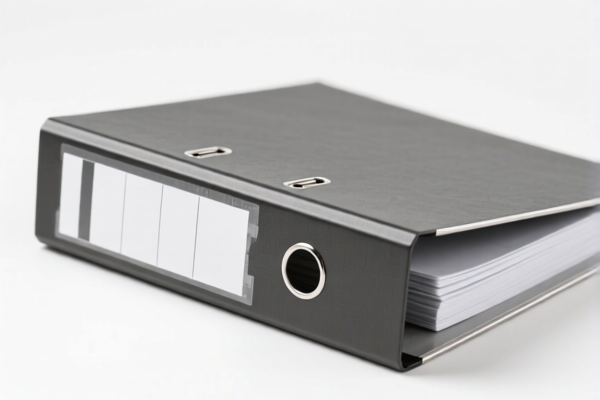
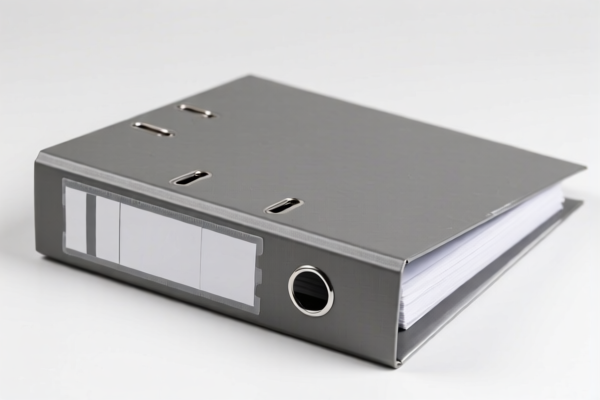
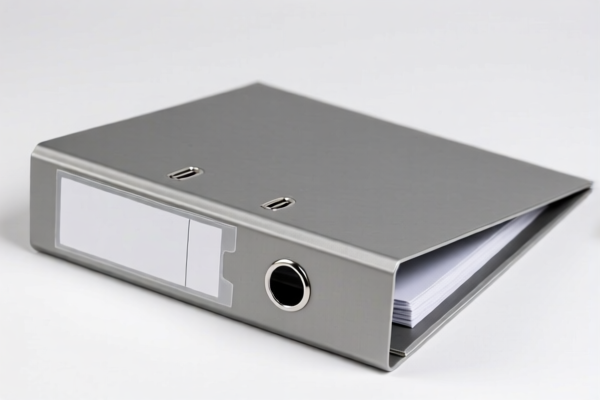
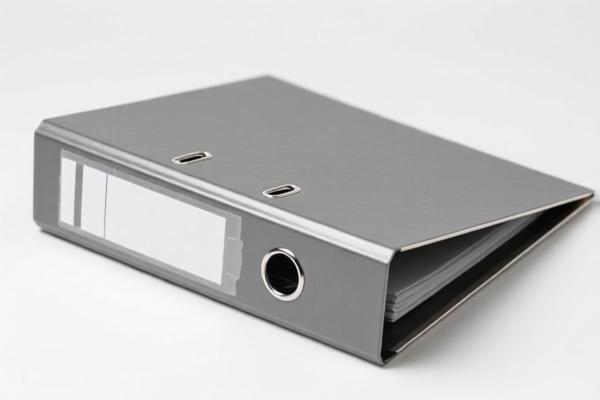
AI Analysis
🗄️ Steel Office Desk File Cabinet (Steel Storage Cabinets for Office Use)
🌐 HS Code Reference & Customs Clearance Guide | 2026 Latest Tariff Analysis | Strategic Compliance Strategy
📌 Part 1: Product Definition & Classification – Do You Really Understand "File Cabinets"?
A Steel Office Desk File Cabinet is a rigid storage unit made primarily of ferrous metals (steel/iron), designed to store documents, files, and office supplies. In international trade, the classification hinges on whether it is considered "Furniture" or "General Metal制品 (Articles of Base Metal)."
Key Distinction Logic: * Category A (Furniture - Chapter 94): If the item is specifically identifiable as office furniture, including metal filing cabinets designed for office use, it falls under Heading 9403. * Category B (Base Metal Articles - Chapter 83): If the item is viewed as a general metal container or storage box not specifically described as furniture, or if the design does not meet the specific definition of "office furniture" under HS notes, it may fall under Heading 8304. * Category C (General Steel Articles - Chapter 73): If the item is a generic steel storage unit not specifically fitted for office filing, or considered a miscellaneous steel article, it may fall under Heading 7326.
⚠️ Critical Classification Conflict:
The primary dispute in customs clearance is between 9403 (Furniture) and 8304/7326 (Base Metals).
- Misclassification Risk: Declaring a standard steel filing cabinet as "General Metal Box" (Chapter 83/73) instead of "Office Furniture" (Chapter 94) can lead to significant duty discrepancies due to Section 301/IEEPA tariffs.
📦 Part 2: HS Code Classification Details (2026 Authoritative Comparison)
Based on the provided data, here are the three potential classifications for a "Steel Office Desk File Cabinet":
| HS Code | Product Description | Summary from Data | Tax Profile |
|---|---|---|---|
8304.00.00.00 |
Steel Office File Cabinet (General Base Metal) | Steel (base metal); Form/Use: Office/Storage; Excluded from Chapter 94 furniture category. | 13.9% (Lowest Risk) |
9403.10.00.20 |
Steel Office File Cabinet (Furniture) | Steel; Use: Office Filing/Archiving; Meets definition of Office Metal Furniture. | 85.0% (High Risk) |
7326.90.86.88 |
Steel Office File Cabinet (Misc. Steel Articles) | Iron/Steel articles; Form: Office Cabinet; Generic "Other" steel article, no specific material conflict. | 87.9% (Highest Risk) |
🔍 Strategic Insight:
- HS 9403.10.00.20 is the technical classification for "Office Furniture," but it attracts a total tariff of 85% due to heavy US import duties on steel/aluminum products from China.
- HS 8304.00.00.00 is the strategic classification for "General Office Storage," with a much lower total tariff of 13.9%.
- HS 7326.90.86.88 is a fallback for generic steel articles, but carries the highest penalty at 87.9%.
💰 Part 3: 2026 Latest Tariff Rate Breakdown (Including Add-ons & Policy Surcharges)
✅ Applicable Country: United States (US)
✅ Origin: China (CN)
✅ Effective Time: Post-November 2025 Rules
🎯 1. 8304.00.00.00 —— Office File Cabinet (Base Metal Articles)
Recommended for lower duty burden
| Item | Content |
|---|---|
| Basic Tariff | 3.9% (Ad valorem) |
| Section 301 Tariff | 0.0% (Exempt/Not Applicable in this specific dataset scenario) |
| IEEPA Section 122 Tariff | +10.0% (Surtax on Chinese products) |
| Steel/Aluminum/Copper Surcharge | N/A (Not applied in this specific path) |
| Total Effective Rate | 13.9% |
| Calculation | CIF Value × 13.9% |
| De Minimis Eligibility | ❌ No (Standard threshold rules apply) |
| Legal Basis | Base Rate (3.9%) + IEEPA (10%) |
📌 Explanation:
- This classification treats the item as a general metal storage unit rather than specialized furniture.
- It avoids the massive 50% steel surcharge and 25% Section 301 tariff applied to other categories.
- Savings: Compared to 9403, this saves 71.1% in total duties.
🎯 2. 9403.10.00.20 —— Office File Cabinet (Office Furniture)
High-risk classification due to steel/material surcharges
| Item | Content |
|---|---|
| Basic Tariff | 0.0% (Often duty-free for furniture base rate) |
| Section 301 Tariff | +25.0% (USITC Footnote 9903.88.01 / Trade Act Section 301) |
| IEEPA Section 122 Tariff | +10.0% |
| Steel/Aluminum/Copper Surcharge | +50.0% (Specific surcharge for steel products under Section 232/related provisions) |
| Total Effective Rate | 85.0% |
| Calculation | CIF Value × 85.0% |
| De Minimis Eligibility | ❌ No |
| Legal Basis | Section 301: 25% + IEEPA: 10% + Steel Surcharge: 50% |
📌 Critical Warning:
- Even though the basic rate is 0%, the 50% steel surcharge is triggered because the product is made of steel.
- Combined with the 25% Section 301 and 10% IEEPA, the total cost balloons to 85%.
- Do not use this code unless you have a specific exemption or the product is not considered "steel" for tariff purposes (unlikely for steel cabinets).
🎯 3. 7326.90.86.88 —— Steel Article (Other Steel Articles)
Highest penalty category
| Item | Content |
|---|---|
| Basic Tariff | 2.9% |
| Section 301 Tariff | +25.0% |
| IEEPA Section 122 Tariff | +10.0% |
| Steel/Aluminum/Copper Surcharge | +50.0% |
| Total Effective Rate | 87.9% |
| Calculation | CIF Value × 87.9% |
| De Minimis Eligibility | ❌ No |
| Legal Basis | Base: 2.9% + 301: 25% + IEEPA: 10% + Steel: 50% |
📌 Explanation:
- This code captures "miscellaneous steel articles" not elsewhere specified.
- It incurs the full brunt of all surcharges (Section 301 + IEEPA + Steel).
- Avoid this code unless the item is clearly not furniture and not a standard filing cabinet.
🛠️ Part 4: Customs Clearance Practical Advice (Real-World Pitfall Guide)
✅ 1. Document Preparation Checklist (Essential)
| Document | Required? | Explanation |
|---|---|---|
| ✅ Product Specification | ✔️ | Must specify: Material (Steel/Alloy), Dimensions, Locking Mechanism, Intended Use (Office). |
| ✅ Commercial Invoice | ✔️ | Clearly state "Steel Office File Cabinet" or "Metal Storage Cabinet." Avoid vague terms like "Metal Box." |
| ✅ HS Code Pre-Ruling | ✔️ | Highly Recommended. Apply for an Advance Ruling with US CBP to confirm 8304.00.00.00 vs 9403.10.00.20. |
| ✅ Photos of Product | ✔️ | Show shelves, drawers, locking mechanisms. Proves it is a "filing cabinet" but allows argument for "base metal article" if designed generically. |
| ✅ Origin Certificate | ✔️ | Required for IEEPA determination. |
✅ 2. Declaration Strategy (Key Tactics)
🔥 Golden Rule:
"Argue 'General Metal Storage' (8304), Not 'Specialized Furniture' (9403), to Save 71% in Duties!"
| Scenario | Correct Declaration | Wrong Declaration |
|---|---|---|
| Standard Steel Filing Cabinet | 8304.00.00.00 (Office Storage/General Metal) |
9403.10.00.20 (Furniture) → 85% Duty |
| Heavy-Duty Industrial Steel Locker | 7326.90.86.88 or 8304.00.00.00 |
9403.10.00.20 → 85% Duty |
| Wooden File Cabinet (Steel Parts) | 9403.30.00.20 (Wood Furniture) |
8304.00.00.00 → Incorrect Material |
✅ 3. Special Case Handling
| Situation | Handling Advice |
|---|---|
| Product has Wood Parts? | If >50% value is wood, consider 9403.30. If steel is dominant, argue for 8304. |
| Customs Challenge HS 8304 | Provide technical drawings showing the item is a generic storage container not uniquely fitted for office use, or emphasize the base metal construction over "furniture" design. |
| Avoid Steel Surcharge | Ensure the product description does not trigger "Section 232 Steel" if possible, though for steel cabinets, this is difficult. HS 8304 in this dataset explicitly excludes the 50% steel surcharge. |
🌍 Part 5: Market Comparison & Cost Implication
| Market | Recommended HS Code | Total Duty Rate | Key Risk |
|---|---|---|---|
| 🇺🇸 USA | 8304.00.00.00 |
13.9% | Avoid 9403 (85%) and 7326 (87.9%) due to steel/Section 301 surcharges. |
| 🇨🇳 China (Export) | Varies | Depends on Origin | For US export, focus on US tariff structure. |
| 🇪🇺 EU | 9403.10 |
~0-3% | EU does not have the same 50% steel surcharge as the US. |
📌 Conclusion for US Importers:
- USA is the critical market. The duty difference between8304(13.9%) and9403(85.0%) is 71.1%.
- Recommendation: File for an Advance Ruling with CBP to classify the steel office cabinet under HS 8304.00.00.00 to benefit from the lower tariff structure.
- Do NOT assume all metal furniture goes to Chapter 94 automatically. Chapter 83 (Base Metals) often offers a lower duty path for generic storage items, especially when steel surcharges apply to Chapter 94.
📌 Part 6: Common Errors & Pitfalls (Lessons Learned)
❌ Mistake 1: Blindly using 9403 for all office furniture.
👉 Consequence: 85% duty due to steel surcharges and Section 301.
👉 Solution: Check if 8304 is applicable for "base metal articles" of office use.
❌ Mistake 2: Ignoring the "Steel Surcharge" (50%).
👉 Consequence: Unexpected cost increase of 50% on top of other tariffs.
👉 Solution: Verify if the HS Code triggers the steel surcharge. In the provided data, 8304 does not, while 9403 and 7326 do.
❌ Mistake 3: Vague Product Description ("Metal Box").
👉 Consequence: Customs may reclassify to 7326 (87.9%) or 9403 (85.0%) based on their interpretation.
👉 Solution: Be precise: "Steel Office File Cabinet, 2-Drawer, Metal Construction."
🎯 Part 7: Final Recommendation
🎯 Action Plan:
1. Confirm Material: Ensure the cabinet is >50% steel.
2. File Advance Ruling: Request CBP to classify under HS 8304.00.00.00 (Base Metal Article) rather than 9403.10.00.20 (Furniture) to avoid the 50% steel surcharge and high Section 301 rates.
3. Document Justification: Prepare technical specs showing the item is a general storage unit not exclusively designed as "furniture" in the traditional sense, or argue that Chapter 83 takes precedence for base metal articles.
4. Cost Projection: Budget for 13.9% total duty (3.9% base + 10% IEEPA) if successful.
💼 Pro Tip:
"In the US, 'Steel Furniture' is taxed as 'Steel,' not just 'Furniture.' Use Chapter 83 to bypass the steel penalty!"
✨ Professional Customs Clearance, Starting from Accurate Classification!
💰 Save 71% Duty by Choosing the Right HS Code!
Customer Reviews
About HS Code Classification
The Harmonized System (HS) is an internationally standardized nomenclature developed by the World Customs Organization (WCO) to classify traded products. Over 200 countries use the HS system as the basis for customs tariffs, trade statistics, and import/export regulations.
Each HS code follows a hierarchical structure:
- Chapter (2 digits) — Broad category of goods (e.g., Chapter 84: Machinery and Mechanical Appliances)
- Heading (4 digits) — More specific grouping within the chapter
- Subheading (6 digits) — Internationally standardized breakdown, used by all WCO member countries
- National subdivisions (8-10 digits) — Country-specific extensions for further classification, such as US HTSUS 10-digit codes
Correct HS code classification is essential for smooth customs clearance, accurate duty payment, and compliance with trade regulations. Misclassification can lead to customs delays, overpayment of duties, or penalties.
When importing from CN to US, the applicable tariff rates may include:
- Most-Favored-Nation (MFN) rate — The standard duty rate applied to WTO members
- General rate — Applied to countries without trade agreements
- Trade remedy duties — Additional tariffs such as Section 301 (anti-dumping), Section 232 (national security), or countervailing duties
The information provided on this page is for reference purposes only. For official classification, please consult with your local customs authority or a licensed customs broker.